Top 7 OpenClaw Skills for Marketing Automation
Marketing automation often just means scheduling posts. OpenClaw skills let AI agents do more: they run campaigns, analyze data, and create content on their own. With 88% of marketers expected to adopt AI by 2025, the goal is agents that work for you, not just tools you have to manage. Here are the OpenClaw skills that turn scripts into useful team members.

Why OpenClaw for Marketing?
OpenClaw is an open standard that lets AI agents work with the outside world. Closed platforms lock your data away, but OpenClaw skills are building blocks any agent can use.
This means you can build an agent that works the way your team works. You can mix skills: one for writing, one for web research, and another for Fastio files. This handles workflows that tools like Zapier can't, such as "Read this PDF, list the key trends, and write a LinkedIn post about it." According to ActiveCampaign, SMB marketers save approximately 13 hours per person each week by using AI automation like this.
Related guides
- How to Use Claude AI for Marketing: Campaigns, Content, and AutomationEighty percent of marketing teams feel pressure to adopt AI, but only 6% have embedded it into actual workflows. Claude...
- How to Use Claude Code Skills in ClineAccording to GitHub's Octoverse 2024 report, the number of developers building with generative AI on the platform...
- Best OpenClaw Skills for AI Calendar and Scheduling AutomationKnowledge workers lose nearly 400 hours a year to meetings, and most of that overhead is coordination, not...
- Best OpenClaw Skills for AI Receptionist and Phone AnsweringPhone calling has been the last major gap in the OpenClaw agent toolkit. While agents can send emails, post to Slack,...
- Best OpenClaw Skills for Multi-Channel Marketing Orchestration in 2026Seventy-three percent of marketers use six or more tools to run campaigns, and each tool switch bleeds context....
- Best OpenClaw Skills for Web ResearchWeb research skills let OpenClaw agents find and read information on the live web. Without them, your AI is stuck with...
More on this subject: OpenClaw Skills (109 guides)
1. Fastio: The Central Asset Hub
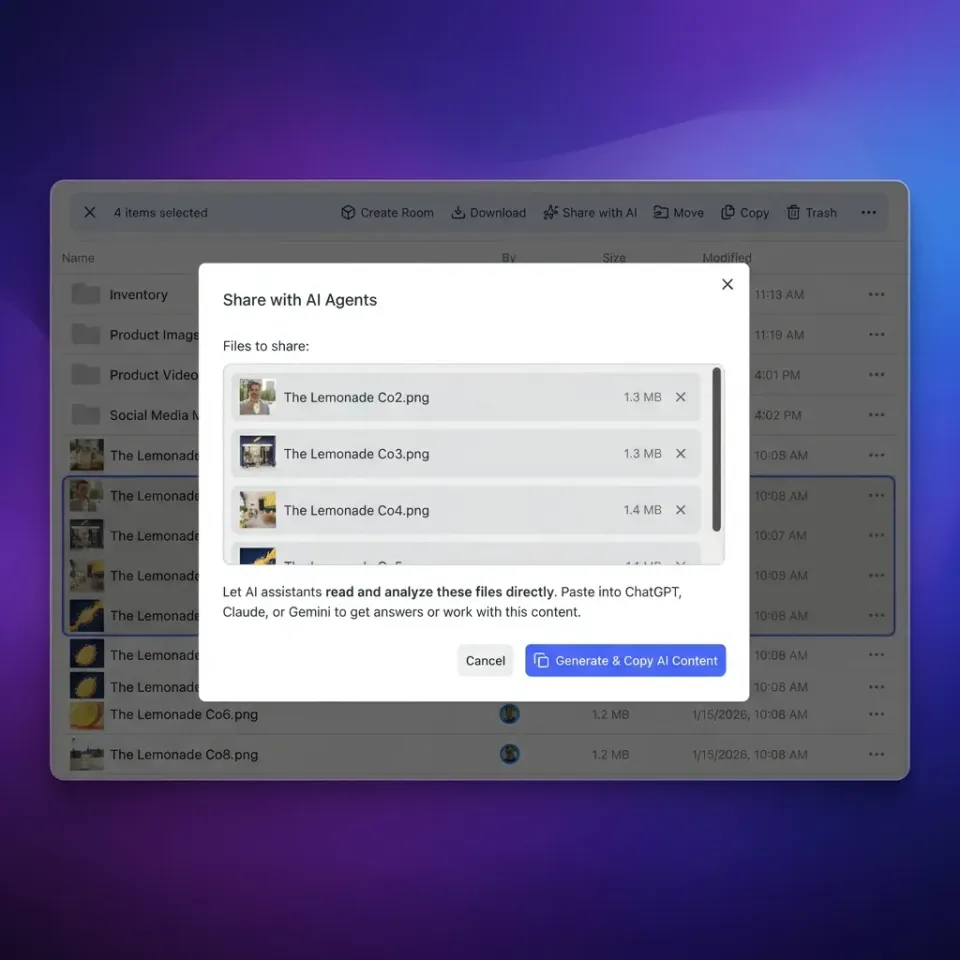
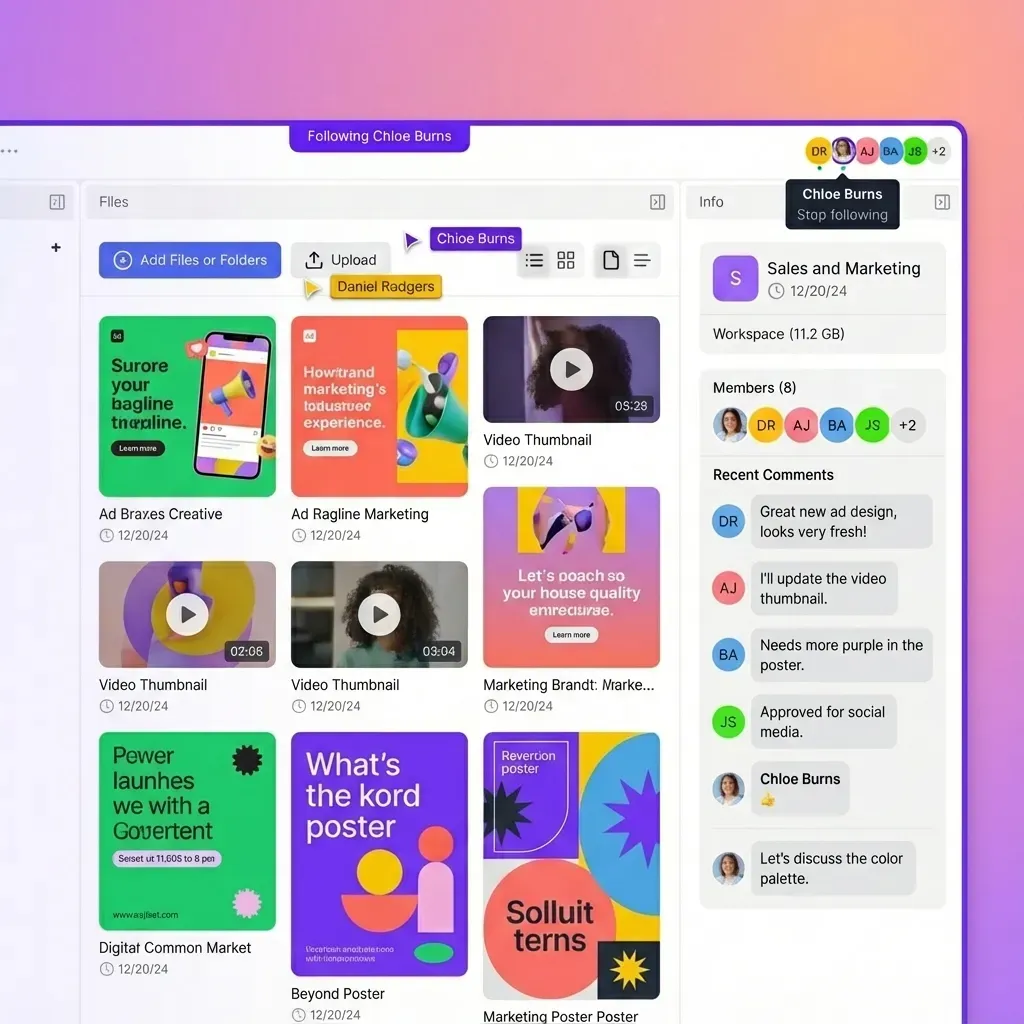
By connecting to the Fastio MCP server at https://mcp.fast.io/mcp/tools, the agent can manage your entire marketing file system with a consolidated MCP toolset.
How it works: The agent watches folders for new uploads, tags files based on their content, and moves assets to the right workspace. Campaign files, briefs, and final deliverables stay organized automatically. Once Intelligence is enabled, Fastio's RAG search means the agent can find any asset using natural language: no manual folder navigation required.
Real-world Example: A creative team uploads hundreds of raw photos. An agent scans every photo, identifies the products in them, tags them with the SKU, and moves the best shots to a "Selects" folder for the art director. Branded share links let external partners access approved assets without an account.
Pricing: Plans start at $9.99/mo (Starter) with a 14-day Business Trial (card required; see /pricing/).
MCP Server: mcp.fast.io



Give Your Marketing Agents a Home
Fastio provides secure workspaces for OpenClaw agents with a consolidated MCP toolset and AI document intelligence.
2. Agent Browser: Competitor Tracking
Tracking competitors is a full-time job. Agent Browser turns OpenClaw into an analyst that checks the web for changes affecting your campaigns. Built on a fast Rust-based headless browser with a Node.js fallback, it handles JavaScript-rendered pages that basic scrapers miss.
How it works: The agent visits competitor pricing pages, blogs, and product pages on a schedule. It captures screenshots, extracts structured data, and saves findings to Fastio for comparison over time.
Real-world Example: An e-commerce brand has an agent that checks competitor prices every morning. If a price drops significantly, the agent alerts the pricing manager via Slack and saves the screenshot evidence to Fastio.
Pricing: Free (MIT-0 license). Review ClawHub Security notes before installing.
ClawHub Page: clawhub.ai/TheSethRose/agent-browser
3. API Gateway: Managing Campaigns Across Channels
Running campaigns on email, social, and ads means juggling too many logins. API Gateway is a passthrough proxy giving OpenClaw direct access to over 100 third-party APIs through managed OAuth connections via Maton.ai - including Google Workspace, Microsoft 365, Notion, Slack, Airtable, and more.
How it works: The agent works as a hub. It can push content to a CMS, update Google Ads, and ping Slack from one set of instructions. The agent knows the order of steps, so it verifies that the landing page is live before ads start.
Real-world Example: A marketing agency uses an "Orchestrator Agent" for product launches. The manager uploads a "Launch Kit" folder with images and copy. The agent sees the upload, checks that all files are there, and distributes them to the right platforms via API Gateway.
Pricing: Free (MIT-0 license); requires a MATON_API_KEY. Maton.ai service may have usage costs.
ClawHub Page: clawhub.ai/byungkyu/api-gateway
4. Brave Search: Real-Time Research & Analytics
AI excels at data analysis, but dashboards just sit there. Brave Search gives OpenClaw lightweight web search and content extraction - making market data active. The skill executes searches, extracts page content, and converts results to clean markdown in seconds, without launching a full browser.
How it works: The agent searches for trend data, industry statistics, or competitor news on a schedule. It doesn't just pull numbers; the agent writes a brief summarizing what it found and saves it to Fastio for the weekly report.
Real-world Example: A marketer asks their agent: "Find recent data on email open rates in our industry and summarize the key benchmarks." The agent returns sourced statistics ready to include in the quarterly performance review.
Pricing: Free (MIT-0 license). Note: uses HTML scraping rather than Brave API - review before installation.
ClawHub Page: clawhub.ai/steipete/brave-search
5. AgentMail: Email Campaign Automation
Campaigns generate follow-up emails that are too personalized to template and too numerous to write by hand. AgentMail is an API-first email platform built specifically for AI agents - offering programmatic inbox management, real-time webhooks, and high-volume sending with no rate limits.
How it works: The agent manages a dedicated campaign inbox. When a lead triggers an event (webinar sign-up, trial start), the agent sends a personalized message. Webhook notifications fire when recipients reply, so the agent can route the response or alert a sales rep.
Real-world Example: A B2B SaaS company uses AgentMail to send personalized nurture sequences to trial users. The agent monitors engagement via webhooks and upgrades the lead score in Airtable (via API Gateway) when a user clicks a pricing link.
Pricing: Free (MIT-0 license); AgentMail service uses usage-based pricing.
ClawHub Page: clawhub.ai/adboio/agentmail
6. Gog: Google Workspace Campaigns
Marketing campaigns run on Google Workspace - from Sheets tracking dashboards to Docs briefs and Calendar launch timelines. The Gog skill is a Google Workspace CLI giving OpenClaw access to Gmail, Calendar, Drive, Contacts, Sheets, and Docs from a single install.
How it works: The agent reads campaign data from Sheets, creates Calendar events for launch milestones, and sends Gmail updates to stakeholders. When a new brief lands in Drive, the agent picks it up and starts the production workflow.
Real-world Example: Every Monday, the agent reads the previous week's campaign metrics from a Google Sheet, appends them to the performance tracker, and sends a Gmail summary to the marketing director. Gog handles all three steps from one instruction.
Pricing: Free (MIT-0 license). Requires gog binary via Homebrew and OAuth setup.
ClawHub Page: clawhub.ai/steipete/gog
7. Playwright: Lead Scoring & Form Automation
Messy CRMs and multi-step web forms waste time. Playwright combines browser automation with MCP capabilities for full web interaction - clicking, form filling, screenshot capture, network tracing, and file upload/download handling.
How it works: The agent watches for new leads. It uses Playwright to research company pages, extract firmographic details (size, industry, recent news), and fill enrichment data into web-based CRM forms. It can also capture screenshots of competitor product pages for the sales team.
Real-world Example: When a lead signs up for a webinar, the agent uses Playwright to research their company page. If the company fits the "Enterprise" profile, the agent marks it "High Priority" and alerts the Enterprise Sales Director via Slack.
Pricing: Free (MIT-0 license).
ClawHub Page: clawhub.ai/ivangdavila/playwright
Building a Marketing Agent
Here is how to build a marketing agent using Fastio and OpenClaw.
Create a Fastio Workspace: Start by setting up a workspace for your agent. This will be its home and storage.
Connect to the Fastio MCP Server: Connect OpenClaw to https://mcp.fast.io/mcp/tools, sending your Fastio API key as a Bearer header. This gives the agent tools to list, read, upload, and search files once Intelligence is enabled.
Define the Mission: Write a prompt to define the agent's role. For example: "You are a Content Agent. Read drafts in 'Drafts', check them against our style guide, and move approved files to 'Final'."
Connect Tools: Add other OpenClaw skills like Agent Browser for research or AgentMail for outreach. OpenClaw lets you combine these skills for complex work.
OpenClaw vs. Standard Automation
Agents work differently than rule-based tools like Zapier or Make.
Summary: Standard automation moves data. OpenClaw agents do the work: writing, analyzing, and deciding.
Sources
References used to verify factual claims in this guide.
-
Adoption rates for AI in marketing are estimated to reach 88%.
-
Marketers using AI save an average of 13 hours per week.
Frequently Asked Questions
What is OpenClaw?
OpenClaw is an open standard for AI agents that allows them to interact with software tools and APIs. In marketing, OpenClaw skills let agents perform tasks like sending emails, analyzing data, and managing content independently.
How do I install OpenClaw skills?
You can install community skills using the ClawHub registry. For storage, connecting your agent to Fastio's remote MCP server at https://mcp.fast.io/mcp/tools gives it persistent file management and asset organization capabilities right away.
Do I need to know how to code to use these skills?
No, most OpenClaw agents are controlled via natural language. You tell the agent what you want to do (e.g., 'Analyze our competitor's pricing'), and it uses its installed skills to do the task.
Is it safe to let agents manage marketing campaigns?
Yes, because you set the permissions. Most teams start with a 'human-in-the-loop' workflow, where the agent drafts content or sets up campaigns, and a human approves them before they go live.
Can OpenClaw agents work with my existing tools?
Yes. OpenClaw has a growing ecosystem of skills that integrate with popular platforms like Google Workspace, Airtable, Slack, and more via API Gateway, which connects to over 100 services through managed OAuth.
What makes Fastio different for AI agents?
Fastio provides a dedicated workspace where agents can store state, manage files, and work with humans. Unlike simple cloud storage, Fastio workspaces are indexed for AI once Intelligence is enabled, allowing agents to search and understand file content instantly.
Related Resources

Give Your Marketing Agents a Home
Fastio provides secure workspaces for OpenClaw agents with a consolidated MCP toolset and AI document intelligence.