Top OpenClaw Skills for Interior Designers
Interior design is half creativity and half administration. OpenClaw skills help designers automate sourcing, organize files, and sync client updates. These automation skills save 10+ hours per project, so you can focus on design.

Why Interior Designers Spend Half Their Time on Admin
Most designers start their careers to create beautiful spaces. The business reality is different. Industry resources like Style by Emily Henderson note that interior designers can spend up to 50% of their time on administrative tasks. You chase vendor quotes and rename product images instead of designing. This admin work is the main bottleneck to growing a firm.
This work hurts profits and creativity. Spending three hours copying SKU numbers into a spreadsheet leaves less energy for concepts or clients. Many designers feel like logistics managers, not creative directors.
OpenClaw works differently than standard project management software. Unlike rigid tools like Studio Designer or Ivy, OpenClaw is an open-source AI agent that runs on your computer. It learns your workflows and does them for you. You install "skills" to hand off repetitive jobs to an AI that works all the time.
You focus on the creative work. Your agent handles the logistics.
Helpful references: Fastio Workspaces, Fastio Collaboration, and Fastio AI.

Related guides
- How to Use Claude Code Skills in ClineAccording to GitHub's Octoverse 2024 report, the number of developers building with generative AI on the platform...
- How to Install and Manage Cline Agent SkillsAI coding agents boost code volume by 180%, but shipped code rises by only 30%, showing a critical gap in development...
- Best OpenClaw Skills for Web ResearchWeb research skills let OpenClaw agents find and read information on the live web. Without them, your AI is stuck with...
- How to Use OpenClaw for Education: Top 7 Skills for EducatorsThe top OpenClaw skills for educators help create personalized lessons and handle admin tasks. By using these...
- Top OpenClaw Skills for Real Estate AgentsOpenClaw skills help real estate agents automate routine tasks and focus on closing deals. From instant lead...
- Best OpenClaw Skills for AI Affiliate Marketing Content AutomationNearly 80% of affiliate marketers now use AI for content creation, but most tools handle only one step of the pipeline....
More on this subject: OpenClaw Skills (109 guides)
Skill 1: Agent Browser for Vendor Sourcing
Sourcing takes more time than almost any other project phase. According to Interior A to Z, sourcing materials and furnishings for a single room can take 5 to 15 hours. You visit dozens of vendor sites, check dimensions, verify stock, and copy details.
The Agent Browser skill by TheSethRose is a fast Rust-based headless browser automation tool with a Node.js fallback. It enables your OpenClaw agent to navigate, click, type, and snapshot pages via structured commands. Instead of clipping items by hand, you tell your agent: "Find mid-century modern velvet sofas under $2,000, in stock, and save their specs to the project folder."
How it works:
- Visits Vendor Sites: The agent navigates to your preferred sites (Wayfair, Perigold, Trade Only) and logs in to see your net pricing.
- Extracts Data: It grabs the price, dimensions, lead time, and SKU using structured element references.
- Saves Assets: It downloads high-res images to your Fastio workspace.
- Updates Trackers: It adds a row to your "Master Sourcing Sheet" automatically.
Real-World Scenario: Say you need unique light fixtures for a boutique hotel. Doing this by hand takes days. With Agent Browser, you give the agent a style guide and a vendor list. The agent runs overnight. By morning, you have a folder of options with pricing and lead times.
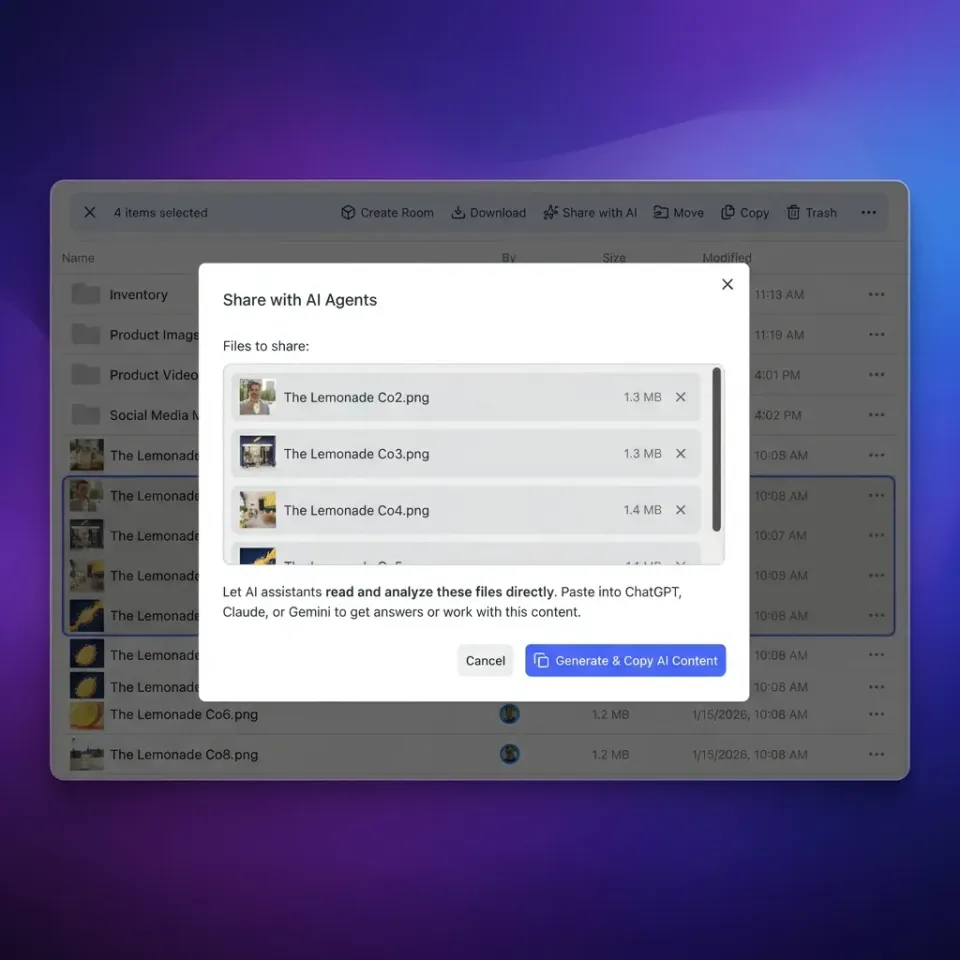
Once Intelligence is enabled on the Fastio workspace, product images and files are indexed and searchable. Search for "blue velvet sofa" later, and Fastio finds the exact image, even if the file name is obscure.
ClawHub Page: https://clawhub.ai/TheSethRose/agent-browser

Skill 2: Filesystem Management for Project Organization
Messy files slow you down. Designers often have a "Downloads" folder full of names like IMG_2934.jpg, screen_shot_final.png, and tearsheet.pdf. Moving these to client folders takes hours.
The Filesystem Management skill by gtrusler provides advanced filesystem operations - listing, searching, batch processing, and directory analysis - purpose-built for the Clawdbot agent framework. It acts as a librarian that watches your downloads folder, then moves and tags files based on your rules.
The "Auto-File" Workflow:
- Renaming: The agent sees a new product download and renames it to
[Client]-[Room]-[Category]-[Vendor].jpgusing its batch operations engine. - Sorting: It moves the file to the correct
/Client/Project/Room/folder in Fastio, with dry-run preview before any action. - Deduplication: It uses multi-criteria filtering to check whether you already have that tear sheet, stopping duplicates before they accumulate.
Smart Search Capabilities: The skill's powerful search supports glob patterns, regex, and full-text content search. Fastio also indexes file content, so asking your workspace "Show me all the beige linen sofas we looked at for the Smith project" returns accurate results. You won't lose items found months ago in a messy folder.
This skill keeps your project folders ready to share. When you share a folder with a contractor or client, they see a clean directory with consistent naming.
ClawHub Page: https://clawhub.ai/gtrusler/clawdbot-filesystem
Skill 3: Slack for Client and Team Notifications
Updating clients and project teams usually means weekly emails with zip files, requiring you to explain which version is current. This slows down approvals and adds coordination overhead.
The Slack skill by steipete lets your OpenClaw agent send real-time updates and file-ready notifications directly to your Slack channels and DMs. The skill enables full Slack operations including sending, editing, and threading messages, adding emoji reactions, and pinning key approvals in project channels.
Automated Client Updates:
- When you move a file into an
Approvedfolder in your Fastio workspace, the agent posts a Slack message: "New living room concepts are ready for review," with a direct link to the portal. - Threaded replies keep project conversations organized without cluttering the main channel.
- The agent can retrieve member info to send DMs to the right person at the right time.
Better Client Experience: Clients want to see progress. A Slack ping with a portal link keeps them involved. You avoid the "Did you get my email?" confusion and outdated PDF versions. The portal always shows the latest version.
ClawHub Page: https://clawhub.ai/steipete/slack



Give Your AI Agents Persistent Storage
Connect OpenClaw agents to Fastio workspaces via remote MCP for interior design asset storage, spec sheets, and project collaboration.
4. Fastio for Spec Sheet Storage and RAG
Making specification sheets (FF&E schedules) usually requires copying images and text from a spreadsheet into InDesign. This causes errors. A wrong price digit can mean expensive mistakes.
Connecting to Fastio via remote MCP gives your agent an intelligent workspace to store and retrieve all the data needed to generate spec sheets. Fastio provides a consolidated MCP toolset covering file upload, folder creation, semantic search once Intelligence is enabled, AI-powered document chat, and Metadata Views for structured extraction schemas.
Capabilities:
- Template Filling: Agents store your firm's spec templates in Fastio and retrieve them with semantic search, then populate product images, dimensions, and pricing from sourced data.
- Total Calculation: The RAG system queries your project files to sum budgets per room, so your proposal matches the client's budget.
- Ownership Transfer: Once a spec sheet is complete, the agent transfers the workspace to you or the client for final approval.
Connect Agent Browser for sourcing to Fastio for storage and the workflow becomes end-to-end: a product goes from a vendor website to a client presentation without manual data entry.
Documentation: Fast.io for Agents
How to Get Started with Agentic Design
Moving to an AI workflow is simple. You don't need to code to use OpenClaw.
Step 1: Create a Fastio Workspace
Sign up at Fastio and create a workspace for your project storage. Create a standard folder structure (e.g., Clients > [Name] > [Room]) for your agents.
Step 2: Install OpenClaw Install the OpenClaw agent on your computer. It connects to your Fastio workspace to access files.
Step 3: Add Skills from ClawHub Find these skills on ClawHub and install them:
- Connect to remote MCP at
https://mcp.fast.io/mcp/tools- Fastio for Agents clawhub install TheSethRose/agent-browser- Agent Browserclawhub install gtrusler/clawdbot-filesystem- Filesystem Managementclawhub install steipete/slack- Slack
Step 4: Start Small Don't automate everything at once. Start with Filesystem Management by gtrusler. Let the agent organize your files for a week. Then, add Agent Browser for sourcing.

OpenClaw vs. Traditional Studio Software
Why use an open-source agent? You get more flexibility and ownership.
If you want control over your process, agents work better than standard software. Standard software forces you to adapt. Agents adapt to you.

Sources
References used to verify factual claims in this guide.
-
Interior designers can spend up to 50% of their time on administrative tasks.
-
Sourcing materials and furnishings for a single room can take 5 to 15 hours. Automation saves 10+ hours per project.
-
Studio Designer costs $60+/user per month.
Frequently Asked Questions
Do I need to know how to code to use OpenClaw?
No. You can install skills with simple commands like `clawhub install`. Once set up, you talk to the agent in plain English, like chatting with a colleague.
Can OpenClaw access my local files?
Yes. OpenClaw runs on your computer, so it manages your local files and folders. This pairs well with Fastio, which provides cloud workspaces where agents can upload files and manage storage via remote MCP.
Is OpenClaw safe to use for client data?
OpenClaw runs locally, so data stays on your machine unless you send it elsewhere. Fastio encrypts your data in transit and at rest, so client projects stay secure.
Does this replace my project management software?
It can, but it often works alongside it. You might use Studio Designer for accounting and OpenClaw for sourcing. Agents bridge the gap between different tools.
How much does OpenClaw cost?
OpenClaw is free and open-source. You only pay for cloud storage and AI costs from providers like Fastio or OpenAI.
Related Resources

Give Your AI Agents Persistent Storage
Connect OpenClaw agents to Fastio workspaces via remote MCP for interior design asset storage, spec sheets, and project collaboration.