Best OpenClaw Skills for AI Affiliate Marketing Content Automation
Nearly 80% of affiliate marketers now use AI for content creation, but most tools handle only one step of the pipeline. OpenClaw skills chain product research, review writing, affiliate link insertion, and performance tracking into automated workflows that run inside a single agent. This guide ranks the best OpenClaw skills for each stage of the affiliate content pipeline and shows how to connect them.

Why Affiliate Publishers Are Moving to Agent-Based Content
US affiliate marketing spending hit $11.99 billion in 2025, and eMarketer projects it will climb another 10% to $13.2 billion in 2026. At the same time, Authority Hacker found that 79.3% of affiliate marketers already use AI for content creation. The gap between those two facts tells the real story: affiliate budgets keep growing, but nearly everyone is competing with the same standalone writing tools.
Standalone AI writers produce drafts. That is the beginning of an affiliate workflow, not the end. After drafting, you still need to research product specs, compare pricing across retailers, insert and validate affiliate links, add schema markup for rich snippets, and track which content actually drives commissions. Most AI tools handle exactly one of those steps.
OpenClaw skills work differently because they run inside an agent framework where each skill can call other skills, access web APIs, read files from a workspace, and maintain context across sessions. ClawHub, the community skill registry, now lists over 13,700 skills, including a growing set built for affiliate workflows. The skills below cover the full affiliate content lifecycle, organized by pipeline stage: research, content creation, link management, and analytics.
Related guides
- How to Use Claude AI for Marketing: Campaigns, Content, and AutomationEighty percent of marketing teams feel pressure to adopt AI, but only 6% have embedded it into actual workflows. Claude...
- How to Use Claude Code Skills in ClineAccording to GitHub's Octoverse 2024 report, the number of developers building with generative AI on the platform...
- Best OpenClaw Skills for LinkedIn Content and Professional Brand BuildingOnly 1% of LinkedIn users post content weekly, yet that group generates 9 billion impressions. OpenClaw skills close...
- Best OpenClaw Skills for Multi-Channel Marketing Orchestration in 2026Seventy-three percent of marketers use six or more tools to run campaigns, and each tool switch bleeds context....
- Best OpenClaw Skills for AI Email Copywriting in 2026OpenClaw's skill ecosystem now includes thousands of email-focused plugins that handle everything from cold outreach...
- Best OpenClaw Skills for AI Receptionist and Phone AnsweringPhone calling has been the last major gap in the OpenClaw agent toolkit. While agents can send emails, post to Slack,...
More on this subject: OpenClaw Skills (109 guides)
How We Evaluated These Skills
We tested each skill against four criteria specific to affiliate content workflows:
- Affiliate relevance. Does the skill solve a problem that affiliate publishers actually face, or is it a generic marketing tool with "affiliate" in the description?
- Chain compatibility. Can the skill accept input from upstream skills and pass structured output to downstream ones?
- Content quality. For writing skills, does the output read like a real product review or comparison, or does it produce obvious AI filler?
- Maintenance status. Is the skill actively maintained on ClawHub with recent updates and working documentation?
We also weighted practical utility over feature count. A skill that does one thing well and integrates cleanly with other skills ranked higher than a do-everything plugin with spotty reliability.
1. Brave Search: Product Research and Price Monitoring
Every affiliate review starts with research. The brave-search skill on ClawHub lets your OpenClaw agent run web searches programmatically, pulling back current product data, pricing pages, and competitor content without manual browsing.
Key strengths:
- Runs web queries and returns results your agent can parse and pass to downstream skills
- Useful for identifying content gaps by comparing your coverage against top-ranking affiliate pages
- Faster than browser automation approaches since it queries a search API directly
- Pairs naturally with content writing skills that accept research input
Best for: Affiliate publishers who need up-to-date pricing, product specs, and competitor positioning before writing reviews.
Limitations: Brave Search returns web search results, not structured product catalogs. For Amazon-specific product data, pair it with a dedicated e-commerce skill like affiliatematic.
2. Affiliate-Master: Full-Stack Affiliate Workflow Automation
Most skills handle one stage of the affiliate workflow. The affiliate-master skill on ClawHub aims to cover several stages in a single tool, from product research through content generation and link insertion.
Key strengths:
- Combines research, writing, and link placement steps into one skill
- Generates comparison-style content for side-by-side product review articles
- Handles affiliate link insertion alongside the content drafting process
- Supports different article formats including single reviews, roundups, and comparison posts
Best for: Solo affiliate publishers or small teams that want a single skill to handle most of the content pipeline without chaining multiple tools.
Limitations: All-in-one skills trade depth for breadth. If you need fine-grained control over SEO optimization or brand voice, you will get better results pairing specialized skills like SEO Content Writer and a brand voice tool.


Store your affiliate content pipeline output in one workspace
Persistent workspace storage for your OpenClaw agent. Save research, drafts, and published articles with version history and MCP access.
3. SEO Content Writer: Review Articles That Rank
The seo-content-writer skill generates long-form articles with proper heading hierarchy, keyword placement, internal linking, and EEAT signals baked in. For affiliate content specifically, it produces the kind of structured, information-dense reviews that Google's product review guidelines reward.
Key strengths:
- Generates EEAT-aligned content with first-hand experience signals built into the structure
- Proper heading hierarchy (H2/H3/H4) optimized for featured snippet capture
- Keyword density controls that keep content readable without stuffing
- Outputs clean markdown that works alongside CMS publishing workflows
Best for: Affiliate sites focused on organic search traffic where ranking position directly determines revenue.
Limitations: SEO Content Writer handles structure and optimization. It does not research products, insert affiliate links, or track commissions. Chain it with Brave Search upstream and linkfuse downstream for a complete pipeline.

4. Affiliatematic: Amazon Product Recommendations
The affiliatematic skill focuses specifically on Amazon's affiliate ecosystem. It pulls product data from Amazon, generates AI-powered recommendations, and formats content for Amazon Associates publishers.
Key strengths:
- Direct Amazon product data integration for accurate specs, pricing, and availability
- AI-powered product recommendation logic based on category analysis
- Formatted output ready for Amazon Associates content guidelines
- Category-specific templates for electronics, home goods, fitness equipment, and other popular affiliate verticals
Best for: Amazon Associates publishers who need product-specific content with accurate, current data from the Amazon catalog.
Limitations: Affiliatematic is Amazon-specific. If you promote products across multiple networks like ShareASale, CJ Affiliate, or Impact, you will need a more general approach using Brave Search for product research and linkfuse for link management.
5. Linkfuse: Affiliate Link Shortening and Management
Content creation is half the workflow. Link management is the other half, and it is where most AI writing tools stop completely. The linkfuse skill creates shortened, trackable affiliate links from any URL your agent generates during the content creation process.
Key strengths:
- Creates shortened affiliate links on the fly during content generation
- Works with any affiliate network URL, not locked to a single platform
- Integrates into content pipelines so links get inserted as articles are written, not after
- Clean link formatting that avoids the long, ugly referral URLs that hurt click-through rates
Best for: Publishers working across multiple affiliate networks who need consistent link formatting and management within their content pipeline.
Limitations: Linkfuse handles link creation and shortening. For deeper analytics on click-through rates and conversion attribution, you will need your affiliate network's native reporting or a dedicated analytics skill.
6. Humanize AI Text: Making Reviews Sound Authentic
Google's product review guidelines explicitly favor content that demonstrates genuine experience. The humanize-ai-text skill rewrites AI-generated content with natural sentence variation, vocabulary diversity, and conversational flow that avoids the patterns search engines flag as machine-generated.
Key strengths:
- Adds natural variation to sentence structure, length, and vocabulary
- Removes common AI writing patterns like excessive transition words, formulaic paragraph structure, and repetitive phrasing
- Preserves factual accuracy and product details while improving readability
- Works as a final pass in any content pipeline, accepting output from SEO Content Writer or other drafting skills
Best for: Affiliate publishers who produce content at scale and need every article to pass both human and algorithmic authenticity checks.
Limitations: Humanization is a polishing step, not a substitute for original product knowledge. Content that starts with thin, generic claims will still read as thin after humanization. Start with solid research from Brave Search or affiliatematic.
7. Schema Markup Generator: Rich Snippets for Product Reviews
Affiliate content lives or dies by click-through rate from search results. The schema-markup-generator skill creates JSON-LD structured data for product reviews, FAQ sections, and how-to guides, giving your content the star ratings and rich snippet formatting that increase visibility in SERPs.
Key strengths:
- Generates valid JSON-LD for Product, Review, FAQ, and HowTo schema types
- Accepts content from upstream skills and extracts schema-relevant data automatically
- Output validates against Google's Rich Results Test requirements
- Covers the schema types most relevant to affiliate content: product reviews with ratings, comparison tables, and FAQ sections
Best for: Affiliate sites competing for rich snippet placement in product-related searches.
Limitations: Schema markup improves how your content appears in search results, but it does not guarantee rich snippet display. Google selects rich results based on multiple factors beyond valid markup. Schema Markup Generator handles the technical side; content quality and site authority determine the rest.
Chaining Skills into an End-to-End Affiliate Pipeline
Individual skills are useful. Chained skills are where affiliate content automation gets practical. OpenClaw's agent framework lets you trigger a sequence of skills with a single prompt, passing output from one stage to the next.
A typical affiliate content pipeline looks like this:
- Research stage. Brave Search queries the target product category, pulls current pricing, identifies top-selling items, and returns structured product data.
- Drafting stage. SEO Content Writer takes the research output and produces a long-form review or comparison article with proper heading structure and keyword placement.
- Link insertion. Linkfuse processes the draft, identifies product mentions, and replaces plain URLs with shortened, trackable affiliate links.
- Humanization. Humanize AI Text runs a final pass over the complete article, smoothing AI patterns without breaking links or product data.
- Schema generation. Schema Markup Generator extracts product names, ratings, and FAQ content from the finished article and generates JSON-LD markup.
Each stage produces output that the next stage consumes. The entire chain runs without manual intervention once triggered, and each intermediate file can be stored in a persistent workspace for review before publishing.
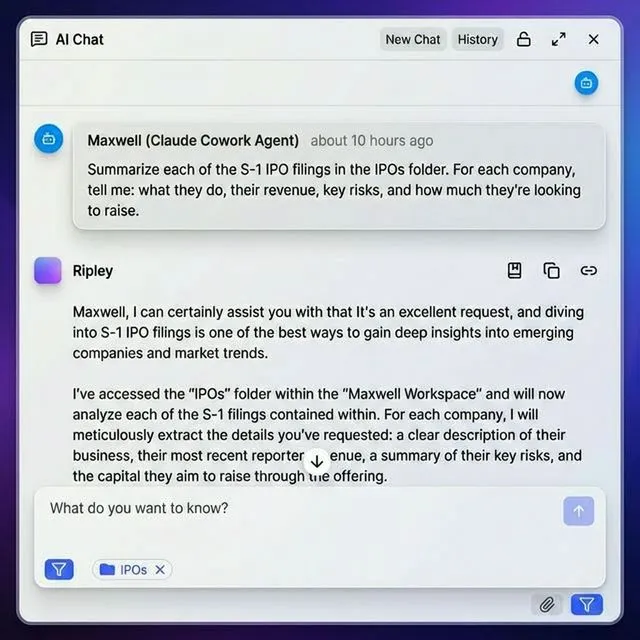
For publishers who need persistent file storage across agent sessions, Fast.io provides shared workspaces where your OpenClaw agent can save research data, draft files, and published content. The Fast.io MCP server gives agents direct workspace access through a consolidated MCP toolset, so your affiliate pipeline can read source files and write finished articles without local file system dependencies. Fastio offers a 14-day Business Trial (card required; see /pricing/) to test workspace storage and agent automation.
Choosing the Right Skill Combination
Not every affiliate publisher needs all seven skills. Your stack depends on your content model and scale.
Single-network Amazon publishers can start with affiliatematic for product data and SEO Content Writer for drafting. Add Humanize AI Text if you publish more than ten articles per month and want to maintain quality consistency across volume.
Multi-network publishers working with ShareASale, CJ, Impact, or direct merchant programs benefit more from the Brave Search plus linkfuse combination. These skills are network-agnostic and handle the research and link management that affiliatematic only covers for Amazon.
High-volume content operations running dozens of articles per week should chain all five core skills (Brave Search, SEO Content Writer, linkfuse, Humanize AI Text, Schema Markup Generator) into an automated pipeline. Store intermediate outputs in a shared workspace so editors can review drafts before the humanization pass.
Solo publishers with limited time should start with affiliate-master as a single entry point. It trades some depth for convenience, covering most of the pipeline in one skill. Graduate to specialized skills as your content volume grows and you need finer control over each stage.
Whichever combination you choose, the advantage of OpenClaw's skill system over standalone AI writing tools is the ability to add, remove, and swap skills as your workflow evolves. You are not locked into a single vendor's content pipeline.
Sources
References used to verify factual claims in this guide.
-
US affiliate marketing spending hit $11.99 billion in 2025, projected to reach $13.2 billion in 2026 79.3% of affiliate marketers have adopted AI-driven content creation
-
ClawHub hosts over 13,700 community skills for OpenClaw agents
Frequently Asked Questions
What AI tools help with affiliate marketing?
OpenClaw skills like affiliate-master, SEO Content Writer, and linkfuse automate the core affiliate workflow stages of product research, review writing, and link management. Unlike standalone tools, these skills run inside an agent framework and can be chained together so one prompt triggers research, drafting, link insertion, and formatting in sequence. Other AI tools used in affiliate marketing include Jasper, SurferSEO, and Frase, though these typically handle content creation in isolation without the pipeline automation that skill chaining provides.
Can AI write affiliate product reviews?
Yes, but quality depends on the input data. Skills like SEO Content Writer produce structured, SEO-optimized review articles when given solid product research as input. The output needs a humanization pass (using a skill like Humanize AI Text) to avoid the formulaic patterns that Google's product review guidelines penalize. The best results come from chaining a research skill with a writing skill, so the review contains specific product details rather than generic filler.
How do you automate affiliate content creation?
The most practical approach is building a skill chain in OpenClaw where each stage feeds the next. Start with Brave Search or affiliatematic for product research, pass the data to SEO Content Writer for drafting, run linkfuse to insert affiliate links, apply Humanize AI Text for authenticity, and finish with Schema Markup Generator for rich snippet markup. Store intermediate files in a persistent workspace like Fast.io so you can review and annotate content before publishing.
Are OpenClaw skills free to use?
OpenClaw itself is open source and free. Most skills on ClawHub are free to install and use, though some skills connect to paid external APIs (like Brave Search's API or specific e-commerce data providers) that have their own pricing. The skill installation and execution framework costs nothing. Check each skill's documentation for any external API costs before adding it to your workflow.
How many affiliate articles can OpenClaw produce per day?
Throughput depends on the LLM provider you connect to OpenClaw, the complexity of your skill chain, and any API rate limits from external services. A typical pipeline using Brave Search, SEO Content Writer, linkfuse, and Humanize AI Text can produce 10 to 20 completed articles per day when running against a fast LLM. The bottleneck is usually the research stage, where web search API limits may throttle query volume.
Related Resources

Store your affiliate content pipeline output in one workspace
Persistent workspace storage for your OpenClaw agent. Save research, drafts, and published articles with version history and MCP access.