Top 10 OpenClaw Skills for Content Creators
Content creators use OpenClaw skills to handle repetitive tasks and scale production. For content creators, OpenClaw skills act as autonomous assistants capable of managing editorial calendars, searching the web for research, and organizing media assets. This list covers real ClawHub skills based on their published pages, install ease, and practical value for creators. Each skill installs via a documented command and works with any LLM.

How We Evaluated OpenClaw Skills
We selected these skills by verifying each one against its published ClawHub page. Criteria included:
- Verified ClawHub page: Every skill listed here has a real, accessible page on clawhub.ai.
- Relevance for content work: Research, writing, publishing, communication, and file management.
- Install ease: Preference for skills with simple install commands or clear download instructions.
- Integration quality: Works with common creator tools like Google Workspace, Slack, and cloud storage.
- Free access: Every skill listed except Fastio (paid plans from $9.99/mo) has a free tier or is open source.
All skills except Fastio are free or open-source with optional paid service dependencies. These are real agent tools, not fictional wrappers.
Helpful references: Fastio Workspaces, Fastio Collaboration, and Fastio AI.

Related guides
- How to Use Claude Code Skills in ClineAccording to GitHub's Octoverse 2024 report, the number of developers building with generative AI on the platform...
- How to Install and Manage Cline Agent SkillsAI coding agents boost code volume by 180%, but shipped code rises by only 30%, showing a critical gap in development...
- Top 7 OpenClaw Skills for Software EngineersThe top OpenClaw skills for software engineers automate repetitive tasks like code workflows, browser testing, database...
- Best OpenClaw Skills for AI Video Script WritingVideo scripts drive every stage of production, and OpenClaw skills can automate the writing process across formats....
- Best OpenClaw Skills for AI Calendar and Scheduling AutomationKnowledge workers lose nearly 400 hours a year to meetings, and most of that overhead is coordination, not...
- Top OpenClaw Skills for Machine Learning EngineersMachine learning engineers use OpenClaw skills to orchestrate model evaluation, manage datasets, and coordinate agentic...
More on this subject: OpenClaw Skills (109 guides)
Quick Comparison of All 10 Skills
1. Brave Search - Web Research and Fact-Checking
Brave Search enables your agent to search the web and extract page content as markdown without opening a browser. For content creators, it replaces manual tab-switching for research: your agent searches a topic, retrieves relevant pages, and feeds the extracted content directly into a draft or outline. Configurable result counts let you pull broad overviews or targeted deep-dives.
Strengths:
- Lightweight web search with no browser overhead
- Optional page content extraction as full markdown for detailed source review
- URL content fetching and parsing for specific reference pages
- Fast enough for high-frequency lookups during drafting sessions
Limitations:
- Requires a
BRAVE_API_KEYenvironment variable - Results reflect Brave's index; not a real-time news feed
Best For: Bloggers, journalists, and YouTubers who need agents to gather source material automatically during content production.
Install Command: cd ~/Projects/agent-scripts/skills/brave-search && npm ci
ClawHub Page: clawhub.ai/steipete/brave-search
2. Agent Browser - Interactive Web Scraping and Reference Gathering
Agent Browser is a fast Rust-based headless browser CLI with a Node.js fallback. Your agent can navigate any page, click elements, fill forms, take screenshots, record video, intercept network requests, and extract structured data from JavaScript-rendered sites. For content creators, it unlocks reference gathering from pages that block simple HTTP fetches.
Strengths:
- Real browser rendering for JavaScript-heavy sites that block basic scrapers
- Screenshots and PDF capture for visual reference or content archiving
- Video recording for documenting multi-step web processes
- Semantic element locators for reliable interaction with dynamic pages
Limitations:
- Heavier resource use than simple HTTP-based search tools
- Browser session management requires cleanup between tasks
Best For: Creators researching competitor content, archiving reference pages, or automating multi-step web interactions for content workflows.
Install Command: npm install -g agent-browser && agent-browser install
ClawHub Page: clawhub.ai/TheSethRose/agent-browser
3. Gog - Google Workspace for Content Teams
Gog provides a full Google Workspace CLI covering Gmail, Calendar, Drive, Contacts, Sheets, and Docs. Content teams embedded in Google's ecosystem use it to let agents read editorial calendars from Sheets, search Drive for reference files, draft Gmail messages, and export Google Docs content for processing. JSON output format makes it easy to pipe results into other skills.
Strengths:
- Google Sheets read/write/append for editorial calendar and tracking management
- Drive file search for locating reference materials without manual navigation
- Gmail send for automated pitch or newsletter workflows
- Calendar management for scheduling content deadlines and review meetings
Limitations:
- Requires initial OAuth setup with a client secret file
- JSON output requires familiarity with jq for downstream processing
Best For: Content teams whose editorial planning, tracking, and assets live in Google Workspace.
Install Command: brew install steipete/tap/gogcli
ClawHub Page: clawhub.ai/steipete/gog


Automate Your Content Pipeline?
Connect OpenClaw agents to Fastio workspaces via remote MCP for media storage, versioning, and document search. Built for creator workflows.
4. Github - Content Repository and Publishing Workflows
For creators who publish via static site generators, documentation platforms, or open-source projects, the GitHub skill brings full repository management into the agent conversation. Your agent can open PRs for new articles, check CI build status, review comments on content PRs, and query file history - all using the gh CLI with JSON filtering for precise data extraction.
Strengths:
- Full PR lifecycle management for content-driven repositories
- CI status checks to verify that new content builds successfully before publishing
- Issue management for tracking content requests and editorial tasks
- Advanced
gh apiqueries with--jsonand--jqfor precise repository data
Limitations:
- Requires
ghCLI to be installed and authenticated - Works on repositories, not on GUI-based CMS platforms
Best For: Technical content creators, developer relations teams, and documentation writers who publish via Git.
Install Command: Instruction-only; requires gh auth login or GITHUB_TOKEN.
ClawHub Page: clawhub.ai/steipete/github
5. AgentMail - Email Outreach and PR Communication
AgentMail is an API-first email platform designed for AI agents. Content creators use it to automate PR outreach, pitch campaigns, newsletter subscriber management, and collaboration requests. Agents create dedicated inboxes per campaign, send emails programmatically, and receive replies via real-time webhooks that trigger immediate follow-up actions.
Strengths:
- Programmatic inbox creation per campaign or project
- Real-time webhook notifications for incoming replies
- Semantic search across inbox history to find previous outreach threads
- No rate limits for high-volume agent email workflows
Limitations:
- Requires an account at console.agentmail.to and an API key
- Review security guidance for prompt injection risks from incoming emails
Best For: Content creators and PR professionals running agent-driven outreach campaigns or managing high-volume email-based collaborations.
Install Command: pip install agentmail python-dotenv
ClawHub Page: clawhub.ai/adboio/agentmail
6. Slack - Team and Editorial Communications
The Slack skill lets your agent control Slack via the slack tool: send, edit, and delete messages; react with emoji; pin and unpin items; list pinned content; fetch member information; and read recent channel messages. For content teams, this means agents can post draft notifications to editorial channels, pin approved content briefs, and retrieve recent feedback threads without manual app switching.
Strengths:
- Send, edit, and delete messages in channels or DMs
- Pin and unpin items for marking approved content or important references
- Read recent channel messages for context before posting
- Fetch member information for directing notifications correctly
Limitations:
- Download-only skill from ClawHub; no CLI install command
- Requires Slack API credentials to be configured
Best For: Content teams using Slack for editorial coordination who want agents to participate in channel workflows directly.
Install Command: Download from clawhub.ai/steipete/slack.
ClawHub Page: clawhub.ai/steipete/slack
7. Filesystem Management - Organizing Local Content Files
Filesystem Management provides advanced local file operations: smart listing with recursive traversal, content search across directories, batch copy and move with dry-run mode, and directory tree visualization. For content creators with large local media libraries or article archives, it replaces manual folder navigation with natural language commands.
Strengths:
- Content search across large directory trees for finding specific drafts or assets
- Batch processing with dry-run mode to safely preview before executing bulk moves
- Directory analysis with statistics for auditing content library structure
- Pattern-based filtering for targeting specific file types or naming conventions
Limitations:
- Local filesystem only; not a cloud storage replacement
- Requires execution permissions on target directories
Best For: Creators managing large local archives of drafts, media files, or project assets who want fast, safe batch operations.
Install Command: clawdhub install filesystem
ClawHub Page: clawhub.ai/gtrusler/clawdbot-filesystem
8. API Gateway - Multi-Platform Publishing Workflows
API Gateway connects your agent to 100+ third-party services through a single managed OAuth proxy. For content creators, the relevant integrations include Notion for content wikis, Airtable for editorial calendars, HubSpot for content marketing pipelines, and Google Workspace alongside many other platforms. OAuth token refresh is handled automatically, so your agent maintains access across long publishing sessions.
Strengths:
- Single consistent interface for 100+ services
- Managed OAuth eliminates per-service authentication complexity
- Covers Notion, Airtable, HubSpot, Google Workspace, Slack, and many more
- Multi-connection support for routing to different accounts or regions
Limitations:
- Requires a Maton API key from maton.ai/settings
- Acts as a passthrough proxy; underlying service rate limits still apply
Best For: Content creators and marketing teams whose workflows span multiple SaaS tools and need a single authentication layer.
Install Command: Set MATON_API_KEY environment variable; obtain key at maton.ai/settings.
ClawHub Page: clawhub.ai/byungkyu/api-gateway

9. Fastio - Media Storage and Agent Collaboration
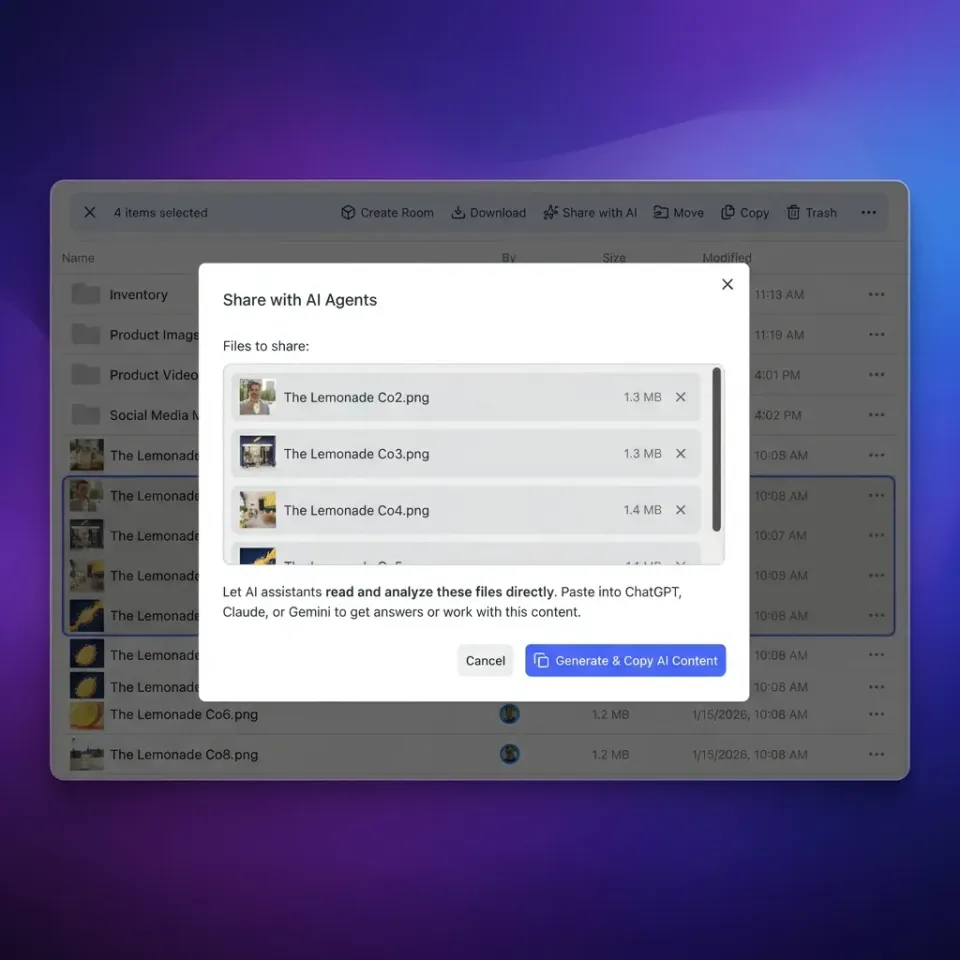
Fastio provides a consolidated MCP toolset for agent workspaces covering file storage, sharing, and AI-powered document analysis once Intelligence is enabled. For content creators, it is the persistent storage layer that keeps media assets, drafts, and brand guidelines available to agents across sessions. Once Intelligence is enabled, Ripley AI chat and document chat let your agent query your uploaded style guide or content briefs using natural language before drafting.
Strengths:
- Consolidated MCP toolset for file management, sharing, and workspace collaboration
- Zero-config RAG: agents query uploaded files and assets using natural language
- 14-day Business Trial (requires a credit card; see /pricing/)
- Human-agent collaboration with ownership transfer and a detailed activity log
Limitations:
- Usage-based credits with tiered storage plans
- File-focused; pairs best with other skills that handle platform publishing
Best For: Content creators and teams who need persistent cross-session storage and want agents to reference brand assets automatically.
MCP Endpoint: https://mcp.fast.io/mcp/tools
Documentation: Fast.io for Agents
10. Clawdbot Documentation Expert - Learning Tool Configuration
The Clawdbot Documentation Expert is a skill specialized in navigating Clawdbot's own documentation. For content creators new to OpenClaw, it provides decision-tree navigation for common setup questions, multiple search modes (keyword, full-text, sitemap), documentation fetching and version tracking, and ready-to-use configuration snippets. It is the fastest way to get unstuck when configuring other ClawHub skills.
Strengths:
- Decision tree navigation for common setup, troubleshooting, and configuration questions
- Multiple search modes: keyword, full-text indexing, and sitemap browsing
- Ready-to-use configuration snippets for providers, gateways, and platform integrations
- Version tracking to stay current with Clawdbot feature changes
Limitations:
- Specific to Clawdbot documentation; not a general web documentation tool
- Scripts require execution permissions to run locally
Best For: Content creators learning to configure OpenClaw for the first time or troubleshooting skill installation issues.
Install Command: Download from clawhub.ai/NicholasSpisak/clawddocs.
ClawHub Page: clawhub.ai/NicholasSpisak/clawddocs
Which OpenClaw Skill Should You Choose?
Start with Brave Search and Fastio as your core workflow foundation. Brave Search handles research at the start of any content project, and Fastio provides persistent storage for assets, drafts, and brand references across all your agent sessions.
Stack additional skills based on your platform: GitHub for static site publishing, Gog for Google Workspace-based editorial teams, Slack for channel-based team coordination, and AgentMail for outreach campaigns. Use API Gateway when your workflow spans multiple SaaS tools and you want a single authentication layer.
Test each skill in isolation before chaining them into automated pipelines. The Clawdbot Documentation Expert is the best starting point if you hit configuration questions along the way.
Frequently Asked Questions
What OpenClaw skills are best for YouTubers?
Brave Search for topic research, Agent Browser for reference gathering from JavaScript-rendered pages, Fastio for media asset storage, and Gog if your planning lives in Google Sheets. These cover the research, organization, and storage needs of a video production workflow.
How to automate content creation with OpenClaw?
Install skills via ClawHub, then chain them in your agent workflow. A typical pipeline might use Brave Search for research, GitHub for draft submission, and Fastio for asset storage. Use the API Gateway skill when your workflow touches multiple platforms like Notion and Airtable.
Are OpenClaw skills free?
Most core skills are free or open-source. Some require API keys from third-party services (Brave Search, API Gateway, AgentMail) but the skills themselves are free to install from ClawHub. Fastio offers paid plans from $9.99/mo with a 14-day Business Trial requiring a credit card.
How do ClawHub skills work with LLMs?
Most skills are LLM-agnostic and work with Claude, GPT-4, and local models via the MCP standard. Instruction-only skills work with any model that can follow written instructions.
Can OpenClaw skills handle large media files?
Yes, via Fastio which supports large file uploads and provides persistent cloud storage. Fastio's consolidated MCP toolset handles upload, download, sharing, and streaming workflows.
What's the install process?
Most skills are instruction-only and downloaded directly from their ClawHub page. Skills that wrap executables use npm, pip, or brew. For Fastio, agents connect directly to its remote MCP server at https://mcp.fast.io/mcp/tools using an API key.
Related Resources

Automate Your Content Pipeline?
Connect OpenClaw agents to Fastio workspaces via remote MCP for media storage, versioning, and document search. Built for creator workflows.