Top OpenClaw Skills for AI Song Cover and Vocal Remix Production
Suno paywalled voice cloning at $10 per month in March 2026, but it handles one step of a multi-stage cover workflow. OpenClaw skills chain arrangement generation, vocal transformation, and section-level repainting into a single agent session. Six skills stand out for building AI song covers and vocal remixes, from ACE-Step's free cover mode to ElevenLabs voice cloning through ClawVox.


Why Single-Tool Generators Fall Short for Covers
Suno v5.5 added voice cloning in March 2026, charging $10 per month for a feature that handles one step of cover production. You feed in a voice sample, Suno generates a song mimicking that timbre. But a full cover pipeline also needs arrangement generation, section-level editing, and vocal mixing. No single tool covers the complete workflow.
Standalone generators like Singify and Tad AI perform voice swapping on their own. Upload a track, pick a voice model, download a processed file. The limitation shows up when you want to control what sits underneath the vocals. You might want one song's vocal style over a completely different instrumental, or you need to regenerate just the chorus while keeping the verses intact. Single-step tools treat the entire track as one block.
OpenClaw skills break this into discrete, chainable stages. One skill generates a new arrangement from a text prompt. Another applies a cloned voice from a short audio sample. A third repaints a specific section without touching the rest. Each step runs independently, and your agent orchestrates the sequence through natural conversation.
Six skills stand out for cover and remix production. Three handle music generation with cover-specific features like audio repainting and model selection. Three handle voice transformation, from professional-grade cloning to multilingual vocal synthesis. Together they form a production pipeline that no standalone cover generator provides.
Related guides
- How to Use Claude Code Skills in ClineAccording to GitHub's Octoverse 2024 report, the number of developers building with generative AI on the platform...
- How to Install and Manage Cline Agent SkillsAI coding agents boost code volume by 180%, but shipped code rises by only 30%, showing a critical gap in development...
- Top OpenClaw Skills for Video ProductionOpenClaw skills automate video production tasks like editing, asset management, and reviews with MCP tools. Video teams...
- Top OpenClaw Skills for Music ProductionOpenClaw skills let music producers automate routine tasks: organizing stems, searching sample libraries, scheduling...
- Best OpenClaw Skills for AI Beat Making and Rap ProductionNearly a third of musicians already use AI song generators in their production workflow, but most guides cover...
- Best OpenClaw Skills for AI Cover Letter and Job Application WritingA field experiment of 7,287 job applications showed tailored cover letters produce 53% more callbacks, but follow-up...
More on this subject: OpenClaw Skills (109 guides)
How We Evaluated These Skills
We tested each skill on three cover production scenarios: recreating a pop track with a different vocal style, remixing an instrumental arrangement while keeping the original vocal melody, and repainting a weak chorus without regenerating the full song.
Evaluation criteria included cover-specific features (does the skill support a direct cover mode or only text-to-music?), vocal control (gender, style tags, language, pitch shifting), pricing, and installation complexity. We also weighted how well each skill chains with others in a multi-step workflow.
Here is how the six options compare:
| Skill | Cover-Specific?
| Voice Control | Free Tier | Best For | |-------|-----------------|---------------|-----------|----------| | ACE Music | Yes (cover + repaint) | BPM, key, multi-language | Free API | Section-level repainting | | Evolink Music | No (generation) | Gender, style tags, 5 Suno models | Paid API | Studio-grade vocal output | | Built-in music_generate | No | Provider-dependent | Provider fees | Quick arrangements | | ClawVox | No (voice processing) | ElevenLabs cloning, isolation | ElevenLabs pricing | Professional voice cloning | | Verbatik | No (voice processing) | 2,700+ voices, 10s cloning | $0.002/1K chars | Multilingual vocal styles | | IMA Studio | No (generation) | Suno Sonic v5, DouBao Song | Paid API | Vocal tracks with lyrics |
Each entry below follows the same structure: what the skill does for cover production, its strengths and limitations, who it fits best, and what it costs.

Music Generation Skills for Cover Production
Three OpenClaw skills support the music generation side of cover production. Each takes a different approach: one offers dedicated cover and repaint modes, one provides studio-grade Suno access with fine vocal control, and one ships with the platform at no extra cost.
A typical starting point is to generate three arrangement variations, audition them against your reference track, and pick the one closest to the target feel before moving to vocal processing. Keep generated files organized by project and version from the start, because cover iterations pile up fast and unlabeled stems become unrecoverable within a few sessions.
1. ACE Music
ACE Music runs on the ACE-Step 1.5 model through a free hosted API and is the only OpenClaw skill with a dedicated cover generation mode. Where other skills only support text-to-music, ACE Music accepts three task types: text2music for original compositions, cover for recreating songs in a new style, and repaint for regenerating specific sections of an existing track while keeping the rest intact.
The repaint mode is especially useful for cover production. Say your agent generates a full track but the intro falls flat. Instead of regenerating the entire song, repaint targets just that section. The rest of the track stays exactly as it was. ACE-Step 1.5 still has some rough edges here. The project documentation notes "unnatural transitions in repainting/extend operations" as a known limitation, so expect to iterate on section boundaries.
Musical parameter control rivals paid alternatives: BPM, key, seed for reproducible results, and multi-language vocal support covering English, Chinese, Japanese, and Korean. Output arrives as base64-encoded audio that the skill decodes to MP3 locally.
Key strengths:
- Only skill with dedicated cover and repaint modes
- Free API with no documented usage limits
- Detailed parameter control (BPM, key, language, duration)
Key limitations:
- Transition artifacts in repainting operations
- Flagged as suspicious by VirusTotal and OpenClaw moderation (review before production use)
Best for: Iterative cover production where you need section-level control without regenerating entire tracks.
Pricing: Free. API key from acemusic.ai/playground/api-key.
Install: Available on ClawHub. Search for "ace-music" in the skill directory.
2. Evolink Music
Evolink Music connects your agent to five Suno model tiers through a single EvoLink API key. It does not have a dedicated cover mode, but its vocal control features make it the strongest option for generating the musical arrangement underneath a cover.
The five models range from Suno v4 (up to 120-second tracks) through three v4.5 variants with 240-second ceilings, to Suno v5 for studio-grade results. Custom mode gives you direct control over lyrics, vocal gender, style tags, negative tags to exclude unwanted genres, and target duration. If you are building a cover that needs a specific vocal character, these controls let you steer the output precisely.
One practical consideration for cover workflows: result URLs expire in 24 hours. Your agent generates a track, but if someone needs the file two days later, the link is dead. Pair this skill with persistent storage for anything worth keeping.
Key strengths:
- Five Suno model tiers from economical to studio-grade
- Fine-grained vocal control with gender, style tags, and negative tags
- Custom and simple generation modes
Key limitations:
- Paid API (EvoLink key required)
- Result URLs expire in 24 hours
Best for: High-quality vocal arrangements where model selection and style precision matter.
Pricing: Paid, varies by Suno model tier.
3. Built-in music_generate
The music_generate tool shipped with OpenClaw 2026.4.5 as a zero-install foundation for music generation. It connects to Google Lyria 3, MiniMax, fal, OpenRouter, and ComfyUI out of the box. Your agent calls it with a text prompt, and the generated audio attaches directly to the reply.
For cover production, music_generate works best as the arrangement layer. Generate an instrumental backing track with a text description ("upbeat funk instrumental, 120 BPM, brass section, slap bass"), then apply vocals from a separate voice skill. MiniMax supports duration steering and batch generation for multiple arrangement variations. Google Lyria 3 ignores duration parameters and picks its own length.
Provider failover is automatic. If your primary provider goes down, the tool tries configured fallbacks before returning an error.
Key strengths:
- Zero installation, ships with OpenClaw 2026.4.5+
- Five providers with automatic failover
- Good for quick arrangement prototyping
Key limitations:
- No cover or repaint modes
- No Suno access (requires a third-party skill)
Best for: Quick instrumental arrangements as a base layer for cover workflows.
Pricing: Provider API costs only.


Store and share your AI cover productions in one workspace
Upload stems, arrangements, and final mixes through the MCP server. Share with collaborators when the cover is ready.
Voice Transformation Skills for Vocal Remixes
Voice transformation turns a generated or extracted vocal performance into something new. These three skills handle voice cloning, pitch shifting, and multilingual vocal synthesis for the remix side of cover production.
The practical workflow is straightforward: extract or isolate the vocal stem from a reference track, clone the target voice from a 10 to 30 second sample, then generate new vocal output in that voice over your arrangement. Quality depends heavily on the source sample, so use clean recordings without background noise or reverb when possible.

4. ClawVox
ClawVox turns your OpenClaw agent into a voice production studio powered by ElevenLabs. For cover workflows, its two critical features are voice cloning and noise isolation. Clone a voice from a short sample, then apply that vocal style to text-to-speech output. Use noise isolation to extract clean vocals from an existing track before processing.
The skill provides scripts for text-to-speech, audio transcription, voice cloning, sound effect generation, noise isolation, and audio dubbing with translation. In a cover workflow, noise isolation strips the original vocals from a reference track, and voice cloning generates new vocals in the target style. The dubbing feature can also translate vocals into different languages while preserving the original vocal character.
Key strengths:
- Professional voice cloning through ElevenLabs
- Noise isolation for extracting vocals from reference tracks
- Audio dubbing and translation with voice preservation
Key limitations:
- ElevenLabs pricing applies to all generation
- Quality depends on your ElevenLabs plan tier
Best for: Professional-grade vocal covers where voice quality justifies the per-character cost.
5. Verbatik
Verbatik gives your agent access to 2,700+ pre-trained neural voices across 50+ languages and instant voice cloning from 10-second audio samples. The skill reports up to 99.1% voice similarity on clones, making it a strong option for covers that need to reproduce a specific vocal character.
Beyond basic cloning, Verbatik offers seven emotion presets, adjustable speed (0.5x to 2x), pitch shifting (-12 to +12 semitones), and volume control. The pitch and speed controls are directly useful for vocal remix work. Shift a cloned voice down a few semitones for a deeper cover interpretation, or speed up delivery for a faster-paced arrangement.
Pricing sits below ElevenLabs for volume work: $0.002 per 1,000 characters for pre-trained voices, $0.10 per 1,000 characters for cloned voices, and $3.00 per clone creation. Balance checking is built into the skill, so your agent can estimate cost before generating.
Key strengths:
- 2,700+ voices across 50+ languages
- Pitch shifting and speed control for remix flexibility
- Lower per-character cost than ElevenLabs
Key limitations:
- TTS output, not singing synthesis (suited for spoken-word covers and narration remixes)
- Voice cloning quality may vary with source material
Best for: Multilingual covers and remix projects where cost-per-character matters at scale.
Pricing: $0.002/1K chars (pre-trained), $0.10/1K chars (cloned), $3.00 per clone.
Install: Available on ClawHub under the Verbatik text-to-speech and voice cloning listing.
6. IMA Studio
IMA Studio connects your agent to Suno Sonic v5 and DouBao (both BGM and Song variants) through a bundled Python script calling the IMA Open API. For cover production, the DouBao Song model generates full vocal tracks with lyrics, while DouBao BGM handles instrumental arrangements. Suno Sonic v5 provides an alternative generation path with its own vocal qualities.
The skill supports custom mode where you pass explicit lyrics, set vocal gender, and apply style tags. Model selection guidance helps your agent pick the right backend for each stage of a cover: DouBao BGM for the instrumental base, Suno Sonic for all-purpose generation, and DouBao Song for vocal-forward tracks.
IMA Studio fills a niche between the built-in music_generate (which cannot access Suno) and Evolink Music (which connects only to Suno via EvoLink). If you want Suno Sonic access through a different API provider, or you need DouBao's vocal models alongside Suno in one skill, IMA Studio covers both.
Key strengths:
- Access to both Suno Sonic v5 and DouBao vocal models
- Custom mode with lyrics and vocal gender control
- Model selection guidance built into the skill
Key limitations:
- Requires IMA API key and account
- Less community documentation than Evolink Music
Best for: Cover workflows that benefit from multiple model providers in a single skill.
Chaining Skills into a Cover Production Workflow
Individual skills handle individual steps. The real value shows up when your agent chains them into a full pipeline. Here is a practical four-stage workflow for producing an AI song cover:
Stage 1: Generate the instrumental arrangement. Use the built-in music_generate or Evolink Music to create a new backing track from a text description. If you want the arrangement to reference an existing song's style, describe the genre, tempo, key, and instrumentation explicitly. Evolink Music's negative tags help exclude styles you want to avoid.
Stage 2: Create the vocal track. Use ClawVox or Verbatik to clone the target voice from a short audio sample. Generate the vocal performance as a separate file. ClawVox works better for professional-grade output. Verbatik's pitch shifting and speed controls give you more remix flexibility at lower cost.
Stage 3: Repaint and refine. If specific sections need work, ACE Music's repaint mode regenerates targeted portions without affecting the rest. Fix a weak bridge, swap out a chorus melody, or extend the outro. Expect some iteration on section boundaries due to transition artifacts in ACE-Step 1.5.
Stage 4: Store and share. Generated files from third-party skills often use temporary hosting. Evolink Music URLs expire in 24 hours. Your agent needs persistent storage to keep projects accessible across sessions.
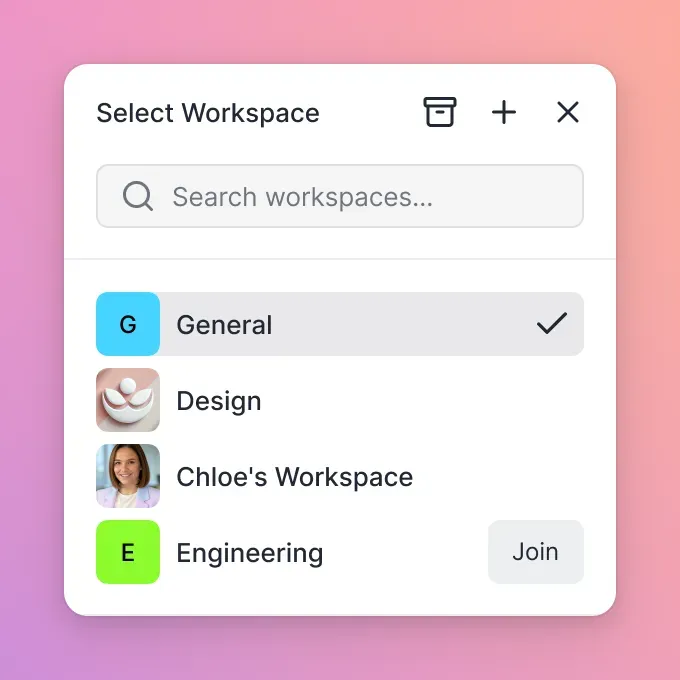
Local disk works for solo setups. S3 or Google Drive handle team storage but require custom integration for agent-friendly access. Fast.io provides workspaces where agents store, organize, and share cover projects through its MCP server. Upload stems, arrangements, and final mixes to a shared workspace. Intelligence Mode auto-indexes files for semantic search once enabled, so your agent can retrieve "the funk arrangement from Tuesday" by description rather than filename. When a cover is ready for review, create a branded share link and hand the workspace to a collaborator. Fast.io offers a 14-day Business Trial, card required; see /pricing/.
Sources
References used to verify factual claims in this guide.
-
Suno v5.5 added voice cloning in March 2026, paywalled at $10 per month
-
ACE-Step 1.5 supports cover generation and audio repainting with known transition artifacts
-
Verbatik achieves up to 99.1% voice similarity from 10-second audio samples
Frequently Asked Questions
Can OpenClaw create AI song covers?
Yes. ACE Music is the only OpenClaw skill with a dedicated cover generation mode, using the ACE-Step 1.5 model. It accepts a reference and generates a new version in a different style. For voice-swapped covers, combine a music generation skill like Evolink Music with a voice cloning skill like ClawVox or Verbatik.
What OpenClaw skill is best for vocal remixes?
ClawVox provides professional-grade voice cloning through ElevenLabs, with noise isolation for extracting vocals from reference tracks. Verbatik offers more flexibility with pitch shifting, speed control, and 2,700+ pre-trained voices at lower per-character cost. Start with Verbatik for prototyping and move to ClawVox when voice quality becomes the priority.
How do I make an AI cover version of a song with OpenClaw?
Install ACE Music from ClawHub and get a free API key from acemusic.ai. Tell your agent to generate a cover with specific style changes like a different genre, tempo, or vocal language. For more control, use a multi-skill workflow: generate the arrangement with Evolink Music, clone the target voice with ClawVox or Verbatik, and refine specific sections with ACE Music's repaint mode.
Is ACE Music free for cover generation?
Yes. ACE Music uses a free hosted API with no documented usage limits. You need a free account at acemusic.ai for an API key, but there are no generation fees. Both VirusTotal and OpenClaw's moderation system flag this skill as suspicious, so audit its network behavior before using it alongside sensitive data.
Can OpenClaw generate covers in different languages?
ACE Music supports vocals in English, Chinese, Japanese, and Korean. Verbatik provides voice cloning and synthesis across 50+ languages. For multilingual covers, generate the instrumental with any music skill, then use Verbatik to create vocals in your target language with a cloned voice profile.
Where should I store generated cover files?
Third-party skills like Evolink Music use temporary hosting where URLs expire within 24 to 72 hours. For persistent storage, upload files to Fast.io through its MCP server. Fast.io offers a 14-day Business Trial (card required; see /pricing/), and Intelligence Mode indexes files for semantic search once enabled so your agent can find tracks by description rather than filename.
Related Resources

Store and share your AI cover productions in one workspace
Upload stems, arrangements, and final mixes through the MCP server. Share with collaborators when the cover is ready.