Top OpenClaw Skills for Music Production
OpenClaw skills let music producers automate routine tasks: organizing stems, searching sample libraries, scheduling sessions, and routing collaboration messages. Rather than switching between a DAW, a file manager, and email, you handle those tasks through natural language from a single agent session. This guide covers the most useful OpenClaw skills for music production workflows. Each entry includes setup instructions, practical use cases, and honest limitations.

How We Evaluated These OpenClaw Skills
We tested each skill on real music project scenarios: organizing a 40-stem session, sourcing royalty-free samples, and routing collaboration messages between producers. Evaluation criteria included install complexity, audio workflow fit, RAG capability on audio file libraries, and quality of ClawHub documentation.
We favored skills with active maintenance, MCP-compatible tool calls, and documented support for large file handling. Skills that required complex OAuth or third-party service accounts were noted clearly.
Helpful references: Fastio Workspaces, Fastio Collaboration, and Fastio AI.
Related guides
- How to Use Claude Code Skills in ClineAccording to GitHub's Octoverse 2024 report, the number of developers building with generative AI on the platform...
- How to Install and Manage Cline Agent SkillsAI coding agents boost code volume by 180%, but shipped code rises by only 30%, showing a critical gap in development...
- Top OpenClaw Skills for Video ProductionOpenClaw skills automate video production tasks like editing, asset management, and reviews with MCP tools. Video teams...
- Best OpenClaw Skills for AI Beat Making and Rap ProductionNearly a third of musicians already use AI song generators in their production workflow, but most guides cover...
- Best OpenClaw Skills for Web ResearchWeb research skills let OpenClaw agents find and read information on the live web. Without them, your AI is stuck with...
- Top 7 OpenClaw Skills for Growth HackersThese top OpenClaw skills help growth hackers automate experimentation and analytics. They scale campaigns faster. Real...
More on this subject: OpenClaw Skills (109 guides)
Comparing Top OpenClaw Skills for Music Production
Use this table to compare top skills at a glance.



Store Stems and Samples for Your OpenClaw Agent
Connect OpenClaw agents to Fastio workspaces via remote MCP for audio stem storage, media streaming, and sample management.
1. Fastio Storage and Workspaces
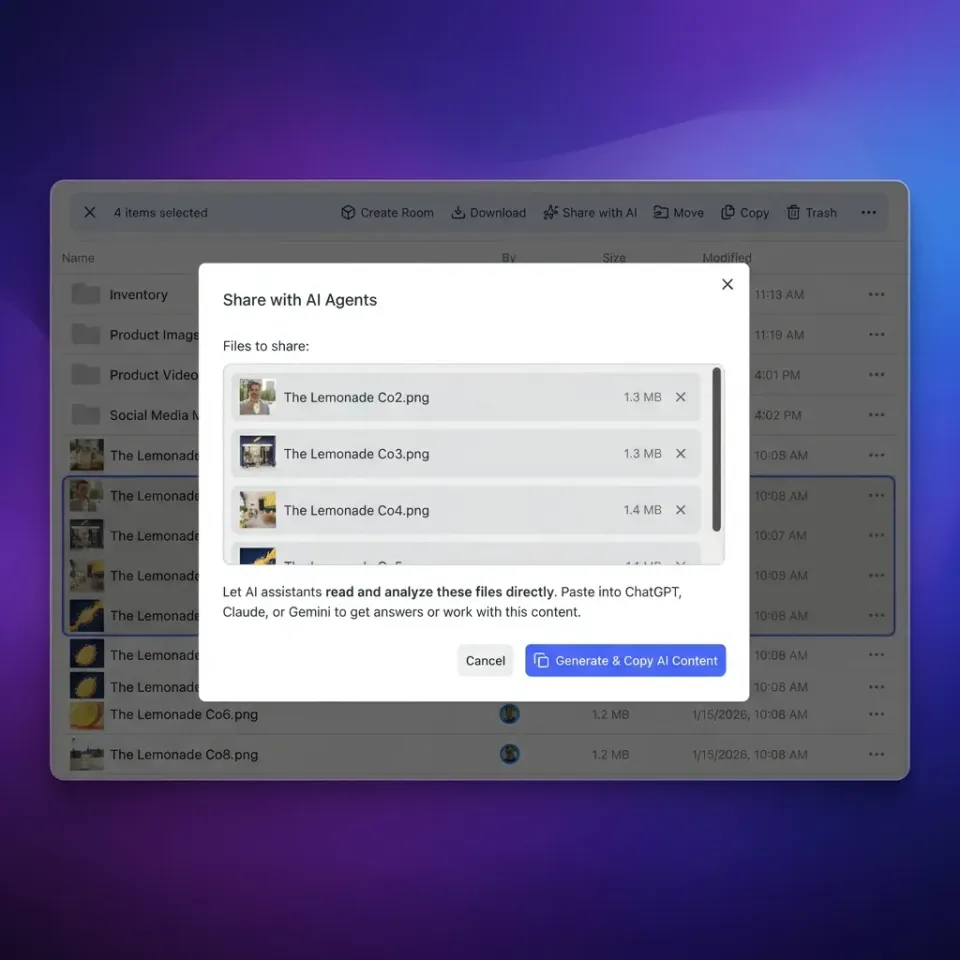
Fastio gives OpenClaw agents persistent storage for music production. Agents pull samples, stems, and projects using a consolidated MCP toolset.
Key strengths:
- generous storage
- Built-in RAG indexes audio files for semantic search
- Ownership transfer lets agents hand off completed projects to humans
- File sharing with passwords and expiration for client deliveries
Limitations:
- high performance media engine for streaming and previewing audio
- Requires Intelligence Mode for RAG
A practical starting point for producers with large sample libraries who want to work with agents. Fastio offers a 14-day Business Trial requiring a credit card.
Best For: Producers needing persistent storage and multi-agent collaboration.
MCP Endpoint: https://mcp.fast.io/mcp/tools
Documentation: Fast.io for Agents
2. Agent Browser
Agent Browser is a fast Rust-based headless browser CLI that lets OpenClaw agents navigate pages, interact with elements, and capture screenshots. Music producers use it to research sample packs, check licensing terms, or pull reference tracks from streaming platforms.
Key strengths:
- Snapshot interactive page elements with structured reference tags
- Screenshot and PDF export for visual references
- Cookie and storage management for authenticated sessions
Limitations:
- Requires Node.js runtime
- Primarily a research tool; pair with Fastio for storage
Best For: Researching sample licenses, royalty-free sources, and reference tracks.
Install Command: npm install -g agent-browser && agent-browser install
ClawHub Page: clawhub.ai/TheSethRose/agent-browser
3. Brave Search
Brave Search gives OpenClaw agents lightweight web search and page content extraction without launching a full browser. Music producers can search for sample packs, plugin documentation, or royalty-free music databases quickly.
Key strengths:
- Fast headless searches without browser overhead
- Returns title, link, snippet, and full page content in markdown
- Simple CLI interface for two core actions: search and extract
Limitations:
- Requires a Brave API key
- Up to 10 results per query
Best For: Quick sample sourcing and plugin research.
Install Command: npm ci (from skill directory)
ClawHub Page: clawhub.ai/steipete/brave-search
4. Gog (Google Workspace)
Gog is a Google Workspace CLI skill that gives OpenClaw agents access to Gmail, Calendar, Drive, Sheets, and Docs. Music studios running on Google Workspace can automate session scheduling, share project files from Drive, and track budgets in Sheets.
Key strengths:
- Unified CLI for Gmail, Drive, Calendar, Sheets, and Docs
- JSON output for scriptable studio workflows
- Update and append operations for Sheets-based tracking
Limitations:
- Requires OAuth setup via
gog auth credentials - macOS/Homebrew install path
Best For: Studios using Google Workspace for scheduling and project management.
Install Command: brew install steipete/tap/gogcli
ClawHub Page: clawhub.ai/steipete/gog
5. AgentMail
AgentMail is an email platform built specifically for AI agents. Music producers and labels can give agents their own email identities for handling collaboration requests, sending stems for review, and managing sync licensing inquiries.
Key strengths:
- Create and manage email addresses through code
- Webhooks trigger actions on incoming messages
- Semantic search and automatic labeling of threads
Limitations:
- Implement allowlist filters to guard against prompt injection
Best For: Automating label communication, sync licensing follow-ups, and collaboration.
Install Command: pip install agentmail python-dotenv
ClawHub Page: clawhub.ai/adboio/agentmail
6. Filesystem Management
This skill gives OpenClaw agents advanced local filesystem operations: smart listing, pattern-based search, and batch file processing. Useful for wrangling DAW project folders, organizing sample libraries, or batch-exporting stems.
Key strengths:
- Filter files by type, pattern, size, and date
- Full-text content search with contextual line display
- Batch copy with dry-run preview before execution
Limitations:
- Local filesystem only; pair with Fastio for cloud backup
- Requires Node.js
Best For: Managing local DAW project directories and organizing sample libraries.
Install Command: clawhub install filesystem
ClawHub Page: clawhub.ai/gtrusler/clawdbot-filesystem
7. S3 Storage Best Practices
The S3 skill is an instruction guide for working with S3-compatible object storage. If you're archiving masters, multitracks, or sample libraries to AWS S3, Cloudflare R2, or Backblaze B2, the lifecycle policy and versioning patterns are the sections worth reading first.
Key strengths:
- Best practices for access control and lifecycle rules
- Presigned URLs for secure file sharing with collaborators
- Compatible with AWS S3, Cloudflare R2, Backblaze B2, and MinIO
Limitations:
- Instruction-only skill; requires existing S3 credentials
- No automated tooling included
Best For: Archiving masters and multitracks to cloud object storage.
ClawHub Page: clawhub.ai/ivangdavila/s3
8. Slack
The Slack skill lets OpenClaw agents send messages, react, pin items, and read channels. Music studios using Slack for internal communication can automate session reminders, notify engineers when stems are ready, or route feedback from collaborators.
Key strengths:
- Send, edit, delete, and read Slack messages
- React to messages and pin important items
- Retrieve workspace member details
Limitations:
- Requires a pre-configured bot token
- Instruction-only skill; no code execution
Best For: Studio teams using Slack for production coordination.
ClawHub Page: clawhub.ai/steipete/slack
Frequently Asked Questions
Can OpenClaw agents help with music sample research?
Yes, Agent Browser and Brave Search let OpenClaw agents search licensing databases and sample marketplaces. Pair with Fastio to store found samples persistently.
What are MCP music stems?
MCP music stems refer to audio stems accessed via Model Context Protocol tools. Agents retrieve, process, and collaborate on individual stems like drums or vocals using skills like Fastio for storage.
What's the best OpenClaw skill for beginners in music production?
Start with Fastio Storage. It offers persistent cloud workspaces, RAG for samples once Intelligence is enabled, and remote MCP integration to build your agentic workflow.
Do OpenClaw skills support remote collaboration?
Yes. Fastio handles file sharing and ownership transfer, AgentMail manages communications, and Slack routes notifications for distributed teams.
How do RAG skills help in music production?
Once Intelligence is enabled on the workspace, Fastio's built-in RAG lets agents search samples and project files by meaning, like finding a specific drum sound by description. This speeds up sound design without manual browsing.
Related Resources

Store Stems and Samples for Your OpenClaw Agent
Connect OpenClaw agents to Fastio workspaces via remote MCP for audio stem storage, media streaming, and sample management.