Top OpenClaw Integrations for Enterprise AI Assistants
OpenClaw shipped without enterprise security controls, and researchers found over 30,000 instances exposed to the public internet within weeks of launch. This guide covers seven integration categories that harden OpenClaw for organizational deployment, from NVIDIA NemoClaw's kernel-level sandbox to Cisco DefenseClaw's open-source skill scanner, plus how to wire persistent storage and audit trails into the stack.


Why OpenClaw Needs Enterprise Hardening
OpenClaw is an open-source AI agent framework created by Peter Steinberger that can execute shell commands, browse the web, send emails, and take actions across messaging platforms like Slack, Teams, WhatsApp, and Telegram. It crossed 346,000 GitHub stars by early 2026 and became one of the fastest-adopted open-source projects in AI history.
The problem: OpenClaw ships with no built-in SSO, no role-based access control, no audit logging beyond session history, and no defined SLA. Its HTTP interface listens on all network interfaces by default rather than localhost. BitSight researchers found over 30,000 distinct OpenClaw instances exposed to the public internet between January 27 and February 8, 2026, with attackers discovering them within minutes and attempting authentication bypasses and raw command execution.
The ClawHavoc supply chain attack made things worse. Researchers traced 1,184 malicious skills on ClawHub to a coordinated campaign, with 335 tied to a single threat actor. The payloads included Atomic macOS Stealer (AMOS), which harvests keychain passwords, browser credentials, SSH keys, and crypto wallet files. Microsoft published dedicated guidance recommending that organizations treat OpenClaw as "untrusted code execution with persistent credentials" and deploy it only on dedicated virtual machines with non-privileged accounts.
These seven integration categories address the gap between what OpenClaw ships with and what enterprises actually need.
Related guides
- Top Integrations for Microsoft Copilot StudioMicrosoft Copilot Studio lets businesses build custom AI agents, but its real power comes from connecting to external...
- Cline Enterprise: Governance, SSO, and ControlCline Enterprise documents five capability pillars for org-wide agent rollout: security by design, bring-your-own...
- Top 8 OpenClaw Integrations for Creative AgenciesCreative agencies choose OpenClaw integrations to speed up client handoffs and file deliveries. These tools handle...
- Top OpenClaw Integrations for Remote TeamsOpenClaw integrations for remote teams allow autonomous agents to operate directly within shared Slack channels, Notion...
- Top OpenClaw Integrations for Film ProductionTop OpenClaw integrations for film production handle dailies workflows and VFX pipelines with MCP tools. Remote teams...
- 5 Best OpenClaw Integrations for Motion DesignersMotion designers often lose hours to file management and render setups instead of actually animating. OpenClaw...
More on this subject: OpenClaw Workflows and Integrations (69 guides)
1. Security Gateways: NVIDIA NemoClaw
NVIDIA announced NemoClaw at GTC 2026 on March 16, positioning it as the enterprise security wrapper for OpenClaw. NemoClaw is an open-source stack that installs on top of OpenClaw and adds three controls enterprises care about most.
Kernel-level sandbox (OpenShell). Agents start with zero permissions. Every filesystem path, network endpoint, and system call requires explicit policy approval. This is structural enforcement, not behavioral. The sandbox runs outside the agent's own process, so even a compromised agent cannot bypass its restrictions.
Out-of-process policy engine. NemoClaw evaluates blocked connection attempts in a terminal UI that shows the destination host, port, and initiating binary. Administrators approve requests for the current session or add them as permanent policy presets. Administrators can add permanent policy presets to expand endpoint access without restarting the sandbox.
Privacy router. Sensitive queries stay on local Nemotron models while complex reasoning tasks route to cloud LLMs. All inference can run locally with no external service dependencies at runtime, which matters for organizations handling regulated data.
NemoClaw is still in alpha. NVIDIA explicitly warns against production use at this stage, but the architecture shows the direction enterprise OpenClaw security is heading: deny-by-default permissions, external policy enforcement, and local-first inference.
2. Enterprise AI Gateways: Airia
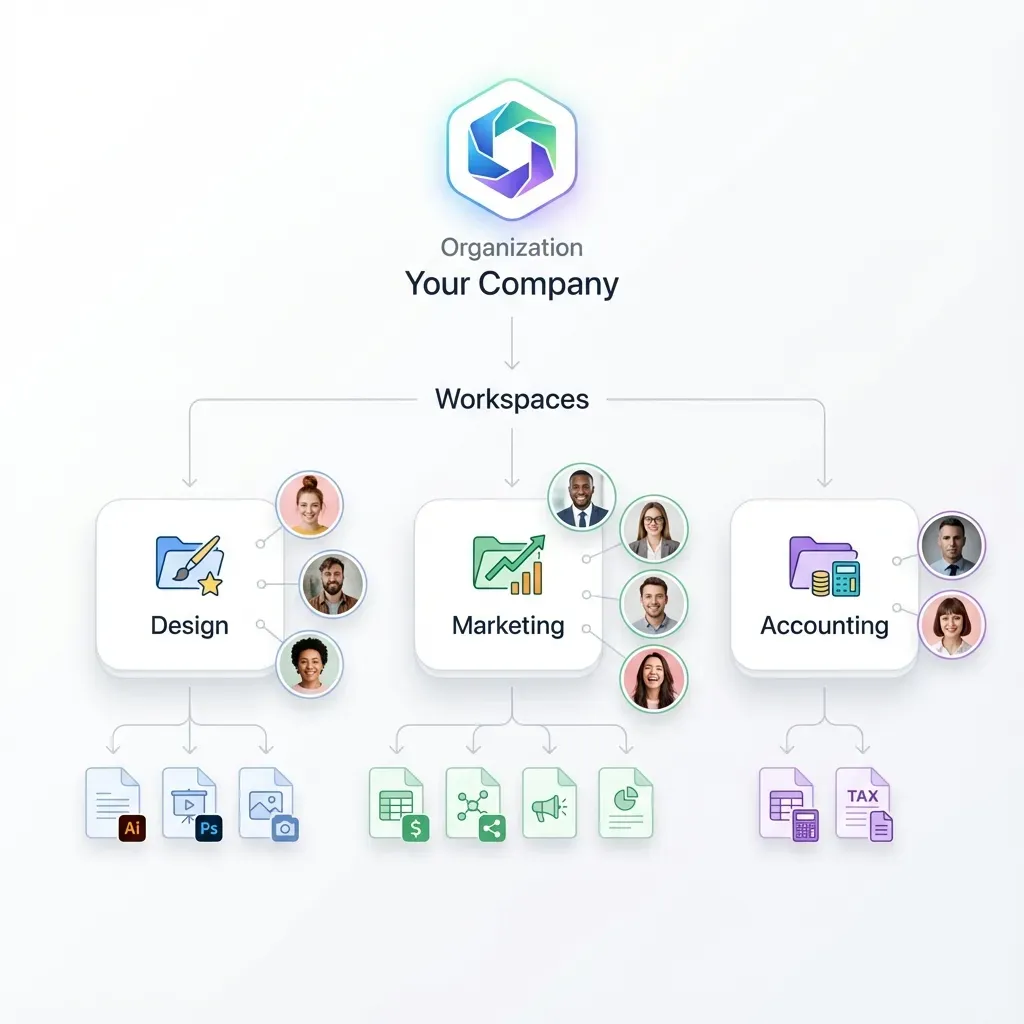
Airia announced enterprise-grade security enablement for OpenClaw deployments on March 20, 2026, taking a different approach than NemoClaw. Where NemoClaw wraps OpenClaw at the operating system level, Airia operates as an AI gateway that sits between OpenClaw and the rest of the organization.
The platform adds four layers on top of OpenClaw.
Data Loss Prevention (DLP). Real-time auditing catches health information, PII, and sensitive data flowing through OpenClaw interactions before it leaves the perimeter.
Observability. Full visibility into OpenClaw interactions, token costs, and usage patterns across the organization. IT teams get a centralized dashboard rather than per-instance session logs.
Agent constraints. Configurable guardrails that limit OpenClaw's operational scope and control what actions the agent can take.
Routing engine. Protections against AI agent failures and unexpected behaviors, preventing unsafe agent actions from reaching external services.
Airia reported that a healthcare organization deployed OpenClaw through their AI Gateway while maintaining strict security requirements. For regulated industries where DLP and centralized monitoring matter more than kernel-level sandboxing, the gateway approach may be a better fit.


Give Your OpenClaw Agent Persistent Storage and Audit Trails
Fastio provides persistent agent workspaces with auto-indexed files, remote MCP server access, and ownership transfer from agent to human.
3. Open-Source Security Scanning: Cisco DefenseClaw
Cisco introduced DefenseClaw at RSAC 2026, packaging four open-source security tools into a single framework that runs inside NVIDIA's OpenShell runtime.
Skills Scanner. Analyzes ClawHub skills for malicious behavior before installation. Given that 1,184 malicious skills were found on ClawHub during the ClawHavoc campaign, pre-installation scanning is a baseline requirement for any enterprise deployment.
MCP Scanner. Verifies Model Context Protocol servers that OpenClaw connects to, checking for misconfiguration and known vulnerabilities.
AI Bill of Materials (AI BoM). Inventories all AI assets, models, and dependencies in your OpenClaw deployment, giving security teams the visibility they need for compliance audits.
CodeGuard. Static analysis layer that examines skill code for suspicious patterns like reverse shell backdoors and credential exfiltration, both of which appeared in the ClawHavoc payloads.
DefenseClaw includes a SQLite audit store and JSONL observability output. The architecture routes agent runtime through a DefenseClaw gateway that applies policy and scanner checks before forwarding requests. Telemetry exports to OTLP, Splunk, or webhooks for integration with existing SIEM infrastructure.
The entire framework is open-source, which means security teams can audit the scanning logic and extend it for their own rulesets.

4. Endpoint Detection: CrowdStrike Falcon
CrowdStrike took a discovery-first approach to OpenClaw security. All CrowdStrike endpoint customers get visibility into OpenClaw running on managed machines through the AI Service Usage Monitor dashboard in Falcon Next-Gen SIEM. The detection works by observing DNS requests to openclaw.ai, revealing which endpoints are running the agent and which third-party models it connects.
Falcon Exposure Management inventories OpenClaw packages across hosts through agent-based inspection. Security teams can identify every OpenClaw installation across managed endpoints from a single console, which is critical when shadow deployments are the norm. VentureBeat reported that OpenClaw reached 500,000 instances with no enterprise kill switch, making discovery the first step toward governance.
For organizations already running CrowdStrike, this integration requires no additional deployment. It uses existing EDR telemetry with read-only access and does not install new agents or transmit additional data externally.
Best for: Organizations that need to find and inventory OpenClaw instances before they can secure them, especially when employees are spinning up agents without IT approval.
How to Add Identity and Access Controls to OpenClaw
OpenClaw's native authentication is thin: token-based auth, simple password protection, and device pairing. There is no built-in SSO, SAML, or OIDC support. Enterprise deployments need external identity wrappers to bridge this gap.
Tailscale integration. OpenClaw's gateway natively accepts Tailscale identity headers when served through Tailscale Serve. This gives you identity-aware access without exposing the gateway to the public internet. For organizations already using Tailscale for zero-trust networking, this is the path of least resistance.
Reverse proxy with identity headers. OpenClaw supports a trusted-proxy authentication mode where an identity-aware reverse proxy forwards user identity via headers. This works with Okta, Azure AD, or any OIDC provider that your proxy supports. Misconfiguring trusted proxy settings allows authentication bypass through forged forwarded headers, so careful setup is important.
RBAC through external tooling. Third-party platforms like Composio offer role-based access with three tiers: Admin (global config and user management), Developer (use OpenClaw and view personal logs), and Auditor (read-only access to all logs). Session isolation modes prevent cross-user context leakage in multi-user setups.
Microsoft's guidance emphasizes using dedicated, non-privileged credentials for every OpenClaw instance, implementing least-privilege access patterns, preferring short-lived tokens over persistent credentials, and enforcing admin consent workflows for sensitive OAuth scopes through Microsoft Entra ID.
Best Practices for Skill and Network Security
OpenClaw's skill ecosystem is its biggest strength and its biggest attack surface. The ClawHavoc campaign proved that skills from the public registry can carry reverse shell backdoors, credential exfiltration, and stealer malware. Enterprise deployments need strict controls on what skills can run and what network access they get.
Containerized deployment. Microsoft recommends deploying OpenClaw in rootless Podman or Docker with a read-only filesystem and all unnecessary capabilities dropped. This contains the blast radius if an agent is compromised through prompt injection. The container should run on a dedicated VM with no access to production data.
Skill allowlisting. OpenClaw's gateway supports allowlist-based DM and group policies. Configure allowlist-based filtering to restrict supplemental context to approved senders only. Pin specific skill versions rather than accepting automatic updates, and review every update before deployment.
Network egress controls. Skills that make outbound HTTP requests should be restricted to known-safe destinations. Configure an SSRF allowlist to prevent agents from making requests to internal network addresses. NemoClaw's OpenShell enforces this at the network namespace level, requiring explicit approval for every outbound connection.
Automated security audits. OpenClaw includes a built-in audit capability that checks for common misconfigurations such as permissive gateway auth, open filesystem permissions, and overly broad group policies. Run security checks as part of your deployment pipeline.
7. Persistent Storage and Audit Trails for Agent Output
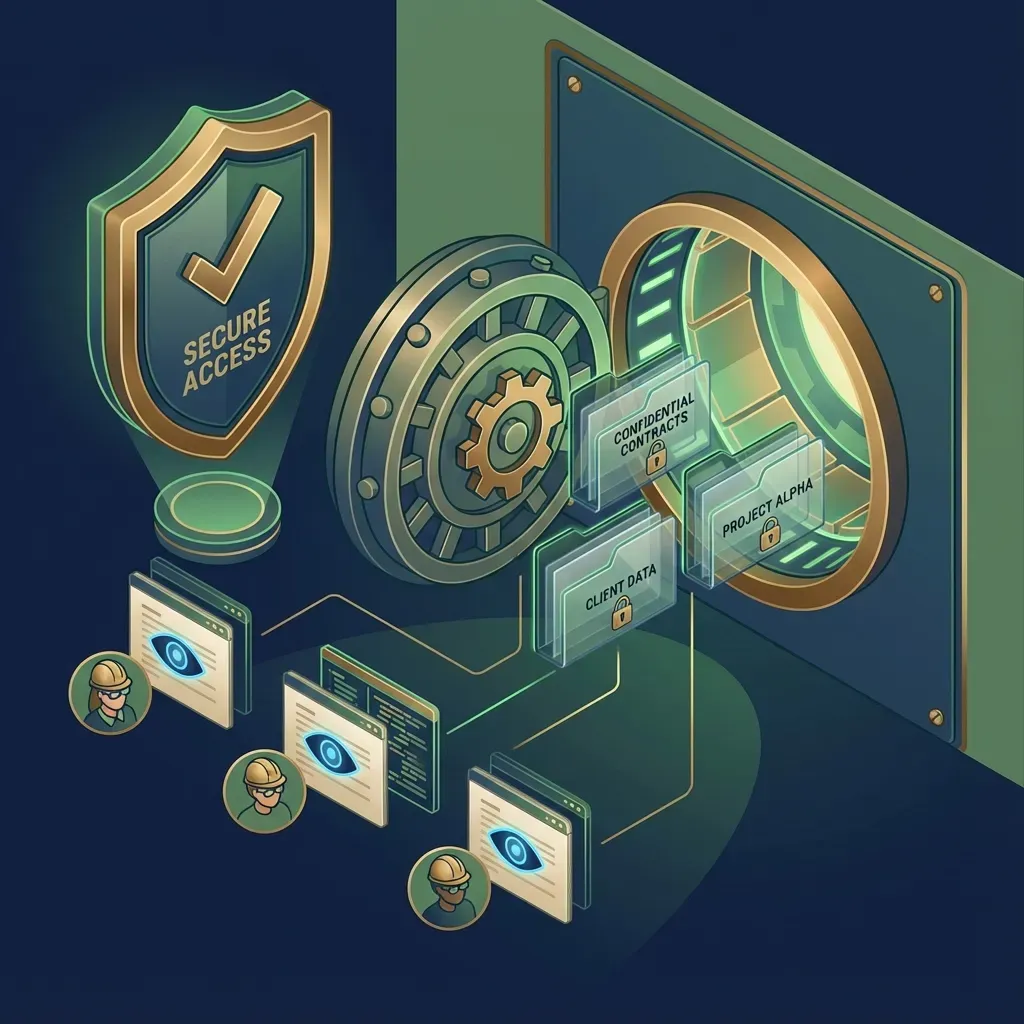
Enterprise AI assistants produce documents, analysis, and decisions that need to survive beyond a single session. OpenClaw stores session data locally in a local directory, but local storage creates problems at scale: no centralized access, no version history for compliance, and no clean handoff path from agent to human.
Fastio addresses this as a persistent workspace layer for agent deployments. When OpenClaw generates reports, extracts data, or produces deliverables, those files need a durable home with access controls, versioning, and audit trails that IT can govern.
What Fastio adds to the stack:
- Shared workspaces where agents write output and humans review it, with granular permissions at the org, workspace, folder, and file level
- Built-in Intelligence Mode that auto-indexes uploaded files for semantic search and RAG chat with citations, no separate vector database required
- MCP server with a consolidated MCP toolset for workspace, storage, and AI operations, accessible via Streamable HTTP at
/mcp - Audit trails and activity summaries that track every file action, giving compliance teams the paper trail OpenClaw's local session logs cannot provide
- Ownership transfer that lets an agent build a workspace and hand it off to a human when the work is done, keeping admin access for the agent
- Advisory file locks and version history for coordinating concurrent access when multiple agents or humans work in the same workspace
The Business Trial is a 14-day trial offering full workspace access and usage-based credits. For enterprise teams evaluating OpenClaw, this provides a non-destructive way to test persistent agent output without committing to infrastructure. Other options in this space include S3 with custom access policies, Google Drive with service accounts, or self-hosted Nextcloud, though none of these include the built-in intelligence layer or MCP tooling.
Metadata Views add structured extraction on top of the storage layer. If OpenClaw agents produce contracts, invoices, or reports, Metadata Views can automatically extract fields like dates, amounts, and counterparties into a sortable, filterable spreadsheet without writing OCR rules.
Sources
References used to verify factual claims in this guide.
-
Over 30,000 distinct OpenClaw instances were exposed to the public internet between January 27 and February 8, 2026
-
1,184 malicious skills were found on ClawHub, with 335 traced to a single coordinated campaign (ClawHavoc)
-
NVIDIA announced NemoClaw at GTC 2026 on March 16 as an open-source security stack for OpenClaw
-
Airia announced enterprise-grade security enablement for OpenClaw deployments on March 20, 2026
-
Cisco introduced DefenseClaw at RSAC 2026, packaging Skills Scanner, MCP Scanner, AI BoM, and CodeGuard
-
Microsoft recommends treating OpenClaw as untrusted code execution with persistent credentials
Frequently Asked Questions
Is OpenClaw safe for enterprise use?
Not out of the box. OpenClaw ships without SSO, RBAC, or audit logging, and its HTTP interface binds to all network interfaces by default. BitSight found over 30,000 exposed instances in early 2026, and the ClawHavoc attack compromised 1,184 skills on ClawHub. Enterprise use requires layering security integrations like NemoClaw, Airia, or DefenseClaw on top of the base agent, plus containerized deployment and strict skill allowlisting.
How do I secure OpenClaw for my organization?
Start with isolation: deploy in a rootless container on a dedicated VM with no production data access. Add identity controls through Tailscale or a reverse proxy with SSO. Restrict skill installation to audited, pinned versions. Use Cisco DefenseClaw to scan skills before deployment and CrowdStrike Falcon to discover shadow instances. For regulated industries, add Airia's gateway for DLP and centralized monitoring.
What enterprise security integrations work with OpenClaw?
The main categories are security sandboxes (NVIDIA NemoClaw), AI gateways (Airia), open-source scanning (Cisco DefenseClaw), endpoint detection (CrowdStrike Falcon), identity wrappers (Tailscale, reverse proxy SSO), and persistent storage with audit trails (Fastio, S3, Nextcloud). Most enterprises combine at least three of these to cover isolation, identity, monitoring, and compliance requirements.
What is NVIDIA NemoClaw?
NemoClaw is NVIDIA's open-source security stack for OpenClaw, announced at GTC 2026. It adds a kernel-level sandbox (OpenShell) with deny-by-default permissions, an out-of-process policy engine for runtime access control, and a privacy router that keeps sensitive queries on local Nemotron models. It is currently in alpha and not recommended for production use.
What was the ClawHavoc supply chain attack?
ClawHavoc was a coordinated attack that planted 1,184 malicious skills on OpenClaw's ClawHub marketplace. Researchers traced 335 of those to a single threat actor. The malicious skills delivered Atomic macOS Stealer (AMOS), which harvests keychain passwords, browser credentials, SSH keys, and crypto wallet files. The attack targeted users running OpenClaw on always-on machines like Mac minis.
Related Resources

Give Your OpenClaw Agent Persistent Storage and Audit Trails
Fastio provides persistent agent workspaces with auto-indexed files, remote MCP server access, and ownership transfer from agent to human.