Top OpenClaw Integrations for Remote Teams
OpenClaw integrations for remote teams allow autonomous agents to operate directly within shared Slack channels, Notion workspaces, and GitHub repos. By connecting your agents to the tools your team already uses, you can improve workflows and reduce manual data transfer between platforms.


Why Remote Teams Need Agentic Integrations
Remote teams use an average of 10 different SaaS tools to manage their daily work, according to industry surveys from Medium. Moving information between these platforms causes friction. When a developer finishes a pull request, they have to manually notify the team in Slack, update a Notion document, and perhaps link a file from a storage drive. This constant platform-hopping drains focus and slows down projects.
Agentic AI changes this dynamic. Instead of humans bridging the gaps between software silos, autonomous agents can handle these platforms for you. By using the Model Context Protocol (MCP) and ClawHub skills, OpenClaw can connect to your entire tech stack. According to Forrester, agentic integrations reduce context switching by 25%, allowing engineers and knowledge workers to stay in deep work for longer periods.
When your AI assistant can directly read project documentation and summarize chat history, the barrier between doing work and managing work disappears. Agents can even deploy generated code straight to your repository. In a remote setting where asynchronous communication is standard, having an agent act on behalf of team members across different time zones is a major benefit.
Related guides
- Top Integrations for Microsoft Copilot StudioMicrosoft Copilot Studio lets businesses build custom AI agents, but its real power comes from connecting to external...
- Claude Code Teams: Multi-Agent Orchestration GuideClaude Code agent teams split complex coding tasks across multiple independent AI sessions. Each teammate gets its own...
- Top 8 OpenClaw Integrations for Creative AgenciesCreative agencies choose OpenClaw integrations to speed up client handoffs and file deliveries. These tools handle...
- Top OpenClaw Integrations for Enterprise AI AssistantsOpenClaw shipped without enterprise security controls, and researchers found over 30,000 instances exposed to the...
- Top OpenClaw Integrations for Film ProductionTop OpenClaw integrations for film production handle dailies workflows and VFX pipelines with MCP tools. Remote teams...
- How to Automate Finance Reporting with OpenClaw IntegrationsManual financial reporting is slow and error-prone. OpenClaw integrations for finance simplify reporting and...
More on this subject: OpenClaw Workflows and Integrations (69 guides)
How We Evaluated the Top OpenClaw Integrations
Choosing the right integrations for your remote team requires looking beyond simple API connections. We evaluated the top OpenClaw tools based on criteria that matter for distributed teams relying on autonomous agents.
First, we looked at multi-agent support and file locks. When multiple agents operate in a shared environment, they need coordination mechanisms like advisory file locks and automatic version history to prevent data conflicts. An integration must handle concurrent access well. Second, we reviewed security and authentication. Remote teams need granular permissions and secure OAuth flows instead of just hardcoded API keys.
Finally, we considered the depth of actionability. A basic integration might only read data. A powerful OpenClaw integration allows agents to execute complex, multi-step actions. The tools on this list turn OpenClaw from a passive observer into an active participant in your team's workflow.

Fastio: The Intelligent Workspace for Agents
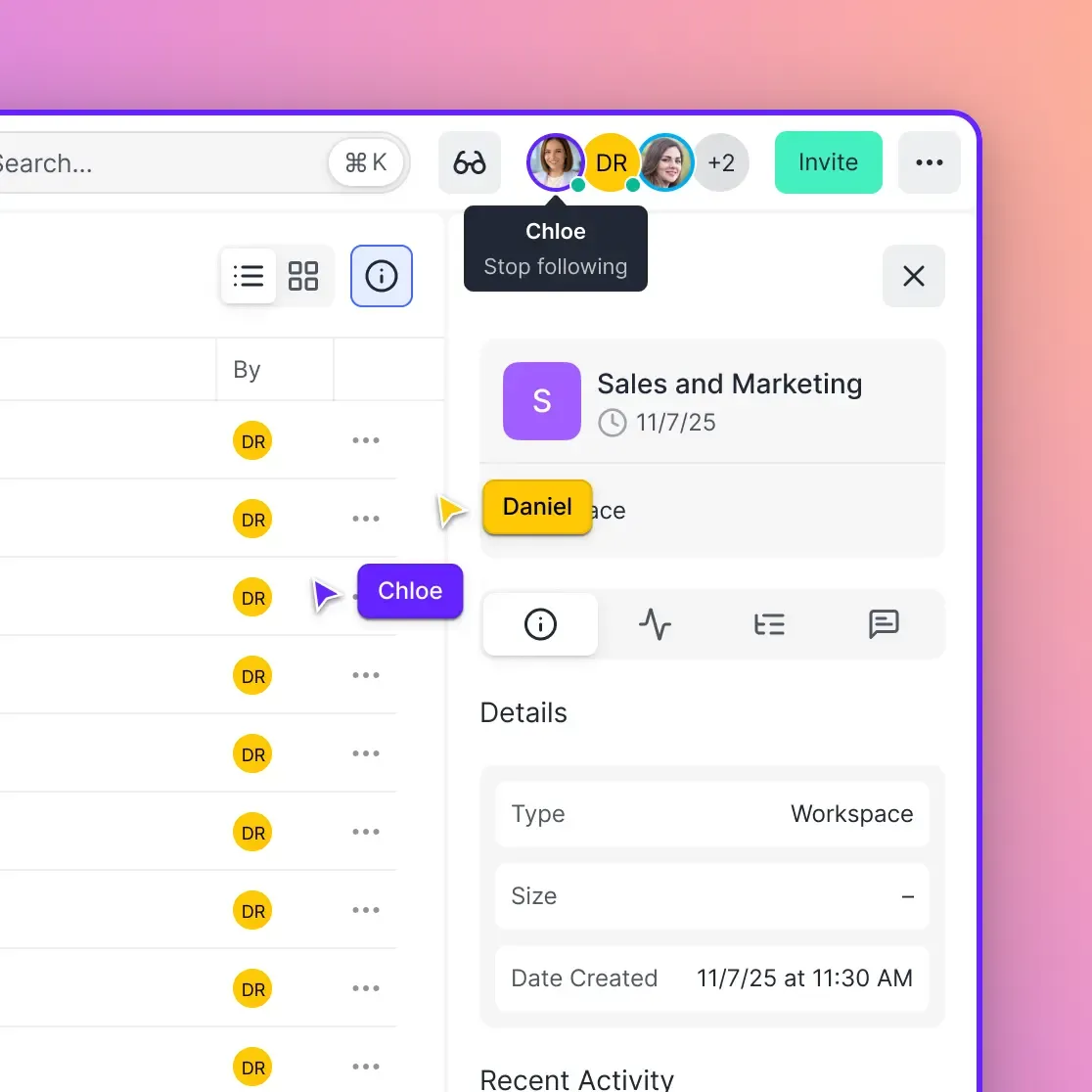
Fastio provides intelligent workspaces where agents and humans work side by side. Rather than treating AI as an isolated tool, Fastio allows agents to join your organization's workspaces just like any human team member. With a 14-day Business Trial offering usage-based credits, it is a great environment for multi-agent workflows.
Connecting to the integration is simple: configure the remote MCP endpoint at https://mcp.fast.io/mcp/tools to access a consolidated MCP toolset via Streamable HTTP. Since every file in a Fastio workspace is automatically indexed and searchable by meaning, your OpenClaw agents can find relevant documents and use built-in RAG capabilities.
Documentation: fast.io/storage-for-agents/
Key Strengths:
- Native Intelligence Mode auto-indexes files for semantic search and AI chat.
- Supports ownership transfer, allowing agents to build complete data rooms and hand them off to clients.
- Consolidated MCP toolset covers file management, uploads, shares, and workspace operations.
Key Limitations:
- Intelligence Mode features consume AI tokens.
- Focuses on file and context management rather than direct task execution.
Best For: Teams that need persistent, intelligent storage where agents and humans collaborate on the same files.
Pricing: 14-day Business Trial; Starter from $9.99/mo.


Give Your Agents a Dedicated Workspace
Stop using ephemeral folders. Fastio provides persistent workspaces where agents and humans collaborate. Claim your 14-day Business Trial today.
Slack: Real-Time Agent Communication
Slack remains the main communication hub for most remote teams. The steipete/slack ClawHub skill lets agents send, edit, and delete messages, react with emoji, pin items, and read recent channel history. This brings agent workflows directly into the interface your team already uses.
With the OpenClaw Slack integration, agents can subscribe to channel events and use thread contexts. If an engineer encounters a server error, they can tag an OpenClaw agent in the thread. The agent can read the error logs, propose a fix, and draft a response, all without the engineer leaving Slack.
ClawHub Page: clawhub.ai/steipete/slack
Key Strengths:
- Send, edit, delete, and react to messages programmatically.
- Pin and unpin messages; fetch member info by user ID.
- Approximately 1,000 current installs.
Key Limitations:
- High-volume channels can overwhelm the context window if not filtered.
- Requires a Slack bot token configured in your environment.
Best For: Incident response, daily standups, and quick question-and-answer workflows.
Pricing: Free to integrate; requires a standard Slack workspace plan.
GitHub: Autonomous Code Collaboration
For remote engineering teams, GitHub is the source of truth. The steipete/github ClawHub skill wraps the gh CLI into skill-based operations for issue triage, pull requests, CI runs, and advanced API queries. Developers can request an initial code review pass from an OpenClaw agent that understands the codebase context.
The skill allows agents to fetch specific commits, read issue descriptions, and post inline comments on code diffs. Since OpenClaw can connect to local file systems and external tools, an agent can pull down a repository, run a local testing suite, and push the results back to a GitHub PR comment.
ClawHub Page: clawhub.ai/steipete/github
Key Strengths:
- Covers
gh issue,gh pr,gh run, andgh apifor advanced queries. - Can autonomously draft release notes based on commit histories.
- Integrates easily with CI/CD pipelines via webhooks.
Key Limitations:
- Requires the
ghCLI to be installed and authenticated in your environment. - Agents may struggle with deep architectural logic without adequate context.
Best For: Development teams looking to automate PR reviews and issue triage.
Pricing: Free; requires the gh CLI and a GitHub account.
Notion: Dynamic Knowledge Management
Notion serves as the collaborative wiki for many distributed teams. The Notion ClawHub skill provides the Notion API for creating and managing pages, querying databases, and writing structured content blocks. This turns a static wiki into an active, agent-maintained knowledge base.
When integrated, OpenClaw can extract structured data from transcripts and chat logs. After a recorded Zoom meeting, an agent can process the transcript, extract action items, and insert them directly into a Notion task board, then assign those items based on the discussion context.
ClawHub Page: clawhub.ai/skills/notion
Key Strengths:
- Support for all Notion property types: title, rich text, select, dates, checkboxes, numbers, URLs, relations.
- Can automatically generate and organize onboarding documents.
- Keeps project documentation up to date without manual work.
Key Limitations:
- Requires creating a Notion integration and sharing specific pages/databases with it.
- Rate limit of approximately 3 requests/second applies.
Best For: Project managers and operations teams managing extensive documentation.
Pricing: API access is free with any standard Notion plan.
AgentMail: Email-First Workflows for Distributed Teams
AgentMail is an API-first email platform built specifically for AI agents. It gives agents dedicated inbox addresses so they can send and receive emails programmatically, set up real-time webhook notifications, and handle email-based approval flows without using a shared human inbox.
For remote teams, this is particularly useful for client-facing communication. An agent can monitor a project inbox, categorize incoming requests, draft replies, and queue them for human review - all within an automated pipeline that does not require a team member to stay logged into their email client.
ClawHub Page: clawhub.ai/adboio/agentmail
Key Strengths:
- Dedicated per-agent inbox addresses for clean separation of concerns.
- Real-time webhooks for incoming messages enable event-driven workflows.
- Semantic search and automatic labeling optimized for agent operations.
Key Limitations:
- Requires an AgentMail API key (
AGENTMAIL_API_KEY). - Built for high-volume agent operations; may be more than needed for simple notifications.
Best For: Teams that route client requests, approvals, or notifications through email.
Pricing: See AgentMail pricing at agentmail.to.
Gog: Google Workspace as a Command-Line Tool
The steipete/gog skill provides a Google Workspace CLI for Gmail, Calendar, Drive, Contacts, Sheets, and Docs. Rather than navigating the full Google API directly, agents use simple CLI commands to search email, manage calendar events, query Drive, and perform Sheets operations.
For remote teams with existing Google Workspace data, this is a practical bridge. Agents can extract structured data from spreadsheets, search for relevant documents in Drive, and draft calendar invites without complex OAuth flows in their own code. Fastio's URL Import feature can then pull relevant files out of Drive for deeper agent analysis.
ClawHub Page: clawhub.ai/steipete/gog
Key Strengths:
- Covers Gmail, Calendar, Drive, Contacts, Sheets, and Docs in a single skill.
- JSON output support makes results easy to chain into agent pipelines.
- OAuth setup handled via the
gogcliHomebrew install.
Key Limitations:
- Requires
brew install steipete/tap/gogcliand OAuth authentication setup. - Folder structures in Drive can still be chaotic for agents to navigate without a semantic search layer.
Best For: Teams already on Google Workspace who want agents to read and write data without custom API code.
Pricing: Free; requires Google Workspace or personal Google account.
Picking the Right Integration for Your Team
The right mix of OpenClaw integrations depends on your remote team's specific bottlenecks. If your developers are slowed down by admin tasks, connecting OpenClaw to GitHub (steipete/github) will provide immediate relief. If institutional knowledge is getting lost in chat histories, integrating Slack and Notion is the logical first step.
The foundational layer for any multi-agent system is intelligent storage. Integrating Fastio via remote MCP at https://mcp.fast.io/mcp/tools ensures that all your agents have a shared, persistent workspace where files are indexed and searchable once Intelligence is enabled. By combining a dedicated intelligence workspace with your communication and tracking tools, you create a shared environment where agents and humans can collaborate.
Sources
Frequently Asked Questions
How do teams use OpenClaw integrations?
Teams use OpenClaw integrations to connect autonomous agents with their daily SaaS tools. Agents can autonomously review code in GitHub (steipete/github), manage email workflows with AgentMail, and summarize discussions in Slack (steipete/slack). They also manage intelligent files in Fastio workspaces, reducing manual administrative work.
What are the best collaboration MCP tools?
The best collaboration MCP tools include Fastio for persistent intelligent file storage, Slack for real-time communication, and Notion for active knowledge management. Fastio's official MCP server provides a consolidated MCP toolset for full file access and built-in RAG capabilities.
Do these integrations require custom coding?
Many top OpenClaw integrations require zero configuration. For example, Fastio connects directly via a remote MCP URL (https://mcp.fast.io/mcp/tools). This gives agents natural language access to file management without custom API coding.
Can OpenClaw agents interact with Google Drive?
Yes, OpenClaw can interact with Google Drive. However, since legacy cloud storage can be chaotic for agents, teams often use modern workspaces like Fastio to ingest Google Drive files via URL Import. This provides a cleaner, auto-indexed environment for agent workflows.
Related Resources

Give Your Agents a Dedicated Workspace
Stop using ephemeral folders. Fastio provides persistent workspaces where agents and humans collaborate. Claim your 14-day Business Trial today.