How to Connect OpenClaw with Trello for Task Automation
OpenClaw can create Trello cards, move tasks between lists, add comments, and manage boards through natural language. This guide covers three integration paths, from the Composio toolkit to a bundled MCP skill, and explains how to pair the workflow with persistent file storage so nothing gets lost between agent sessions.

Why Connect OpenClaw to Trello?
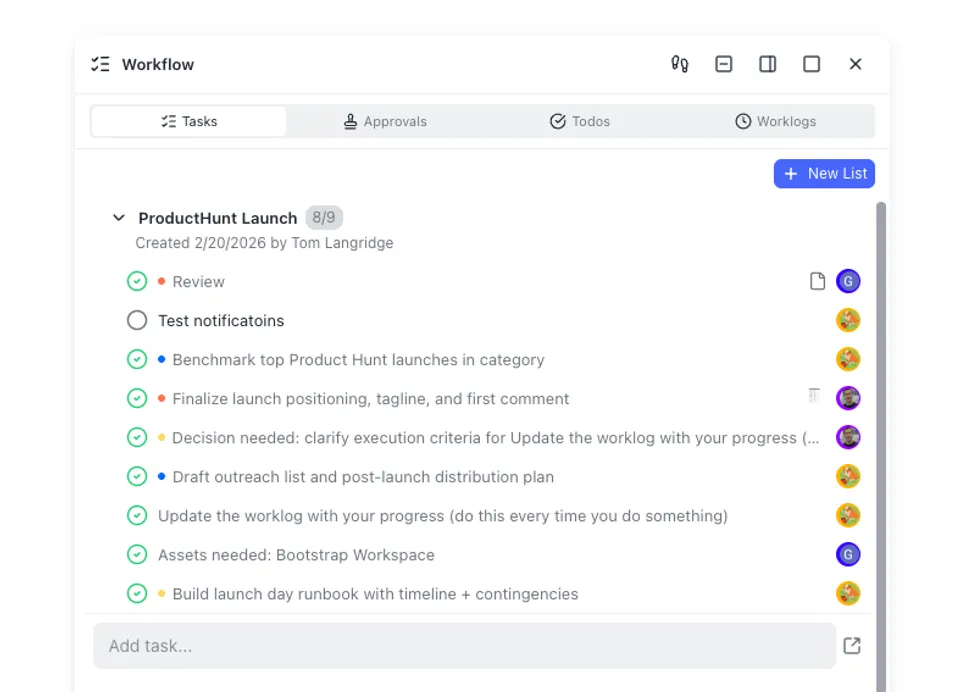
Composio's integration directory lists over 20,000 tool actions across 1,000+ apps, but Trello remains one of the most requested connections for OpenClaw agents. The reason is practical: Trello's board-list-card model maps cleanly onto the kind of task queues that agents already think in. An "Incoming" list becomes an inbox, "In Progress" tracks active work, and "Done" closes the loop.
Without an integration, you're the bottleneck. Every status update, card move, and comment requires you to switch context, open Trello, and do the update manually. With an OpenClaw integration, you describe the change in plain language, and the agent handles the API calls.
Three integration paths exist today, each with different tradeoffs:
- Composio toolkit: Managed authentication, 20,000+ cross-app tools, but requires a Composio account
- Direct Trello API: Full control, no middleware, but you manage tokens yourself
- MCP skill: Self-contained skill folder, runs locally, works offline after setup
The right choice depends on whether you need cross-app orchestration (Composio), raw flexibility (direct API), or a portable, shareable skill (MCP). This guide walks through all three.

Related guides
- How to Connect Hermes Agent to n8n With Webhooksn8n has 400+ integrations but every workflow follows a predetermined path. Hermes Agent adds reasoning to those...
- How to Connect Devin AI to GitHubDevin AI's GitHub integration is a full GitHub App install with nine read scopes and eight read-write scopes, not a...
- How to Connect OpenClaw to Linear for AI-Powered Issue ManagementOpenClaw connects directly to Linear's GraphQL API, giving your AI agent the ability to triage issues, plan cycles, and...
- How to Connect OpenClaw to Monday.com for AI Project ManagementThe OpenClaw Monday.com integration lets AI agents use Monday.com boards as persistent memory and task queues for...
- How to Use OpenClaw with Playwright for Browser AutomationOpenClaw's Playwright integration turns AI agents into browser operators that can navigate pages, fill forms, extract...
- How to Integrate OpenClaw with HubSpot for CRM AutomationOpenClaw can connect to HubSpot's CRM through two paths: Composio's managed MCP server with automatic OAuth, or a...
More on this subject: OpenClaw Setup and Guides (199 guides)
What Credentials Does the Trello API Require?
All three methods need the same starting credentials from Trello. The process takes about two minutes.
Go to trello.com/power-ups/admin. If you don't have a Power-Up yet, click "New" in the top right corner and give it a name like "OpenClaw Agent." Once the Power-Up exists, open it and navigate to the API Key tab.
Click "Generate a new API Key." Copy the key. On the same page, click the "Token" link next to your API key. Trello will ask you to authorize the application. Click "Allow" and copy the token that appears.
You now have two values:
TRELLO_API_KEY: Your app's public identifierTRELLO_TOKEN: Your personal authorization token (keep this private)
The API key alone doesn't grant access to your data. The token does. Store it in a password manager or your shell's environment file, not in a git repository.
A quick test to confirm both values work:
curl "https://api.trello.com/1/members/me?key=YOUR_KEY&token=YOUR_TOKEN"
If you get a JSON response with your Trello username, you're ready to connect OpenClaw.
Method 1: Composio Toolkit
Composio handles OAuth, token refresh, and scoping so you never touch raw credentials after the initial setup. The Composio OpenClaw integration page walks through the current install steps. Follow their page for the latest instructions, since the setup flow changes as the plugin evolves.
After initial authentication, registered Trello tools appear directly in your OpenClaw session. You can call them by name without additional search or execute steps.
Available Trello actions through Composio include:
- Board operations: create boards, update board attributes, get board details
- Card management: add cards to lists, update card fields, archive cards, add attachments
- Collaboration: add comments, create checklists, apply labels
- Automation: create webhooks for board events
The tradeoff is dependency. Your agent needs network access to Composio's servers, and if Composio is down, your Trello tools disappear. For teams already using Composio for other integrations (Slack, GitHub, Linear), this is the fast path. For a single-purpose Trello connection, it adds unnecessary middleware.
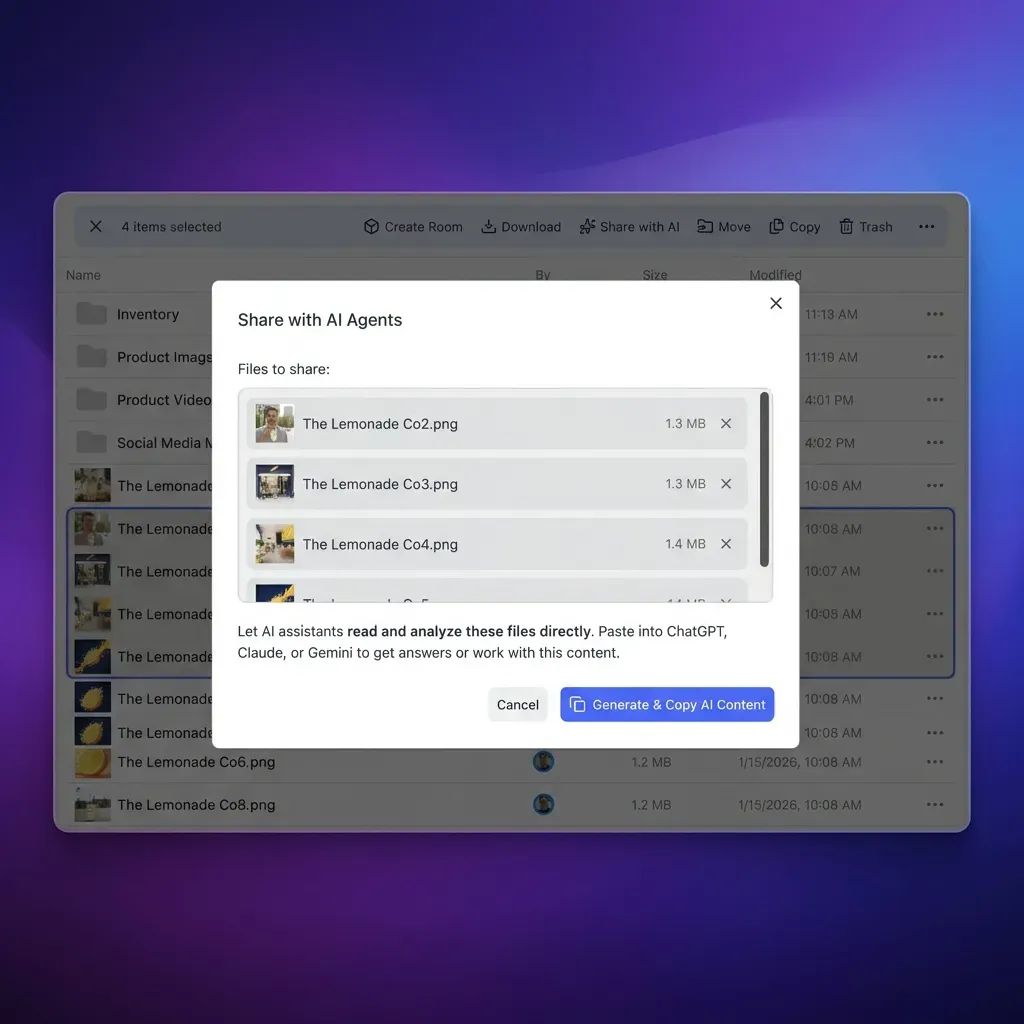


Give your OpenClaw agent persistent file storage
Shared workspace where your agent writes output and your team picks it up. Remote MCP endpoint for reads, writes, and semantic search.
Method 2: Direct Trello REST API
If you want full control without middleware, your OpenClaw agent can call Trello's REST API directly. The agent needs access to your API key and token, typically through environment variables. Once the credentials are available, the agent can hit Trello endpoints at the base URL https://api.trello.com/1/.
Common operations:
List your boards:
curl "https://api.trello.com/1/members/me/boards?key=$TRELLO_API_KEY&token=$TRELLO_TOKEN"
Create a card on a specific list:
curl -X POST "https://api.trello.com/1/cards" \
  -d "idList=LIST_ID&name=New Task&key=$TRELLO_API_KEY&token=$TRELLO_TOKEN"
Move a card to a different list:
curl -X PUT "https://api.trello.com/1/cards/CARD_ID" \
  -d "idList=TARGET_LIST_ID&key=$TRELLO_API_KEY&token=$TRELLO_TOKEN"
The direct approach works well for simple automations: creating cards from incoming requests, updating statuses, or archiving completed work. It breaks down when you need the agent to discover board structure dynamically, since you'll write that discovery logic yourself rather than relying on pre-built tools.
One pattern that works: teach your agent to always call the boards endpoint first, then the lists endpoint for the target board, before creating or moving cards. This prevents hardcoded list IDs from breaking when someone renames or reorders lists.
Method 3: MCP Skill Installation
An MCP skill bundles the Trello server, authentication config, and agent instructions into a single folder. This is the most portable option: you can share the skill with other OpenClaw users, version it in git, and run it without an external service.
The skill folder typically contains a metadata file declaring required environment variables (your Trello API key and token), a package manifest, and the server source. You then register the MCP server in OpenClaw's configuration so it launches automatically when needed. Community-maintained Trello skills on Smithery and LobeHub provide ready-made packages with current install instructions.
Once installed, the skill exposes typed tools for listing boards, creating and updating cards, searching across cards, adding comments, and managing checklists.
Workflow sequencing matters. Always call trello_list_boards first to discover board IDs. Then trello_get_board to learn available lists and labels. Only then create, update, or move cards. Skipping discovery leads to stale IDs and failed requests.
A good practice: include negative guidance in your skill's instructions. Tell the agent to prefer archiving cards over deleting them, and to match user language like "move it to Done" against retrieved list names rather than hardcoded strings.

How to Store Files Your Agent Creates from Trello Tasks
Trello tracks tasks. It doesn't store the files those tasks produce. When your OpenClaw agent finishes a card's work (a report, a code review, a data export), the output needs to live somewhere persistent and shareable.
Local disk works for single-machine setups but breaks when sessions restart or you switch devices. S3 handles durability but requires IAM configuration and doesn't give non-technical teammates a way to browse files. Google Drive and Dropbox work for manual sharing but lack the API surface agents need for programmatic reads and writes.
Fastio fills this gap as a workspace designed for agent-to-human handoff. Your OpenClaw agent writes files to a Fastio workspace, and your team reviews them through a web UI, no CLI access required. Files are indexed and searchable once Intelligence is enabled for the workspace, so teammates can ask questions about agent output without digging through folders.
Pairing Trello cards with Fastio storage:
- Agent creates a Trello card for a new task
- Agent does the work and writes output files to a Fastio workspace
- Agent adds a comment to the Trello card with the Fastio share link
- Human reviews the card, clicks the link, and accesses the deliverable
Fastio's MCP server gives OpenClaw agents direct workspace access through Streamable HTTP at https://mcp.fast.io/mcp/tools. Fastio offers a 14-day Business Trial requiring a credit card (see pricing).
Every file change is logged in an audit trail, which matters for compliance-sensitive teams that need to prove who produced what and when.
Sources
References used to verify factual claims in this guide.
-
Composio provides access to over 20,000 tool actions across 1,000+ apps
-
Trello API key generated at trello.com/power-ups/admin with token authorization
-
MCP skill folder structure uses SKILL.md with YAML frontmatter and Markdown instructions
Frequently Asked Questions
How do I connect OpenClaw to Trello?
Generate an API key and token at trello.com/power-ups/admin, then choose one of three methods. The Composio plugin manages authentication for you. Direct API access uses environment variables with curl commands. An MCP skill bundles the Trello server into a portable folder in your OpenClaw workspace. All three methods let your agent create cards, move tasks, and manage boards through natural language.
Can OpenClaw manage Trello boards automatically?
Yes. Once connected, OpenClaw can create cards, move them between lists, add comments, attach files, create checklists, and apply labels, all through natural language commands. A common pattern uses Trello as a kanban task queue where the agent creates cards in an "Incoming" list, processes them, moves them through "In Progress," and archives completed work.
What is the best way to integrate OpenClaw with project management tools?
For Trello specifically, the MCP skill approach offers the best balance of portability and control. The skill folder lives in your OpenClaw workspace, can be version-controlled, and runs without external service dependencies. For teams that use multiple project management tools alongside Trello, Composio's toolkit provides a single authentication layer across 1,000+ apps. Direct API calls work best for simple, targeted automations that don't need full tool discovery.
Do I need a paid Trello account for the OpenClaw integration?
No. Trello's free plan supports API access, and the API key generation process at trello.com/power-ups/admin works on all account tiers. The free tier includes up to 10 boards and unlimited cards, which is enough for most agent-driven workflows. Trello Premium and Enterprise add features like dashboard views and advanced automation rules, but the core API actions (create, update, move, comment) work identically across plans.
Where should I store files that my OpenClaw agent produces from Trello tasks?
Local disk works for testing but doesn't survive session restarts. For production workflows, use a shared workspace like Fastio, where your agent writes output files and your team accesses them through a web UI. The agent can add a Fastio share link as a comment on the Trello card, connecting the task to its deliverable. Fastio offers a 14-day Business Trial requiring a credit card (see [pricing](/pricing/)).
Related Resources

Give your OpenClaw agent persistent file storage
Shared workspace where your agent writes output and your team picks it up. Remote MCP endpoint for reads, writes, and semantic search.