How to Integrate OpenClaw with HubSpot for CRM Automation
OpenClaw can connect to HubSpot's CRM through two paths: Composio's managed MCP server with automatic OAuth, or a HubSpot Private App token with scoped API permissions. Once connected, your agent reads contacts, updates deals, monitors pipelines, and triggers follow-up workflows without you touching the CRM manually. This guide covers both setup methods, the CRM operations available, practical automation recipes, and how to store agent output in a persistent workspace humans can access.

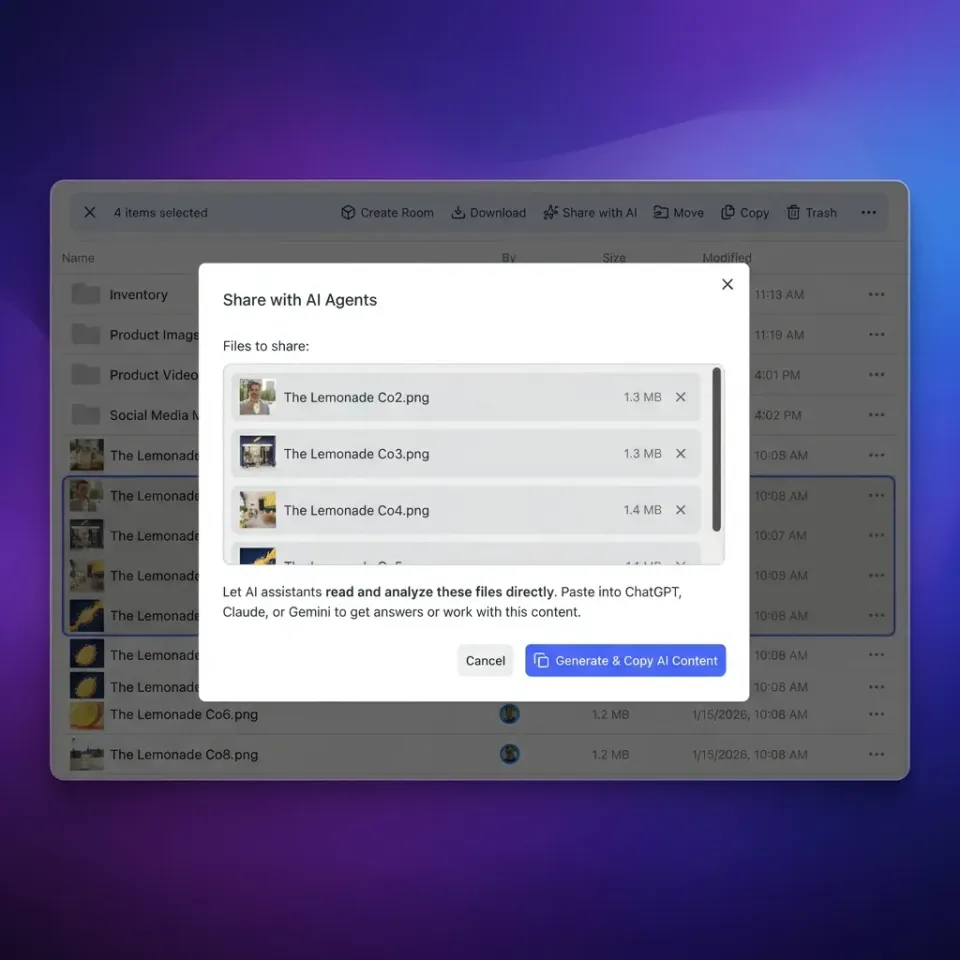
What the OpenClaw HubSpot Integration Does
OpenClaw is an open-source AI agent framework that runs on your local hardware and connects to external services through skills and MCP servers. The HubSpot integration gives your agent direct access to CRM data: contacts, companies, deals, tickets, and custom objects. Your agent can read records, create new ones, update fields, and trigger actions across HubSpot's sales, marketing, and service hubs.
The integration matters because HubSpot's native AI features only work inside HubSpot itself. OpenClaw sits outside the platform and orchestrates across tools. Your agent can pull a contact from HubSpot, research the company using web search, draft a follow-up email, log the activity back to HubSpot, and store the output in a shared workspace. That cross-platform orchestration is what separates an agent framework from a built-in chatbot.
Two connection methods exist. The first uses Composio's managed MCP server, which handles OAuth tokens, scopes, and refresh cycles automatically. The second uses a HubSpot Private App token with granular permission scoping you control directly. Both support the same CRM operations. The choice comes down to whether you want managed authentication or full control over token lifecycle.

Related guides
- How to Integrate Hermes Agent With Slack for Team AI AutomationHermes Agent's messaging gateway connects to Slack through Socket Mode, giving your team access to a self-improving AI...
- How to Integrate an AI Detector API with Hermes AgentThis guide shows how to wire third-party AI detection APIs into Nous Research Hermes Agent through MCP and skills, run...
- How to Build an OpenClaw Dynamics 365 AgentMost Dynamics 365 automation guides stop at Copilot Studio or Power Automate. This one covers a different path,...
- How to Integrate OpenClaw with Shopify for Ecommerce AutomationResearchers found 341 malicious skills in OpenClaw's ClawHub marketplace within weeks of its popularity surge, yet...
- How to Use OpenClaw with Playwright for Browser AutomationOpenClaw's Playwright integration turns AI agents into browser operators that can navigate pages, fill forms, extract...
- How to Connect OpenClaw with Trello for Task AutomationOpenClaw can create Trello cards, move tasks between lists, add comments, and manage boards through natural language....
More on this subject: OpenClaw Setup and Guides (199 guides)
How to Connect OpenClaw to HubSpot Through Composio
Composio provides a managed MCP server that brokers the connection between OpenClaw and HubSpot. This is the faster setup path because Composio handles OAuth, token refresh, and scope management on your behalf. You authenticate once through a browser-based flow, and Composio keeps the connection alive without you managing tokens manually.
Two setup paths are available. The dashboard method works entirely through Composio's web interface: you sign up, find the HubSpot toolkit, copy a setup prompt, and paste it into your OpenClaw chat. Composio walks you through the OAuth authorization in your browser, and your agent gets immediate access to HubSpot tools. No CLI interaction needed. The second path uses Composio's CLI plugin, which you install into OpenClaw and configure with your Composio account credentials. This gives you the same managed authentication but lets you automate the setup across multiple machines or team members.
Both paths register all available HubSpot tools in your OpenClaw environment automatically. Once connected, your agent calls CRM operations by name without separate search or execute steps. If the OAuth token expires, Composio handles the refresh cycle or prompts you to re-authenticate through the dashboard. Check Composio's OpenClaw integration page for current setup instructions, since the exact steps may change as both platforms evolve.


Give your CRM agent a workspace humans can actually use
Store pipeline reports, enrichment data, and meeting summaries where your team can search, review, and ask questions. generous storage, MCP-ready endpoint for OpenClaw.
Setting Up with a HubSpot Private App Token
If you want direct control over authentication without a third-party broker, create a HubSpot Private App and connect OpenClaw using the API token. This approach gives you explicit control over which HubSpot scopes your agent can access.
Create the Private App in HubSpot:
- Go to Settings, then Integrations, then Private Apps in your HubSpot account
- Name the app something clear like "OpenClaw Integration"
- Enable these scopes based on what your agent needs:
crm.objects.contacts.readandcrm.objects.contacts.writecrm.objects.companies.readcrm.objects.deals.readandcrm.objects.deals.writecrm.objects.owners.read
- Create the app and copy the access token
Store the token securely:
Keep the token in a .env file outside your workspace directory. Never embed tokens directly in skill files or commit them to version control.
HUBSPOT_ACCESS_TOKEN=pat-na1-xxxxxxxx-xxxx-xxxx-xxxx-xxxxxxxxxxxx
Configure OpenClaw to use the token:
Add the token to your OpenClaw environment so your agent can authenticate against HubSpot's API. The exact configuration depends on your OpenClaw setup, but the key requirement is that the token stays out of version control and skill files reference it as an environment variable rather than a hardcoded value. Include a rule in your agent's instructions requiring confirmation before any write operation. This prevents accidental bulk updates to your production CRM. Refer to the OpenClaw integrations guide for current configuration steps.
The Private App method works well for teams that need audit-friendly authentication. Every API call traces back to a specific Private App with documented scopes, which simplifies compliance reviews. Once your agent starts producing CRM output, you will want somewhere persistent to store it. A workspace like Fastio gives your agent a place to write reports that humans can review and search later.
What CRM Operations Can Your Agent Run?
Both connection methods expose the same core CRM operations. Here is what your OpenClaw agent can do once connected to HubSpot.
Read operations:
- Look up contacts by email, name, or custom properties
- Search companies by domain, industry, or revenue range
- Check deal pipeline status and stage history
- Pull owner assignments and team structures
- Query custom objects and their associations
Write operations:
- Create and update contacts, companies, and deals
- Log calls, meetings, and email activities
- Move deals between pipeline stages
- Create tasks and set follow-up reminders
- Update custom properties on any CRM object
Bulk and automation operations:
- Batch archive contacts, deals, quotes, and line items
- Merge duplicate CRM records
- Manage property schemas and custom object definitions
- Handle privacy requirements deletion requests programmatically
- Run pipeline health checks on a schedule
The Composio path exposes 200+ operations across these categories. The Private App path gives you the same underlying HubSpot API, but you write the specific operations into your skill file. Start with read-only operations in week one, add write capabilities in week two, and introduce scheduled automations in week three. This phased approach limits the blast radius of any misconfiguration.
Practical Automation Recipes
Sales development reps spend roughly 28% of their work week on administrative tasks, primarily CRM data entry. That is over 11 hours per week not spent on actual selling. Here are four automation recipes that address the most common time drains.
Contact auto-enrichment: When a new contact enters HubSpot, your OpenClaw agent researches the company, locates the contact's LinkedIn profile, gathers recent company news, and appends firmographic details to the CRM record. This runs in the background without manual research.
Deal monitoring and alerts: Configure your agent to scan the pipeline daily. It flags deals that have been inactive for seven or more days, highlights high-value opportunities with no recent activity, and summarizes weekly pipeline movement. Route these alerts to Slack, Telegram, or email.
Meeting documentation: After a sales call, your agent processes the meeting transcript, summarizes key discussion points, updates the deal record in HubSpot, and generates follow-up tasks with suggested next actions. The rep reviews and approves rather than writing everything from scratch.
Lead scoring and routing: Your agent evaluates new contacts against your ideal customer profile, scores them based on firmographic and behavioral signals, and routes qualified leads to the appropriate sales rep with context about why the lead scored well.
Each of these workflows produces output your team needs to review: enrichment reports, pipeline summaries, meeting notes, and scoring rationale. Storing that output somewhere accessible matters, especially when agents run overnight or on weekends.
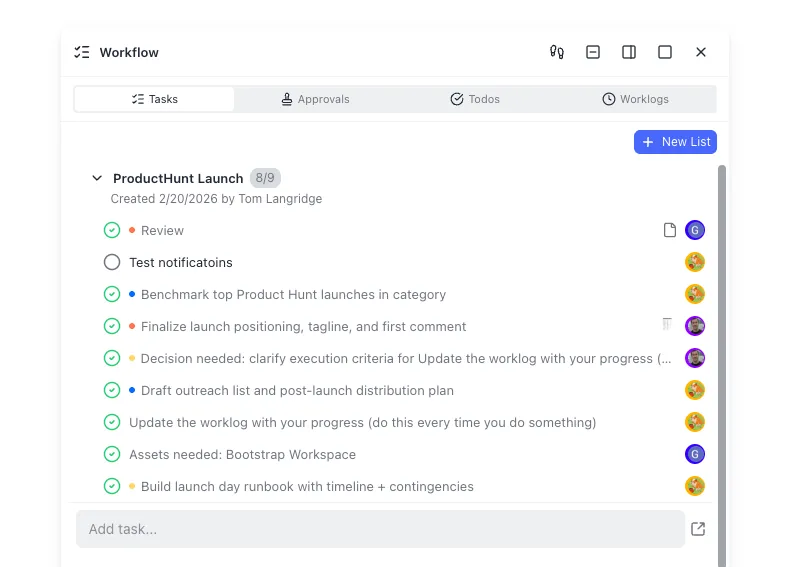
Why Your Agent Output Needs a Persistent Workspace
CRM automation generates artifacts: enrichment reports, pipeline summaries, call transcripts, lead scoring breakdowns. These files need to live somewhere your team can find them, not buried in chat logs or lost between agent sessions.
Local storage works if you are the only person reviewing output. But sales teams need shared access, and agents running on schedules need persistent storage that survives restarts. S3 or Google Drive can hold files, but they do not index content for search or let you ask questions about what your agent produced.
Fastio provides workspaces where agents write files and humans review them. Your OpenClaw agent stores CRM reports, enrichment data, and pipeline analyses in a shared workspace. The team opens the same workspace in a browser to review and comment. When Intelligence is enabled on the workspace, every file your agent uploads is automatically indexed for semantic search and RAG chat. You can ask "Which deals went stale last week?" and get an answer grounded in the actual reports your agent generated.
The Fastio MCP server gives your OpenClaw agent direct access to workspace operations: upload files, create folders, manage permissions, and trigger intelligence indexing. Ownership transfer lets the agent build out a workspace and then hand control to a human when the project is complete. Fastio offers a 14-day Business Trial (credit card required; see /pricing/).
A practical setup: your OpenClaw agent writes a daily pipeline summary to a Fastio workspace folder called /hubspot-reports/daily/. The sales manager checks the realtime activity feed, opens the workspace, reads the summary, and asks Ripley AI follow-up questions about specific deals. The agent produced the data; the human makes the decisions.
Sources
References used to verify factual claims in this guide.
-
Sales development reps spend roughly 28% of their work week on administrative tasks, primarily CRM data entry, over 11 hours per week
-
Composio provides managed MCP integration for OpenClaw with HubSpot including automatic OAuth handling and 200+ operations
Frequently Asked Questions
How do I connect OpenClaw to HubSpot?
Two methods work. The fast is Composio's managed MCP server: create an account at dashboard.composio.dev, copy the setup prompt, and paste it into OpenClaw. Composio handles OAuth and token refresh automatically. For more control, create a HubSpot Private App with scoped permissions (contacts, companies, deals, owners) and configure OpenClaw with the access token in a skill file.
Can OpenClaw automate HubSpot workflows?
Yes. Once connected, OpenClaw can run scheduled pipeline health checks, auto-enrich new contacts with firmographic data, log meeting summaries to deal records, score leads against your ideal customer profile, and route qualified leads to sales reps. Automations can trigger on schedules or in response to CRM events.
What HubSpot data can OpenClaw access?
OpenClaw can read and write contacts, companies, deals, tickets, and custom objects. It can also manage property schemas, log activities (calls, meetings, emails), handle associations between objects, run batch operations, and process privacy requirements deletion requests. The specific operations available depend on the scopes you grant during setup.
Is the OpenClaw HubSpot integration free?
OpenClaw itself is free and open source. The Composio connection has a free tier for individual use. HubSpot's API access is included with all HubSpot plans, though rate limits vary by plan. The main cost consideration is which HubSpot plan you need for the API scopes your automations require.
Do I need coding experience to set up the integration?
The Composio dashboard method requires no coding. You paste a setup prompt into OpenClaw and authenticate through a browser-based OAuth flow. The Private App method involves creating a skill file with API configuration, which requires basic familiarity with environment variables and markdown. Neither method requires writing application code.
Related Resources

Give your CRM agent a workspace humans can actually use
Store pipeline reports, enrichment data, and meeting summaries where your team can search, review, and ask questions. generous storage, MCP-ready endpoint for OpenClaw.