How to Migrate from RPA to OpenClaw AI Agents
Up to 50% of RPA projects fail to deliver expected ROI, largely because maintenance eats 30-50% of the initial investment every year. This guide walks through replacing traditional RPA bots with OpenClaw's record-and-compile model, where you describe a task in plain language, the AI records browser actions, and it compiles everything into a standalone Playwright script that runs without token costs.

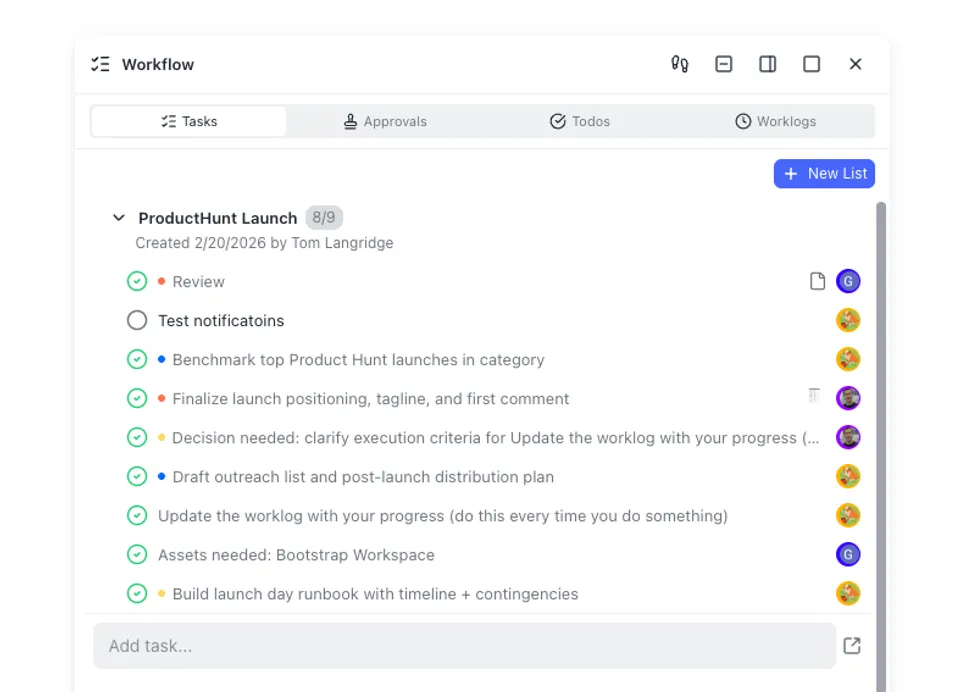
Why RPA Bots Break and What That Costs You
Up to 50% of RPA projects fail to deliver expected ROI, according to automation consultancy Kognitos, and the primary culprit is maintenance. Organizations spend 30-50% of their initial RPA implementation budget annually just keeping bots running. A 200-bot portfolio typically requires 5-15 specialized RPA developers whose job is essentially fixing things that broke overnight.
The root cause is architectural. Traditional RPA tools like UiPath, Automation Anywhere, and Blue Prism rely on brittle UI selectors, fixed element IDs, and pixel-precise coordinates. When a web application updates its layout, renames a button, or adds a verification step, the bot fails. RPA developers then spend time reverse-engineering what changed, updating selectors, and re-testing. Blueprint Systems found that RPA developers spend at least 30% of their time trying to understand what existing automations are doing before they can fix them.
Licensing compounds the problem. Enterprise RPA platforms charge $5,000-$15,000 per bot annually, but licensing represents only 25-30% of total cost of ownership. The remaining 70-75% goes to implementation, maintenance, and support staff.
OpenClaw takes a fundamentally different approach. Instead of programming bots with fixed selectors, you describe tasks in natural language. An AI agent drives a real browser, records each step with screenshots, and compiles the result into a standalone Python script. That script replays deterministically with zero token cost and no API calls. When a UI changes, you re-record the task in minutes rather than debugging selector chains for hours.
Related guides
- How to Migrate from Claude Code to ClineLearn how to migrate from Claude Code to Cline by porting configuration files, mapping Model Context Protocol settings,...
- The Developer Guide to Devin AI Codebase MigrationPlatform migrations represent a substantial financial and operational risk. This guide outlines how to use Devin AI to...
- How to Automate OpenClaw Workflows with Zapier MCPOpenClaw agents are good at reasoning, but they need a way to act on that reasoning across your existing tools. Zapier...
- OpenClaw Automation Recipes: Ready-to-Use Workflow TemplatesUsers who configure two or more OpenClaw workflows in their first week retain at 78%, nearly double the 41% rate for...
- How to Get Started with the OpenClaw Python SDKThe OpenClaw Python SDK lets you manage agents, workspaces, and tools from Python code instead of the CLI or chat...
- How to Build a Web Scraping Agent with OpenClawOpenClaw's browsing skill turns your AI agent into a web scraper that can navigate pages, handle JavaScript rendering,...
More on this subject: OpenClaw Setup and Guides (199 guides)
How OpenClaw's Record-and-Compile Model Works
The openclaw-rpa skill (available on ClawHub) replaces the traditional RPA development cycle of inspect-select-code-test with a three-phase workflow: describe, record, replay.
Phase 1: Describe. You tell OpenClaw what you want to automate in plain language. For example: "Go to the vendor portal, download this month's invoices, extract the totals, and compile them into an Excel report."
Phase 2: Record. OpenClaw drives a real Chromium browser, performing each step while capturing screenshots and DOM state. You initiate recording for browser workflows or API-based flows, walk through each step, and signal completion. OpenClaw then synthesizes the captured actions into a standalone Playwright script.
Phase 3: Replay. The compiled script runs as pure Python with no LLM calls, no token costs, and no API keys needed at execution time. You execute it directly or trigger it through OpenClaw's task scheduler for recurring automation.
The skill handles four automation categories:
- Browser actions: login, navigation, form filling, text extraction, table sorting and filtering
- HTTP APIs: GET and POST requests with JSON handling, useful for connecting to internal services that expose REST endpoints
- Excel operations: workbook creation with multiple sheets, dynamic row insertion, and formatted reports via openpyxl
- Word document generation: reports with paragraphs and tables via python-docx, commonly used for producing human-readable summaries of automated data collection
Session persistence is built in through OpenClaw's login-save mechanism, which captures authentication cookies for a given domain. Subsequent runs inject those cookies automatically, so compiled scripts skip the login flow entirely. This is critical for production deployments where automations run unattended on a schedule.
The pre-built example library includes scripts for Wikipedia data extraction, e-commerce test flows on Sauce Demo, Yahoo Finance scraping, Amazon bestseller tracking with Word export, Airbnb price comparison using vision-based element detection, and accounts payable reconciliation that outputs both Excel and Word reports. These serve as starting templates you can modify rather than building every automation from scratch.
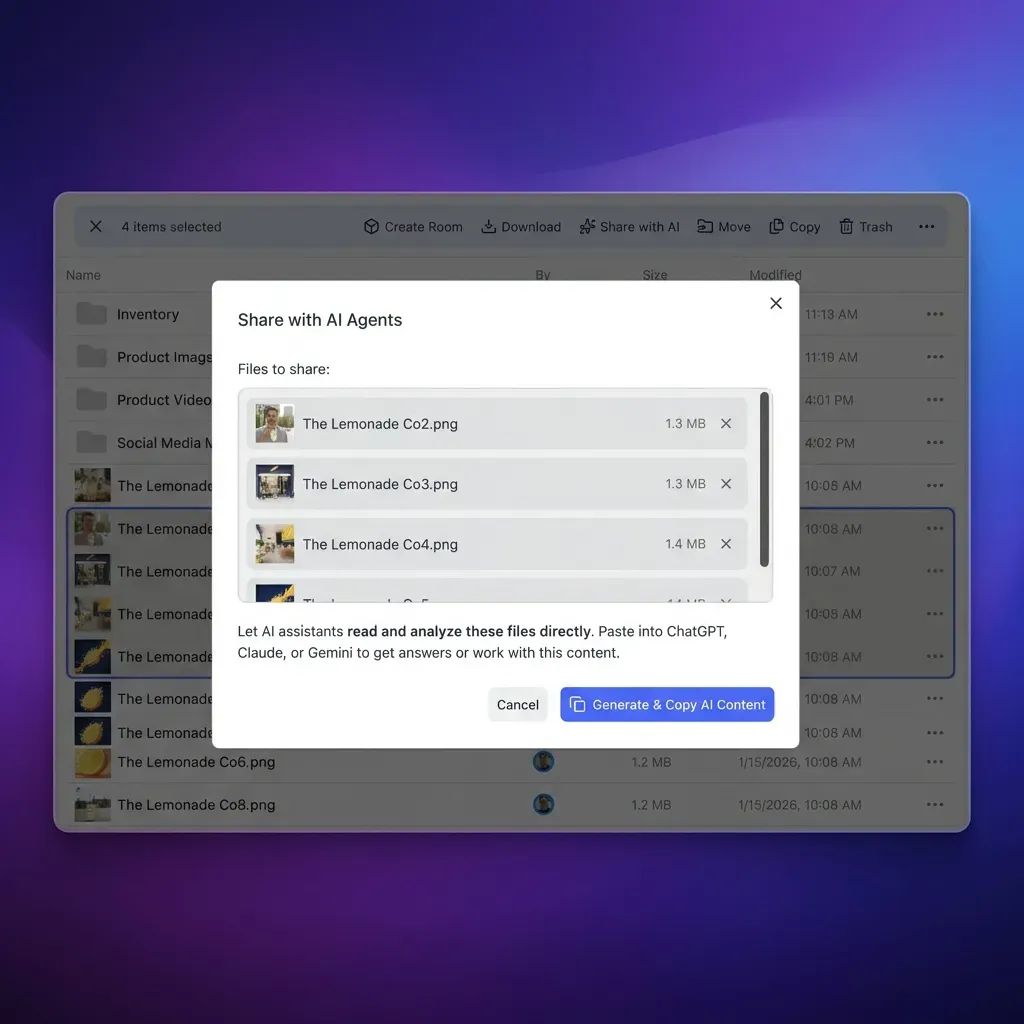
Audit Your RPA Portfolio Before Migrating
Migrating from RPA to OpenClaw is not a one-click conversion. No tool exists that automatically translates UiPath XAML or Automation Anywhere bot definitions into OpenClaw scripts. The practical approach is a portfolio audit followed by selective re-authoring, starting with the bots that break most often.
Step 1: Inventory your bots. List every active automation with its trigger frequency, failure rate, and maintenance hours per month. Most organizations discover that 20% of their bots consume 80% of maintenance effort. Those are your migration candidates.
Step 2: Classify by complexity. Sort bots into three buckets:
- Single-app automations (form fills, data extraction, report generation) are direct candidates for openclaw-rpa's record-and-compile model
- Multi-app orchestrations (invoice processing that spans email, ERP, and accounting software) need TaskFlow for step coordination
- API-heavy integrations (database queries, REST API calls with conditional logic) may be better served by direct Python scripts or OpenClaw's
#rpa-apitrigger
Step 3: Identify quick wins. Browser-based bots that break frequently due to UI changes are the highest-value migration targets. These are exactly the workflows where OpenClaw's approach delivers the biggest maintenance reduction, because re-recording a task takes minutes compared to hours of selector debugging.
Step 4: Map dependencies. Document which bots feed data to other bots or downstream systems. These dependency chains become TaskFlow pipelines after migration.


Store and hand off your OpenClaw agent output
Generous storage workspace with auto-indexing, MCP server access, and ownership transfer.
Orchestrating Multi-Step Workflows with TaskFlow
Single-task automation is only half the picture. In an RPA environment, orchestrators like UiPath Orchestrator or Automation Anywhere Control Room manage scheduling, sequencing, and error handling across bot portfolios. OpenClaw's equivalent is TaskFlow, which shipped in the 2026.4.2 release.
TaskFlow manages durable multi-step flows with state persistence, revision tracking, and approval gates. It operates in two modes:
Managed mode is the direct replacement for an RPA orchestrator. TaskFlow owns the entire lifecycle: it creates tasks as flow steps, drives them to completion, and advances state automatically. A workflow definition looks like this:
name: vendor-invoice-processing
steps:
  - id: download
    command: invoice-bot download --json
  - id: extract
    command: invoice-bot extract --json
    stdin: $download.json
  - id: reconcile
    command: invoice-bot reconcile --json
    stdin: $extract.json
  - id: approve
    command: invoice-bot submit --preview
    stdin: $reconcile.json
    approval: required
  - id: post
    command: invoice-bot submit --execute
    stdin: $reconcile.json
    condition: $approve.approved
The approval: required gate is significant for finance and compliance workflows. It pauses the pipeline and waits for a human to review and approve before proceeding, which is something most RPA orchestrators handle through separate approval workflows or email notifications.
Mirrored mode observes externally created tasks without owning their lifecycle. This is useful during migration when some steps still run on legacy RPA infrastructure while others have moved to OpenClaw.
Scheduling uses standard cron syntax with timezone support. A vendor invoice workflow that runs every weekday morning at 7 AM Eastern would use a five-field cron expression with the America/New_York timezone, ensuring consistent execution regardless of server location. Flow state is backed by SQLite with WAL mode and survives gateway restarts, so a long-running pipeline will not lose progress if the host machine reboots.
For teams running dozens of workflows, the CLI provides visibility into flow status. You can list all tracked flows with their current state, inspect individual flows by ID or lookup key, and cancel running flows when something goes wrong. This replaces the dashboard-centric monitoring approach of UiPath Orchestrator with a command-line-first workflow that works alongside existing DevOps tooling and can be scripted into monitoring pipelines.
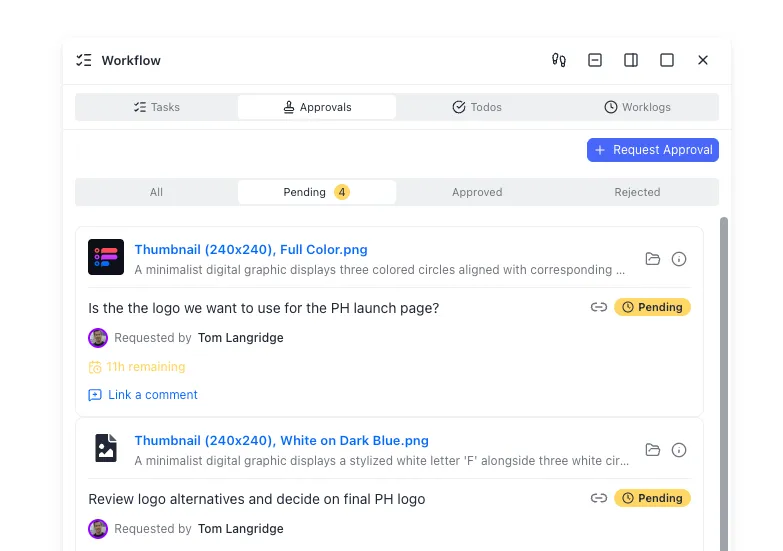
Connecting Persistent Storage for Agent Output
RPA bots typically write output to network drives, SharePoint, or directly into enterprise applications. When you move to AI agents, you need a persistent storage layer that both agents and humans can access, and that keeps an audit trail of what was produced and when.
Local filesystems work for single-machine setups, but they create problems at scale: no version history, no access controls, no way for a colleague to review output without SSH access or a file share. Cloud storage like S3 or Google Drive solves availability but adds integration overhead and lacks built-in intelligence features.
Fastio provides workspaces where OpenClaw agents write output and humans review it through the same interface. Explore paid plans starting at $9.99/mo or begin with a 14-day Business Trial. Agents authenticate through the remote Fastio MCP server (Streamable HTTP at /mcp), which exposes a consolidated toolset for storage, search, and sharing.
The practical workflow looks like this: an OpenClaw agent runs a compiled RPA script, generates an Excel report, and uploads it to a Fastio workspace. Once Intelligence Mode is enabled for the workspace, it auto-indexes the file for semantic search, so anyone on the team can ask questions about the report's contents without opening it. When the agent's work is done, ownership transfer hands the workspace to a human who takes over review and distribution.
For multi-agent setups where several OpenClaw instances process different vendor accounts simultaneously, agents can acquire an advisory file lock before writing and release it when finished, while another agent attempting to lock the same file receives an HTTP 409 status and waits. A WebSocket events feed or activity polling notifies downstream systems when new files arrive, replacing the brittle file-sharing loops that RPA orchestrators typically use for inter-bot coordination, while every write is preserved in version history.
Migration Checklist and Common Pitfalls
After auditing your portfolio and understanding the tooling, here is a practical migration sequence.
Week 1-2: Environment setup. Install OpenClaw and the openclaw-rpa skill from ClawHub. Verify the environment with the built-in health check. Set up a Fastio workspace for agent output and configure the MCP connection. Run one of the pre-built example scripts (the Wikipedia extraction or Sauce Demo e-commerce flow) to confirm the record-and-compile pipeline works end to end.
Week 3-4: Re-author your first bot. Pick the bot with the highest maintenance cost from your audit. Describe the workflow in natural language, initiate recording mode, walk through each step, and signal completion to compile. Run the generated script manually, compare output to the legacy bot's output, and iterate until they match.
Week 5-6: Build the orchestration layer. Convert your first multi-step workflow into a TaskFlow definition. Start with managed mode so TaskFlow owns the full lifecycle. Add approval gates where humans currently review bot output. Schedule with cron for unattended execution.
Week 7-8: Run parallel. Keep the legacy RPA bot running alongside the OpenClaw replacement for at least two weeks. Compare outputs daily. Use TaskFlow's mirrored mode to observe the legacy bot's tasks while the new pipeline runs independently.
Common pitfalls to avoid:
- Starting with the most complex workflow instead of the highest-maintenance simple bot. Complexity compounds risk during migration.
- Forgetting session management. Save authentication cookies during initial setup so compiled scripts do not require re-authentication on every run.
- Ignoring the approval gap. If your RPA workflow has human checkpoints, map them to TaskFlow's
approval: requiredgates before going live. - Skipping the parallel run period. Two weeks of side-by-side comparison catches edge cases that a single test run misses.
- Not planning for the bots you will keep. Some API-heavy integrations or legacy system connectors may be better left on RPA infrastructure. Migration does not have to be all-or-nothing.
Sources
References used to verify factual claims in this guide.
-
Up to 50% of RPA projects fail to deliver expected ROI Organizations spend 30-50% of initial RPA implementation budget annually on maintenance 5-15 specialized RPA developers needed for a 200-bot portfolio
-
RPA licensing represents only 25-30% of total cost of ownership Enterprise RPA platforms charge $5,000-$15,000 per bot annually
-
RPA developers spend at least 30% of their time understanding what existing automations are doing
Frequently Asked Questions
Can AI agents fully replace RPA bots?
For browser-based and document-processing workflows, yes. OpenClaw's record-and-compile approach handles form fills, data extraction, report generation, and multi-step browser automations. API-heavy integrations with complex conditional logic may still benefit from traditional scripting or a hybrid approach where OpenClaw handles the UI layer and existing API integrations remain in place.
How do I migrate from UiPath to OpenClaw?
There is no automatic conversion tool that translates UiPath XAML definitions into OpenClaw scripts. The practical path is to audit your bot portfolio, prioritize by maintenance cost, and re-author workflows using openclaw-rpa's record-and-compile model. Start with browser-based bots that break frequently due to UI changes, since those deliver the highest maintenance savings. Multi-step orchestrations move to OpenClaw TaskFlow, which replaces UiPath Orchestrator's scheduling and sequencing.
What can OpenClaw automate that RPA cannot?
OpenClaw agents understand context and adapt to UI changes, which traditional RPA bots cannot do. They handle unstructured data like natural language descriptions, can make decisions based on content rather than fixed rules, and re-record workflows in minutes when applications update. RPA bots are limited to structured, rule-based tasks and break when the target UI changes, requiring manual selector updates by specialized developers.
Is OpenClaw better than RPA for business automation?
For most browser-based and document workflows, OpenClaw offers lower maintenance costs and faster development cycles. RPA still has advantages in environments with stable, unchanging interfaces and deep integrations with enterprise platforms like SAP or Oracle that have dedicated RPA connectors. The best approach for many organizations is gradual migration, starting with high-maintenance bots and keeping stable RPA integrations in place.
Does the compiled OpenClaw script require an LLM to run?
No. Once openclaw-rpa compiles a workflow into a Playwright Python script, it runs standalone with zero LLM token costs and no API calls. The AI is only involved during the initial recording phase. Replay is deterministic and runs at native Python execution speed.
How does OpenClaw handle scheduled automations?
OpenClaw includes a cron system for scheduling recurring tasks with timezone support. For multi-step workflows, TaskFlow manages durable pipelines with state persistence that survives gateway restarts. Combined, these replace the scheduling and orchestration capabilities of tools like UiPath Orchestrator or Automation Anywhere Control Room.
Related Resources

Store and hand off your OpenClaw agent output
Generous storage workspace with auto-indexing, MCP server access, and ownership transfer.