OpenClaw Automation Recipes: Ready-to-Use Workflow Templates
Users who configure two or more OpenClaw workflows in their first week retain at 78%, nearly double the 41% rate for single-workflow users. The difference comes down to reusable patterns: once you understand how TaskFlow connects triggers, steps, and approval gates, each new recipe takes minutes instead of hours.

Why Retention Doubles After the Second Workflow
OpenClaw's own adoption data tells a clear story: users who set up two or more automations in their first week stay active at a 78% rate three months later, compared to 41% for those who stop at one. The gap exists because the first workflow teaches the mental model (trigger, steps, output), and the second proves it generalizes. After that, adding a third or fourth recipe is trivially fast.
The problem is that most guides explain concepts without giving you anything to paste. The official TaskFlow documentation covers execution modes, state management, and CLI commands, but stops short of end-to-end recipes. Community sources like ClawTank and KiloClaw publish recipe lists, but they describe what an automation does rather than how to wire it up. This guide bridges that gap with seven recipes you can adapt to your own tools and schedules.
Before diving in, it helps to understand the two systems that make these recipes work: TaskFlow for multi-step orchestration, and cron scheduling for recurring triggers. TaskFlow was introduced in OpenClaw 2026.4.2 as a durable orchestration layer with two execution modes, approval gates, and state that survives restarts. Cron scheduling handles the timing side, letting you attach any recipe to a repeating schedule with timezone support and session persistence.
Related guides
- How to Set Up an MCP Server for n8n Workflow AutomationThe Model Context Protocol turns n8n into an AI-accessible automation platform. This guide walks through setting up n8n...
- Clay Templates: How to Launch Ready-Made GTM WorkflowsUS searchers look up "clay templates" about 320 times per month, enough demand to justify a real operating playbook...
- How to Automate OpenClaw Workflows with Zapier MCPOpenClaw agents are good at reasoning, but they need a way to act on that reasoning across your existing tools. Zapier...
- How to Automate Email Workflows with OpenClaw AgentsOpenClaw agents can monitor inboxes, classify messages, extract data from attachments, and route actions through...
- OpenClaw vs Make: How to Choose Between an AI Agent and a Visual Workflow BuilderOpenClaw is an autonomous AI agent that reasons through tasks and adapts on the fly. Make is a visual workflow builder...
- OpenClaw vs n8n: Agent AI vs Workflow Automation ComparedOpenClaw is an autonomous AI agent that decides what to do next. n8n is a workflow automation tool that runs the steps...
More on this subject: OpenClaw Setup and Guides (199 guides)
How TaskFlow Connects Triggers, Steps, and Gates
Every recipe in this guide relies on three TaskFlow primitives. Understanding them once means you can modify any recipe or build your own.
Managed vs. Mirrored Execution
Managed mode means TaskFlow controls the full lifecycle of each step: it creates tasks, drives them to completion, and advances the flow state automatically. This is the default for recipes where OpenClaw owns the entire workflow. Mirrored mode observes externally-created tasks without taking ownership, which is useful when OpenClaw needs to track progress from cron jobs, CI pipelines, or other orchestration systems running outside the agent.
Approval Gates
Any step in a TaskFlow can require human approval before proceeding. You mark a step as requiring approval in the workflow definition, and the flow pauses until a human reviews the output and confirms. If the reviewer denies the step, the downstream steps that depend on that approval are skipped automatically. This is how recipes that send emails, publish reports, or modify production systems stay safe: nothing goes out without a human in the loop.
Cron Scheduling with Session Context
OpenClaw's cron system lets you attach any recipe to a repeating trigger using standard cron expressions with timezone support. The key decision is the session type. A persistent session gives the agent context across runs, so it remembers which emails, PRs, or events it already processed. An isolated session starts each run with a clean slate, which is better for independent tasks like generating a fresh report from scratch. You configure both the schedule and the session type when you register the recipe with the cron system.
Preflight Checks
Before any recipe executes, TaskFlow can validate prerequisites: API credential availability, network reachability, required tool enablement, and failure destination configuration. Including a preflight step catches misconfiguration before the workflow burns through API calls or produces partial output.
Recipe 1: Morning Briefing with Approval Gate
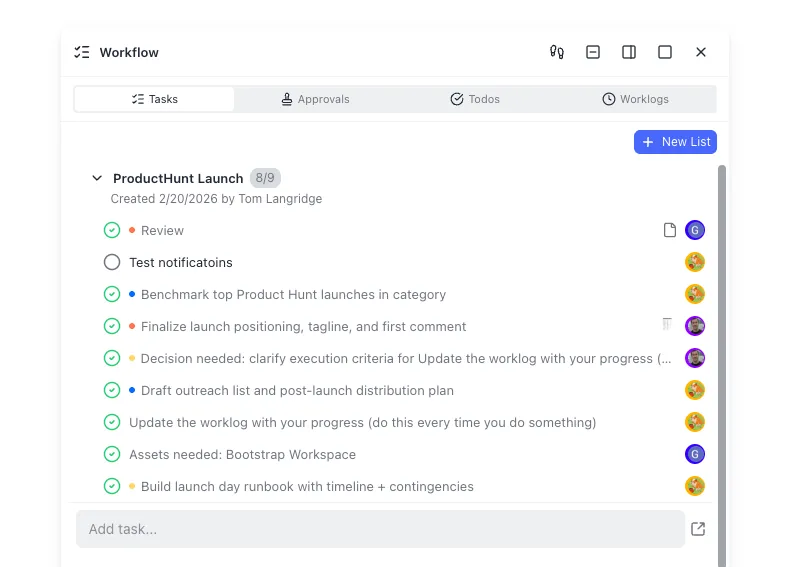
This recipe aggregates calendar events, priority emails, weather, and top news stories into a single briefing delivered to Slack or Telegram each morning. It uses managed mode with an approval gate so you can review the briefing before it sends.
What it does:
- Pulls today's calendar events via Google Calendar API
- Scans unread emails and filters by sender priority list
- Fetches local weather and headline news
- Formats everything into a structured daily summary
- Pauses for your approval before sending to the delivery channel
Schedule: Weekdays at 7:00 AM in your local timezone.
Session type: Use session:morning-brief so the agent remembers your sender priority list and formatting preferences across runs.
Approval gate: The briefing preview step uses approval: required. You get a formatted preview in your chosen channel. Reply to confirm, and the agent delivers the final version. This prevents hallucinated calendar entries or misread email subjects from reaching your team.
Adaptation tips: Remove the news aggregation step if you prefer a work-only briefing. Add a step that checks your project management tool (Linear, Jira, Asana) for tasks due today. The format step can output markdown, HTML, or plain text depending on your delivery channel.


Persistent storage for your OpenClaw automation outputs
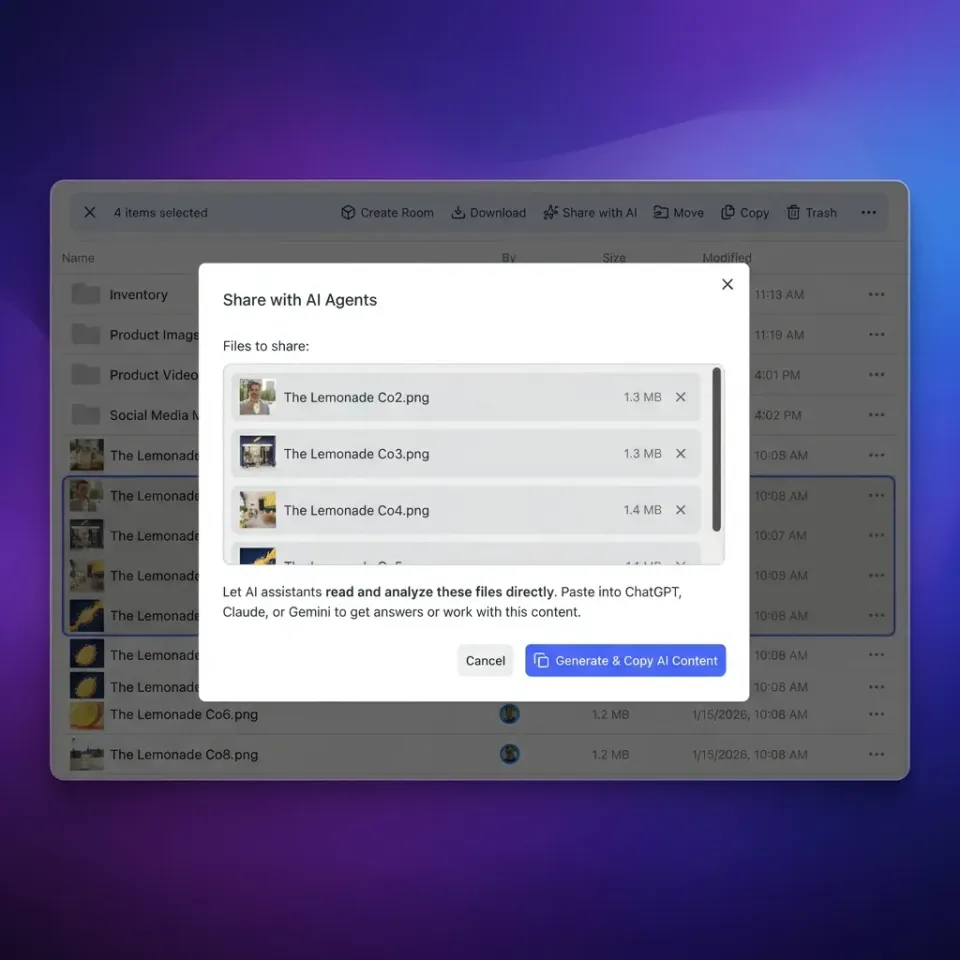
Every recipe generates files: triage reports, daily briefings, weekly summaries. Fastio gives your agents indexed, searchable storage with advisory file locks, version history, and MCP access.
Recipe 2: CI Failure Alert with Root Cause Triage
CI failures that sit unnoticed for hours slow down entire teams. This recipe monitors GitHub Actions (or any CI provider with automation hooks support), triages failures by category, and posts actionable summaries to your team channel.
What it does:
- Preflight check verifies GitHub token permissions and Slack automation hooks URL
- Polls recent workflow runs for failures (or listens via automation hooks in mirrored mode)
- Reads failure logs and categorizes the issue: flaky test, dependency problem, config drift, or genuine code regression
- Posts a triage summary with the failure category, relevant log lines, and a suggested first action
- Tags the last committer on the failing branch
Schedule: Every 15 minutes during business hours, or event-driven via automation hooks.
Session type: Use a persistent session so the agent tracks which failures it already reported and avoids duplicate alerts across runs.
Choosing the right execution mode: If your CI system already manages job state and retries, mirrored mode lets OpenClaw observe and enrich alerts without duplicating that logic. If you want the agent to own the full lifecycle, including automatic flaky-test retries, managed mode is the better fit.
Why this adds value over stock CI notifications: A raw failure notification tells you something broke. This recipe adds a triage layer that reads the logs, categorizes the failure type, and suggests a first response action. That reduces the cognitive load on whoever picks up the alert.
Where this recipe generates files (triage reports, log extracts, trend analysis), you need shared storage. Local filesystems work for solo developers but create conflicts when multiple agents write concurrently. Fastio workspaces provide persistent storage with advisory file locks and version history, so parallel CI monitors coordinate safely. Fastio offers a 14-day Business Trial (see /pricing/).
Recipe 3: Email Triage Assistant
About 48% of OpenClaw users deploy the platform for productivity automation, and email triage is the single most requested recipe category. This workflow scans your inbox on a schedule, categorizes messages by urgency, drafts replies for routine items, and queues high-priority threads for your attention.
What it does:
- Connects to Gmail (or any IMAP-compatible provider)
- Scans unread messages since the last run
- Categorizes each message: urgent (needs reply today), routine (can draft a response), informational (archive), or spam
- Drafts reply templates for routine messages
- Posts a summary of urgent items to your preferred channel
- Archives informational messages automatically
Schedule: Every 30 minutes during work hours, using a persistent session so the agent remembers which messages it already processed.
Approval gate: Add approval: required before the auto-archive and auto-reply steps. This lets you review what gets archived and what replies get sent in your name. Once you trust the categorization accuracy (usually after a week of corrections), you can remove the gate for routine categories while keeping it for replies.
Handling attachments: When the triage assistant encounters messages with attachments that need team review, those files need to go somewhere accessible. S3 buckets work if your team already uses AWS. Google Drive is fine for small teams. For agent-to-human handoff scenarios where you want the recipient to get a branded portal link instead of a raw file dump, Fastio's share functionality creates trackable delivery links with audit trails. The agent uploads the attachment, generates a share link, and includes it in the triage summary.

Recipes 4-7: Developer Workflows
The remaining four recipes target developer-specific automation. Each follows the same TaskFlow structure: preflight, collect, process, approve (optional), deliver.
PR Review Reminder
Stale pull requests slow down shipping velocity. This recipe checks your GitHub organization for PRs that have been open longer than a configurable threshold (default: 48 hours) without review activity, then pings the assigned reviewer directly.
- Schedule: Twice daily, 10:00 AM and 3:00 PM
- Session:
isolated(each run is independent) - Key detail: The recipe excludes draft PRs and PRs with the "do not review" label. It escalates to the team lead if a PR passes 72 hours with no review
Dependency Update Digest
Outdated dependencies create security risk and maintenance debt. This recipe scans your repositories weekly, identifies packages with available updates, groups them by severity (security patch, minor, major), and posts a prioritized update plan.
- Schedule: Monday mornings at 9:00 AM
- Session:
session:deps-digestto track which updates you have already acknowledged - Key detail: Security patches get flagged with urgency. Major version bumps include a link to the changelog and breaking changes summary
End-of-Day Summary
This recipe captures what happened during the workday: commits pushed, PRs merged, emails sent, meetings attended, and tasks completed. It formats everything into a concise daily log.
- Schedule: Weekdays at 5:30 PM
- Session:
session:eod-summaryto accumulate context throughout the day - Key detail: The summary includes a "tomorrow's priorities" section based on calendar events and approaching deadlines
Weekly Report Generator
Compiles the week's end-of-day summaries into a team-facing weekly report with metrics: PRs merged, issues closed, deployment count, and incident summary. Includes an approval gate before distribution.
- Schedule: Friday at 4:00 PM
- Session:
session:weekly-report - Approval gate: Required before sending, so you can edit the narrative summary before your team or manager sees it
- Key detail: The report pulls from the end-of-day session history, so it works best when both recipes run on the same OpenClaw instance
File storage for generated reports: Weekly reports, dependency digests, and triage logs accumulate quickly. For teams running multiple agents, you need shared storage that supports concurrent writes without conflicts. Fastio workspaces handle this with granular permissions and version history, and the MCP server lets agents read and write files programmatically. Agents upload reports, humans review them through the web UI or a branded share link, and the audit trail tracks every version.
How to Adapt These Recipes to Your Stack
These seven recipes cover common patterns, but the real value of TaskFlow is composability. Here is how to adapt them.
Swap delivery channels. Every recipe assumes a specific output channel (Slack, Telegram, email), but the delivery step is independent from the collection and processing steps. Replace the final step's channel configuration to deliver via whatever your team uses.
Chain recipes into pipelines. The CI failure triage recipe can feed into the end-of-day summary. The email triage assistant's urgent queue can populate tomorrow's priorities in the morning briefing. TaskFlow's session persistence means one recipe's output becomes another recipe's input when they share a session namespace.
Add mirrored mode for existing systems. If you already have a Jenkins pipeline, Datadog monitor, or PagerDuty escalation policy, use mirrored mode to observe those systems without duplicating their logic. OpenClaw tracks the external task state and adds its own processing layer on top.
Scale with preflight checks. As your recipe count grows, preflight checks become essential. A recipe that requires five API credentials should verify all five before executing the first step. This prevents partial runs that leave state in an inconsistent position.
Persist outputs for team access. Single-developer setups can store recipe outputs locally. Teams need shared, persistent storage. Local filesystems do not support concurrent agent writes. Cloud storage like S3 requires IAM configuration and does not provide built-in search or handoff. Fastio intelligent workspaces index uploaded files automatically, so your team can search recipe outputs by meaning, not just filename. Fastio offers an official 14-day Business Trial requiring a credit card, with plans starting at $9.99/mo (see /pricing/).
Sources
References used to verify factual claims in this guide.
-
Users who configured two or more workflows in their first week were still active three months later 78% of the time, compared to 41% for single-workflow users
-
Approximately 48% of users deploy OpenClaw for productivity automation
-
TaskFlow introduced in OpenClaw 2026.4.2 with managed and mirrored execution modes, durable state persistence, and approval gates
Frequently Asked Questions
What can OpenClaw automate?
OpenClaw automates multi-step workflows that involve collecting data, processing it, and delivering results. Common examples include email triage, CI/CD monitoring, daily briefings, report generation, dependency auditing, and document processing. The agent connects to external tools through skills and APIs, so any service with an API or automation hooks can participate in an automation recipe.
How do I create an OpenClaw workflow?
Define your workflow as a sequence of steps with triggers and conditions. Each step specifies a command to run, optional input from previous steps, and whether approval is required. Attach the workflow to a cron schedule for recurring execution, or trigger it manually. The TaskFlow system handles state persistence, restart recovery, and cancellation propagation.
What is OpenClaw TaskFlow?
TaskFlow is OpenClaw's durable orchestration layer, introduced in version 2026.4.2. It manages multi-step workflows with two execution modes (managed and mirrored), approval gates, preflight reliability checks, and state that survives restarts. Managed mode gives TaskFlow full lifecycle control over each step. Mirrored mode lets TaskFlow observe tasks created by external systems without taking ownership.
Can OpenClaw run scheduled automations?
Yes. OpenClaw's cron system supports standard cron expressions with timezone configuration. You can attach any recipe to a schedule using the CLI. The session parameter controls whether each run starts fresh (isolated mode) or maintains context from previous runs (persistent session mode), which is important for workflows that need to track what they already processed.
How do I store files generated by OpenClaw automations?
Local storage works for single-developer setups. For teams or multi-agent systems, you need shared cloud storage with concurrent write support. Options include S3 (requires IAM setup), Google Drive (limited programmatic access), or Fastio workspaces (generous storage, MCP server access, advisory file locks, version history, and built-in search). The choice depends on whether you need simple file dumps or structured handoff with audit trails.
What is the difference between managed and mirrored TaskFlow modes?
Managed mode means OpenClaw controls the entire task lifecycle, creating steps, driving them to completion, and advancing the flow state. Use it when OpenClaw owns the workflow end-to-end. Mirrored mode observes tasks created by external systems (CI pipelines, cron jobs, other orchestrators) without taking ownership. Use it when you want OpenClaw to add processing or alerting on top of existing infrastructure.
Do I need coding experience to use OpenClaw automation recipes?
Basic technical literacy helps, especially for customizing schedules and connecting API credentials. The recipes themselves use declarative YAML-style step definitions rather than imperative code. You define what each step does and how steps connect, and TaskFlow handles execution order, state management, and error recovery. Community platforms like KiloClaw offer no-code deployment for simpler recipes.
Related Resources

Persistent storage for your OpenClaw automation outputs
Every recipe generates files: triage reports, daily briefings, weekly summaries. Fastio gives your agents indexed, searchable storage with advisory file locks, version history, and MCP access.