How to Build a Web Scraping Agent with OpenClaw
OpenClaw's browsing skill turns your AI agent into a web scraper that can navigate pages, handle JavaScript rendering, and extract structured data without writing brittle CSS selectors. This guide walks through setting up the browsing tools, configuring proxy rotation for anti-bot evasion, building extraction workflows with memory and retry logic, and storing scraped results in a persistent workspace.

What Makes Agent-Based Scraping Different
Traditional web scraping relies on scripts that break whenever a site changes its HTML structure. You write selectors, handle pagination manually, and build retry logic from scratch. When a site adds a CAPTCHA or changes its class names, your scraper stops working until you fix it.
An OpenClaw web scraping agent takes a different approach. Instead of hardcoded selectors, the agent uses an accessibility tree to understand page structure. It can reason about what it sees, decide how to navigate, and adapt when layouts change. The browsing skill gives it programmatic browser control through Chrome's DevTools Protocol, so it handles JavaScript-rendered content, infinite scroll, and dynamic loading without extra configuration.
The practical difference: a Python script needs you to anticipate every edge case upfront. An OpenClaw agent handles unexpected states by reasoning about them in context. It can retry failed requests, rotate through proxies, and store partial results in memory between attempts.
Related guides
- How to Automate Web Scraping With Hermes Agent's Scrapling SkillHermes Agent's Scrapling skill gives your AI agent three distinct scraping strategies, from fast HTTP fetching for...
- How to Use Claude Code on the WebClaude Code authored roughly 4% of all public GitHub commits by February 2026, yet most developer guides treat it as a...
- Best OpenClaw Projects to Build: Beginner to Advanced Ideas for 2026OpenClaw crossed 250,000 GitHub stars faster than any software project in history, but most developers stall after the...
- How to Build a Personal AI Assistant with OpenClawOpenClaw crossed 350,000 GitHub stars in under five months, making it the most-starred software project on the...
- OpenClaw Coding Agent Tutorial: Automate Bug Fixes and PRsOpenClaw's coding-agent skill delegates development tasks to background AI processes that fix bugs, review PRs, and...
- How to Build a Data Pipeline Agent with OpenClawTraditional ETL pipelines break when data sources change schemas, rotate auth tokens, or serve content behind...
More on this subject: OpenClaw Setup and Guides (199 guides)
How to Set Up the OpenClaw Browsing Skill
The browsing skill is a modular component you add to your OpenClaw installation. It provides web automation, page navigation, and data extraction through a Chromium-based browser that the agent controls directly.
Install the skill from your OpenClaw terminal by running the browsing skill install command, then run the setup wizard to configure browser resources. The LumaDock tutorial walks through the full installation process with screenshots.
The setup connects OpenClaw to Chrome or any Chromium-based browser using the DevTools Protocol. The skill supports two operating modes depending on your deployment:
Managed browser profile works best for server deployments and automated pipelines. OpenClaw launches an isolated browser instance that it controls entirely. This is what you want for scheduled scraping jobs.
Extension relay mode connects to a browser tab you already have open. This is useful during development when you want to watch the agent navigate in real time, but it is not suitable for production scraping.
After setup completes, verify the skill is active by listing your installed skills. You should see browsing among them. The agent now has access to element selection, text extraction, table parsing, and scroll automation for interacting with pages programmatically.

Configuring Proxy Rotation with Decodo
Scraping at any meaningful scale requires proxy rotation. Sites detect repeated requests from the same IP and block them. Decodo works alongside OpenClaw as a ClawHub skill that routes requests through residential proxies automatically.
The Decodo integration guide covers the full installation and authentication setup. Once installed through ClawHub and configured with your Decodo credentials, the proxy layer operates transparently. Your agent makes requests as normal while Decodo handles IP assignment, rotation on failure, and geographic targeting behind the scenes.
Decodo routes requests through over 115 million residential IPs across 195+ locations. The anti-bot evasion goes beyond simple IP rotation:
- Browser fingerprinting that mimics legitimate user sessions
- Automatic CAPTCHA solving for common challenge types
- JavaScript rendering before extraction, so you get the fully loaded page
- Behavioral analysis that avoids triggering rate limits
The skill also exposes specialized extraction modes through OpenClaw: a universal parser for converting webpages to markdown, structured search result extraction, and domain-specific parsers for popular platforms. For general scraping, the universal mode handles most sites without additional configuration.


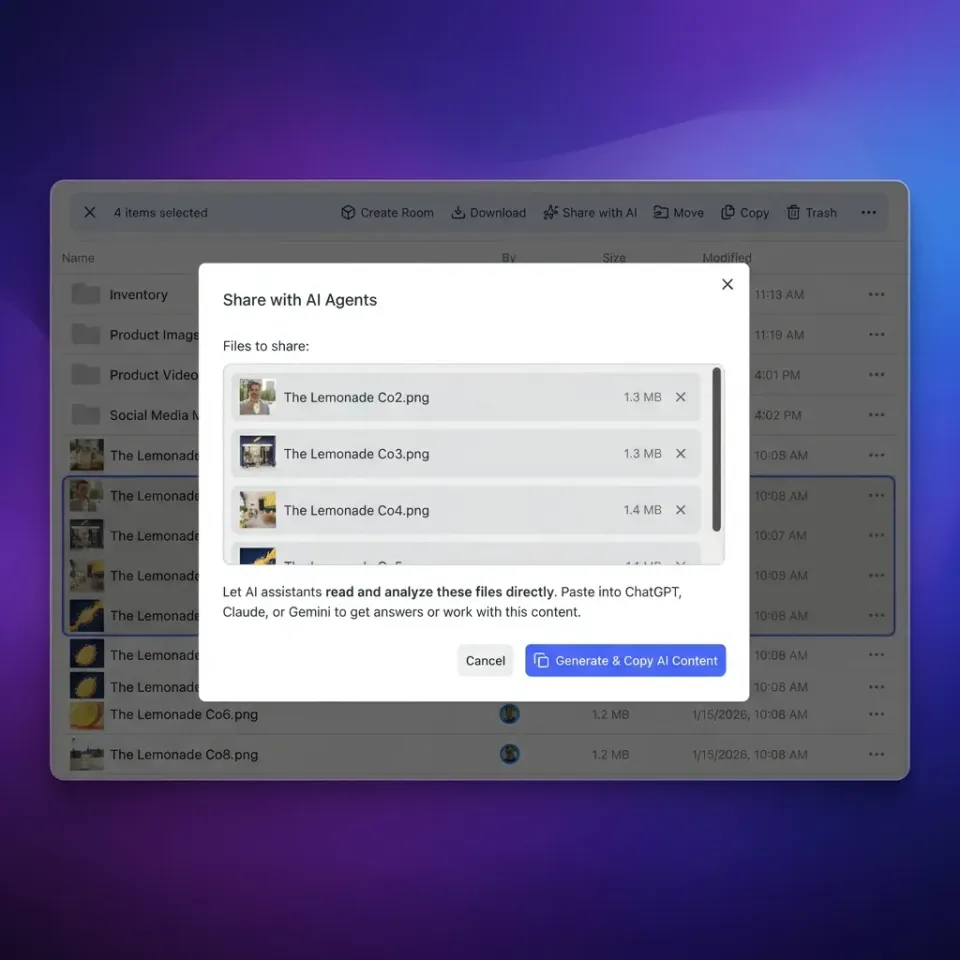
Store and search your scraped data across sessions
Persistent workspace with built-in intelligence. Upload extraction results, query them in natural language, and hand off to clients when the job is done.
Building the Extraction Pipeline
With browsing and proxy tools configured, you can build a scraping workflow that handles real-world complexity. The key is combining OpenClaw's different extraction methods based on what each target site requires.
For static HTML pages, use the HTTP-only approach. This is fast because it skips browser rendering entirely:
URL="https://example.com/products"
HTML="$(curl -fsSL "$URL")"
TITLES="$(printf "%s" "$HTML" | pup '.product-title text{}' | head -n 20)"
For JavaScript-rendered pages, the browsing skill launches a real browser that executes scripts before extraction. The agent uses accessibility tree refs rather than brittle CSS selectors, which means it adapts to layout changes without breaking:
The agent locates elements with find_element() and find_elements(), extracts text with get_text(), and handles tabular data with get_table_data(). For infinite-scroll pages, it calls scroll_down() paired with wait_for_elements() to trigger dynamic content loading before extracting.
For sites behind bot protection, the Decodo integration or Firecrawl remote sandbox handles the heavy lifting. Firecrawl provides a real-browser sandbox that returns structured markdown output:
npx -y firecrawl-cli@latest init --all --browser
With Firecrawl configured as a fallback, OpenClaw's web_fetch tool automatically escalates to browser rendering when plain HTTP returns incomplete content.
Handling pagination depends on the site's implementation. URL-parameter pagination (?page=2, ?page=3) can be looped programmatically. JavaScript-driven pagination requires the browsing skill to click "Next" buttons and wait for new content to load.
The extraction order OpenClaw follows: Readability parser first (fast, local), then Firecrawl browser rendering (if configured), then basic HTML cleanup as a final fallback. This cascading approach means simple pages get scraped instantly while complex ones still work.
Storing and Managing Scraped Data
Raw scraped data is only useful if you can access it later. Local files work for one-off jobs, but agent-driven scraping pipelines need persistent, searchable storage that survives between sessions.
You have several options for where scraped results land:
Local JSON/CSV files work for prototyping. The agent writes extraction results to disk and you process them manually. This breaks down when you run multiple scraping sessions or need to search across results.
Cloud object storage (S3, GCS) provides durability but no built-in search or sharing. You get raw files in buckets with no semantic understanding of the content.
Fastio workspaces combine persistent file storage with built-in intelligence. Upload scraped data as JSON, CSV, or structured documents, and once Intelligence is enabled for the workspace, it indexes everything for semantic search and RAG chat. Your agent can query past scraping results in natural language without maintaining a separate database.
The Fastio MCP server lets your OpenClaw agent upload results directly after extraction. Fastio offers a 14-day Business Trial (card required; see /pricing/), and files are searchable once Intelligence is enabled on the workspace.
For structured extraction at scale, Metadata Views turn scraped documents into a queryable spreadsheet. Describe the fields you want (product name, price, availability, URL) in plain language, and the AI extracts them from every uploaded file into sortable columns. This is particularly useful when scraping product catalogs or job listings where you need consistent structured output across hundreds of pages.
Advisory file locks coordinate multi-agent pipelines when multiple agents write to the same workspace concurrently: an agent acquires a lock before writing and releases it when done, so others can wait. One agent scrapes pricing data while another scrapes product descriptions, and version history preserves every revision regardless.

How to Handle Failures and Scale Production Scraping
Production scraping jobs fail. Sites go down, CAPTCHAs appear unexpectedly, and network timeouts happen. An agent-based approach handles these failures differently than a traditional script.
Session management and cookies: The browsing skill stores cookies in browser profiles, so login sessions persist across scraping runs. If a site requires authentication, the agent logs in once and reuses the session. Treat these profiles as sensitive data since they contain active credentials.
Search provider selection: OpenClaw supports 12 web search providers with automatic fallback. The precedence order starts with Brave, then cascades through MiniMax, Gemini, Grok, Kimi, Perplexity, Firecrawl, Exa, Tavily, DuckDuckGo, Ollama, and SearXNG. If one provider is down or rate-limited, the agent moves to the next without manual intervention.
Query strategy matters: Use targeted queries over broad ones. "Product pricing tables site:example.com" outperforms "example.com products". Run multiple specific queries sequentially rather than one catch-all query that returns irrelevant results.
Scaling considerations: For high-volume scraping, combine the HTTP-only approach for simple pages with browser automation reserved for JavaScript-heavy targets. This reduces resource consumption . The Decodo proxy skill handles IP rotation at scale, but each browser instance still consumes memory and CPU.
Ownership transfer for client deliverables: When you build a scraping pipeline for a client, Fastio's ownership transfer lets you hand off the entire workspace of scraped data. You build the workspace, populate it with extraction results, then transfer the organization to the client. You keep admin access for maintenance while they own the data.
For ongoing scraping jobs, the realtime activity feed and WebSocket events feed notify downstream systems when new files appear in a workspace. Your agent scrapes daily, uploads results, and event listeners trigger whatever processing pipeline comes next.
Sources
References used to verify factual claims in this guide.
-
Decodo provides access to 115M+ residential IPs across 195+ locations
-
OpenClaw supports 12 web search providers with automatic fallback detection
Frequently Asked Questions
Can OpenClaw scrape websites?
Yes. OpenClaw provides a browsing skill that controls a Chromium browser through the DevTools Protocol. It handles JavaScript rendering, form interactions, and dynamic content loading. For simpler pages, it can also fetch and parse raw HTML without launching a browser.
How do I use OpenClaw browsing tools for data extraction?
Install the browsing skill with 'install skill browsing' and run openclaw-setup. The agent then has access to find_element(), find_elements(), get_text(), get_table_data(), and scroll_down() for programmatic page interaction. It uses accessibility tree refs to locate elements rather than brittle CSS selectors.
What is the best AI agent for web scraping?
It depends on your requirements. OpenClaw excels at adaptive scraping where sites change frequently, since the agent reasons about page structure rather than relying on hardcoded selectors. For high-volume static scraping, traditional tools like Scrapy or Puppeteer scripts may be more resource-efficient. OpenClaw's advantage is handling unexpected states, retrying intelligently, and storing results with context.
Does OpenClaw support headless browser scraping?
OpenClaw's browsing skill supports managed browser profiles that run without a visible window, suitable for server-side automation. The extension relay mode provides a visible browser for development and debugging. Both modes use the same DevTools Protocol interface.
How do I avoid getting blocked while scraping with OpenClaw?
Install the Decodo skill from ClawHub, which routes requests through 115 million+ residential IPs with automatic rotation. It includes fingerprint mimicry, CAPTCHA bypass, and behavioral analysis evasion. For additional protection, use Firecrawl as a remote browser sandbox that isolates your scraping from your own IP entirely.
Related Resources

Store and search your scraped data across sessions
Persistent workspace with built-in intelligence. Upload extraction results, query them in natural language, and hand off to clients when the job is done.