How to Build a TensorFlow Lite Edge Inference Agent with OpenClaw on Raspberry Pi
An edge inference agent combines OpenClaw's tool-calling orchestration with TensorFlow Lite's optimized runtime to classify images, detect objects, or process sensor data directly on Raspberry Pi hardware. This guide covers installing the TFLite runtime, building a custom OpenClaw skill that calls the inference engine, and wiring the results into the agent's reasoning loop so it can act on what it sees without round-tripping to a cloud API.


Why Run Inference Locally on the Pi
Most OpenClaw setups on Raspberry Pi delegate all reasoning to cloud APIs. The Pi handles orchestration, tool calls, and channel integrations while Claude, GPT-4, or Gemini does the thinking. That works well for language tasks, but it falls apart when your agent needs to process images, audio, or sensor readings at speed.
Consider a Pi-mounted camera watching a loading dock. Cloud-based image classification means uploading every frame, waiting for a response, and paying per call. At one frame per second, that is 86,400 API calls per day. Latency is 200ms to 2 seconds per round trip depending on network conditions and provider load. For time-sensitive decisions (is that package damaged? did a person enter the restricted area?), that delay matters.
TensorFlow Lite, now officially called LiteRT by Google, solves this by running optimized models directly on the Pi's ARM processor. MobileNet V2 image classification completes in roughly 25ms on a Pi 5, fast enough for real-time video processing. Object detection with EfficientDet-Lite0 runs at about 35ms per frame, delivering 20+ fps throughput. These numbers come from benchmarks comparing the Pi 5 to earlier models, where TFLite inference runs nearly 5x faster than on the Pi 4 thanks to the Cortex-A76's NEON SIMD instructions and ARMv8.2-A dot-product support.
The key insight is that OpenClaw already has a skill system designed for exactly this kind of integration. A custom skill can call a local Python script that runs TFLite inference, parse the results, and feed them back into the agent's reasoning loop. The agent still uses cloud LLMs for complex language tasks, but classification and detection happen on-device with zero network dependency.
This is the gap in existing content. TFLite-on-Pi tutorials show you how to run a model. OpenClaw-on-Pi guides show you how to set up the agent. Nobody connects the two into an integrated system where the agent reasons about what the model sees.
Related guides
- How to Build a Hermes Agent AI Code CheckerThe proportion of copy-pasted code in repositories rose from 8% in 2020 to 12% in 2024, representing a 48% relative...
- How to Build AI Agents with the Claude Agent SDKThe Claude Agent SDK is Anthropic's toolkit for building AI agents that can read files, run commands, search the web,...
- How to Build a Wildlife Camera Trap with OpenClaw on Raspberry PiA wildlife camera trap agent uses an OpenClaw-powered Raspberry Pi with a PIR motion sensor and camera module to...
- How to Build a Traffic Counting Station with OpenClaw on Raspberry PiA traffic counting agent uses a Raspberry Pi camera with computer vision to detect, classify, and count vehicles on a...
- How to Build a Radiation Monitoring Station with OpenClaw on Raspberry PiA Geiger counter connected to a Raspberry Pi gives you raw counts per minute. Adding OpenClaw turns those numbers into...
- How to Set Up the Raspberry Pi AI Kit for Local OpenClaw InferenceThe Raspberry Pi AI Kit adds a Hailo-8L neural network accelerator to a Pi 5, delivering 13 TOPS of on-device inference...
More on this subject: OpenClaw on Raspberry Pi (192 guides)
What to check before scaling openclaw raspberry pi tensorflow lite edge inference agent
The hardware requirements are modest. A Raspberry Pi 5 with 8 GB RAM gives you comfortable headroom for both OpenClaw's runtime and TFLite inference running simultaneously. OpenClaw's Node.js process typically uses 300 to 500 MB of RAM, and TFLite models load into a separate Python process that consumes 50 to 200 MB depending on model size. That leaves several gigabytes free for the OS, camera buffers, and other processes.
A Pi 4 with 8 GB works but inference times roughly double. The 4 GB Pi 5 variant is adequate if you stick to smaller models like MobileNet V1.
Hardware checklist:
- Raspberry Pi 5, 8 GB RAM (recommended) or Pi 4, 8 GB
- 64 GB microSD card or M.2 SSD via HAT+ adapter
- Official 27W USB-C power supply (third-party chargers cause under-voltage throttling)
- Active cooling case (sustained inference generates heat)
- Raspberry Pi Camera Module 3 or USB webcam (for image-based inference)
- Optional: Coral USB Accelerator for further speed gains
Software stack:
- Raspberry Pi OS Lite, 64-bit (saves ~600 MB RAM over the desktop version)
- Python 3.11+ with pip
- TFLite runtime (the
tflite-runtimepip package, not the full TensorFlow install) - OpenClaw (installed via the official installer)
- NumPy and Pillow for image preprocessing
The distinction between tflite-runtime and the full tensorflow package matters. The runtime-only package is roughly 5 MB versus 500+ MB for full TensorFlow, and it contains everything needed for inference. You do not need TensorFlow's training APIs on the Pi.
Camera setup
If you are using the Pi
Camera Module 3, enable it in raspi-config under Interface Options. Verify it works with libcamera-still -o test.jpg. For USB webcams, most UVC-compatible cameras work without additional drivers. Test with fswebcam test.jpg or OpenCV's VideoCapture.

Installing TFLite and Running Your First Model
Start by installing the TFLite runtime and downloading a pre-trained model. The goal is to verify that inference works before connecting anything to OpenClaw.
Install the runtime and dependencies in a virtual environment to keep things clean:
python3 -m venv ~/tflite-env
source ~/tflite-env/bin/activate
pip install tflite-runtime numpy pillow
Download a MobileNet V2 image classification model. Google provides pre-trained, quantized models optimized for edge devices:
mkdir -p ~/models
curl -L -o ~/models/mobilenet_v2.tflite \
  https://storage.googleapis.com/download.tensorflow.org/models/tflite/mobilenet_v2_1.0_224_quant.tflite
curl -L -o ~/models/labels.txt \
  https://storage.googleapis.com/download.tensorflow.org/models/tflite/mobilenet_v2_1.0_224_quant_labels.txt
Create a Python script (~/inference/classify.py) that loads the model, accepts an image path as an argument, and outputs the top prediction as JSON:
import sys
import json
import numpy as np
from PIL import Image
import tflite_runtime.interpreter as tflite

def classify(image_path, model_path, labels_path):
    interpreter = tflite.Interpreter(model_path=model_path)
    interpreter.allocate_tensors()

input_details = interpreter.get_input_details()
    output_details = interpreter.get_output_details()
    height = input_details[0]['shape'][1]
    width = input_details[0]['shape'][2]

img = Image.open(image_path).resize((width, height))
    input_data = np.expand_dims(np.array(img, dtype=np.uint8), axis=0)

interpreter.set_tensor(input_details[0]['index'], input_data)
    interpreter.invoke()

output = interpreter.get_tensor(output_details[0]['index'])[0]
    top_idx = np.argmax(output)

with open(labels_path) as f:
        labels = [line.strip() for line in f.readlines()]

result = {
        "label": labels[top_idx],
        "confidence": float(output[top_idx]) / 255.0,
        "inference_ms": None
    }
    print(json.dumps(result))

if __name__ == "__main__":
    classify(sys.argv[1], sys.argv[2], sys.argv[3])
Test it with any JPEG image:
python3 ~/inference/classify.py test.jpg ~/models/mobilenet_v2.tflite ~/models/labels.txt
You should see JSON output with a label, confidence score, and near-instant response. On a Pi 5, expect roughly 25ms per classification call. If inference takes longer (over 200ms), check that you are using the 64-bit OS and the tflite-runtime package rather than full TensorFlow.
Adding timing
For production use, add timing to the script so the agent can monitor inference latency. Wrap the interpreter.invoke() call with time.perf_counter() and populate the inference_ms field in the output. This gives the agent data to detect hardware issues: if inference times spike from 25ms to 500ms, the Pi is likely thermal throttling.


Give Your Edge Agent a Persistent Workspace
Your Pi classifies images locally, but teams need to see the results. Built for openclaw raspberry tensorflow lite edge inference agent workflows.
Building the OpenClaw Inference Skill
OpenClaw skills are directories containing a SKILL.md file that teaches the agent how to perform a specific task. The skill declares what tools it needs, describes the workflow in natural language, and optionally includes metadata like required binaries.
Create the skill directory and its instruction file:
mkdir -p ~/.openclaw/skills/tflite-classify
The SKILL.md file is the core of the integration. It tells the agent what the skill does, how to invoke the inference script, and how to interpret the results. The frontmatter declares the skill's metadata, and the markdown body contains the agent's instructions.
Your SKILL.md should include:
- A
nameanddescriptionin the frontmatter - Instructions that tell the agent to capture an image (or accept one from a sensor trigger), run the classify.py script with the image path, and parse the JSON output
- Guidance on confidence thresholds: below 0.5, treat the result as uncertain and flag for human review. Above 0.8, act on the classification directly
- Error handling: if the script returns no output or a non-zero exit code, the agent should report the failure rather than guessing
The agent uses its bash/exec tool access to run the Python script and reads the JSON output. Because TFLite inference completes in under 50ms, the skill responds fast enough for the agent to incorporate the result into its current reasoning step without noticeable delay.
Wiring into the agent loop
The real power emerges when inference feeds into OpenClaw's ReAct (Reasoning + Acting) loop. Here is the flow:
- A trigger fires: camera motion detected, scheduled interval, or a message from a user asking "what do you see?"
- The agent captures an image using libcamera or OpenCV
- The agent invokes the tflite-classify skill with the image path
- The script returns JSON with the label and confidence
- The agent reasons about the result: "The model detected a delivery truck with 0.92 confidence. I should log this and notify the warehouse channel."
- The agent takes action: sends a Telegram message, writes to a log file, updates a database, or triggers another skill
This loop runs entirely on the Pi for the inference step. The agent still calls a cloud LLM for the reasoning step (interpreting what the classification means and deciding what to do), but the expensive per-image inference cost is gone. You pay for one LLM API call to reason about the result, not for the image classification itself.
Beyond image classification
The same pattern works for any TFLite model. Object detection models return bounding boxes and labels. Audio classification models process microphone input. Anomaly detection models flag unusual sensor readings. Each model type needs its own Python wrapper script, but the OpenClaw skill structure stays the same: invoke the script, parse the output, reason about the result.
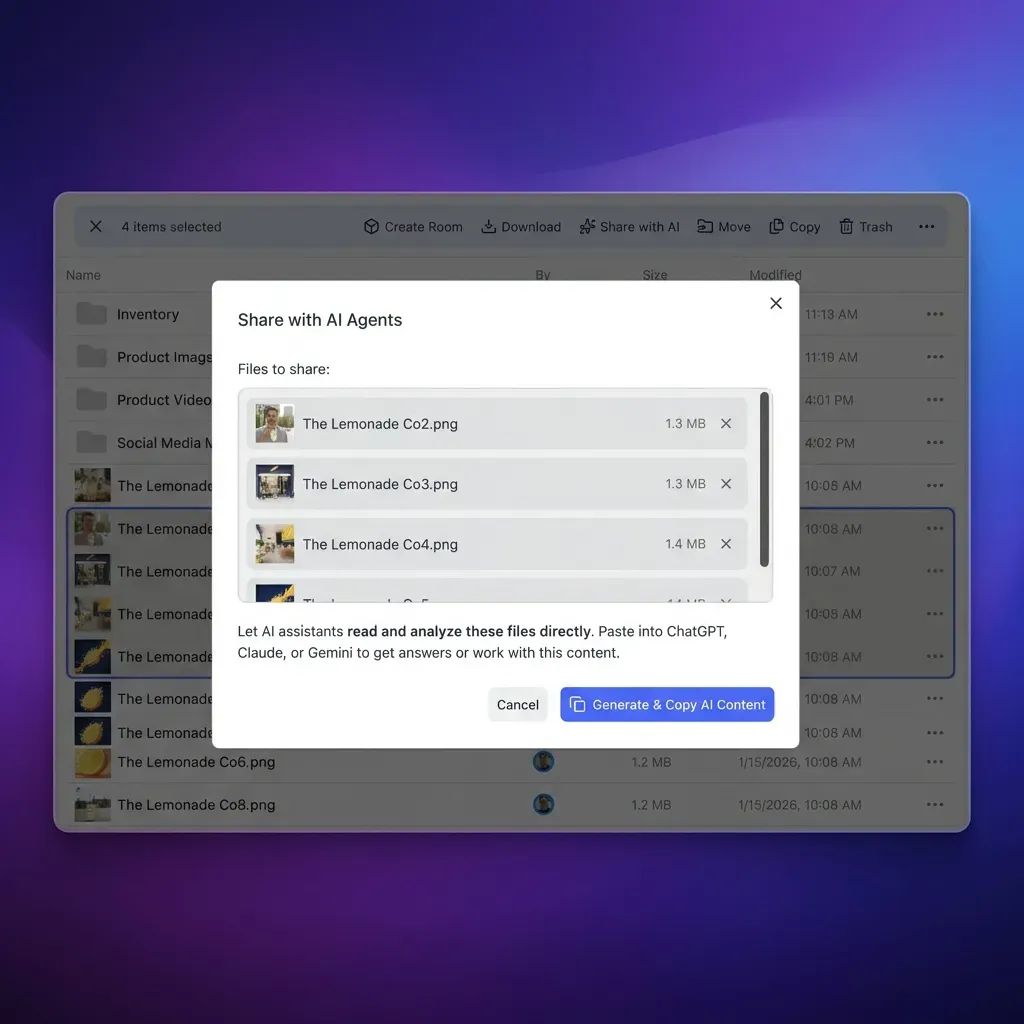
Syncing Results to a Cloud Workspace
Local inference solves the latency and cost problems, but it creates a new one: the data lives on a single Pi. If the SD card fails, your inference logs and captured images disappear. If a teammate needs to review what the agent detected, they need SSH access to the Pi.
The practical solution is syncing inference outputs to a cloud workspace where both humans and other agents can access them. The agent runs inference locally, then uploads the results (images, classification logs, summary reports) to a shared workspace.
Several options work for this:
- Local storage with rsync: Simple, but requires setting up a destination server and managing SSH keys. No built-in search or sharing.
- S3 or Google Cloud Storage: Reliable, but you are paying for storage and egress. No intelligence layer on top of the files.
- Google Drive or Dropbox: Familiar, but API rate limits and OAuth complexity add friction for automated agents.
- Fastio: Designed for exactly this workflow. The Business Trial provides generous storage and monthly credits during the trial. Agents access workspaces through the Fastio MCP server or REST API, and every uploaded file is automatically indexed for semantic search through Intelligence Mode.
The Fastio approach has a specific advantage for inference agents. Once the agent uploads a batch of classified images, any team member can open the workspace and ask questions in natural language: "Show me all images classified as damaged packaging this week" or "How many delivery trucks were detected yesterday?" Intelligence Mode's built-in RAG answers these queries using the uploaded data, no additional vector database or search infrastructure needed.
For multi-Pi deployments, each Pi agent can upload to the same workspace. A supervisor agent or human reviewer sees aggregated results across all locations. When you want to hand off the system to a client or operations team, Fastio's ownership transfer lets you build the workspace, populate it with agent outputs, and transfer control while retaining admin access for maintenance.
The upload itself is straightforward. The agent uses its tool-calling ability to hit the Fastio API or MCP server, uploading the image file and a JSON metadata sidecar with the classification result, timestamp, confidence score, and model version. Downstream systems can subscribe to the Fastio events feed to see new inference results as they arrive.
Performance Tuning and Troubleshooting
Getting inference running is the first step. Keeping it reliable under production conditions requires attention to thermal management, model selection, and monitoring.
Thermal throttling is the most common performance killer. The Pi 5's Cortex-A76 cores will clock down from 2.4 GHz when the chip temperature exceeds 80C. During sustained inference (processing a continuous video stream), temperatures climb fast without active cooling. The official Pi 5 case with fan keeps temperatures under 65C during continuous MobileNet inference. If you are using a passive heatsink only, expect periodic throttling that shows up as inference time spikes.
Monitor CPU temperature from the agent itself. Add a health check skill that reads /sys/class/thermal/thermal_zone0/temp and alerts if the value exceeds 75000 (75C). This early warning gives you time to reduce inference frequency or investigate cooling before the Pi starts throttling.
Model selection affects both speed and accuracy. MobileNet V2 quantized is the sweet spot for most classification tasks on the Pi 5: 25ms inference, 71% top-1 accuracy on ImageNet, and a 3.4 MB model file. If you need higher accuracy, EfficientNet-Lite2 delivers 77% accuracy but takes roughly 90ms per inference. For object detection, EfficientDet-Lite0 at 35ms is fast enough for real-time processing. EfficientDet-Lite2 is more accurate but drops to about 10 fps.
Quantization matters. Always use INT8 quantized models on the Pi. Full float32 models run 2 to 4x slower and consume more memory. Google's pre-trained model zoo includes quantized versions of most common architectures. If you are converting a custom model, use TFLite's post-training quantization with a representative dataset for best results.
The Coral USB Accelerator is worth considering for demanding workloads. Benchmarks show the Pi 5 with TFLite alone performs comparably to the Pi 4 with a Coral TPU for many models. But if you need to run multiple models simultaneously or process higher-resolution inputs, the Coral's dedicated Edge TPU offloads inference entirely from the CPU. This frees the ARM cores for OpenClaw's orchestration work. The tradeoff: Coral requires models compiled specifically for its Edge TPU, which limits you to INT8 quantized models and adds a compilation step.
Common issues
"ModuleNotFoundError: No module named 'tflite_runtime'": You are running the script outside the virtual environment. Either activate it first or use the full path: ~/tflite-env/bin/python3 classify.py.
Inference times over 200ms for MobileNet: Check that you installed the 64-bit version of Pi OS. The 32-bit version cannot use ARMv8.2-A optimizations. Also verify you are using tflite-runtime and not full TensorFlow, which includes training overhead.
Camera capture failures: If using libcamera, ensure no other process holds the camera. Only one application can access the Pi Camera Module at a time. For USB cameras, check ls /dev/video* to confirm the device is detected.
Memory pressure: If the Pi becomes unresponsive during inference, check total memory usage with free -h. Running OpenClaw, TFLite, and a camera stream simultaneously on a 4 GB Pi can push into swap. The 8 GB model avoids this.
Sources
References used to verify factual claims in this guide.
-
TFLite models run nearly 5x faster on Raspberry Pi 5 than Pi 4 Pi 5 ARMv8.2-A architecture achieves TFLite benchmarks 2.4x faster via dot-product and FP16 support Pi 5 TFLite inference speed is comparable to Coral TPU performance
-
OpenClaw uses a 5-component architecture with Gateway, Brain, Memory, Skills, and Heartbeat
-
TensorFlow Lite (LiteRT) supports Linux-based embedded and IoT devices with Python API
Frequently Asked Questions
Can OpenClaw run TensorFlow Lite on Raspberry Pi?
OpenClaw itself does not include TFLite, but its skill system lets you create a custom skill that calls a TFLite inference script running in a Python process. The agent invokes the script through its bash or exec tool, reads the JSON results, and incorporates them into its reasoning. This approach keeps OpenClaw handling orchestration while TFLite handles inference.
How fast is TensorFlow Lite inference on Raspberry Pi 5?
MobileNet V2 image classification runs in roughly 25ms per inference on the Pi 5. Object detection with EfficientDet-Lite0 takes about 35ms per frame, which is fast enough for 20+ fps real-time video processing. These speeds come from the Cortex-A76's NEON SIMD instructions and ARMv8.2-A dot-product acceleration. The Pi 5 runs TFLite models nearly 5x faster than the Pi 4.
What is the difference between TFLite and Coral TPU for edge AI?
TFLite runs inference on the Pi's CPU using optimized ARM instructions. The Coral USB Accelerator has a dedicated Edge TPU chip that offloads inference entirely from the CPU. Benchmarks show that TFLite on the Pi 5 performs comparably to Coral on the Pi 4 for many models. Coral still wins for multi-model workloads or higher-resolution inputs because it frees the CPU for other work. The tradeoff is that Coral requires specifically compiled INT8 models, which adds a build step.
How much RAM does OpenClaw with TFLite need on a Raspberry Pi?
OpenClaw's Node.js runtime typically uses 300 to 500 MB. A TFLite model in a separate Python process adds 50 to 200 MB depending on model size. On a Pi 5 with 8 GB RAM, this leaves several gigabytes free for the OS, camera buffers, and other processes. The 4 GB Pi 5 variant works for smaller models but can hit memory pressure with larger detection models or concurrent camera streams.
Do I need the full TensorFlow package or just the TFLite runtime?
Install the tflite-runtime pip package, not the full tensorflow package. The runtime is roughly 5 MB versus 500+ MB for full TensorFlow, and it includes everything needed for on-device inference. The full package adds training APIs and GPU support that are unnecessary on a Pi and waste disk space and memory.
Can I run multiple TFLite models at the same time on a Raspberry Pi?
Yes, but each model loads into its own interpreter instance and consumes additional memory. Running two MobileNet models simultaneously is feasible on an 8 GB Pi 5. For heavier workloads with multiple detection models, consider a Coral USB Accelerator to offload inference from the CPU, or stagger the models so only one runs at a time.
Related Resources

Give Your Edge Agent a Persistent Workspace
Your Pi classifies images locally, but teams need to see the results. Built for openclaw raspberry tensorflow lite edge inference agent workflows.