How to Deploy Industrial Raspberry Pi with OpenClaw AI Agents
Roughly 75% of Raspberry Pi units now ship into industrial and embedded applications, yet most deployment guides still target hobbyists. This guide covers selecting the right Compute Module for commercial use, navigating compliance certification, running OpenClaw AI agents on headless CM5 hardware, and connecting industrial edge nodes to persistent cloud storage for audit trails and team handoff.

The Industrial Pi Market Is Larger Than the Maker Market
Approximately 75% of Raspberry Pi units now ship into industrial and embedded applications, according to the Raspberry Pi Foundation. That number surprises people who still associate the platform with weekend projects and LED strips. The reality is that Compute Modules power silicon ingot cutting machines, autonomous marine vehicles, and smart building controllers across thousands of production deployments worldwide.
The gap between what Raspberry Pi hardware can do in industrial settings and what most guides actually cover is wide. Search for "industrial Raspberry Pi" and you get hobbyist tutorials repackaged with the word "industrial" in the title. Few address compliance testing, production lifetime commitments, or how to pair edge hardware with AI agent orchestration for autonomous monitoring and decision-making.
This guide bridges that gap. It covers board selection for commercial environments, the compliance certification pipeline, deploying OpenClaw as an always-on AI agent on headless Compute Module 5 hardware, and wiring the whole system to persistent cloud storage where both agents and human operators share the same workspace.
Related guides
- How to Deploy Hermes Agent on KubernetesHermes Agent's official docs cover six terminal backends, but Kubernetes is not one of them. A community-maintained...
- How to Deploy CrewAI to ProductionDeploying CrewAI crews to production moves notebook experiments to reliable systems. Notebooks suit tests, but lack...
- How to Deploy OpenClaw Agents on Raspberry Pi Compute Module 4The Raspberry Pi Compute Module 4 shares the same BCM2711 SoC as the Pi 4, which OpenClaw officially supports, making...
- How to Build an OPC UA SCADA Gateway Agent with OpenClaw on Raspberry PiAn OPC UA SCADA gateway agent runs OpenClaw on a Raspberry Pi to bridge industrial control systems with AI-powered...
- How to Deploy OpenClaw Headless on Raspberry PiA headless OpenClaw deployment runs the AI agent on a Raspberry Pi without a monitor or keyboard, managed entirely via...
- How to Deploy OpenClaw on Ubuntu Server for Raspberry PiUbuntu Server gives Raspberry Pi owners an LTS-backed operating system with five years of free security patches, native...
More on this subject: OpenClaw on Raspberry Pi (192 guides)
How to Choose Between CM5, Pi 5, and RP2040 for Industrial Use
Raspberry Pi offers three product lines relevant to industrial deployments. Each targets a different layer of the automation stack.
Raspberry Pi Compute Module 5 (CM5)
- Broadcom BCM2712 quad-core Arm Cortex-A76 at 2.4GHz
- 2GB, 4GB, 8GB, or 16GB LPDDR4X-4267 SDRAM with ECC support
- 16GB, 32GB, or 64GB MLC eMMC storage (or Lite variant for external boot)
- 2x USB 3.0 at 5Gbps, PCIe 2.0 x1, Gigabit Ethernet with IEEE 1588
- Optional dual-band 802.11ac Wi-Fi and Bluetooth 5.0
- Production availability guaranteed until at least January 2036
- Starting price: $45 (2GB Lite, no wireless)
The CM5 is the industrial workhorse. Its small form factor mounts onto custom carrier boards, letting you design exactly the I/O layout your application needs. The decade-plus production commitment means you can design a product today and still order replacement modules in 2035. MLC eMMC storage handles the write endurance requirements that SD cards cannot sustain in 24/7 deployments.
Raspberry Pi 5
- Same BCM2712 SoC as the CM5
- Fixed form factor with standard I/O (2x HDMI, 4x USB, GPIO header)
- Available in 2GB, 4GB, and 8GB RAM configurations
- Suitable for prototyping and low-volume deployments
The Pi 5 shares the CM5's processor, which makes it an ideal development board for testing OpenClaw agent configurations before committing to a Compute Module deployment. For production, the fixed form factor limits your options. You cannot strip out the HDMI ports, add RS-485, or mount the board directly into a DIN rail enclosure.
RP2040 Microcontroller
- Dual-core Arm Cortex-M0+ at 133MHz
- 264KB SRAM, no built-in flash
- Low cost (around $0.70 at volume)
- Extensively documented for machine learning at the edge
The RP2040 sits below the other two in the stack. It handles real-time sensor polling, motor control, and protocol conversion. In industrial deployments, an RP2040 often acts as a sensor frontend that feeds data to a CM5 running OpenClaw. The microcontroller handles the timing-critical GPIO work while the CM5 handles the reasoning.
For industrial AI agent deployments, the CM5 is the default choice. Use the Pi 5 for prototyping and the RP2040 for real-time peripheral control.

How to Navigate Compliance and Certification for Industrial Pi Products
Shipping a Raspberry Pi inside a commercial product requires compliance testing, even though the Compute Module itself is pre-certified. The FCC requires that the final assembled product completes testing through an approved lab and receives equipment authorization. Integrating a CM5 into a custom carrier board changes the emissions characteristics, so the pre-certification of the module alone is not sufficient for regulatory approval.
Raspberry Pi provides two resources that simplify this process .
Product Information Portal
The Product Information Portal gives free access to compliance documentation, conformity certificates, and test reports for every Raspberry Pi product. Create a free account and you can download the datasheets, schematics, and certification documents you need for your own compliance submission. For the CM5 specifically, the portal includes FCC, CE, and regional certification packages that your test lab will reference when evaluating your assembled product.
Design Partner Network
Raspberry Pi maintains a vetted network of design partners who specialize in taking Compute Module designs from prototype to production. These partners handle carrier board design, thermal engineering, enclosure manufacturing, and compliance testing as a service. If you are building your first industrial product on a Compute Module, working with a design partner compresses the timeline from concept to certified product by months.
The compliance process typically involves:
- Design your carrier board with the CM5 mounted
- Build pre-production units
- Submit to an accredited test lab for FCC Part 15 (US), CE marking (EU), and any region-specific requirements
- Reference the CM5's existing certifications from the Product Information Portal in your submission
- Receive equipment authorization for your specific assembled product
Industrial carrier boards from companies like Sfera Labs and EmbeddedPi ship with their own FCC and CE certifications, which can further simplify the process if you use an off-the-shelf carrier rather than designing your own.


Persistent Storage for Your Industrial Pi Agents
A workspace with MCP-ready endpoints. Store sensor logs, model outputs, and deployment configs where both your agents and your team can reach them. Starts with a 14-day Business Trial (card required; see /pricing/).
Installing OpenClaw on Headless Compute Module 5
OpenClaw turns a Compute Module 5 into an always-on AI agent that can monitor sensors, respond to events, and communicate through 23+ messaging channels including Telegram, Slack, Discord, and WhatsApp. The agent runs as a persistent gateway on the Pi while routing inference requests to cloud LLM providers like Claude, GPT, or Gemini.
This architecture makes sense for industrial deployments. The CM5 handles I/O, scheduling, and local logic at 3 to 5 watts of idle power consumption. The heavy reasoning happens on cloud APIs. Annual electricity cost for a CM5 running OpenClaw continuously is roughly $7 to $14, which is negligible compared to traditional industrial PCs that draw 50 to 150 watts under load.
Hardware requirements for OpenClaw on CM5:
- Minimum: 1GB RAM, 1 core, 500MB free disk, 64-bit OS
- Recommended: 4GB+ RAM CM5, USB SSD for boot and storage, Ethernet connection
- Do not attempt to run local LLMs on the Pi. Even small models are too slow for production use. Route inference to Claude or GPT through their APIs.
Headless setup process:
- Flash Raspberry Pi OS Lite (64-bit) onto your CM5's eMMC or an attached USB SSD using the official Raspberry Pi Imager. Pre-configure the hostname, SSH credentials, and network settings in the imager before flashing.
- Boot the CM5 on its carrier board and connect via SSH.
- Update the system and install build dependencies (git, curl, build-essential).
- Install Node.js 24 from the NodeSource repository.
- Run the OpenClaw installer and complete the onboarding wizard, which configures your LLM API keys and messaging channel connections.
- Enable systemd user service lingering so OpenClaw survives SSH disconnects and system reboots.
Performance tuning for industrial use:
- Boot from USB SSD instead of eMMC or SD card. Random I/O performance improves dramatically, and SSDs handle the write patterns of continuous logging far better than flash storage.
- Reduce GPU memory allocation to 16MB since headless deployments do not need video output.
- Disable Bluetooth and any unused services to free RAM and reduce the attack surface.
With these optimizations, a 4GB CM5 running OpenClaw typically uses under 400MB of RAM, leaving ample headroom for your application-specific scripts and sensor polling processes.

Connecting Industrial Pi Agents to Persistent Cloud Storage
An OpenClaw agent running on a CM5 generates data constantly: sensor logs, decision records, alert histories, configuration snapshots, and model outputs. Storing all of this on the Pi's local storage creates two problems. First, eMMC and SSD capacity on edge hardware is limited. Second, the data is stranded on a device that might be mounted inside a factory enclosure with no convenient access for human operators.
Industrial deployments need a storage layer that both the edge agent and the human team can access. Local options like NFS shares or S3-compatible object stores work but require infrastructure you have to maintain. You need backup policies, access control, and monitoring for every self-hosted storage node.
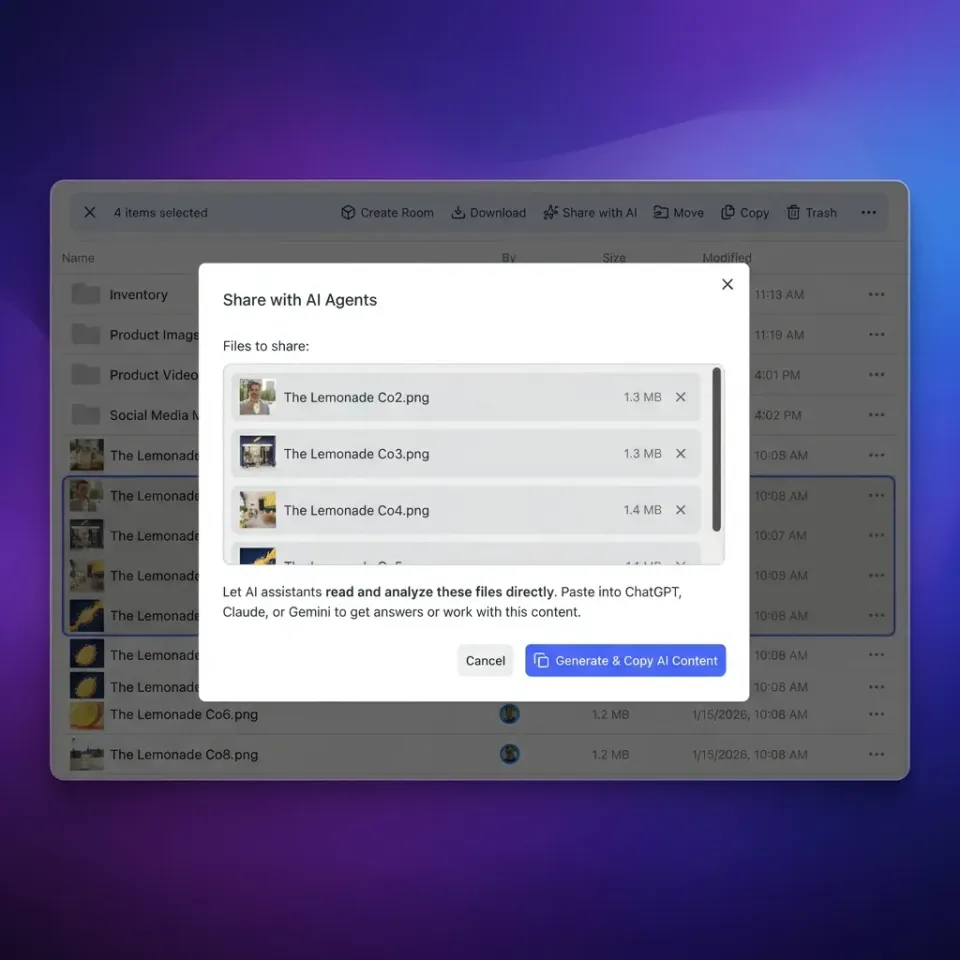
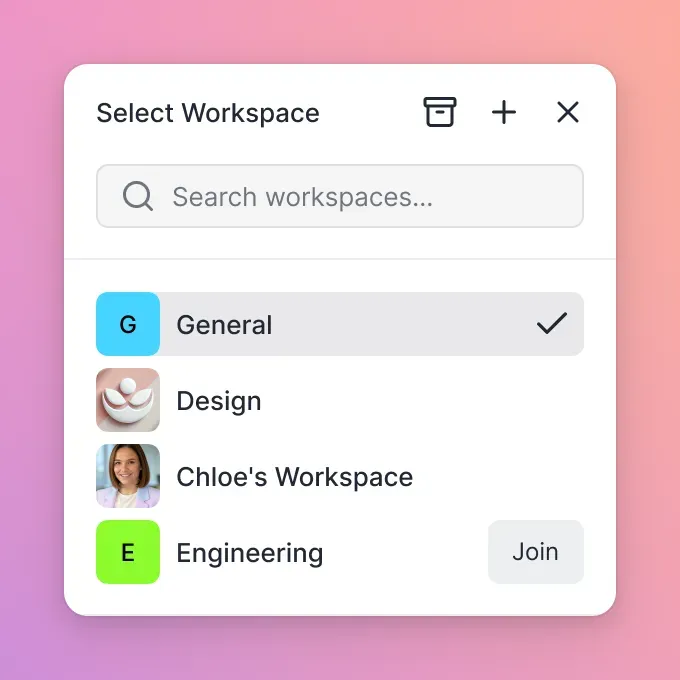
Fast.io provides an alternative that eliminates the infrastructure overhead. The agent creates a workspace, uploads files through the MCP server or REST API, and the human team accesses the same files through a web interface. Once Intelligence is enabled for the workspace, uploaded files are indexed for semantic search, so an operator can ask questions about sensor logs or configuration files without downloading and reading them manually.
For industrial deployments, the relevant capabilities are:
- Persistent workspaces that survive device failures and redeployments. If a CM5 dies, the replacement agent connects to the same workspace and picks up where the previous one left off.
- Audit trails that record every file operation. When regulators or quality teams ask what happened at a specific time, the answer is in the event log.
- Ownership transfer that lets an agent build and populate a workspace, then hand control to a human operator. The agent retains admin access for continued uploads while the human manages the workspace day to day.
- Advisory file locks for environments where multiple agents write to the same workspace. An agent acquires a file lock before writing, heartbeats it while working, and releases it when done. Another agent attempting to lock receives HTTP 409 and can wait, while version history tracks every write.
- Realtime activity polling and WebSocket events that notify downstream systems when files change, allowing dashboard refreshes or alert pipelines as new sensor reports arrive.
Fast.io plans bundle storage, monthly credits, and workspaces scaled to each tier (Starter, Business, and Enterprise), with a 14-day Business Trial (card required; see pricing). For a single CM5 deployment generating daily sensor logs and weekly reports, the included capacity is more than enough to keep running.
To connect an OpenClaw agent on a CM5 to Fast.io, configure the agent to use the MCP server at https://mcp.fast.io/mcp/tools (Streamable HTTP). The MCP toolset covers workspace creation, file upload and download, AI queries, and event subscriptions. Your agent can upload a batch of sensor readings, ask the workspace "what was the peak temperature in the last 24 hours?", and include the answer in a Telegram alert to the on-call engineer.
Production Deployments in the Field
The Raspberry Pi Foundation documents several industrial deployments that illustrate what production-grade Compute Module usage looks like in practice.
Silicon ingot cutting uses Compute Module 5 to control precision cutting machinery. The CM5's quad-core processor handles the real-time computation for blade positioning while monitoring vibration sensors and temperature readings. When parameters drift outside acceptable ranges, the system adjusts automatically or alerts the operator through configured messaging channels.
Smart building management runs on Compute Module 4 deployments that manage HVAC, lighting, and occupancy sensing across multi-floor commercial buildings. Environmental data analysis happens at the edge, with summary reports pushed to cloud storage for building managers. These deployments are natural candidates for CM5 upgrades, since the CM5 maintains backward-compatible carrier board connectors while offering faster processing.
Autonomous marine vehicles built on CM4 navigate coastal and offshore environments for survey and monitoring work. The Compute Module handles sensor fusion from GPS, sonar, and camera inputs while maintaining communication links to shore-based control stations.
At Hannover Messe 2026, the Portuguese startup Coreflux demonstrated a system that lets operators automate factory floor processes in plain English instead of ladder logic or structured text. A Raspberry Pi running their Language of Things engine processed factory data, managed energy systems, and communicated with machines in real time. The total hardware cost for the edge controller was $35.
These deployments share a common pattern. The Raspberry Pi handles local computation and I/O at the edge. An AI agent provides the reasoning layer. And a cloud workspace stores the output where human operators can access it. The CM5's ten-year production guarantee means the hardware platform remains stable while the software stack and agent capabilities evolve around it.
For teams starting their first industrial Pi deployment, the recommended path is: prototype on a Pi 5, validate your OpenClaw agent behavior with your specific sensors and APIs, design or select a CM5 carrier board for production, run compliance testing, and connect the deployed agent to Fast.io for persistent storage and human handoff. The entire hardware stack costs under $200 per node, with no monthly fees for the edge hardware and a 14-day Business Trial on Fast.io (card required; see /pricing/) for the agent's output.
Sources
References used to verify factual claims in this guide.
-
Approximately 75% of Raspberry Pi units are now deployed in industrial and embedded applications CM5 starts at $45 with Broadcom BCM2712 quad-core Cortex-A76 at 2.4GHz
-
Raspberry Pi technology has been deployed in tens of thousands of applications in a variety of industries
-
Compute Module 5 will remain in production until at least January 2036
-
OpenClaw has over 380,000 GitHub stars as of June 2026
-
OpenClaw on Raspberry Pi idles at 3-5W with annual electricity cost of approximately $7-14
-
Coreflux demonstrated factory automation on a $35 Raspberry Pi at Hannover Messe 2026
Frequently Asked Questions
Can Raspberry Pi be used in industrial applications?
Yes. Approximately 75% of Raspberry Pi units now ship into industrial and embedded applications. The Compute Module product line is specifically designed for commercial use, with long production lifetimes (CM5 is guaranteed until at least January 2036), compliance certification support through the Product Information Portal, and a vetted design partner network that helps manufacturers take products from prototype to certified production.
What is the difference between Raspberry Pi 5 and Compute Module 5 for industrial use?
The Pi 5 and CM5 share the same BCM2712 processor, but the CM5 is a system-on-module designed to mount on custom carrier boards. This lets you design exactly the I/O configuration your application needs, whether that means RS-485 for industrial communication, DIN rail mounting, or removing unused ports like HDMI. The CM5 also offers MLC eMMC storage options that handle continuous write patterns better than SD cards, and its smaller form factor fits inside industrial enclosures.
Is Raspberry Pi reliable enough for industrial use?
The Raspberry Pi Foundation has documented tens of thousands of industrial deployments across sectors including precision manufacturing, smart buildings, and autonomous marine vehicles. The CM5 offers MLC eMMC storage for write endurance, ECC-capable LPDDR4X memory, and a guaranteed production run until January 2036. For additional reliability, industrial carrier boards from design partners add features like wide-input power supplies, watchdog timers, and conformal coating for harsh environments.
How much power does a Raspberry Pi Compute Module 5 consume?
A CM5 running OpenClaw as a headless agent idles at approximately 3 to 5 watts. Annual electricity cost at continuous operation is roughly $7 to $14 depending on local rates. This is a fraction of what traditional industrial PCs consume, which makes the CM5 practical for always-on deployments where power budget or heat dissipation is constrained.
Can OpenClaw run on Raspberry Pi hardware?
OpenClaw officially supports Raspberry Pi 4 and Pi 5 hardware, which includes the CM5 since it shares the Pi 5's BCM2712 processor. Minimum requirements are 1GB RAM, 500MB disk, and a 64-bit OS. The recommended configuration for industrial use is a 4GB or 8GB CM5 with a USB SSD and Ethernet connection. OpenClaw handles local I/O and agent logic while routing inference requests to cloud LLM providers.
How do I store data from an industrial Raspberry Pi agent in the cloud?
Connect your OpenClaw agent to a cloud workspace through the Fast.io MCP server at mcp.fast.io/mcp/tools. The agent uploads sensor logs, reports, and configuration files to a shared workspace where human operators access the same data through a web interface. Once Intelligence is enabled for the workspace, files are indexed and searchable for semantic queries, and audit logs record every operation. Fast.io offers Starter, Business, and Enterprise plans with a 14-day Business Trial (card required; see /pricing/).
Related Resources

Persistent Storage for Your Industrial Pi Agents
A workspace with MCP-ready endpoints. Store sensor logs, model outputs, and deployment configs where both your agents and your team can reach them. Starts with a 14-day Business Trial (card required; see /pricing/).