How to Build a Smart Baby Monitor with OpenClaw on Raspberry Pi
A smart baby monitor agent running OpenClaw on a Raspberry Pi combines a camera, microphone, and temperature sensor to watch over a nursery. This guide covers the hardware, sensor wiring, cry detection with AI, context-aware alert filtering, and cloud-synced event logs so parents get useful notifications instead of false alarms.

Why Standard Baby Monitors Fall Short
Most Raspberry Pi baby monitor tutorials walk you through setting up a video stream with the Pi Camera Module and calling it done. Projects like OpenBabyMonitor on GitHub add basic cry detection using threshold-based loudness checks or small neural networks trained on Google's AudioSet. These are genuine improvements over a simple webcam feed, but they still leave gaps.
The baby monitor market is projected to reach $2.1 billion by 2027, and the growth is driven by parents wanting smarter alerts, not just more pixels. A camera stream alone does not tell you whether a sound is a cry, a cough, or the cat jumping off the dresser. Threshold-based detectors trigger on any loud noise. Parents end up checking a traditional monitor an average of 12 times per night, many of those checks prompted by false alarms.
A smarter approach layers an AI agent on top of the sensor hardware. Instead of forwarding raw audio levels, the agent classifies sounds, checks room temperature and humidity, and decides whether the situation warrants an alert. A brief fuss at 2 AM with stable room conditions might not need a notification. Sustained crying combined with a rising room temperature probably does.
This is what an OpenClaw nursery agent does: it sits between your sensors and your phone, applying reasoning to raw data before alerting you. The result is fewer false alarms and more context when something actually needs your attention.
Related guides
- How to Build a Hermes Agent AI Code CheckerThe proportion of copy-pasted code in repositories rose from 8% in 2020 to 12% in 2024, representing a 48% relative...
- How to Build AI Agents with the Claude Agent SDKThe Claude Agent SDK is Anthropic's toolkit for building AI agents that can read files, run commands, search the web,...
- How to Build a Pool Water Quality Monitor with OpenClaw on Raspberry PiCommercial pool monitors display readings on a screen. They tell you the pH is 7.1 but not what to do about it. This...
- How to Build a Smart Medication Reminder with OpenClaw on Raspberry PiMost DIY Raspberry Pi pill dispensers run on fixed timers. This guide adds an OpenClaw agent that tracks adherence...
- How to Build an OpenClaw Smart Mirror with Raspberry PiA smart mirror display agent is an OpenClaw-powered Raspberry Pi connected to a TFT or monitor behind a two-way mirror,...
- How to Build a Smart Irrigation Controller with OpenClaw on Raspberry PiMost Raspberry Pi irrigation projects water plants when a sensor reads 'dry.' That works, but it ignores weather...
More on this subject: OpenClaw on Raspberry Pi (192 guides)
What to check before scaling openclaw raspberry pi baby monitor nursery agent
OpenClaw runs comfortably on a Raspberry Pi 4 (4 GB minimum) or Raspberry Pi 5 (8 GB recommended for faster inference). The Pi 5 handles local model inference better, but cloud-hosted LLMs through Claude, GPT-4, or Gemini work fine on either board. OpenClaw's baseline requirements are modest: 1 GB RAM, 1 CPU core, and 500 MB disk.
Parts list:
- Raspberry Pi 4 (4 GB) or Pi 5 (8 GB)
- MicroSD card (16 GB or larger) or USB SSD for better reliability
- Raspberry Pi Camera Module 2 or NoIR variant for low-light nursery use
- USB microphone (a basic condenser mic works, around $9)
- BME680 breakout board for temperature, humidity, pressure, and VOC gas readings
- 5V 3A USB-C power supply
- Optional: NeoPixel LED strip (WS2812B) for visual status indicator
Sensor wiring:
The BME680 connects to the Pi's I2C bus. Wire SDA to GPIO 2, SCL to GPIO 3, VIN to 3.3V, and GND to any ground pin. The Pi Camera Module plugs into the CSI ribbon connector. The USB microphone connects to any available USB port.
If you want a visual status indicator, a short NeoPixel strip on GPIO 26 lets the agent show green for normal conditions, amber for elevated temperature, and red when it detects sustained crying. Keep the strip dim and position it away from the crib so it does not disturb sleep.
Software prerequisites:
Install Raspberry Pi OS (64-bit) and enable the camera and I2C interfaces through raspi-config. The Fastio OpenClaw Pi tutorial recommends Adafruit Blinka as the sensor library layer. Blinka provides a CircuitPython compatibility layer so you can use the same sensor libraries on a Pi that you would use on a microcontroller. Install it alongside the BME680 library from Adafruit's learning system.
A note on the NoIR camera:
The standard Pi Camera Module 2 includes an infrared filter that blocks IR light, which means it struggles in a dark nursery. The NoIR variant removes that filter. Pair it with a small IR LED array (positioned outside the crib) and you get clear black-and-white video in complete darkness without any visible light that could wake the baby.

Audio Classification and Cry Detection
Raw audio volume is a poor signal for baby monitoring. A door closing, a dog barking, or a passing truck can all exceed the decibel threshold that triggers a basic detector. The goal is classification, not just detection.
Baby cries concentrate their acoustic energy in the 250 Hz to 2,500 Hz frequency range, with distinctive harmonic patterns that separate them from speech, music, and environmental noise. Several open-source projects have trained models on labeled audio datasets to distinguish crying from babbling, coughing, and silence.
Two practical approaches for the Pi:
Lightweight neural network: The OpenBabyMonitor project trains a small model on Google's AudioSet labels, running inference on audio chunks captured from the USB microphone. This approach works on a Pi Zero W and draws under 1 watt during detection. It is accurate enough for binary classification (crying vs. not crying) but does not distinguish between types of cries.
LLM-assisted classification: OpenClaw can pipe audio event summaries (frequency profile, duration, periodicity) to a language model that reasons about the context. A 3-second burst of high-frequency sound followed by silence is different from 45 seconds of sustained crying with rising intensity. The LLM does not process raw audio directly. Instead, a lightweight local classifier extracts features, and the OpenClaw agent uses those features alongside temperature and camera data to decide what to do.
The second approach is where OpenClaw adds genuine value over a standalone cry detector. The agent combines audio classification results with room conditions. If the BME680 reads 27°C and rising while the baby is crying, the alert includes that context: "Crying detected, room temperature is 27°C and climbing." A parent receiving that notification can act on it without pulling up a separate temperature app.
Reducing false positives:
Configure the agent to require sustained audio events before alerting. A single 2-second spike is often noise. Crying that persists for 15 seconds or longer with consistent frequency characteristics is almost always real. You can tune this threshold based on your child's patterns. The agent's memory system, which stores context in local Markdown files, can track historical patterns to refine its sensitivity over time.


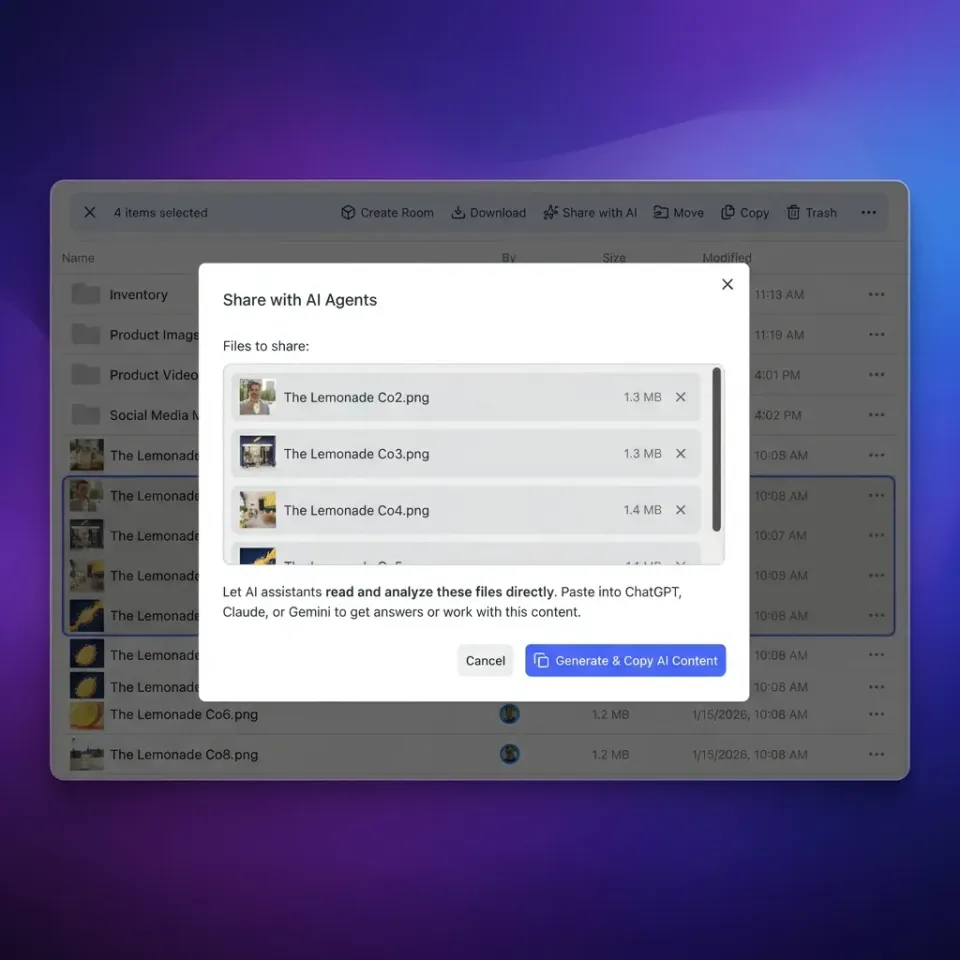
Store Your Nursery Agent's Logs and Snapshots
Built for openclaw raspberry baby monitor nursery agent workflows.
Building the OpenClaw Nursery Agent
OpenClaw is an open-source AI agent framework that transforms language models from chat interfaces into action-oriented agents. On a Raspberry Pi, it runs on Node.js with first-class ARM64 support. The Raspberry Pi Foundation published an official guide for running OpenClaw on Pi hardware, and the framework supports both cloud-hosted LLMs and local models through Ollama or llama.cpp.
The agent's behavior is defined through OpenClaw's skills system. Skills are directories containing a SKILL.md file with instructions that tell the agent what tools to use and how to reason about inputs. For a nursery monitor, the skill defines the agent's response logic: when to alert, when to log quietly, and when to ignore.
What the nursery skill handles:
- Sensor polling: Read temperature, humidity, and VOC levels from the BME680 at regular intervals. Log readings and flag deviations from a comfortable range (typically 18 to 22°C for a nursery).
- Audio event processing: Receive classification results from the local audio model. Evaluate duration, intensity, and pattern before deciding on an action.
- Camera snapshots: Capture a still frame when an audio event is detected. This gives parents visual context alongside the alert, which is far more useful than audio-only notifications.
- Alert routing: Send notifications through the messaging platform of your choice. OpenClaw supports WhatsApp, Telegram, Slack, Signal, and others natively. Parents can receive a message like "Crying started at 2:14 AM, room is 21°C, humidity 45%," with an attached snapshot.
- Event logging: Write each event (cry detected, temperature spike, manual check-in) to a structured log file for later review.
Model selection matters for nursery use:
For a dedicated nursery monitor that runs around the clock, latency and cost are real considerations. A cloud-hosted model like Claude or GPT-4 gives the best reasoning quality but adds network latency and API costs. A local model through Ollama on a Pi 5 keeps everything on-device with zero API costs and no internet dependency, though reasoning quality is lower.
A practical middle ground: use a local model for routine classification decisions (temperature normal, no cry detected, log and continue) and route complex or ambiguous situations to a cloud model. OpenClaw supports this kind of tiered approach through its tool and skill configuration.

Syncing Event Logs and Snapshots to the Cloud
A nursery monitor generates data that both parents, grandparents, and caregivers may need to access. Keeping everything on the Pi's local storage works for a single user, but it falls apart when multiple people want to check the baby's overnight log or review a snapshot from an alert.
Cloud sync solves this, and the choice of storage backend matters. Generic cloud drives like Google Drive or Dropbox handle file uploads, but they are not designed for agent-generated content. You end up with a folder full of timestamped files and no easy way to search or query them.
Fastio is built for this use case. As a workspace platform for agentic teams, it treats agent-uploaded files as first-class content. The OpenClaw agent can upload event logs, snapshots, and daily summaries to a Fastio workspace using the MCP server, which exposes tools for file operations, workspace management, and AI queries over Streamable HTTP.
What this looks like in practice:
The agent writes a nightly summary to a Fastio workspace: sleep periods, total cry events, average room temperature, and any anomalies. Snapshots from cry events are uploaded alongside the summary. When Intelligence Mode is enabled on the workspace, those files are automatically indexed for semantic search. A parent or pediatrician can later ask questions like "How many times did the baby cry last Tuesday?" and get answers with citations from the uploaded logs.
Sharing with caregivers:
Fastio's branded shares let you create a receive-only or view-only link for a babysitter or grandparent. They see the latest nursery data without needing a login or installing an app. When the caregiver relationship ends, you revoke the share. Audit trails track who accessed what, which matters when you are sharing data about a child.
Fastio offers a 14-day Business Trial, card required; see pricing for plan options. With 250 GB of storage on the Starter plan and more on higher plans, it has room for months of nursery monitoring data, even with camera snapshots.
Ownership transfer for professional setups:
If you are building nursery monitors for clients (a doula practice, a neonatal care service), the ownership transfer feature lets you set up the workspace, configure the agent, populate it with documentation, and then hand the entire workspace to the client. You keep admin access for troubleshooting while the client owns their data.
Safety Considerations and Practical Limits
A DIY baby monitor is a supplementary tool, not a replacement for safe sleep practices or medical monitoring equipment. The American Academy of Pediatrics recommends placing infants on their backs on a firm, flat surface for every sleep, and no consumer or DIY monitor changes that guidance.
What this setup can do:
- Detect and classify sounds with reasonable accuracy
- Track room temperature and humidity trends
- Send context-aware alerts with snapshots
- Log events for pattern review
- Reduce false alarm fatigue compared to threshold-only monitors
What this setup cannot do:
- Monitor breathing or blood oxygen (that requires medical-grade pulse oximetry)
- Replace a caregiver's presence during high-risk sleep periods
- Guarantee zero missed events (network outages, power failures, and sensor malfunctions can all cause gaps)
Practical reliability tips:
Power the Pi from a UPS or battery backup so a brief power outage does not kill the monitor. Use an SSD instead of a microSD card for storage, since SD cards can corrupt after months of continuous writes. Set up a heartbeat check: the agent sends a "still running" message every hour, and if the message stops, your phone alerts you that the monitor itself is down.
Position the microphone within 1 to 2 meters of the crib for reliable audio pickup. USB microphones vary wildly in sensitivity, so test yours by recording at the actual nursery volume level before relying on it. The BME680 sensor should sit at crib height but outside the crib to get an accurate room reading without affecting the baby's sleep surface.
Privacy:
All sensor processing happens on the Pi itself. Audio classification runs locally, and raw audio is never streamed to a cloud service. Camera snapshots are captured on-demand during events and uploaded to your private workspace only when you configure cloud sync. If you skip the cloud sync step entirely, nothing leaves your local network.
Sources
References used to verify factual claims in this guide.
-
The baby monitor market is projected to reach $2.1 billion by 2027
-
Parents check traditional baby monitors an average of 12 times per night
-
Baby cries concentrate acoustic energy in the 250 Hz to 2,500 Hz frequency range
Frequently Asked Questions
Can I build a baby monitor with Raspberry Pi?
Yes. A Raspberry Pi 4 or Pi 5 combined with a camera module, USB microphone, and temperature sensor gives you a fully functional baby monitor. Adding OpenClaw as the AI agent layer lets you go beyond a basic video stream to include cry detection, contextual alerts, and event logging.
Is a Raspberry Pi baby monitor safe?
A Pi-based monitor is a supplementary awareness tool, not a medical device. It can reliably detect sounds, track room temperature, and send alerts, but it cannot monitor breathing or blood oxygen levels. Follow standard safe sleep guidelines from the American Academy of Pediatrics regardless of what monitoring technology you use.
How do I add sound detection to a Raspberry Pi baby monitor?
Connect a USB microphone to the Pi and use a lightweight neural network trained on audio datasets like Google's AudioSet to classify sounds. Baby cries concentrate in the 250 Hz to 2,500 Hz range with distinctive harmonic patterns. OpenClaw can layer reasoning on top of the classifier, combining audio results with room temperature data to reduce false alarms.
What Raspberry Pi model works best for a baby monitor?
A Raspberry Pi 4 with 4 GB of RAM handles the core monitoring tasks well. A Pi 5 with 8 GB is better if you want to run local AI models through Ollama for fully offline cry classification. OpenClaw's minimum requirements are 1 GB RAM, 1 CPU core, and 500 MB disk, so even a Pi 4 has headroom.
How long can a Raspberry Pi baby monitor run on battery power?
A Pi 4 running cry detection draws between 3 and 5 watts. With a 20,000 mAh power bank providing 5V output, expect roughly 15 to 20 hours of operation. For continuous overnight use, a wall-powered Pi with a small UPS backup provides the most reliable setup.
Related Resources

Store Your Nursery Agent's Logs and Snapshots
Built for openclaw raspberry baby monitor nursery agent workflows.