Best Raspberry Pi Alternatives for Running OpenClaw AI Agents
The Raspberry Pi 5 runs OpenClaw's Node.js runtime without issues, but 2026 memory shortages pushed the 8GB model to $125 while adding no on-board AI accelerator. Seven alternatives offer better price-to-performance for always-on agent deployments, from the $179 RUBIK Pi 3 with a verified OpenClaw deployment to the $599 Mac Mini M4 that idles under 5 watts.

Why Raspberry Pi Falls Short for OpenClaw Agents
The Raspberry Pi 5's 16GB model now costs $205, a 70% increase from its original $120 MSRP, driven by a global LPDDR4X memory shortage that hit supply chains in late 2025. Even the 8GB model jumped to $125. At those prices, the Pi's value proposition shifts: you are paying mid-range SBC money for a board with no dedicated AI accelerator and a PCIe 2.0 bus that limits NVMe storage throughput.
OpenClaw's own requirements are modest. The agent runtime needs Node.js 22.16 or newer, 2GB of RAM minimum, and 4GB for daily production use. Since OpenClaw routes inference to cloud LLM APIs by default, the board mostly manages network connections, skill execution, and local file I/O. Any Raspberry Pi 4 or 5 with 4GB handles that workload.
The limits appear when you push past a single agent running cloud-only inference. Running local models, even 1B-parameter quantized versions, on a Pi requires the AI HAT+ accessory, which adds cost and occupies the PCIe slot. Multi-agent orchestration can consume 16GB or more of RAM. And if your agent generates files, indexes documents, or maintains a local knowledge base, you need NVMe storage speeds that the Pi's bus cannot deliver.
The boards below were scored on five criteria: AI compute (measured in TOPS), memory ceiling, storage expandability, idle power draw, and documented OpenClaw compatibility.
To be clear, this list is about hardware, not about OpenClaw itself. If you are also reconsidering the agent framework, that is a separate decision; our OpenClaw alternatives comparison covers that side of it.

Related guides
- Best Replit Alternatives in 2026Replit crossed 50 million users in early 2026, but its February pricing overhaul pushed many developers to evaluate...
- Best Claude Cowork Alternatives in 2026Claude Cowork handles autonomous desktop tasks well for individual paid subscribers, but its single-user design,...
- How to Build an Agent-Driven OLED Status Display with Raspberry Pi and OpenClawRaspberry Pi shipped 7.6 million units in FY 2025, yet most SSD1306 OLED tutorials stop at a static "Hello World"...
- Choosing the Right Raspberry Pi Power Supply for Always-On OpenClaw AgentsA Raspberry Pi 5 with AI peripherals draws up to 16 watts under sustained load, five times its idle consumption. Most...
- OpenClaw on Raspberry Pi vs Orange Pi: Which SBC Runs Your AI Agent Better?Raspberry Pi has official OpenClaw support and a massive ecosystem. Orange Pi offers more RAM and an onboard NPU for...
- Best Raspberry Pi Projects for OpenClaw AI AgentsRaspberry Pi OpenClaw projects turn affordable single-board computers into always-on AI agents for home automation,...
More on this subject: OpenClaw on Raspberry Pi (192 guides)
Best SBC and Mini PC Alternatives for OpenClaw Agents
Each alternative was evaluated against public hardware specifications, manufacturer documentation, and community deployment reports. Prices reflect May 2026 retail pricing where available.
Quick comparison:
- ThunderSoft RUBIK Pi 3, $179, 12 TOPS, verified OpenClaw deployment
- NVIDIA Jetson Orin Nano Super, $249, 67 TOPS, highest AI compute under $300
- Orange Pi 5 Plus, $90 to $150, 6 TOPS, budget ARM with NVMe
- Radxa Rock 5B+, $75 to $229, 6 TOPS, up to 32GB RAM and dual NVMe
- Mac Mini M4, $599, 38 TOPS, idles under 5 watts
- Beelink OpenClaw Mini PCs, pricing TBD, pre-installed OpenClaw
- Khadas Edge2, $199 to $299, 6 TOPS, compact form factor

1. ThunderSoft RUBIK Pi 3
The RUBIK Pi 3 is the only SBC on this list with a manufacturer-verified OpenClaw deployment. ThunderSoft published a deployment guide showing OpenClaw running across multiple RUBIK Pi 3 units as coordinated compute nodes, distributing tasks like document structuring, strategy drafting, and presentation generation in parallel.
Built on the Qualcomm QCS6490 platform, the board delivers 12 TOPS of AI compute through its integrated Hexagon NPU. That is enough to run 1.8B-parameter models on-device without a cloud connection. It ships with 8GB LPDDR4x, 128GB UFS 2.2 storage, Wi-Fi 5, Bluetooth 5.2, gigabit Ethernet, and an optimized Ubuntu 24.04 LTS image with official Canonical support.
Price: $179
AI Compute: 12 TOPS (Qualcomm Hexagon NPU)
Best for: Teams that want verified OpenClaw compatibility and on-device inference without the NVIDIA ecosystem.
Limitations: The 8GB RAM ceiling is tight for multi-agent setups. The community is smaller than Raspberry Pi or Jetson boards.
2. NVIDIA Jetson Orin Nano Super
The Jetson Orin Nano Super offers the highest AI compute density of any board under $300. A late-2024 software update pushed performance from 40 TOPS to 67 TOPS while NVIDIA cut the developer kit price from $499 to $249. The 1024 CUDA cores and 32 tensor cores handle vision transformers, language models, and multimodal inference at speeds no ARM NPU can match.
Hardware includes 8GB LPDDR5 at 102 GB/s bandwidth, a 6-core Arm Cortex-A78AE CPU at 1.7 GHz, and a power envelope of 7W to 25W depending on workload. OpenClaw runs on the JetPack Linux stack, and the GPU handles any local inference tasks you offload from cloud APIs.
Price: $249
AI Compute: 67 TOPS (Ampere GPU with tensor cores)
Best for: On-device model inference, computer vision pipelines, and latency-sensitive edge deployments where raw compute matters.
Limitations: JetPack SDK has a steeper learning curve than standard Ubuntu. The 25W peak draw requires a proper power supply, not a USB adapter.
3. Orange Pi 5 Plus
The Orange Pi 5 Plus hits a practical sweet spot between price and capability. The Rockchip RK3588 SoC pairs four Cortex-A76 cores at 2.4 GHz with four Cortex-A55 efficiency cores, a Mali-G610 GPU, and a 6 TOPS NPU supporting INT4/INT8/INT16/FP16 mixed-precision inference.
Memory options span 4GB to 16GB LPDDR4x. An M.2 M-Key slot accepts NVMe SSDs, dual 2.5G Ethernet ports support network redundancy, and the board runs Ubuntu 22.04 and Debian 11. For OpenClaw, the 16GB configuration provides enough headroom for the agent runtime plus local skill execution without swap pressure.
Price: $90 to $150 depending on RAM
AI Compute: 6 TOPS (Rockchip NPU)
Best for: Budget deployments needing more RAM and storage flexibility than a Pi 5 at a comparable or lower price.
Limitations: The Rockchip NPU has narrower model support than Qualcomm or NVIDIA platforms. NPU toolchain setup requires manual configuration.
4. Radxa Rock 5B+
The Rock 5B+ shares the RK3588 SoC with the Orange Pi 5 Plus but pushes expandability further. It supports up to 32GB LPDDR5, the highest memory ceiling on this list. Two M.2 Key-M PCIe 3.0 x2 sockets allow dual NVMe SSDs. The 2.5 Gigabit Ethernet port supports PoE through an add-on HAT, so you can power and network the board with a single cable.
For agents that generate and index large file sets, dual NVMe is a genuine advantage. Run the OS on one drive and dedicate the second to workspace storage, keeping I/O contention low. Wi-Fi 6 and Bluetooth 5.2 come standard.
Price: Starting at $75 (8GB), $150 to $229 for higher RAM configurations
AI Compute: 6 TOPS (Rockchip NPU)
Best for: File-heavy agent workloads where storage throughput and memory ceiling matter more than raw AI compute.
Limitations: Same 6 TOPS NPU as the Orange Pi 5 Plus. Availability fluctuates, and the 32GB model commands a premium.
5. Mac Mini M4
The Mac Mini M4 is not a single-board computer, but it appears in every OpenClaw hardware discussion for good reason. The base model idles under 5 watts according to Apple's published power data. Under a light agent workload, average draw sits around 10 to 15 watts, putting annual electricity cost at roughly $8 to $15 depending on local utility rates.
The M4 chip's unified memory architecture (16GB base, configurable to 32GB) gives OpenClaw's Node.js runtime and local models access to the same memory pool without the bus bottlenecks common on SBCs. The Apple Neural Engine provides 38 TOPS, and the internal NVMe storage is faster than anything you can attach to an ARM board.
OpenClaw installs natively on macOS. Set up Node.js, run the installer script, and you have a production-ready agent host in under 15 minutes.
Price: Starting at $599
AI Compute: 38 TOPS (Apple Neural Engine)
Best for: Always-on home lab or office deployments where power efficiency and low maintenance justify the higher upfront cost.
Limitations: No GPIO pins or hardware expansion. macOS updates occasionally break Node.js toolchains. The $599 starting price is 3x to 7x higher than the SBCs on this list.
6. Beelink OpenClaw Mini PCs
Beelink announced a dedicated OpenClaw Pre-installed Series in March 2026: x86 mini PCs with the agent environment configured and running at first boot. The pitch is zero manual setup. Plug in power and Ethernet, and the agent starts.
These are full x86-64 Linux systems with broad compatibility across Node.js, Python, Docker, and any model runtime targeting desktop hardware. Beelink bundles SSD upgrade kits for storage expansion and backs the series with a three-year warranty and dedicated setup support.
Price: Not finalized (expected mid-2026)
AI Compute: Varies by model (higher-end configurations include AMD Ryzen AI NPUs)
Best for: Users who want a turnkey OpenClaw host without manual Linux or Node.js configuration, and who prefer x86 compatibility over ARM power efficiency.
Limitations: Pricing is not public. x86 mini PCs typically idle at 15 to 30 watts, compared to 3 to 7 watts for most ARM SBCs. Hardware choices are locked to Beelink's lineup.
7. Khadas Edge2
The Khadas Edge2 packs the RK3588S (a streamlined variant of the RK3588) into one of the smallest form factors in this category. Four Cortex-A76 cores at 2.25 GHz, up to 16GB LPDDR4x, Wi-Fi 6, Bluetooth 5.0, and 6 TOPS through the integrated Rockchip NPU.
Khadas maintains optimized OS images for Android 12, Ubuntu 22.04, and Debian 11, with documentation that consistently ranks above other RK3588 board vendors. The tight thermal design and low power draw suit enclosed or portable agent deployments where space and ventilation are limited.
Price: $199 to $299 depending on RAM, storage, and enclosure options
AI Compute: 6 TOPS (Rockchip NPU)
Best for: Compact or enclosed deployments where board dimensions and thermal management are primary constraints.
Limitations: Fewer community guides than Orange Pi or Radxa boards. No dual NVMe option. The RK3588S drops one HDMI output compared to the full RK3588.
How to Match Your Workload to the Right Board
The right hardware depends on what your OpenClaw agents actually do.
If your agents call cloud APIs and store results locally, any board with 4GB RAM and an Ethernet port handles the job. The Orange Pi 5 Plus or Radxa Rock 5B+ in their base configurations give you more storage options than a Pi 5 at similar prices. Start here if your budget is under $150.
If you need on-device inference, the board's AI compute becomes the deciding factor. The RUBIK Pi 3 at 12 TOPS runs small models (up to 1.8B parameters) and has the only manufacturer-verified OpenClaw deployment guide. The Jetson Orin Nano Super at 67 TOPS handles larger models and more complex vision pipelines, but costs $70 more and requires NVIDIA's JetPack SDK.
If uptime and low maintenance matter most, the Mac Mini M4 or a Beelink mini PC offers desktop-class reliability without common SBC issues: SD card corruption, thermal throttling, and underpowered USB ports. The upfront cost is higher, but the total cost over two years can be lower when you factor in replaced SD cards, power supply failures, and troubleshooting time.
For multi-agent setups where several OpenClaw instances share one machine, prioritize RAM. The Rock 5B+ with 32GB LPDDR5 provides the most headroom on this list. Pair it with an NVMe SSD, and each agent gets the I/O bandwidth it needs to avoid contention.


Give your OpenClaw agents a shared workspace
A shared workspace on a 14-day trial, with files indexed once Intelligence is enabled, MCP access for reads and writes, and ownership transfer.
Where Agent Output Goes After the Job Finishes
A single-board computer gives your agent somewhere to run. It does not solve where the output goes once the job finishes.
Local storage works for prototyping, but production agents need their files accessible to other agents, team members, or external stakeholders. You can sync to an S3 bucket or mount a NAS, but both add infrastructure to maintain, and neither provides search, indexing, or granular access control without extra tooling.
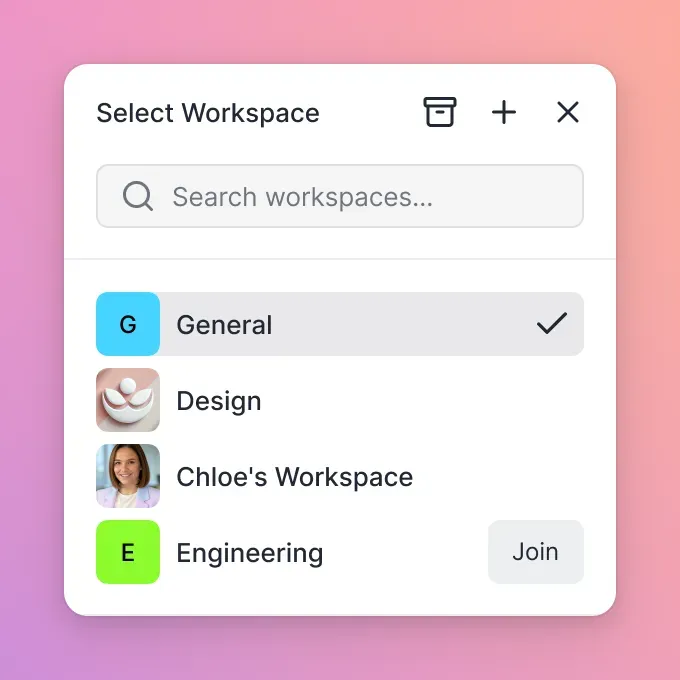
Fastio is built for this handoff. Your OpenClaw agent connects through the MCP server or REST API, writes files to a shared workspace, and any team member or downstream agent can access, search, or download the results immediately. Intelligence Mode auto-indexes uploaded files for semantic search and AI chat, so your agent's output becomes queryable the moment it lands in the workspace.
The Business Trial runs with Business-plan capabilities for 14 days and requires a credit card. It lets you evaluate the workflow before choosing a plan. When the agent finishes a project, ownership transfer lets you hand the entire workspace to a client or team lead while keeping admin access.
For OpenClaw setups specifically, the workflow is straightforward: the agent generates files on the SBC, uploads them to a Fastio workspace, and anyone with access can review, annotate, or build on that work from any device.
Sources
References used to verify factual claims in this guide.
-
Raspberry Pi 5 16GB model now costs $205, a 70% increase from its original $120 MSRP
-
NVIDIA Jetson Orin Nano Super delivers 67 TOPS at $249, up from 40 TOPS at $499
-
ThunderSoft RUBIK Pi 3 delivers 12 TOPS and supports 1.8B-parameter models on-device with OpenClaw
-
RUBIK Pi 3 goes on sale at $179
-
Mac Mini M4 idles under 5 watts
-
Beelink announced OpenClaw Pre-installed Series in March 2026
-
Raspberry Pi 5 8GB model priced at $125 after memory-driven price increases
Frequently Asked Questions
What is the best single board computer for AI agents?
For raw AI compute, the NVIDIA Jetson Orin Nano Super leads with 67 TOPS at $249. For verified OpenClaw support with on-device inference, the ThunderSoft RUBIK Pi 3 offers 12 TOPS at $179 and is the only board with a manufacturer-published OpenClaw deployment guide. If you need a reliable agent gateway without local inference, the Orange Pi 5 Plus at $90 to $150 provides 16GB RAM and NVMe support at a lower price than a Raspberry Pi 5 with comparable specs.
Can OpenClaw run on Jetson Nano?
OpenClaw requires Node.js 22.16 or newer and at least 2GB of RAM. The Jetson Orin Nano Super meets both requirements and runs OpenClaw on its JetPack Linux stack. The older Jetson Nano (original, non-Orin) has 4GB RAM and an older GPU architecture, making it viable for basic agent hosting but limited for local inference. Upgrading to the Orin Nano Super is worth the $249 for the 67 TOPS performance jump.
Is a mini PC better than Raspberry Pi for AI?
For always-on agent hosting, generally yes. Mini PCs like the Mac Mini M4 offer higher RAM ceilings, faster NVMe storage, better thermal management, and power efficiency that keeps electricity costs low. The Mac Mini M4 idles under 5 watts and provides 38 TOPS through the Apple Neural Engine. The tradeoff is upfront cost: a Mac Mini starts at $599 versus $125 for a Raspberry Pi 5 with 8GB. Over two years of 24/7 operation, the reliability difference often closes that gap.
What is the cheapest hardware for running OpenClaw?
The cheapest functional option is a 2GB Raspberry Pi 5 at $65, though 4GB at $85 is the practical minimum for daily use. For a meaningful upgrade over the Pi, the Radxa Rock 5B+ starts at $75 with 8GB RAM, dual NVMe support, and Wi-Fi 6. If total cost of ownership matters more than purchase price, the Mac Mini M4's sub-5-watt idle draw offsets its $599 price over a few years compared to x86 mini PCs that idle at 15 to 30 watts.
Does OpenClaw need a GPU for agent tasks?
Not for standard operation. OpenClaw routes inference to cloud LLM APIs, so the board only needs enough CPU and RAM to run the agent runtime, manage network connections, and handle file I/O. A GPU or NPU becomes relevant when you want to run models locally to reduce API costs, lower latency, or keep data on-premises. Boards with 6 TOPS or more handle small classification and embedding models. For local language models, aim for 12 TOPS or higher.
Related Resources

Give your OpenClaw agents a shared workspace
A shared workspace on a 14-day trial, with files indexed once Intelligence is enabled, MCP access for reads and writes, and ownership transfer.