How to Build an OpenClaw Power BI Dashboard Agent
OpenClaw can automate the repetitive parts of Power BI management, from triggering dataset refreshes to generating plain-language narrative summaries and routing reports to the right people. This guide covers how to set up an OpenClaw Power BI agent, connect it through the REST API, configure the five core functions, and store generated reports in persistent workspaces for team handoff.


What an OpenClaw Power BI Agent Does
Business intelligence teams spend a disproportionate amount of time on report logistics. Research from Redbird estimates that 60-80% of analytics team time goes to manual reporting tasks rather than actual analysis. Power BI handles visualization well, but everything around it (refreshing datasets on schedule, exporting reports for stakeholders who don't log into Power BI, explaining what the numbers mean) still falls on humans.
An OpenClaw Power BI agent fills that gap. According to ECOSIRE's documentation on OpenClaw analytics agents, the agent performs five core functions:
- Data preparation: orchestrating ETL from source systems, validating data quality, and handling transformations before loading into Power BI datasets
- Refresh orchestration: triggering dataset refreshes via the Power BI REST API, monitoring status, managing failures, and alerting on freshness issues
- Intelligent distribution: sending report snapshots, PDFs, and AI-generated briefings to configured recipients through scheduled or condition-triggered delivery
- AI-generated narratives: interpreting dashboard data in natural language to produce executive summaries, metric annotations, and anomaly explanations
- Conversational Q&A: letting users ask questions about their dashboards through chat platforms like Teams or Slack without opening Power BI directly
OpenClaw positions itself as the intelligence and automation layer surrounding Power BI as the visualization layer. You keep your existing dashboards. The agent handles everything else.

Related guides
- How to Build a Devin AI Workspace Dashboard SetupA practical guide to building a centralized Devin AI run monitoring dashboard using Fast.io. By combining Devin's...
- How to Build a Hermes Agent AI Code CheckerThe proportion of copy-pasted code in repositories rose from 8% in 2020 to 12% in 2024, representing a 48% relative...
- How to Build a Web Scraping Agent with OpenClawOpenClaw's browsing skill turns your AI agent into a web scraper that can navigate pages, handle JavaScript rendering,...
- Best OpenClaw Projects to Build: Beginner to Advanced Ideas for 2026OpenClaw crossed 250,000 GitHub stars faster than any software project in history, but most developers stall after the...
- OpenClaw vs Power Automate: When AI Agents Beat Traditional AutomationGartner projects that 40% of enterprise apps will embed task-specific AI agents by end of 2026, up from under 5% in...
- How to Build a Personal AI Assistant with OpenClawOpenClaw crossed 350,000 GitHub stars in under five months, making it the most-starred software project on the...
More on this subject: OpenClaw Setup and Guides (199 guides)
How to Connect OpenClaw to Power BI
The integration works through Microsoft's Power BI REST API. OpenClaw authenticates as a service principal (an app registration in Azure Active Directory) rather than impersonating a user account, which means it can operate unattended on schedules.
The ClawHub marketplace hosts a dedicated microsoft-power-bi skill that wraps common API operations. The superpowerbi-skill repository on GitHub goes further, demonstrating how to build Power BI reports from Snowflake data using PBIR format, DAX expressions, and parallel agent teams. Both entry points provide scaffolding so you don't have to write raw REST calls manually.
The Power BI REST API gives agents programmatic control over datasets, reports, and workspaces. Agents can trigger and monitor dataset refreshes, export reports to PDF or PowerPoint for distribution, and manage workspace membership and access. The skill layers handle API authentication and error handling, so the agent code focuses on business logic rather than HTTP plumbing.
Power BI Pro or Premium licenses are required for the service principal to access datasets and reports. If your agent needs to query datasets directly for narrative generation or Q&A, you'll need Premium capacity or Premium Per User licensing for XMLA endpoint access. This is a Microsoft licensing constraint, not an OpenClaw one.
ECOSIRE's documentation recommends rotating Azure AD credentials on a schedule through the agent itself, so you don't end up with expired secrets causing silent failures overnight.
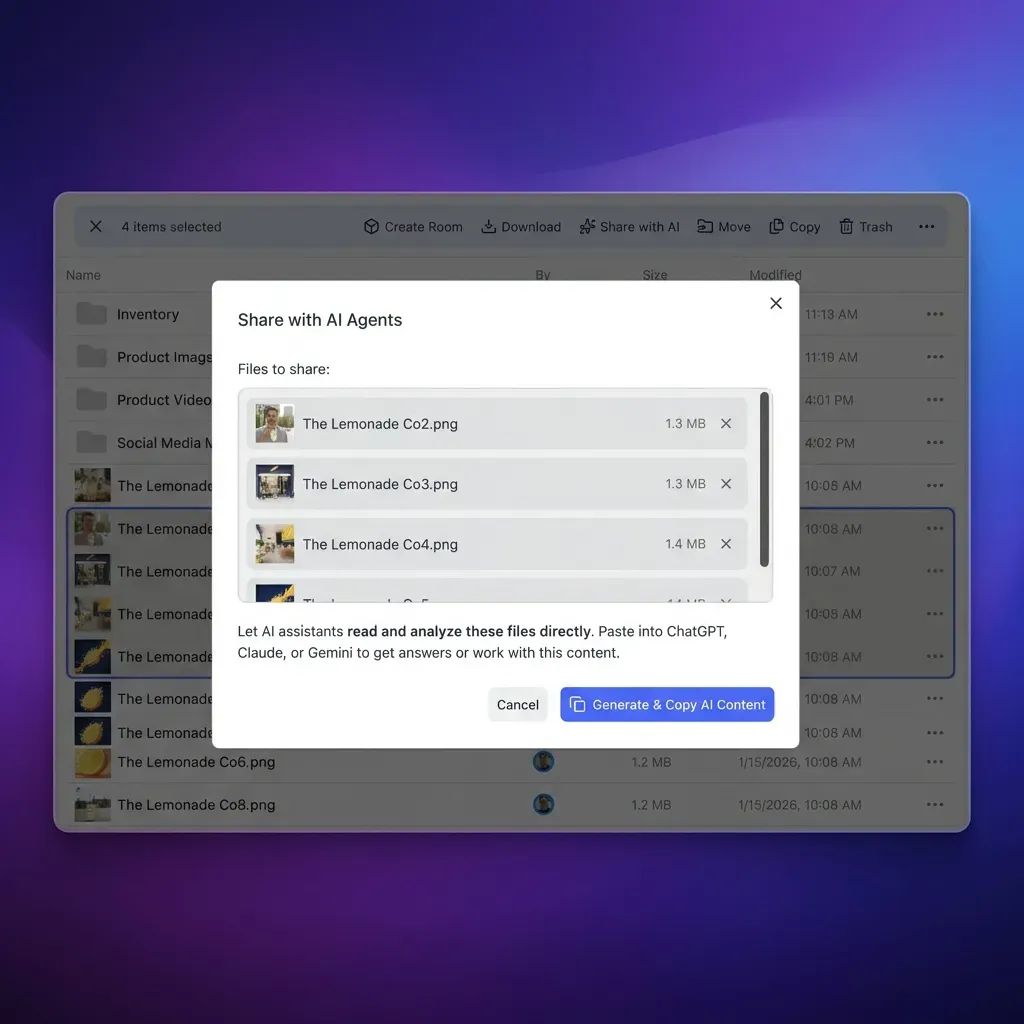


Persist your BI agent's reports where your team can find them
Generous storage workspace storage with auto-indexing, MCP server access, and branded share links for report delivery.
How Data Preparation and Refresh Orchestration Work
The data preparation agent handles what happens before Power BI ever sees the data. The workflow documented by ECOSIRE follows four stages:
Source extraction pulls incremental data from each source (databases, APIs, flat files) since the last load, avoiding full table scans on every cycle.
Business logic transformation applies rules like revenue recognition, currency conversion, and customer segmentation as version-controlled transformations in the agent's skill code, not in Power BI's Power Query layer. This makes them testable outside the BI tool.
Pre-load validation checks row counts, null rates, referential integrity, and business rule compliance before loading proceeds. If validation fails, the agent alerts stakeholders with specific details about what went wrong. Bad data never reaches the dashboard.
Conditional refresh triggering calls the Power BI REST API to refresh the dataset only after successful loading, then monitors status until completion. On failure, the agent diagnoses the issue (connectivity, transformation errors, credential expiry), attempts automated remediation where possible, and escalates to the BI team with full diagnostics when automated fixes don't work.
No report gets distributed until a successful refresh is confirmed. This sounds obvious, but many scheduled email systems will happily send yesterday's stale data if the refresh failed overnight.
Where to store validation logs and failure reports:
GitHub retains workflow artifacts temporarily, and Power BI's own refresh history has limited detail. For teams that need durable audit trails, pushing structured validation reports to a shared workspace makes them searchable across time. Local file storage works for debugging, but anything needed for compliance or cross-team visibility benefits from cloud persistence. Fastio workspaces provide a shared location with a 14-day Business Trial. Check pricing for details. S3 or Azure Blob Storage also work if you already have infrastructure there.
Configuring Intelligent Report Distribution
The distribution function replaces the standard approach of emailing the same PDF to everyone on a fixed schedule. OpenClaw's distribution agent enables several patterns that standard Power BI email subscriptions can't handle.
Role-based delivery filters report content for specific recipients. The CFO receives the full P&L with all cost centers. Regional VPs receive data filtered to their regions. Team leads get their department's KPIs without the noise of company-wide metrics. The agent generates these filtered views programmatically from the same underlying dataset.
Condition-triggered sending dispatches reports only when content warrants attention. Define thresholds (revenue drops below target, churn exceeds a limit, pipeline coverage falls below 3x) and the agent sends reports only when those conditions fire. This prevents inbox fatigue from reports where nothing changed.
Channel routing delivers through each recipient's preferred channel. PDF attachments via email work for formal board reporting. Image snapshots posted to Teams channels work for daily standups. Interactive Power BI links work for stakeholders who want to drill in. The agent routes each delivery appropriately.
Localization generates narrative summaries in the recipient's language while the underlying data remains consistent. A global team receives the same numbers with explanations in English, German, Japanese, or whatever language is configured per recipient.
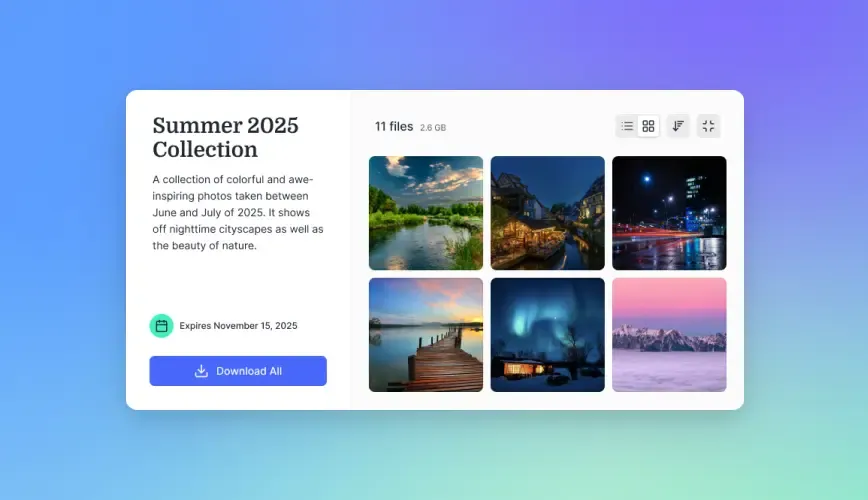
For teams using Fastio, distribution outputs (PDFs, snapshots, narrative reports) can be uploaded to shared workspaces where both agents and humans access the same files. The MCP server exposes upload and share operations, so the agent can push a report PDF and generate a branded share link in one workflow. Human stakeholders get a link, not an attachment buried in email.
AI-Generated Narratives and Conversational Q&A
The analytics intelligence function is where OpenClaw adds the most unique value. Power BI shows charts. The agent explains what the charts mean.
Narrative generation queries Power BI datasets directly and produces multi-level summaries:
- Executive summary (3-5 sentences): high-level performance, key drivers, and business implications
- Section narratives (2-3 paragraphs per area): deeper analysis of revenue, operations, pipeline, or whatever domains your dashboards cover
- Metric annotations (1-2 sentences each): brief explanations of significant variances from targets or prior periods
- Chart descriptions: accessibility-focused text that conveys key takeaways for stakeholders who prefer reading over chart interpretation
ECOSIRE notes that narratives are calibrated to your organization's communication preferences during implementation. The tone, level of detail, and focus areas are configurable, not hardcoded.
Conversational Q&A lets users ask questions through Teams or Slack without opening Power BI. This complements Power BI's native Q&A feature (which only works inside the Power BI interface) by meeting users where they already work.
The agent handles multi-step calculations that require cross-dataset information and business context. When a VP asks "why did EMEA revenue drop this quarter?", the agent can pull data from multiple datasets, compare to the same period last year, check whether a known product issue affected the region, and respond with a grounded answer. Follow-up questions maintain context, so "what about APAC?" doesn't require restating the full question.
Anomaly detection runs continuously, applying statistical methods like z-score analysis, seasonal adjustment, and trend-break detection. When metrics breach thresholds, the agent generates contextual alerts that include pattern context. A user drop that correlates with a deployment timing is flagged differently than an unexplained organic decline.
For teams that want narrative reports stored persistently, files uploaded to Fastio are indexed and searchable once Intelligence is enabled for the workspace. An agent can upload weekly narrative summaries to a workspace, and later query across months of reports with semantic search. "What were the main revenue drivers in Q1?" returns cited answers from your own historical narratives.
Storing and Handing Off Agent Outputs
An OpenClaw Power BI agent generates artifacts: PDF exports, narrative summaries, anomaly reports, Q&A transcripts, validation logs. These need to live somewhere accessible to both the agent and the humans who consume them.
Local storage works for single-agent setups where you're the only consumer. The agent writes files to disk, you read them. Simple, but it doesn't scale to teams and doesn't survive machine failures.
Cloud object storage (S3, Azure Blob, GCS) gives durability and access control. If you already have infrastructure here, it's a reasonable choice. The downside is that files are opaque blobs without search or intelligence layered on top.
Intelligent workspaces add search, indexing, and collaboration over stored files. Fastio provides this for agent workflows: upload a narrative report, and it's immediately indexed for semantic search. Share a folder with a client or executive, and they see a branded portal rather than a raw file listing. Fastio plans include workspace storage and access to the remote MCP server at https://mcp.fast.io/mcp/tools for programmatic operations.
The handoff pattern matters for BI teams. The agent does the work (refresh, generate, validate), then transfers outputs to humans through a shared workspace. This is the ownership transfer model: agent builds, human receives, both retain appropriate access. No emailing attachments back and forth, no shared drives where files get overwritten.
Multi-agent coordination:
If you run multiple OpenClaw agents (one for data prep, one for distribution, one for narratives), they need shared access to intermediate outputs. Fastio's advisory file locks let agents coordinate writes to shared workspace files. The data prep agent acquires a lock, uploads validated datasets, and releases it, while the narrative agent picks them up. Version history acts as a safety net, ensuring every revision is preserved.
For teams already using Microsoft Fabric alongside Power BI, OpenClaw can orchestrate Fabric pipelines as part of the data preparation stage. The agent triggers Fabric dataflows, monitors completion, then triggers the downstream Power BI dataset refresh. The two systems work together rather than competing.
Sources
References used to verify factual claims in this guide.
-
60-80% of analytics team time is spent on manual reporting tasks
-
OpenClaw performs five core Power BI agent functions including data prep, refresh orchestration, distribution, AI narratives, and conversational Q&A
-
ClawHub hosts a dedicated microsoft-power-bi skill for OpenClaw
-
superpowerbi-skill builds Power BI reports from Snowflake data using PBIR format, DAX, and parallel agent teams
Frequently Asked Questions
How do I connect OpenClaw to Power BI?
OpenClaw connects through Microsoft's Power BI REST API using a service principal (Azure AD app registration). The ClawHub marketplace hosts a dedicated microsoft-power-bi skill that wraps common operations. You'll need Power BI Pro or Premium licensing for the service principal, and Premium capacity or PPU licensing if the agent needs XMLA endpoint access for direct dataset queries.
Can OpenClaw automate Power BI report distribution?
Yes. The distribution agent supports role-based filtering (different recipients see different data), condition-triggered sending (reports only go out when thresholds are breached), channel routing (email, Teams, Slack, interactive links), and localization (narratives generated in each recipient's language). This goes beyond Power BI's built-in email subscriptions, which send the same content to everyone on a fixed schedule.
What is the OpenClaw Power BI skill?
The microsoft-power-bi skill on ClawHub provides pre-built operations for common Power BI API tasks like triggering dataset refreshes, checking refresh status, exporting reports, and managing workspaces. The superpowerbi-skill on GitHub extends this further with PBIR format report generation from Snowflake data using DAX and parallel agent teams.
How do I set up an AI agent for business intelligence?
Start with a focused scope. Pick one of the five core functions (data prep, refresh orchestration, distribution, narratives, or Q&A) and build that first. Connect the agent to Power BI via the REST API with a service principal. Set up a persistent workspace for generated outputs. Then gradually expand to additional functions as you validate each stage works reliably.
What Power BI license does an OpenClaw agent need?
The service principal needs Power BI Pro or Premium licensing for basic API operations (triggering refreshes, exporting reports). For direct dataset querying via XMLA endpoints, which enables narrative generation and conversational Q&A, you need Premium capacity or Premium Per User licensing. These are Microsoft licensing requirements that apply to any programmatic Power BI access.
Can OpenClaw replace Power BI's native Q&A feature?
It complements rather than replaces it. Power BI's built-in Q&A works within the Power BI interface. OpenClaw's conversational Q&A operates through external platforms (Teams, Slack) so users can ask questions without opening Power BI. It also handles multi-step queries requiring cross-dataset analysis and business context that the native feature doesn't support.
Related Resources

Persist your BI agent's reports where your team can find them
Generous storage workspace storage with auto-indexing, MCP server access, and branded share links for report delivery.