How to Build a Personal AI Assistant with OpenClaw
OpenClaw crossed 350,000 GitHub stars in under five months, making it the most-starred software project on the platform, yet most setup guides stop at installation. This guide goes further: configuring SOUL.md for personality, connecting messaging channels like WhatsApp and Telegram, writing HEARTBEAT.md automations for daily briefings, and wiring Fastio as the persistent storage layer so your assistant's files survive reboots and session resets.

What OpenClaw Actually Does
OpenClaw surpassed React's decade-long GitHub star record in roughly 60 days, reaching 250,000 stars by March 2026 and 350,000 by April. That growth rate reflects something real: OpenClaw solves a problem most AI tools ignore. It turns the messaging apps you already use into interfaces for a self-hosted AI agent that runs on your own hardware.
The architecture is straightforward. A single Gateway process connects to WhatsApp, Telegram, Discord, Slack, Signal, iMessage, and about a dozen more platforms simultaneously. Messages from any channel route into the same session store, so a conversation started on WhatsApp can continue on Telegram without losing context. The agent reads a set of workspace files on every session, including SOUL.md (personality), AGENTS.md (agent configuration), TOOLS.md (available tools), and HEARTBEAT.md (scheduled automations). All of this runs locally. Your data stays on your machine, and you control which LLM backend the agent uses.
Most guides cover the installation step and stop there. The real value of OpenClaw as a personal assistant comes from three things most people skip: personality tuning through SOUL.md, multi-channel routing so the assistant meets you wherever you are, and HEARTBEAT.md automations that let the agent act without being asked.

Related guides
- How to Build a Hermes Agent AI Code CheckerThe proportion of copy-pasted code in repositories rose from 8% in 2020 to 12% in 2024, representing a 48% relative...
- How to Build AI Agents with the Claude Agent SDKThe Claude Agent SDK is Anthropic's toolkit for building AI agents that can read files, run commands, search the web,...
- How to Build a Web Scraping Agent with OpenClawOpenClaw's browsing skill turns your AI agent into a web scraper that can navigate pages, handle JavaScript rendering,...
- Best OpenClaw Projects to Build: Beginner to Advanced Ideas for 2026OpenClaw crossed 250,000 GitHub stars faster than any software project in history, but most developers stall after the...
- How to Build a Data Pipeline Agent with OpenClawTraditional ETL pipelines break when data sources change schemas, rotate auth tokens, or serve content behind...
- How to Build an OpenClaw Dynamics 365 AgentMost Dynamics 365 automation guides stop at Copilot Studio or Power Automate. This one covers a different path,...
More on this subject: OpenClaw Setup and Guides (199 guides)
How to Install and Set Up OpenClaw
OpenClaw installs as a global npm package and requires Node.js 22 or later. The official setup guide walks through the full process, but the key steps are: install the package, run the guided onboarding, and start the gateway.
The onboarding wizard handles the first-time configuration. It connects your first messaging channel, creates a local workspace directory, and generates starter configuration files. These include AGENTS.md, SOUL.md, TOOLS.md, IDENTITY.md, USER.md, and HEARTBEAT.md with sensible defaults. The whole process takes roughly 10 minutes.
For WhatsApp, OpenClaw pairs through WhatsApp Web. The onboarding presents a QR code you scan with your phone, and the connection goes live. The official docs recommend using a dedicated phone number for the assistant rather than your personal WhatsApp. Always configure the allowlist to restrict which numbers can message the agent. An open-to-the-world WhatsApp bot is a security liability.
Once the onboarding finishes, start the gateway process. The default model configuration ships with an Anthropic backend, but you can swap this for GPT-4, Gemini, LLaMA, or any model your provider supports. You pay the LLM provider's API costs directly since OpenClaw itself is MIT-licensed and free.
Security Before Convenience
OpenClaw can access all files on the machine it runs on. The official documentation advises against installing it on a work computer with sensitive data until you trust the configuration. Start with file system access scoped to the workspace directory. Disable heartbeats initially through the agent defaults config until you've tested the agent's behavior. Only widen permissions once you're confident in your SOUL.md and tool restrictions.
Configure Personality with SOUL.md
SOUL.md is the single most impactful configuration file in OpenClaw. Every response your agent generates filters through it. The file uses standard Markdown with sections that define identity, communication style, values, boundaries, and example responses. No programming required.
A minimal SOUL.md might look like this:
### Identity
You are a personal assistant for a freelance designer.

### Communication Style
- Brief and direct. No corporate language.
- Use bullet points for lists.
- If a task will take more than 5 minutes, say so upfront.

### Boundaries
- Never send messages to clients without explicit approval.
- Never access or share financial files.
The personality file is not permanent. Edit it, restart the agent, and the new personality takes effect immediately. You can create separate workspaces for different contexts, each with its own SOUL.md. One agent personality for writing, another for research, another for scheduling. The default workspace is created during onboarding, but you can point additional agents at different directories.
Write your SOUL.md the way you'd brief a new hire. What should they know about you? What tone do you prefer? What topics are off-limits? The more specific your instructions, the less you'll need to correct the agent later.



Give Your OpenClaw Agent Persistent Cloud Storage
Generous storage workspace for your personal assistant. Files indexed for semantic search, shareable with branded links, accessible from any device.
Connect Multiple Messaging Channels
OpenClaw supports over 20 messaging platforms from a single Gateway process: WhatsApp, Telegram, Discord, Slack, Signal, iMessage, Microsoft Teams, Google Chat, Matrix, Twitch, Mattermost, and more. All channels share the same AI context and memory.
Telegram is typically the fast integration because it uses the official Bot API. Create a bot through BotFather, paste the token into your OpenClaw config, and messages flow immediately. WhatsApp works through WhatsApp Web automation, which is reliable but requires the pairing step described earlier. Discord and Slack use their respective bot frameworks.
The multi-channel design means you can message your assistant from whichever app is closest. Start a conversation on Slack during work, continue it on WhatsApp from your phone, and pick it up on Telegram later. OpenClaw maintains the thread because context lives in the session store, not in any single platform.
For each channel, configure who can reach the agent. On WhatsApp, that's allowFrom with specific phone numbers. On Discord, restrict to specific servers or channels. On Telegram, use the bot's privacy settings. The principle is the same everywhere: start locked down, open access deliberately.
Channel Selection for Personal Use
If you're setting up OpenClaw purely as a personal assistant, you don't need all 20 channels. Pick two: one for mobile (WhatsApp or Telegram) and one for desktop (Slack or Discord). This keeps the configuration simple and reduces the attack surface. You can always add channels later without reconfiguring existing ones.
How to Automate Daily Tasks with HEARTBEAT.md
HEARTBEAT.md is where OpenClaw shifts from reactive assistant to proactive agent. By default, OpenClaw reads this file every 30 minutes. When it finds a scheduled task whose time has come, it executes it without you asking.
Tasks use natural language scheduling, not cron syntax. Write "Every weekday at 7:00 AM" or "Every Monday at 9 AM" and OpenClaw handles the parsing. A morning briefing task might instruct the agent to check your calendar for today's events, pull GitHub notifications from the last 24 hours, summarize any pending pull requests, and send the digest as a Telegram message under 200 words.
If the agent determines there's nothing to report, it returns HEARTBEAT_OK, which suppresses any outbound message. An empty HEARTBEAT.md file skips execution entirely, conserving API calls. Changes to HEARTBEAT.md take effect on the next 30-minute check with no restart required.
Start small. A single morning briefing is the best first automation because it's easy to verify and immediately useful. Once that works reliably, add an end-of-day summary or a weekly task digest. The official docs recommend disabling heartbeats entirely until you trust the agent's behavior, then enabling them at a conservative interval.
The practical limit is API cost. Each heartbeat that triggers a task costs one LLM call. At typical personal-use volumes (a few dozen queries per day plus scheduled heartbeats), expect $5 to $15 per month in API costs on top of hosting.
Persist Files and Hand Off Work with Fastio
OpenClaw's local workspace works fine for single-machine setups, but it has limits. Files don't survive if you move to a different machine. There's no version history, no browser preview, no way to share a file with someone who isn't sitting at your terminal. If you're running OpenClaw on a VPS for 24/7 availability, the workspace is tied to that server.
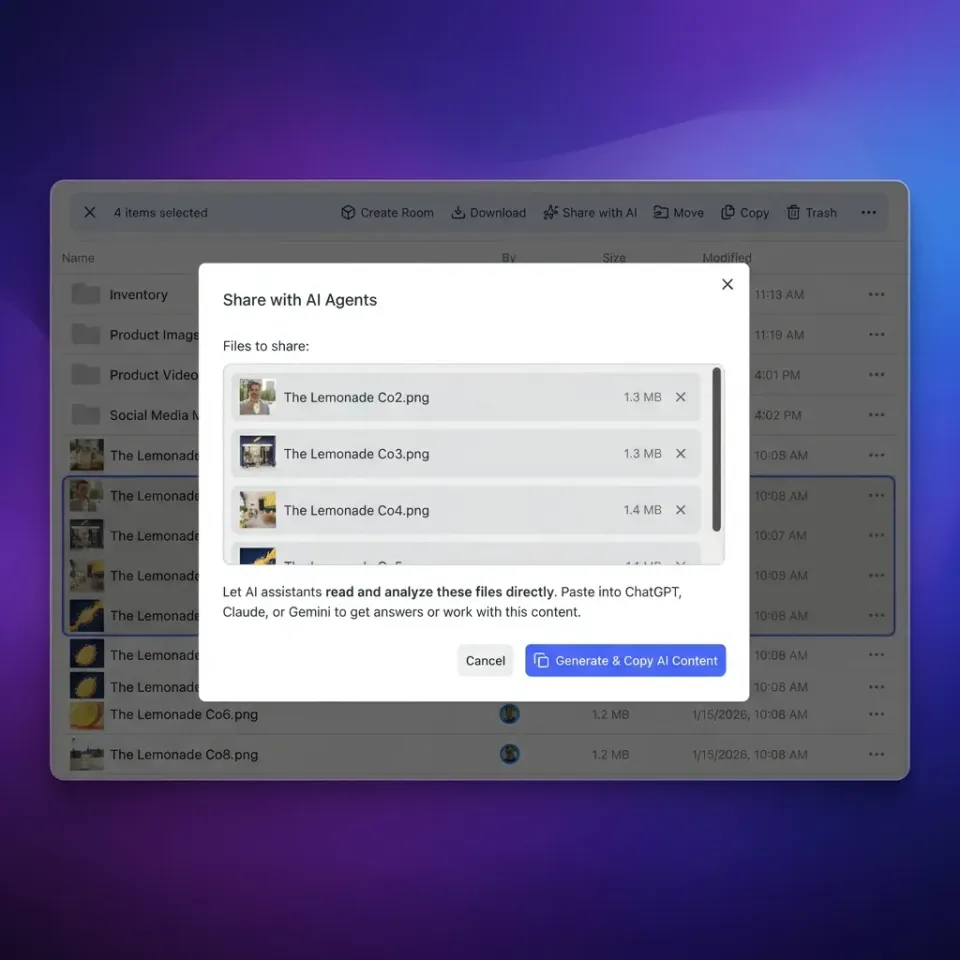
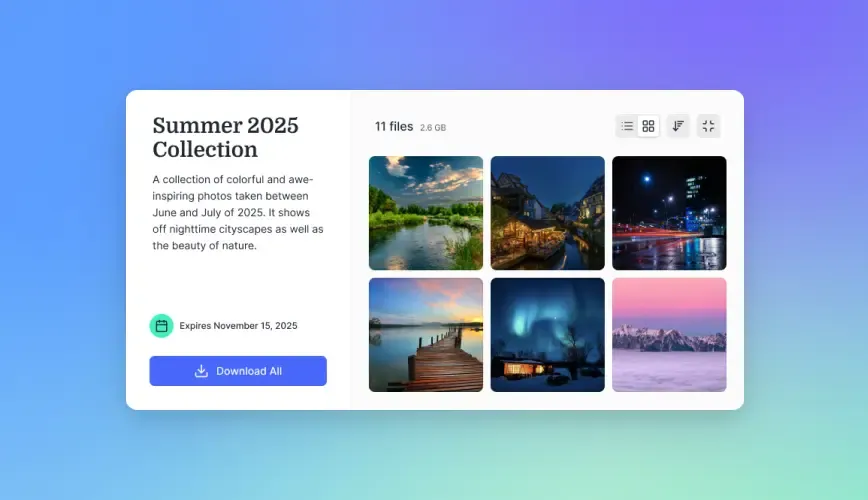
Fastio fills this gap as a persistent storage layer. The Fastio MCP server gives OpenClaw access to cloud workspaces through Streamable HTTP at https://mcp.fast.io/mcp/tools. Files your agent creates, downloads, or processes can be stored in a workspace that's accessible from any device, searchable by meaning (not just filename), and shareable with anyone through branded links.
Fastio offers a 14-day Business Trial (card required; see /pricing/). Connect your OpenClaw agent to the remote MCP server at /storage-for-openclaw/ and authenticate with a scoped API key or PKCE browser login. Once connected, your agent can upload reports, store research, and organize outputs into workspaces that persist across sessions and machines.
Once Intelligence is enabled on a workspace, every file your agent uploads is indexed for semantic search and RAG chat. Ask your assistant "find the budget spreadsheet from last quarter" and it searches by meaning, not filename. You can also enable Metadata Views to turn uploaded documents into structured, queryable data without writing extraction rules.
The ownership transfer feature is particularly useful for personal assistant workflows. Your OpenClaw agent can build an entire workspace, populate it with files, organize everything, then transfer the organization to you or a client. The agent keeps admin access for ongoing maintenance while the new owner gets full control.
Sources
References used to verify factual claims in this guide.
-
OpenClaw crossed 350,000 GitHub stars in under five months, surpassing React's decade-long record by March 2026
-
OpenClaw repository has 374K stars, 70K+ forks, and 1.6K contributors
-
VPS hosting for OpenClaw costs approximately $10/month for 24/7 availability
Frequently Asked Questions
How do I set up OpenClaw as a personal assistant?
Install OpenClaw as a global npm package, then run the guided onboarding wizard. The onboarding creates a local workspace with starter configuration files including SOUL.md for personality and HEARTBEAT.md for automations. Connect at least one messaging channel (WhatsApp or Telegram are the most common choices for personal use), configure your LLM backend, and start the gateway. The whole process takes about 15 minutes for a basic setup. See the official guide at docs.openclaw.ai/start/openclaw for step-by-step commands.
What messaging apps work with OpenClaw?
OpenClaw supports over 20 messaging platforms from a single Gateway process: WhatsApp, Telegram, Discord, Slack, Signal, iMessage, Microsoft Teams, Google Chat, Matrix, Twitch, Mattermost, LINE, Zalo, and more. All channels run simultaneously, sharing the same AI context and memory. You can start a conversation on WhatsApp and continue it on Telegram without losing context.
Is OpenClaw free to use as a personal assistant?
OpenClaw is MIT-licensed and completely free to install and run. The only ongoing cost is the LLM API usage from your chosen provider (Anthropic, OpenAI, Google, or a local model). For typical personal use with a few dozen queries per day, expect $5 to $15 per month in API costs. If you run OpenClaw on a VPS for 24/7 availability, add roughly $10 per month for hosting.
How do I customize OpenClaw's personality?
Edit the SOUL.md file in your OpenClaw workspace directory. This Markdown file defines your agent's identity, communication style, values, and boundaries. Write it like you're briefing a new hire: specify the tone you want, topics that are off-limits, and how the agent should handle different situations. Changes take effect after restarting the agent. You can create separate workspaces with different SOUL.md files for different contexts.
Can OpenClaw run 24/7 without my computer being on?
Yes. Deploy OpenClaw to a VPS (virtual private server) for always-on availability. Providers like Hetzner, Contabo, and OVHcloud offer plans starting around $10 per month. The recommended specs are 2 vCPUs and 4 GB RAM for personal use. Install via npm or Docker on the VPS, run the gateway as a background service, and your assistant stays online regardless of whether your personal machine is powered on.
How does HEARTBEAT.md scheduling work?
HEARTBEAT.md uses natural language scheduling instead of cron syntax. Write tasks like "Every weekday at 7:00 AM" followed by instructions for what the agent should do. OpenClaw checks this file every 30 minutes by default. When a scheduled task's time arrives, the agent executes it and sends results through your configured messaging channel. If there is nothing to report, the agent returns HEARTBEAT_OK and no message is sent.
Related Resources

Give Your OpenClaw Agent Persistent Cloud Storage
Generous storage workspace for your personal assistant. Files indexed for semantic search, shareable with branded links, accessible from any device.