OpenClaw for Business: Use Cases, Costs, and Deployment That Actually Work
Self-hosted OpenClaw costs 3x to 5x more than the VPS sticker price once you add LLM API bills and maintenance labor, yet most organizations still reach positive ROI within three to six months of their first production deployment. This guide covers the five business workflows where OpenClaw delivers measurable returns, breaks down real hosting costs, and explains how to bridge the gap between an agent that runs on your laptop and one your team can trust in production.


The Business Case for Running Your Own AI Agent
Self-hosted OpenClaw deployments cost 3x to 5x more than the advertised VPS price when you factor in API bills and maintenance hours, according to a 2026 analysis by Blink. That sounds like a deal-breaker until you compare it to the alternative: paying per seat for managed AI tools that lock your data into someone else's infrastructure and charge premium rates for the same underlying LLM calls.
The real question is not whether OpenClaw is cheap. It is whether the automation it enables saves more than it costs. Early adopters report compressing email triage from two-plus hours daily to under 25 minutes, cutting report generation from four to six hours down to five minutes, and reducing content production labor by roughly 70%. One experiment documented by Nat Eliason on Creator Economy gave an OpenClaw bot $1,000 and watched it generate $14,718 in revenue over three weeks by autonomously launching a website, an info product, and a social media presence.
Those numbers come with caveats. The Eliason experiment ran under controlled conditions with heavy human oversight. The email triage savings assume a high-volume inbox. And the 70% content reduction figure describes first-draft generation, not polished output. Still, the pattern is consistent: OpenClaw pays for itself when you point it at repetitive, well-defined workflows where the cost of human labor is obvious and measurable.
The five use cases below are the ones where businesses report the fast path to positive ROI.
Related guides
- Devin AI Use Cases for Engineering TeamsOfficial Devin docs report 6-12x efficiency gains when teams scope multi-step coding work correctly, and Nubank...
- How to Deploy Hermes Agent on KubernetesHermes Agent's official docs cover six terminal backends, but Kubernetes is not one of them. A community-maintained...
- How to Secure OpenClaw for Enterprise EnvironmentsSecuring OpenClaw takes more than a firewall. Agents in production bring risks like prompt injection and supply chain...
- OpenClaw Pricing: What It Actually Costs to Run in 2026OpenClaw is MIT-licensed and costs nothing to download. The real bill comes from two things: where you host it and...
- How to Deploy OpenClaw on Coolify for Self-Hosted Agent InfrastructureCoolify gives you a managed deployment experience for OpenClaw without surrendering control to a cloud vendor. This...
- OpenClaw vs OpenCode: What Each Tool Actually Does and When to Use ItOpenClaw and OpenCode are the two most-starred open-source AI agent projects on GitHub, and developers keep asking...
More on this subject: OpenClaw Setup and Guides (199 guides)
Five OpenClaw Use Cases with Measurable Returns
Not every OpenClaw deployment is worth the effort. The use cases that deliver consistent ROI share three traits: the task is repetitive, the inputs are structured, and a human can verify the output quickly.
1. Email triage and communication summaries
OpenClaw connects to Gmail or Outlook, processes unread messages, and generates prioritized briefings. According to Contabo's 2026 business guide, teams using this workflow save 20 to 30 minutes every morning. For a five-person team, that adds up to roughly 40 hours per month of recovered time. The agent can flag urgent items, draft responses for review, and extract action items from meeting transcripts using Whisper for transcription.
2. Accounting intake from email and PDFs
OpenClaw parses invoices, receipts, and financial documents from email attachments, classifies them, and prepares structured data for your accounting system. This removes recurring monthly coordination from bookkeeping cycles. The key guardrail: file-system sandboxing and validation checkpoints, because a misclassified document in accounting has downstream consequences that take weeks to surface.
3. Client onboarding automation
The agent creates accounts, sends welcome emails, and schedules kickoff calls. Multi-step onboarding processes that previously took three to four hours of admin time compress to 15-minute automated sequences. This works best for agencies and SaaS companies with standardized intake workflows.
4. DevOps monitoring and incident triage
OpenClaw monitors server health, analyzes CI/CD pipeline failures, and summarizes error logs. It can scan dependency updates for security vulnerabilities and generate pull request descriptions. The constraint here is important: the agent provides signals only, with no authority over merge decisions or deployment triggers.
5. Content repurposing across channels
A single blog post becomes Twitter threads, LinkedIn posts, email copy, and video scripts. According to Contabo, weekly blog posts go from half-day projects to two hours with OpenClaw handling the first-draft expansion. The agent handles format conversion and platform-specific adjustments while a human handles voice and editorial judgment.
Each of these workflows follows the same pattern: start with read-only operations, validate the agent's output, and only expand to write operations after you trust the results.


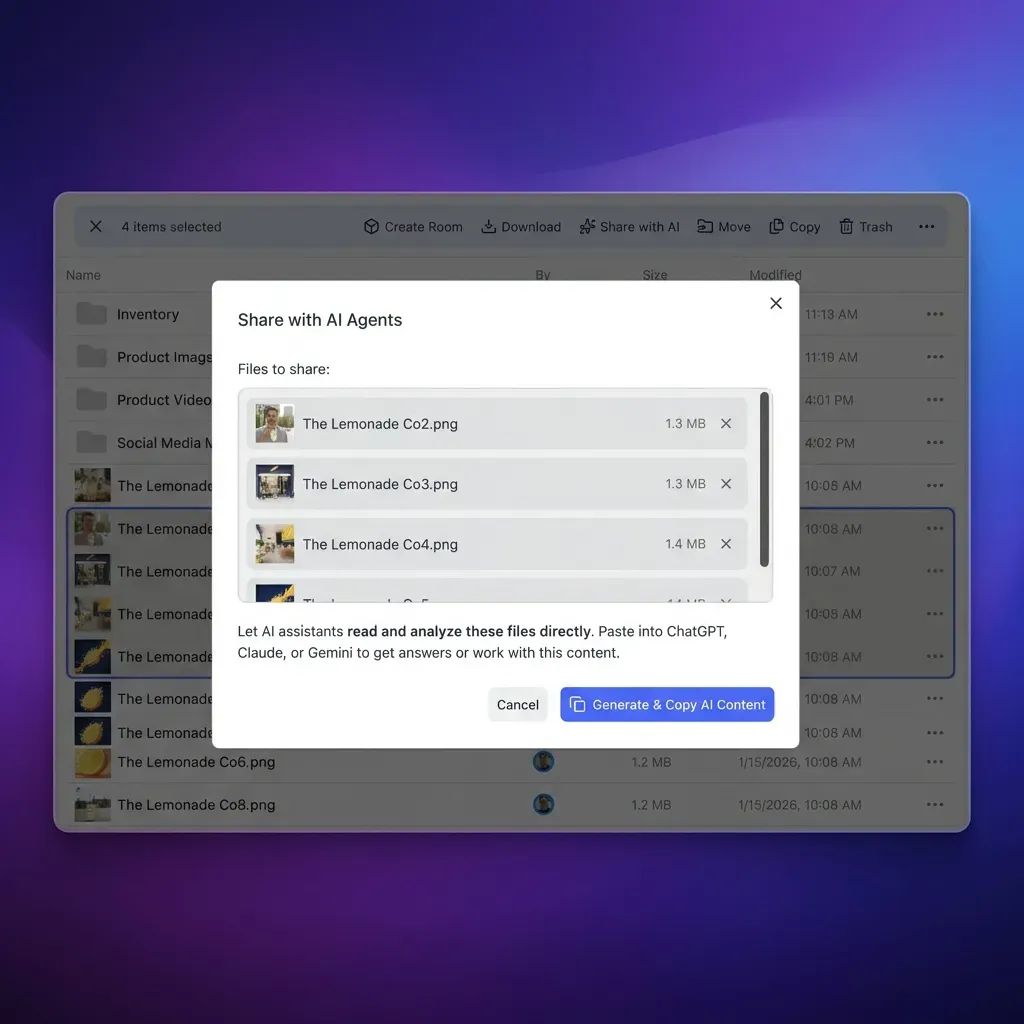
Give your OpenClaw agents a workspace the whole team can use
Scalable cloud storage, remote MCP server access, and built-in AI search for every file your agents produce.
How Much Does an OpenClaw Deployment Actually Cost?
The most common mistake in OpenClaw budgeting is looking only at server costs. A Hetzner VPS runs $6.50 per month. DigitalOcean starts around $24. But those numbers ignore the two largest cost drivers: LLM API usage and maintenance labor.
LLM API costs scale with usage:
- Light use (one to two tasks per day): $10 to $20 per month
- Moderate use (five to fifteen tasks per day): $30 to $60 per month
- Heavy use (twenty-plus tasks per day): $60 to $100 or more per month
Running local models through Ollama eliminates per-request API costs, but you need a machine with enough RAM and GPU capacity to run inference at acceptable speeds. Most businesses find that cloud APIs deliver better quality for knowledge work tasks.
Maintenance labor is the hidden multiplier. Docker updates, security patches, SSL renewals, incident response, and general troubleshooting take four to eight hours per month. At $50 per hour, that is $200 to $400 monthly on top of infrastructure.
Total cost of ownership comparison (monthly):
- Managed hosting (Blink Claw Starter): $45 to $55
- Self-hosted on Hetzner, no labor cost assigned: $66
- Self-hosted on Hetzner, with labor at $50/hour: $266
- Self-hosted on DigitalOcean, with labor: $284
Over a full year, managed hosting costs $540 to $660. Self-hosted with labor at $50 per hour costs $2,844 to $5,844. The break-even point is clear: if your time is worth more than $15 per hour, managed hosting is cheaper.
When self-hosting still makes sense: Regulated industries where data cannot leave your network. Teams with existing DevOps capacity that can absorb maintenance into their current workload. Organizations running heavy enough workloads that the per-request savings on local LLM inference offset the infrastructure cost.
The hybrid approach many teams adopt is to self-host the OpenClaw instance for data control, use cloud APIs for LLM inference, and store agent outputs in a managed workspace like Fastio where files are automatically indexed and shareable with the rest of the team. This keeps sensitive processing on your infrastructure while offloading storage, search, and collaboration to a purpose-built layer.
Team Deployment: From Solo Agent to Production Workflow
Running OpenClaw on your laptop is straightforward. Running it for a team of ten with audit requirements and access controls is a different problem.
Infrastructure decisions
Most business deployments run OpenClaw in Docker with a read-only filesystem and least-privilege permissions. The recommended setup uses a dedicated system user, command allowlists rather than blocklists, and environment variables or a secret manager for API keys. Contabo offers one-click OpenClaw VPS deployment starting at $3.96 per month if you want a quick starting point.
Human-in-the-loop by default
The most valuable agentic systems are defined by how precisely they are constrained. Start every new workflow with the agent drafting actions that require human approval before execution. Only promote to autonomous operation after the team has reviewed enough outputs to trust the pattern. This is not a philosophical position; Codebridge's enterprise risk analysis documents real failure modes: agents that misparse financial documents with consequences that take weeks to surface, preliminary PR feedback that teams treat as definitive judgment, and CRM entries that drift from reality because nobody validates the logs.
Where outputs land matters
An agent that generates reports nobody can find is not saving time. Most teams need a shared location where agent outputs are versioned, searchable, and accessible to people who did not set up the agent. Fastio workspaces handle this by auto-indexing uploaded files for semantic search and AI chat. When your OpenClaw agent finishes processing a batch of invoices or generates a weekly report, it can push the output to a workspace via the Fastio MCP server where the rest of the team can search, summarize, and act on it without touching the agent's infrastructure.
Fastio plans start at $9.99/mo for Starter with 250 GB of storage and 100,000 credits per month, with a 14-day Business Trial available to test team workflows.
Access control and audit trails
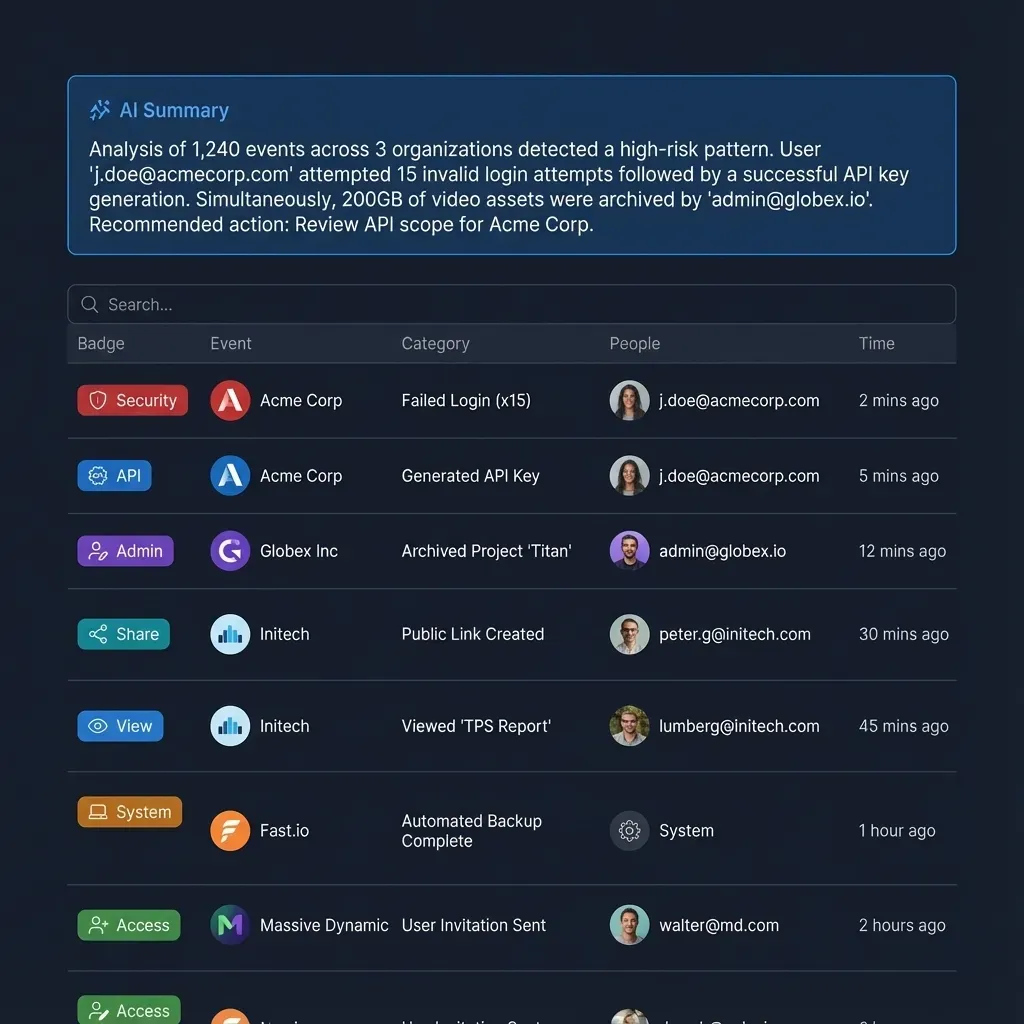
Business deployments need to answer "who did what and when." OpenClaw itself does not have built-in RBAC, so teams typically layer access control at the infrastructure level through Docker container isolation, separate instances per team, or VPN-gated access. For the output layer, Fastio provides granular permissions at the org, workspace, folder, and file level, plus a detailed activity log that records every action.
How to Measure OpenClaw ROI for Budget Reviews
Vague claims about "productivity gains" do not survive a budget review. To justify an OpenClaw deployment, you need numbers tied to specific workflows.
Step 1: Baseline the manual process
Before deploying an agent, time the workflow it will replace. How long does email triage take each morning? How many hours go into monthly invoice processing? How long does the content team spend reformatting a blog post for three platforms? Write these numbers down. They are your denominator.
Step 2: Calculate total deployment cost
Add infrastructure costs, API costs, estimated maintenance hours, and any managed service fees. Include the setup time as a one-time cost. Initial setup typically takes three to eight hours, which translates to $150 to $1,200 depending on your team's hourly rate.
Step 3: Measure time saved per cycle
Run the automated workflow for two to four weeks and track actual time saved. Compare to your baseline. Be honest about quality: if someone spends 30 minutes reviewing and editing agent output, that counts against the savings.
Step 4: Calculate monthly ROI
Monthly ROI = (hours saved x hourly cost of that labor) minus (monthly deployment cost), divided by monthly deployment cost.
A practical example: Your five-person support team spends 10 hours per week on email triage. After deploying OpenClaw, that drops to 3 hours, saving 7 hours weekly or 28 hours monthly. At $40 per hour, that is $1,120 in recovered labor. If your deployment costs $300 per month (self-hosted with maintenance), your monthly ROI is 273%.
Most organizations report reaching positive ROI within three to six months of their first production deployment. The fast path is to pick one high-volume, well-defined workflow and prove the return before expanding to additional use cases.
Getting Started: A Practical Deployment Sequence
Deploying OpenClaw for business is not a one-weekend project. The teams that succeed follow a phased approach that limits risk at each stage.
Week 1 to 2: Pick one workflow and prove it works
Choose your highest-volume repetitive task, likely email triage or document processing. Deploy OpenClaw on a single VPS or managed host. Connect it to the relevant services (Gmail, Slack, or your file storage). Run it in read-only mode where it processes inputs and generates drafts but does not send or publish anything. Review every output manually.
Week 3 to 4: Add the output layer
Set up a shared workspace where agent outputs land. This is where Fastio fits naturally: the agent pushes processed documents, reports, or drafts to a workspace via MCP. Team members access results through the web UI, search across outputs using Intelligence Mode, or ask questions about the files using document chat. The agent builds the workspace; humans consume and act on it.
Month 2: Expand to write operations
After two to four weeks of validated read-only output, promote the agent to handle low-risk write operations: sending draft emails for review, updating a local CRM, or posting content to staging. Keep human approval gates on anything customer-facing.
Month 3 and beyond: Add workflows and measure
Once the first workflow proves ROI, repeat the process for additional use cases. Each new workflow gets its own validation period. Resist the temptation to automate everything at once; the teams that rush this phase are the ones who end up debugging data drift six months later.
Security throughout
At every stage, follow the principle of least privilege. Use command allowlists. Sandbox file access. Log everything. For a deep dive on hardening, see the OpenClaw enterprise security guide. For managing the outputs that multiple agents or team members need to access, Fastio's granular permissions and audit trails provide the governance layer that OpenClaw itself does not include.
Sources
References used to verify factual claims in this guide.
-
Self-hosted OpenClaw costs 3x to 5x more than VPS sticker price including API bills and maintenance labor Hetzner CX22 at $6.50/month, managed hosting at $45-55/month, and year-1 TCO comparison data
-
OpenClaw bot given $1,000 generated $14,718 in revenue over 3 weeks
-
Email triage savings of 20-30 minutes every morning and content workflows from half-day to two hours Multi-step onboarding compressed from 3-4 hours to 15-minute automated sequences Contabo one-click OpenClaw VPS starting at $3.96 per month
-
The most valuable agentic systems are defined by how precisely they are constrained
-
Most organizations report positive ROI within three to six months
Frequently Asked Questions
Is OpenClaw suitable for enterprise use?
OpenClaw can handle enterprise workflows, but it requires careful deployment. The platform lacks built-in RBAC and compliance certifications, so teams layer access control through infrastructure isolation, container sandboxing, and output management in tools like Fastio that provide granular permissions and audit trails. Regulated industries benefit from OpenClaw's local-first architecture since data never leaves your network.
How much does OpenClaw cost for a business?
Total cost depends on your deployment model. Self-hosted OpenClaw on a Hetzner VPS costs around $66 per month for infrastructure and API calls, but rises to $266 or more when you include four to eight hours of monthly maintenance labor. Managed alternatives like Blink Claw run $45 to $55 per month all-in. If your time is worth more than $15 per hour, managed hosting is typically cheaper.
Can OpenClaw replace RPA tools?
OpenClaw handles many tasks that traditional RPA tools cover, such as email processing, document classification, and data entry, but with natural language instructions instead of brittle screen recordings. It works best for workflows involving unstructured data like emails, PDFs, and meeting transcripts. For highly structured, high-volume transaction processing, dedicated RPA tools still have an edge in reliability and speed.
How do teams deploy OpenClaw securely?
Secure business deployment starts with Docker isolation using read-only filesystems, a dedicated system user with least-privilege permissions, and command allowlists instead of blocklists. Store API keys in environment variables or a secret manager. Run all new workflows in read-only mode before granting write permissions, and maintain comprehensive logging with immutable storage for audit purposes.
What integrations does OpenClaw support for business?
OpenClaw connects to Gmail, Outlook, Slack, Telegram, Stripe, Google Analytics, GitHub Actions, GitLab CI, Jenkins, and most platforms with an API. It uses Whisper for meeting transcription and Ollama for local LLM inference. For file storage and team collaboration, the remote Fastio MCP server adds a consolidated MCP toolset for workspace management, semantic search, and document processing.
How long does it take to see ROI from OpenClaw?
Most organizations reach positive ROI within three to six months of their first production deployment. The fast returns come from high-volume, repetitive workflows like email triage, where teams report saving 20 to 30 minutes per person per day. A five-person team saving seven hours per week at $40 per hour recovers $1,120 monthly against typical deployment costs of $45 to $300.
Related Resources

Give your OpenClaw agents a workspace the whole team can use
Scalable cloud storage, remote MCP server access, and built-in AI search for every file your agents produce.