How to Set Up OpenAI Codex as an OpenClaw Provider
OpenClaw 2026.4.10 shipped Codex as a bundled provider, and 2026.5.2 added the /goal command for autonomous multi-step coding tasks. This guide walks through OAuth authentication, runtime configuration, the Codex use plugin, and how to persist agent-generated code in a shared workspace so teammates can review and deploy it.

Why Codex Inside OpenClaw Matters
Only 23% of developers regularly use AI agents for coding tasks, according to the Stack Overflow Developer Survey. The gap between "interested" and "using" often comes down to integration friction: managing separate tools, switching contexts, and losing outputs between sessions. OpenClaw's Codex integration closes that gap by routing autonomous coding work through the same interface you already use for every other model.
Before version 2026.4.10, running Codex through OpenClaw meant passing requests through a compatibility layer. Auth tokens, thread state, and compaction all behaved slightly differently from native Codex. The 2026.4.10 release changed this by treating codex/gpt-* models as a first-class path with their own auth flow, native thread management, and predictable compaction behavior.
The 2026.5.2 release pushed further with the /goal command. Instead of prompting Codex one step at a time, you describe a high-level objective and OpenClaw dispatches it as an autonomous task. Codex writes code, runs tests, iterates on errors, and opens PRs without requiring step-by-step input.
This matters because OpenClaw already handles model routing, memory, and multi-channel orchestration. Adding Codex as a native provider means you can mix providers within a single session: use Claude for planning, Codex for implementation, and Gemini for code review, all coordinated through one agent.
Related guides
- How to Set Up the Manus Agent Telegram IntegrationIntegrating the Manus Agent with Telegram allows users to execute multi-step research and file generation tasks...
- Codex OneDrive Integration: Connecting OpenAI Coding Agents to OneDriveA Codex OneDrive integration connects OpenAI Codex agents to Microsoft OneDrive repositories, allowing coding agents to...
- How to Set Up OpenClaw ACP and Bridge Your IDE to AI AgentsOpenClaw's Agent Client Protocol (ACP) lets you spawn and control external coding tools like Claude Code, Cursor, and...
- How to Set Up a Local Development Workflow for OpenClaw AgentsA solid local development environment helps you build and debug OpenClaw agents before deployment. This guide covers...
- OpenClaw vs OpenCode: What Each Tool Actually Does and When to Use ItOpenClaw and OpenCode are the two most-starred open-source AI agent projects on GitHub, and developers keep asking...
- How to Run OpenClaw in VS Code: Three Extension Approaches ComparedThe official OpenClaw extension has nearly 5,000 VS Code installs, but it only covers one of three ways to connect...
More on this subject: OpenClaw Setup and Guides (199 guides)
What You Need Before Setting Up Codex
You need three things before configuring Codex in OpenClaw:
- OpenClaw 2026.4.10 or later
- A ChatGPT subscription (Plus, Pro, or Team tier)
- The OpenClaw daemon running on your host machine
Authentication
OpenClaw authenticates with Codex through an OAuth flow managed by its onboarding wizard. You select the OpenAI Codex provider, sign in with your OpenAI account, and authorize access. The wizard stores credentials locally and preserves your existing channels, memory settings, and scheduled jobs. For headless servers without a browser, OpenClaw supports device-code authentication so you can complete the flow from a separate device over SSH.
Verifying the Connection
After authentication, set Codex as your active model and confirm it responds. The OpenClaw Codex plugin docs cover the version-specific commands for authentication, model selection, and status checks.

How to Route Requests Through the Codex Provider
OpenClaw treats Codex as a plugin with its own app-server rather than routing through OpenClaw's embedded runtime. This distinction matters: native routing means your Codex requests use OpenAI's own authentication, threading, and compaction behavior instead of OpenClaw's generic path. If the Codex provider is unavailable, the request fails cleanly rather than being silently rerouted.
Runtime and Approval Configuration
The Codex plugin supports configuration for request timeouts, approval policies, and sandbox behavior. For local development, the defaults allow full code execution. For production use, you can add approval gates so certain actions require human review before the agent proceeds. The Codex plugin documentation and the Codex app-server repo cover the full configuration surface.
Team Deployments
Teams running multiple OpenClaw instances can share a single Codex app-server as a centralized gateway. This lets you manage Codex access and resource allocation in one place rather than configuring credentials on every machine. The app-server repo documents the deployment options for shared environments.


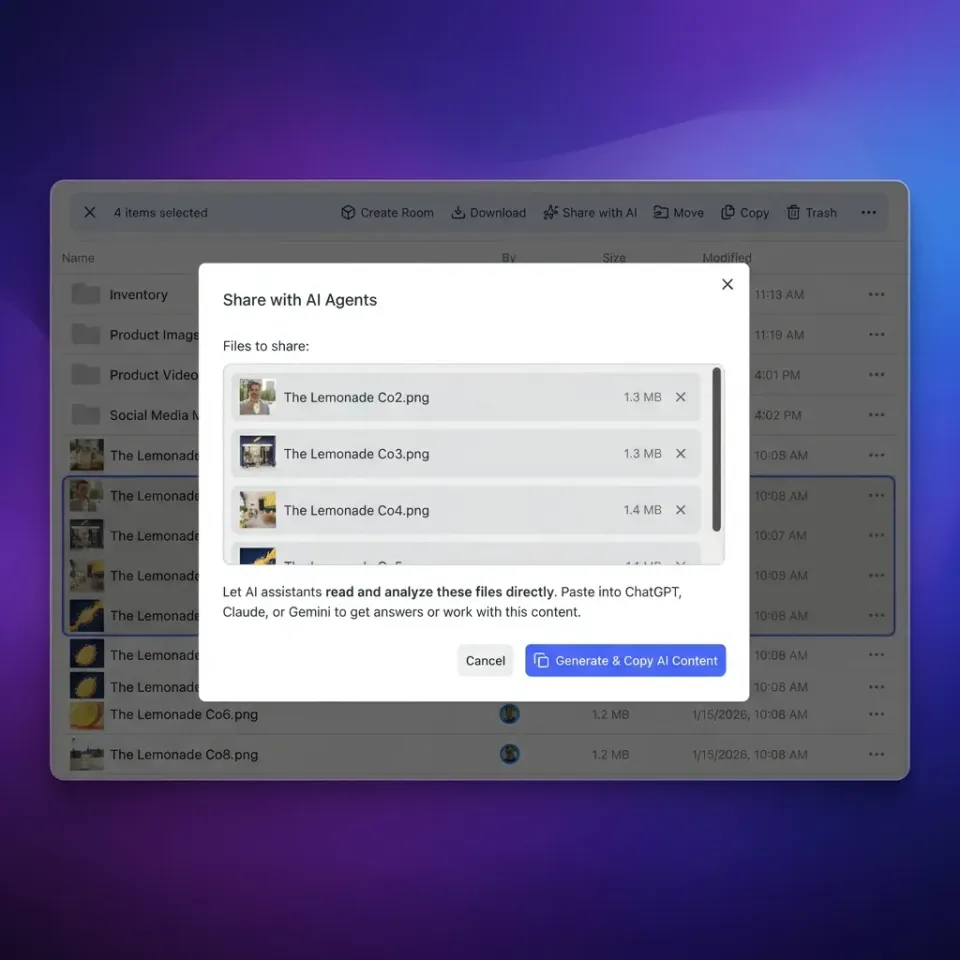
Persist your Codex outputs in a shared workspace
Persistent workspace with MCP-native access. Upload agent-generated code, share with reviewers, and transfer ownership when the work is done.
Using the /goal Command for Autonomous Tasks
The /goal command is the highest-use feature in the Codex integration. You describe an objective in plain language, and Codex executes it autonomously across multiple steps until it's done.
How It Works
Send a high-level task through your OpenClaw chat interface:
/goal Refactor the authentication module to use JWT tokens instead of session cookies. Update all affected tests.
Codex breaks the objective into subtasks, writes code, runs your test suite, fixes failures, and iterates until the goal is met. For code changes, it can create branches and open pull requests directly.
When to Use /goal vs. Regular Chat
Regular chat is better for exploration: asking questions about code, getting explanations, brainstorming approaches. Use /goal when you have a clear, scoped objective that would take multiple back-and-forth exchanges to complete manually.
Good /goal tasks:
- Refactoring a module across multiple files
- Debugging a failing test suite and fixing the root cause
- Adding a new API endpoint with validation, tests, and documentation
- Migrating a dependency version across the codebase
Poor /goal tasks:
- "Make the codebase better" (too vague for autonomous execution)
- Architectural decisions that require human judgment
- Changes to production infrastructure or deployment configs
Managing Usage Quotas
ChatGPT Plus includes a 5-hour weekly usage quota for Codex. Long-running /goal tasks can consume this quickly. OpenClaw's fallback model feature lets you designate a secondary provider (such as a Gemini or Claude model) that takes over automatically when the Codex quota is exhausted. This prevents your agent from stalling mid-task.
ChatGPT Pro subscribers get higher limits, making it the better choice for teams running multiple autonomous tasks per day.
Managing Codex Outputs in a Shared Workspace
Autonomous coding agents produce a stream of artifacts: branches, PRs, refactored files, test results. The challenge isn't generating this output. It's making it reviewable, versioned, and accessible to the rest of your team.
Local file systems work for solo developers, but they break down when multiple agents or team members need to access the same outputs. Git handles code, but generated reports, logs, and documentation need somewhere to live too.
Where Fast.io Fits
Fast.io provides persistent workspaces where agents and humans share the same files, search, and AI chat. After Codex generates code or documentation, your OpenClaw agent can push those artifacts to a Fast.io workspace using the MCP server.
The practical workflow looks like this:
- Codex completes a
/goaltask and produces output files - Your OpenClaw agent uploads results to a Fast.io workspace via MCP
- Team members review the output in the same workspace, with version history and audit trails
- When the work is approved, ownership transfers from the agent to the project lead
Alternatives for Output Storage
S3 or Google Cloud Storage work if you only need a file dump. GitHub repositories handle code artifacts well but aren't built for non-code outputs like reports or analysis. Google Drive and Dropbox lack the agent-native APIs and audit trails you need for autonomous workflows.
Fast.io's advantage for this use case is the combination of MCP-native access, built-in Intelligence Mode for searching across uploaded artifacts, and a 14-day Business Trial (card required). Your OpenClaw agent can upload files, create shares for reviewers, and hand off completed work, all through the same MCP tooling it uses for other workspace operations.
Connecting OpenClaw to Fast.io
Add the Fast.io MCP server to your OpenClaw configuration. The server is available at https://mcp.fast.io/mcp/tools via Streamable HTTP. Once connected, your agent gains access to workspace, storage, AI, and sharing tools. See the MCP documentation for the full tool surface.
How to Fix Common Codex Integration Problems
OAuth Token Expired or Invalid
If the model status shows an expired token, re-authenticate through OpenClaw's auth login flow for the OpenAI provider. This refreshes the token without resetting your other configuration. The OpenClaw troubleshooting guide covers version-specific auth commands.
Wrong Provider Route After Upgrade
OpenClaw v2026.5.6 fixed a bug where the doctor repair tool from v2026.5.5 could knock Codex OAuth users onto the wrong provider route. If your Codex requests are failing after an upgrade, run the doctor repair. It rewrites legacy Codex model references, auth profile IDs, and auth ordering to the canonical OpenAI route.
Legacy Model References
If you configured Codex before 2026.4.10, you may have legacy model references that predate the current naming convention. The doctor repair migrates these automatically to the canonical format.
Compaction Conflicts
Do not override the compaction model on Codex agents. Codex manages its own compaction natively, and overriding it causes unpredictable thread behavior. If you're seeing odd thread state, check whether a compaction override was set and remove it.
Sandbox Mode and Native Code
When OpenClaw's sandbox is active, native code execution is disabled. If your /goal tasks need to run code locally for testing or building, you'll need to either disable the sandbox or enable an alternative execution server. For local development, the default sandbox setting allows full execution.
Sources
References used to verify factual claims in this guide.
-
23% of developers regularly use AI agents
-
Codex became a bundled provider in OpenClaw 2026.4.10
-
OpenClaw 2026.5.2 added the /goal command and ChatGPT Pro subscription support
-
ChatGPT Plus includes a 5-hour weekly usage quota for Codex
-
v2026.5.6 fixed a doctor repair that could knock Codex OAuth users onto the wrong provider route
Frequently Asked Questions
How do I use Codex with OpenClaw?
Install OpenClaw 2026.4.10 or later, then run the onboarding wizard and select the OpenAI Codex auth choice. Sign in with your ChatGPT account, paste the callback URL back into your terminal, and set Codex as your active model. Enable the Codex plugin in your config and set the agent runtime to Codex for native routing. The OpenClaw docs cover the specific commands for each step.
What is the OpenClaw /goal command?
The /goal command lets you describe a high-level coding objective, and OpenClaw dispatches it to Codex for autonomous multi-step execution. Codex writes code, runs tests, iterates on errors, and can open pull requests without step-by-step human input. It was introduced in OpenClaw 2026.5.2 and requires a ChatGPT subscription.
Does OpenClaw support OpenAI Codex?
Yes. OpenClaw added Codex as a bundled first-class provider in version 2026.4.10. The integration includes native authentication, thread management, model discovery, and compaction. Version 2026.5.2 deepened the integration with the /goal command and ChatGPT Pro subscription support.
How do I set up Codex as an OpenClaw provider?
Run the OpenClaw onboarding wizard and select the OpenAI Codex auth choice, complete the OAuth flow with your OpenAI account, and enable the Codex plugin in your configuration. Set the agent runtime to Codex under the OpenAI provider settings to route requests through the native Codex app-server rather than OpenClaw's embedded runtime.
What ChatGPT subscription do I need for OpenClaw Codex?
You need ChatGPT Plus ($20/month), Pro ($200/month), or Team. Plus includes a 5-hour weekly usage quota for Codex. Pro offers higher limits and is recommended for teams running multiple autonomous tasks. You can set up automatic fallback models in OpenClaw to handle quota exhaustion gracefully.
Can I run Codex through OpenClaw on a headless server?
Yes. Use device-code authentication during the OAuth setup. The wizard generates a short code you enter on any device with a browser (your phone or laptop) while the server waits for confirmation. This works over SSH without port forwarding. WebSocket transport is also available for connecting to a remote Codex app-server.
Related Resources

Persist your Codex outputs in a shared workspace
Persistent workspace with MCP-native access. Upload agent-generated code, share with reviewers, and transfer ownership when the work is done.