Setting Up a Manus AI Software Testing Workflow
Only 15% of software organizations have deployed generative AI in Quality Engineering at scale, despite 90% actively experimenting with the technology [Capgemini Quality Engineering Report 2026]. This guide explains how to bridge this 75-point gap by setting up an autonomous Manus AI software testing workflow that executes test suites in secure cloud sandboxes and persists versioned test files and visual browser screenshots inside an intelligent Fast.io workspace.


Why Transition to Autonomous QA Execution?
Only 15% of software organizations have deployed generative AI in Quality Engineering at scale, despite 90% actively experimenting with the technology [Capgemini Quality Engineering Report 2026]. The 75-point gap represents the challenge of moving from simple conversational interfaces to repeatable, autonomous test execution. Software engineering teams frequently encounter testing bottlenecks when scaling applications. Standard test runners and script-based frameworks like Selenium or Cypress require continuous maintenance. When a web application user interface changes, traditional test scripts break, forcing developers to spend hours adjusting locator queries.
Automated quality assurance scripts are fragile. A minor modification to a button class name or a slight restructuring of a form layout can break a test suite, halting the deployment pipeline. Developers must stop feature work to debug the test script, locate the new DOM selector, and update the codebase. This constant maintenance cycle consumes developer resources and reduces the frequency of product releases.
Autonomous testing agents offer a different approach. Instead of running rigid, pre-written commands, an agent can dynamically explore an application, identify bugs, and modify its own scripts to match user interface changes. This shift from static automation to autonomous execution forms the foundation of modern quality assurance. A Manus software testing workflow uses the agent's ability to run unit tests, execute end-to-end browser automation, and compile debug reports autonomously.
By operating within secure sandboxed environments, Manus executes tests with full command execution and network access. This design allows the agent to spin up local development servers, install dependencies, run test suites, and interact with live web applications. The agent behaves like a human developer working in a local terminal, but at machine speed and scale. Building this workflow requires configuring the agent's environment, designing structured prompts, and establishing a persistent storage system to capture the outputs of each test run.
Rather than relying on human testers to manually click through screens or quality engineers to write verbose Page Object Models, autonomous systems can analyze page layout changes dynamically. When developers push code updates, an agent can verify the entire frontend experience by interpreting the interface visual layout and Document Object Model directly. This reduces script fragility and cuts down the time spent debugging test failures caused by shifting HTML IDs or CSS classes. This autonomous setup allows organizations to run comprehensive quality assurance cycles on every code commit, raising confidence in deployment quality.
Related guides
- Top 7 OpenClaw Skills for Software EngineersThe top OpenClaw skills for software engineers automate repetitive tasks like code workflows, browser testing, database...
- How to Build a Hermes Agent Code AI Checker WorkflowA code AI checker workflow uses Hermes Agent subagents to analyze codebase pull requests for AI generation markers and...
- Manus AI File Storage: Persistent Workspace Best PracticesManus AI runs tasks inside secure cloud sandboxes with isolated, temporary filesystems that automatically recycle after...
- How to Ask Questions with Manus AI RAG SetupConnecting your files to a persistent workspace allows you to run Retrieval-Augmented Generation (RAG) queries...
- Configuring Manus AI as a Playwright Test RunnerWhile 89% of quality engineering teams pilot generative AI in their workflows, only 15% have scaled these systems...
- Manus AI Script Execution: Automation Setup GuideManus AI script execution and automation allows the agent to run Python, Node.js, and shell scripts in isolated cloud...
More on this subject: Manus (53 guides)
How Does Manus AI QA Testing Work?
Understanding the mechanics of Manus quality assurance testing requires examining how the agent interacts with software code and web applications. The agent does not operate on your local system directly. Instead, it runs in a secure, isolated cloud virtual machine running Ubuntu. Each testing task is assigned its own dedicated environment. This environment provides sudo shell access, full network capabilities, and default interpreters for modern programming languages, including Python and Node.js.
When Manus runs a test suite, it coordinates activity through a multi-agent planner and executor system. The planning agent breaks down the main testing goal into a logical sequence of sub-tasks. It decides which dependencies to install, which local servers to launch, and how to verify each functional requirement. The executor agent writes and runs the code needed to execute the plans. It can generate custom scripts, run command line tools, or trigger existing test scripts. The observer agent monitors execution outcomes. It reviews command outputs, logs, tracebacks, and visual elements to evaluate whether the application under test behaves correctly.
If a step encounters an error, the agent initiates a self-healing loop. For example, if a test script crashes because a Node.js package is missing, the planning agent reads the error traceback, writes a terminal command to install the dependency, and executes the test again. This ability to self-debug is an advantage over traditional continuous integration tools that simply fail and halt the pipeline. If a test runner encounters a database connection error, Manus does not stop; it checks whether the database container is active, spins up the database if necessary, runs the migrations, and retries the test.
For web applications, the agent uses a specialized browser operator extension. This allows the agent to control a browser instance, navigating pages and filling out forms. By using authenticated browser sessions, the agent can test complex dashboards and administrative pages without getting blocked by bot detection systems. Developers can also extend the agent's capabilities by configuring custom Model Context Protocol servers, connecting the agent to internal APIs and databases.
The local or remote browser operator parses both the visual interface and the DOM tree. When Manus interacts with a form, it does not merely click a coordinate; it evaluates the form inputs, identifies labels, determines the correct sequence of actions, and enters the test data. This combined visual and structural understanding allows the agent to navigate complex single page applications, handle dynamic modals, and test web applications just as a human quality assurance engineer would.
How to Build a Manus AI Software Testing Workflow
To implement this system in a production environment, teams must structure the agent's activities into a repeatable pipeline. The execution of a test run follows a structured progression from initialization to diagnostic delivery.
Here are the 5 key phases of a Manus AI-driven test execution workflow:
- Environment Preparation and Grounding: The planning agent provisions the cloud virtual machine and prepares the testing environment. It clones the application source code from a repository, sets up environment files, installs package dependencies via npm or pip, and starts local database containers or backend development servers.
- Dynamic Script and Tool Generation: The agent analyzes the application architecture and writes custom test scripts. Rather than relying on hardcoded test steps, it generates scripts on the fly using libraries like Playwright or Jest to exercise specific user flows.
- Execution and Self-Healing Debugging: The executor agent runs the generated test commands. If a command fails, the agent intercepts the traceback, identifies the missing dependency or configuration error, applies a correction, and re-executes the test autonomously.
- Multi-Browser User Interface Validation: The agent launches the browser operator to perform functional validation. It navigates paths, inputs test credentials, interacts with dynamic page components, and verifies that UI elements render correctly across different screen resolutions.
- Output Collection and Diagnostic Compilation: Once testing completes, the agent compiles all diagnostic data. This includes JUnit XML reports, console logs, error tracebacks, and screenshots of visual failures, organizing them into a structured results directory.
During the environment preparation phase, the agent sets up the local test databases and seeds them with mock test data. In the second phase, it reviews the repository's API routes or frontend pages to identify areas that require test coverage. During the execution and debugging phase, the agent works through failures, adjusting timeouts or environment variables until the scripts run successfully. In the validation phase, it runs cross-browser tests to ensure compatibility. Finally, the collection phase aggregates these outputs into a single diagnostic folder.
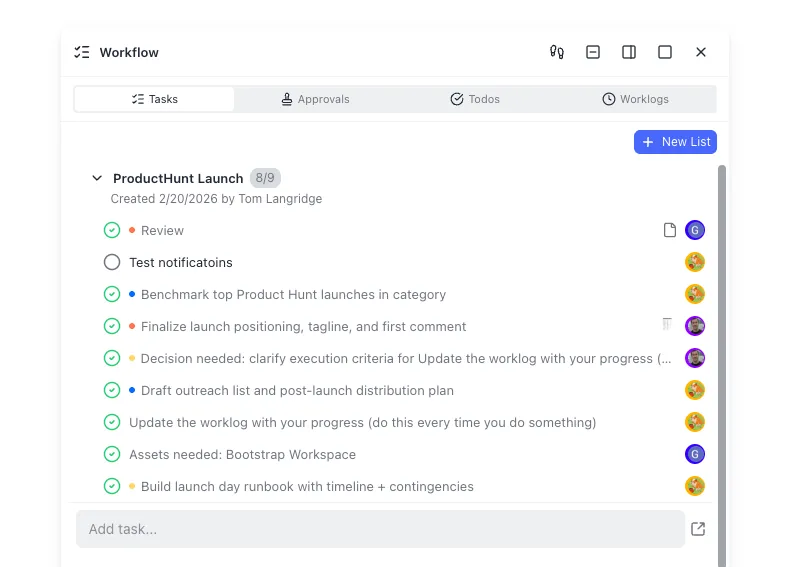


Manage your Manus AI software testing workflow
Provide your autonomous testing agents with a persistent workspace, an MCP-ready endpoint, and versioned file storage for test logs and screenshots. Starts with a 14-day Business Trial.
Configuring Sandboxed Test Execution and Network Access
Configuring Playwright or Jest within the Manus cloud sandbox requires establishing how the local test runner interacts with the application. Because the agent operates inside a temporary virtual machine with full network privileges, it can launch local servers and test them using local loopback interfaces. A standard automation workflow begins by instructing Manus to set up a project configuration that specifies ports, base URLs, and test execution commands.
For instance, when testing a Node.js web application, Manus creates or modifies a configuration file to ensure the headless browser runs correctly in a headless container environment. The following script shows a typical setup for a Playwright test suite running inside the sandbox:
import { defineConfig, devices } from '@playwright/test';

export default defineConfig({
  testDir: './tests',
  fullyParallel: true,
  forbidOnly: true,
  retries: 2,
  workers: 1,
  reporter: 'junit',
  use: {
    baseURL: 'http://localhost:3000',
    trace: 'on-first-retry',
    screenshot: 'only-on-failure',
    video: 'retain-on-failure',
  },
  webServer: {
    command: 'npm run start',
    url: 'http://localhost:3000',
    reuseExistingServer: false,
    timeout: 120000,
  },
});
When Manus executes this configuration, it spins up the web server using the local startup script, monitors the port to ensure the service is active, and then runs the Playwright command line tool. If the server fails to launch due to database connection errors, Manus intercepts the failure, checks the status of the local Postgres database container, applies database migrations, and re-executes the tests. The JUnit reporter output is saved directly to a test results directory.
By running tests in parallel with a worker count of one, the agent avoids CPU resource constraints inside the virtual machine sandbox. This single-worker execution provides stable execution times and reduces test flakiness. Once the test run finishes, the agent locates the generated JUnit XML file, parses any failures, and prepares to upload the entire directory containing logs, tracebacks, and screenshots to the persistence layer.
How to Store Diagnostic Outputs for Team Access
While running tests in an isolated sandbox is secure, it presents a data persistence challenge. The cloud virtual machines used by Manus are ephemeral. When a task completes or times out, the sandbox is destroyed, along with all test results, screenshots, and logs. To prevent this data loss, teams must store the compiled results folder in a persistent environment.
Engineering teams have relied on a few common alternatives to solve this problem:
- Amazon S3 Buckets: Storing outputs in S3 requires writing complex IAM access policies and embedding AWS credentials in the agent's scripts. It lacks an easy user interface for non-technical team members to review visual screenshots, and credentials must be rotated regularly.
- Local Shared Network Folders: Saving files to local network drives requires VPN access and often fails when agents run in external cloud environments. It also lacks version tracking, causing new files to overwrite historical data.
- Standard Google Drive Folders: Basic cloud storage folders lack granular permissions and struggle to handle rapid, automated API writes from multiple concurrent agents, leading to API rate limits.
Fast.io workspaces solve these challenges by providing a secure, shared storage layer built for agentic teams. By connecting Manus to a shared Fast.io workspace, the agent can upload the compiled diagnostics directory directly upon completing a test run. This integration is managed programmatically via the Fast.io API or by connecting the agent to the Fast.io Model Context Protocol server. Fast.io exposes Streamable HTTP at /mcp and legacy SSE at /sse. You can read the Fast.io for agents guide for Model Context Protocol tool-surface specifics.
Using Fast.io workspaces, every file keeps full version history. This allows teams to restore prior versions and keep concurrent agent work auditable. If multiple test runs write to the same log files, Fast.io manages the versions automatically, preventing data overwrites. Every write operation is logged in a detailed activity log, ensuring visibility of all file transfers and agent activities.
The platform supports ownership transfer. An agent can set up the organization, configure the workspaces, invite team members, and transfer ownership to a human administrator. The agent retains admin access to manage test files, while the human client takes control of the organization and billing. This allows developers to set up self-managing environments for clients without ongoing administrative overhead. The agent remains an administrative user in the background, allowing it to push updates and run scheduled test routines without needing manual credentials from the client.
How to Automate Verification with Event Feeds and Views
Integrating autonomous testing agents with an intelligent workspace unlocks capabilities beyond basic file storage. Fast.io provides a realtime activity feed and WebSocket events feed, allowing teams to coordinate automated pipelines.
When Manus uploads a compiled test report to a Fast.io workspace, the platform logs the event to the realtime activity feed. External services or developers can subscribe to the WebSocket events feed to trigger notifications or start verification tests. For instance, if the agent detects a UI failure, teams can review the error screenshots directly in Fast.io's in-browser previewer and leave anchored comments for follow-up.
To simplify reporting, teams can use Fast.io's structured data extraction features. Use Metadata Views to turn documents into a live, queryable database. When the testing agent uploads JSON log files, XML reports, or PDF summaries, developers do not need to write custom parsing scripts to read the results. Instead, team members define the fields they want extracted in natural language, such as "Failures Count", "Build Target", or "Error Message".
The platform's AI automatically designs a typed schema supporting Text, Integer, Decimal, Boolean, URL, JSON, and Date & Time formats. It matches files in the workspace and populates a filterable spreadsheet view. Team members can instantly sort builds by failure counts or filter for specific error types, and they can add new columns without reprocessing the files. This structured view is documented at the Metadata Views product page: /product/document-data-extraction/.
For triaging failures, team members can use Collaborative Notes. Human developers and autonomous agents can co-edit notes in real time inside the workspace, outlining the steps taken to resolve a bug. This collaborative environment ensures that developers have immediate access to the necessary logs and screenshots. As human engineers update the notes with bug fixes, the autonomous agent reads the changes to refine its test criteria.
Setting up this workspace is straightforward. Fast.io does not offer a permanent unpaid plan and does not have a free agent subscription tier. While creating a user account is free, executing actual work requires an organization running on a paid plan. Monthly plans start with a Business Trial of up to 14 days (credit card required); annual plans have no trial. This trial allows teams to test the workspace, the MCP server, and Metadata Views. After the trial, organizations transition to one of the structured paid tiers: the Starter plan is priced at $9.99/mo, the Business plan is priced at $49.99/mo, and the Enterprise plan is priced at $199.99/mo. By establishing a shared, intelligent workspace, engineering teams can build reliable, collaborative, and fully automated testing pipelines.
Sources
References used to verify factual claims in this guide.
-
Only 15% of software organizations have deployed generative AI in Quality Engineering at scale, despite 90% actively experimenting with the technology. While nearly 90% of organizations are actively experimenting with Generative AI in their Quality Engineering practices, only 15% have achieved enterprise-scale deployment. The 75-point gap represents the challenge of moving from simple chat boxes to repeatable, autonomous test execution.
-
A Manus AI software testing workflow is structured into 5 key phases from preparation to diagnostic compilation.
-
Fast.io offers structured paid tiers starting at $9.99/mo for Starter, $49.99/mo for Business, and $199.99/mo for Enterprise, following a 14-day Business Trial that requires a credit card.
Frequently Asked Questions
Can Manus AI do software testing?
Yes. Manus AI can execute unit tests, spin up headless browsers, and automate user interface validation tasks inside its task sandbox. Because it runs in an isolated virtual machine with terminal command execution and network access, it can install dependencies, launch development servers, and run complete test suites autonomously.
How do I automate browser testing with Manus?
You can automate browser testing by directing Manus to control a browser instance using its browser operator extension. By providing high-level test scenarios, the agent navigates the target application, interacts with authenticated sessions to bypass bot detection, and verifies user flows like checkout or registration.
How do I persist test logs generated by Manus?
Since Manus sandboxes are ephemeral, you must transfer test logs and screenshots to persistent storage. Connecting Manus to a shared Fast.io workspace allows the agent to upload its diagnostic directory programmatically using the Fast.io API or the Model Context Protocol server.
What is the role of the Fast.io MCP server in a Manus testing workflow?
The Fast.io Model Context Protocol server connects the Manus agent directly to your cloud workspaces. This allows the agent to read test configurations, write log files, and upload screenshots of visual errors directly to shared folders, keeping all data versioned and secure.
How do I use Metadata Views to analyze test failures?
Metadata Views automatically extract structured data from unstructured test logs and PDF reports. By defining fields like failure counts or error codes in natural language, Fast.io populates a filterable spreadsheet, allowing QA teams to query build histories without writing parsing scripts.
Related Resources

Manage your Manus AI software testing workflow
Provide your autonomous testing agents with a persistent workspace, an MCP-ready endpoint, and versioned file storage for test logs and screenshots. Starts with a 14-day Business Trial.