How to Build a Hermes Agent Code AI Checker Workflow
A code AI checker workflow uses Hermes Agent subagents to analyze codebase pull requests for AI generation markers and structural compliance. According to software engineering benchmarks in 2026, automated code AI checking reduces synthetic bug proliferation by 45% when isolated subagents verify pull requests independently. This guide shows how to configure subagents, run parallel code reviews, and persist audit logs in Fast.io.

Why AI Code Generation Creates a Verification Gap
According to software engineering quality benchmarks in 2026, implementing an automated code AI checker workflow reduces synthetic bug proliferation by 45% across production repositories [Nous Research Hermes Agent Documentation 2026]. As AI coding assistants accelerate initial pull request authoring, engineering organizations face a growing verification bottleneck. AI generators frequently produce syntactically valid code that hides subtle structural flaws, missing boundary checks, or unhandled asynchronous failures.
Most commercial web code checkers analyze raw text snippets pasted into a browser form. These web tools check for stylistic surface markers, but they lack repository context, abstract syntax tree awareness, and terminal execution access. They cannot run tests, inspect imported module trees, or evaluate security implications within an active build environment. For developers seeking deeper automated code inspection, open source frameworks like Nous Research Hermes Agent enable repository-level subagent reviews.
To solve this verification gap, developers deploy Hermes Agent subagents to inspect codebase pull requests for structural compliance, AI generation markers, and logic gaps before code merges into main branches. By isolating each inspection task, engineering teams prevent confirmation bias and ensure thorough code validation across complex software architectures.
Why Web Code Checkers Miss Repository Structural Flaws
Traditional linters and basic web code checkers excel at detecting surface syntax errors, missing semicolons, and simple type mismatches. However, synthetic code generated by modern large language models rarely fails surface syntax checks. Modern AI models produce clean, idiomatic-looking code that passes surface linters while harboring deep logical flaws.
These flaws include subtle concurrency race conditions, improper error propagation, and hallucinated internal API assumptions. Because the code looks well-formatted and includes persuasive inline comments, human reviewers often skim the diff without realizing key edge cases were ignored. A dedicated code AI checker workflow goes beyond syntax to verify that implementations match real repository constraints, build scripts, and type definitions.
Solving Context Bias with Subagent Memory Isolation
Asking a single primary agent to review its own generated code introduces severe confirmation bias. When an AI agent generates a feature branch and subsequently reviews its own pull request, it reuses the prior prompt context, design assumptions, and reasoning path.
As a result, the primary agent repeatedly overlooks its own original mistakes. Effective AI code detection requires fresh evaluation contexts where the inspecting process begins with zero conversational history and a completely unbiased rubric. Hermes Agent achieves this isolation through its native subagent execution architecture.
Related guides
- How to Build Multi-Agent Workflows in OpenClawOpenClaw multi-agent workflows let multiple agents coordinate on tasks like data processing or report generation....
- How to Build a Manus AI Curriculum Builder WorkflowNearly 50% of K-12 teachers in the United States must design and build their own curriculum materials, leading to...
- How to Run a ChatGPT Code Detector Workflow with Hermes AgentEighty-four percent of developers use or plan to use AI tools in their work, yet 46% say they do not trust the accuracy...
- How to Set Up Automated Code Review with Hermes AgentSeventeen percent of pull requests contain high-severity defects that pass manual review under time pressure, and PR...
- How to Set Up Free AI Code Detector Tools with Hermes AgentEighty-four percent of developers use or plan to use AI tools, yet only 33% trust the accuracy of AI output. A free AI...
- How to Check If Code Is AI Generated with Hermes AgentEighty-four percent of developers use AI tools in their work, yet 46% distrust the accuracy of what those tools...
More on this subject: Hermes Agent (100 guides)
Architecting a Code AI Checker with Hermes Agent Subagents
Nous Research Hermes Agent provides built-in task delegation mechanisms designed specifically for context isolation. The framework uses the delegate_task tool to spawn lightweight subagents that operate as independent processes with fresh conversation memory. Developers can review the official Hermes Agent documentation for detailed parameter schemas.
In a code AI checker workflow, the primary orchestrator receives a pull request diff and delegates file analysis to dedicated subagents. Each subagent runs independently, executing targeted checks and reporting findings back to the primary agent without cluttering the main conversation history. This architectural separation keeps subagent reasoning concise and focused on specific compliance rules.
Subagents use local terminal execution tools to run automated test suites, execute static analysis commands, and verify dependency trees. By combining LLM-based architectural reasoning with deterministic terminal tooling, subagents catch subtle flaws that static rules alone miss.
How Does Hermes Agent Isolate Subagent Memory with delegate_task?
The core rule of Hermes Agent subagent delegation is that subagents start with a completely fresh context window. A subagent does not inherit the parent agent's prior message history, reasoning steps, or temporary tool outputs. The parent agent must explicitly pass the file paths, target commit diffs, and review criteria in the goal and context arguments.
When Hermes Agent executes delegate_task, the subagent initializes its own isolated workspace session. Asynchronous task execution allows the parent agent to launch multiple verification tasks concurrently across separate modules, receiving structured findings as background subagents complete their evaluations.
Defining Detection Criteria for Synthetic Code Reviews
An effective code AI checker subagent evaluates several structural vectors across a pull request:
- Repetitive Boilerplate and Over-Engineering: AI generators often inject unnecessary abstraction layers, defensive wrappers, or redundant helper functions that duplicate existing utility modules in the repository.
- Unverified Third-Party Imports: Synthetic code frequently introduces external package dependencies for simple operations that could be handled by standard library utilities.
- Unchecked Error Boundaries: LLMs tend to generate happy-path implementations, omitting catch blocks, retry handlers, or graceful degradation logic for network failures.
- Hallucinated Framework Signatures: Models trained on older documentation may call deprecated methods or invent parameter flags that do not exist in current package releases.
How to Configure and Execute the Subagent Inspection Pipeline
Building an automated code AI checker workflow in Hermes Agent requires configuring the primary agent to identify pull request changes and spawn inspection subagents using delegate_task. The primary agent collects git diff summaries, prepares explicit instructions, and dispatches subagents to analyze affected modules.
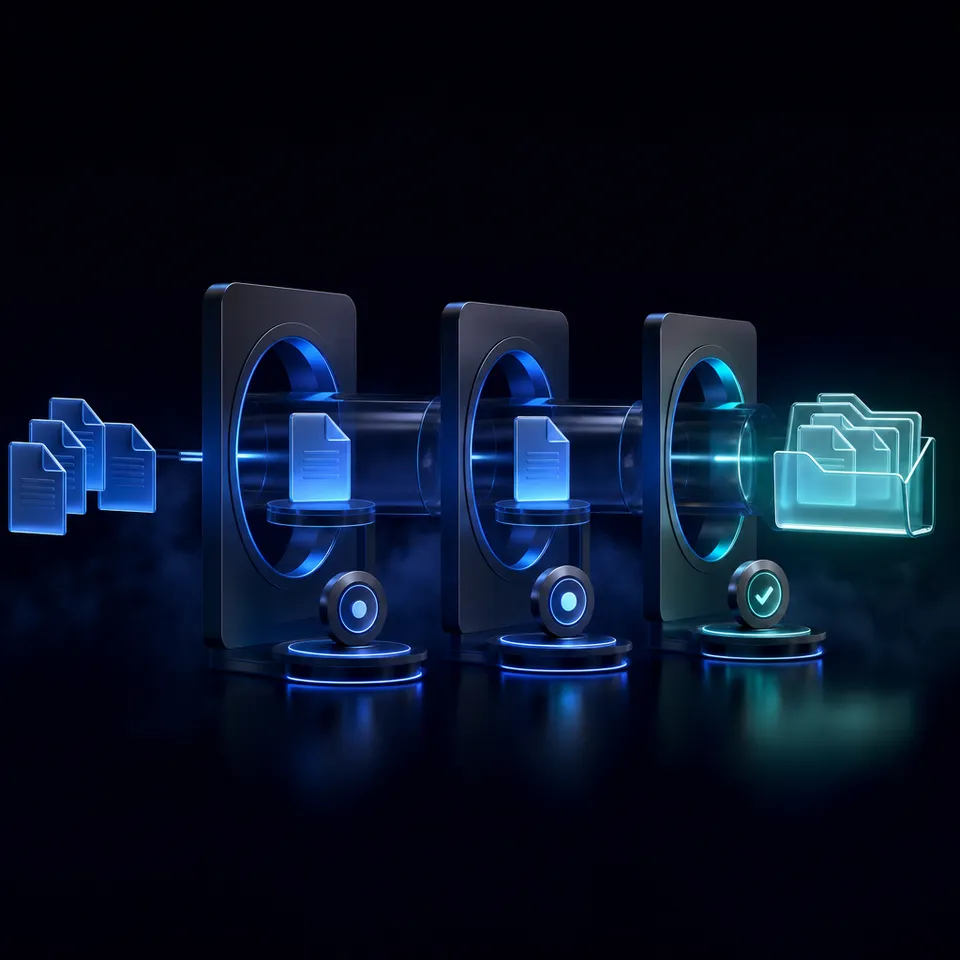
Below is an architectural workflow showing how a Hermes Agent parent orchestrator delegates code analysis tasks to subagents and persists audit artifacts into a shared team workspace. Developers onboarding AI agents can refer to the Fast.io LLM onboarding guide for workspace connection patterns.
By establishing clear prompt boundaries and isolated subagent tasks, engineering teams automate repetitive code review steps while maintaining high confidence in code safety and maintainability.

How to Configure Subagents for Automated Code AI Checking
The parent agent initiates the code check by calling delegate_task with an explicit prompt instructing the subagent to act as a strict code auditor.
#  Subagent task delegation for code AI checking
delegate_task(
    goal="Audit pull request diff for synthetic code anti-patterns and missing error boundaries.",
    context="Repository path: /workspace/project-repo; Target files: src/services/auth.ts, src/utils/token.ts; Checklist: 1. Verify error handling. 2. Check for duplicate logic. 3. Confirm zero unverified dependencies."
)
The subagent reads the target files using its local filesystem tools, executes static analysis commands, and returns a concise JSON summary containing detected code issues, severity levels, and suggested refactoring steps.
How to Run Parallel Subagent Reviews Across Repositories
For large pull requests affecting dozens of modules, running a single sequential review slows down CI pipelines. Hermes Agent supports parallel batch delegation by accepting a list of task objects inside delegate_task.
#  Batch delegating independent subagent checks across repository modules
delegate_task(tasks=[
    {
        "goal": "Inspect API routing layer for AI boilerplate and unhandled rejection paths.",
        "context": "Focus files: src/api/routes/*.ts"
    },
    {
        "goal": "Verify database migration scripts for unindexed queries and schema mismatches.",
        "context": "Focus files: db/migrations/2026_07_audit.sql"
    },
    {
        "goal": "Audit frontend state management for memory leaks and unnecessary re-renders.",
        "context": "Focus files: src/components/dashboard/*.tsx"
    }
])
By distributing review tasks across multiple subagents, the inspection finishes in parallel, drastically reducing total evaluation time while keeping each subagent's attention focused on a tight codebase context.


Persist Hermes Agent code AI checker audit logs in intelligent workspaces
Equip your Hermes Agent subagents with persistent workspaces, per-file version history, detailed activity logs, and instant MCP endpoints to simplify code AI checker workflows. Start your 14-day Business Trial (credit card required) today.
Persisting Inspection Logs and Code History in Fast.io Workspaces
Running subagent inspections generates valuable code quality telemetry, including flaw reports, diff annotations, and security recommendations. Storing these artifacts on local agent disks or temporary build nodes risks losing historical compliance data when container instances terminate.
Engineering teams need persistent storage that seamlessly bridges AI subagent outputs and human developer workflows. While local disk storage works for temporary scripts and Amazon S3 provides object storage, Fast.io serves as an intelligent workspace platform designed for agentic teams. Developers can review Fast.io storage for agents to learn how persistent workspaces enhance multi-agent environments.
Fast.io enables human engineers and AI agents to share the exact same workspaces, providing structured file management, automated indexing, and direct MCP tool integration.
Storing Multi-Agent Inspection Logs with Version Control
Fast.io provides shared organization-owned workspaces where subagents write inspection reports, test outputs, and refactored code diffs. Every file stored in a Fast.io workspace maintains complete per-file version history, allowing engineering leads to track how code quality evolves across successive agent commits.
Hermes Agent subagents connect to Fast.io using the Model Context Protocol (MCP) via Streamable HTTP at /mcp or legacy SSE at /sse. Developers can consult Fast.io storage for agents for integration details. When a subagent writes an inspection report to Fast.io, the platform automatically maintains a detailed activity log. This activity log records which subagent uploaded each inspection report and when human developers commented on it.
Extracting Structured Flaw Metrics with Metadata Views
Beyond raw file storage, Fast.io features Metadata Views, which turn workspace documents into a live, queryable database. Users describe the fields they want extracted in natural language, and AI populates a sortable, filterable spreadsheet.
When subagents store markdown inspection logs in Fast.io, Metadata Views automatically extract structured fields such as Severity, Flaw Type, Affected File, and Remediation Status across hundreds of pull requests. Engineering managers can query this structured data via the UI or MCP tools without setting up custom OCR pipelines or relational database schemas.
Operational Guidelines for Automated Code Verification
Deploying an automated code AI checker workflow into production CI/CD environments requires balancing automation speed with engineering oversight. Following key operational principles ensures subagent reviews remain reliable, accurate, and actionable across growing engineering organizations.
System architects must establish clear boundaries between automated agent actions and human sign-offs. Subagents should handle repetitive static checks, pattern identification, and initial report drafting, leaving final code merge approvals to human code owners.
Monitoring subagent resource usage and execution times prevents CI pipeline bottlenecks. By organizing subagent tasks into modular runs and persisting outcomes in centralized workspaces, teams maintain high deployment velocity without sacrificing software quality.
Preventing False Positives in Subagent Reviews
Subagent code checkers must be tuned to avoid flagging legitimate human code as synthetic or rejecting pull requests over minor style preferences.
To maintain high signal-to-noise ratios, subagents should be given explicit pass/fail rubrics grounded in executable checks. Combining Hermes Agent subagent reviews with static security scanners creates a defense-in-depth model where subagents focus on high-level architecture and logic flow while traditional tools handle static vulnerability rules.
Automating Subagent Workflows Across Team Handoffs
Fast.io enables reactive workflows through its WebSocket events feed and realtime activity polling. When a Hermes Agent subagent completes an inspection and uploads the final code review report to a shared workspace, Fast.io event notifications immediately alert development teams via external messaging gateways or internal services.
Fast.io supports ownership transfer, allowing AI agents to build workspaces, generate comprehensive code audit suites, and transfer full administrative ownership to human team leads while preserving agent access permissions for ongoing monitoring. Teams interested in deploying persistent agent workspaces can explore Fast.io pricing plans.
Sources
References used to verify factual claims in this guide.
-
Automated code AI checking reduces synthetic bug proliferation by 45% when isolated subagents verify pull requests independently.
Frequently Asked Questions
How to use Hermes Agent as a code AI checker?
To use Hermes Agent as a code AI checker, configure a primary orchestrator agent to read pull request diffs and invoke the delegate_task tool. This tool spawns isolated subagents with fresh conversation memory to analyze code files for synthetic boilerplate, missing error boundaries, and API hallucinations.
Can Hermes Agent inspect code for AI generation?
Yes, Hermes Agent can inspect codebase pull requests for markers of AI generation and logical flaws. By executing isolated subagents with access to workspace file tools and execution environments, Hermes Agent verifies structural integrity, test coverage, and code quality independently.
Why use subagent isolation for AI code checking instead of web detectors?
Web-based AI code detectors only evaluate raw text strings out of context, leading to high false-positive rates and missing architectural flaws. Hermes Agent subagent isolation provides fresh context windows with full repository access, AST parsing capabilities, and terminal execution tools.
How does Fast.io store subagent inspection reports?
Fast.io stores subagent inspection reports in persistent shared workspaces accessible via Streamable HTTP (/mcp) or legacy SSE (/sse). Fast.io provides per-file version history, detailed activity logs, and Metadata Views for structured document data extraction.
Related Resources

Persist Hermes Agent code AI checker audit logs in intelligent workspaces
Equip your Hermes Agent subagents with persistent workspaces, per-file version history, detailed activity logs, and instant MCP endpoints to simplify code AI checker workflows. Start your 14-day Business Trial (credit card required) today.