Law Firm IT Consulting: Cloud File Migration and Infrastructure Strategy
Law firm IT consulting modernizes legal technology infrastructure, file systems, and security architecture without disrupting active casework. Moving off legacy on-premise servers requires structured data auditing, strict permission mapping for ethical walls, and preserving evidentiary document metadata. This guide outlines the strategic milestones and technical controls required to transition legal matter files to modern cloud workspaces.

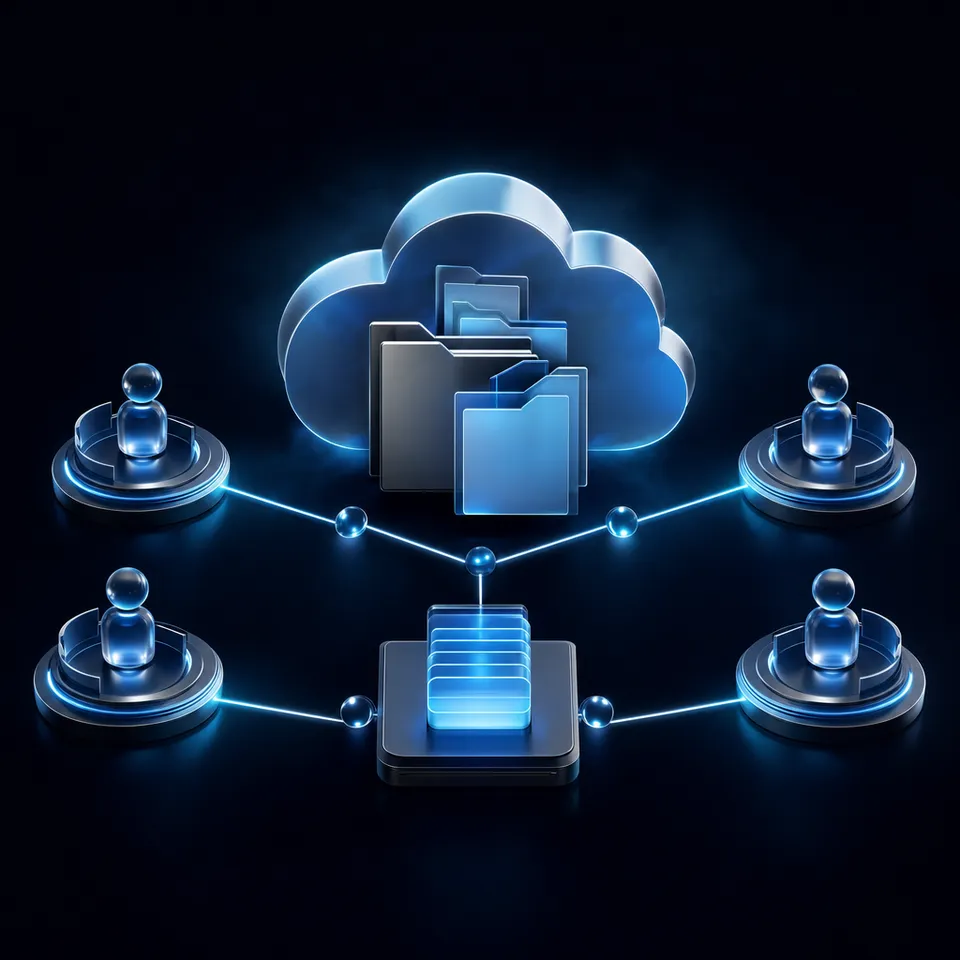
Why Law Firm IT Consulting Demands Legal-Specific Engineering
When an IT consultant treats a law firm like a standard corporate office, the migration usually breaks on the first active litigation matter. Corporate IT playbooks prioritize bulk file transfer speeds over evidentiary metadata preservation, ethical wall isolation, and courtroom deadline continuity. In an ordinary corporate environment, resetting a file creation date during a cloud sync causes minor confusion. In a litigation practice, wiping filesystem timestamps destroys document chronologies, complicates privilege logs, and creates evidentiary challenges during discovery.
Law firm IT consulting is the specialized advisory discipline of evaluating, designing, and overseeing the modernization of a legal practice technology architecture, file systems, and security posture. Moving beyond generic digital transformation slogans requires an operational approach grounded in the realities of legal practice: court rules, client confidentiality, and complex matter files. A qualified legal technology advisor must address both the software stack and the file systems where billable work lives.
Many practices struggle under aging on-premise servers, fragile VPN tunnels, and fragmented cloud tools. Upgrading these systems involves untangling decades of matter records, resolving proprietary document indexes, and training attorneys who bill by the hour. A successful legal infrastructure consulting engagement aligns technology investments with operational speed, matter security, and client service expectations.
Evidentiary Metadata and File Integrity Risks
Generic cloud migration tools and standard operating system copy commands strip critical file attributes. When files move across standard web interfaces or consumer cloud sync clients, the filesystem often replaces the original creation date with the transfer timestamp. Legal teams must distinguish between two metadata layers:
Operating System Attributes: These include filesystem creation timestamps, last modified dates, and file ownership tags. Preserving these attributes during a migration requires direct API operations or dedicated cloud import engines that write original filesystem attributes into document metadata fields.
Embedded Document Properties: These properties live inside the document payload itself, such as Microsoft Word author histories, PDF revision markers, digital signatures, and Bates numbering. Unvetted conversion scripts that compress PDFs or convert legacy file formats can flatten revision layers and corrupt document authenticity.
Beyond standard office documents, litigation repositories contain specialized data sets that fail under generic migration routines. Concordance load files (.DAT) and Opticon image cross-reference files (.OPT) link native files and text extractions to exact Bates sequences. If an automated script alters folder paths or renames files to resolve character limits, the entire electronic discovery production breaks. Legal IT consultants verify that these file relationships remain intact before decommissioning legacy storage.
Navigating Legacy Document Management Constraints
Boutique and mid-sized law firms frequently rely on legacy on-premise document management systems (DMS) such as Worldox, Time Matters, ProLaw, or PC Law. These applications store matter files on Windows Server network shares using complex, proprietary database pointers.
A file named Brief_in_Support.docx may physically reside in a folder labeled with an arbitrary numeric hash code. The human-readable context (client name, matter number, document author, practice group, and version history) is locked inside an associated SQL database.
A competent legal technology advisor extracts both the physical file payload and the relational database metadata. The consultant reconstructs logical directory structures and maps legacy document profiles into modern workspace tags. Without this translation step, attorneys are left with millions of unindexed, orphan files that cannot be attributed to specific matters.
Related guides
- DocketBird Review: Court Docket Tracking and Law Firm File IntegrationDocketBird automates court docket tracking and document retrieval across federal and state courts, capturing new...
- Legal Data Migration: How to Move Law Firm Files and Matter Data SafelyExecuting a successful legal data migration requires preserving document metadata, maintaining matter folder...
- Aderant Legal Software: Enterprise Law Firm Practice and Financial ManagementAderant legal software serves as the operational and financial backbone for enterprise law firms, powering timekeeping,...
- Clio Document Management Alternatives: Upgrading Your Firm's File StorageClio document management alternatives are dedicated document management systems that connect to or replace Clio's...
- Cloud-Based Legal Practice Management Software: Architecture, Security, and File WorkspacesCloud-based legal practice management software centralizes matter tracking, billing, and document administration on...
- IT Support for Law Firms: Modernizing Infrastructure and Matter WorkspacesIT support for law firms encompasses the specialized technical assistance, software configuration, and infrastructure...
More on this subject: Legal Teams (197 guides)
Five Phases of a Law Firm IT Consulting Engagement
A structured IT consulting engagement eliminates unexpected downtime and prevents data loss. Rather than attempting a reckless weekend cutover, experienced advisors execute a five-phase technical roadmap:
- Infrastructure Discovery: Cataloging every file share, on-premise server, practice management database, and local workstation drive where case files reside.
- Security and Access Assessment: Auditing user permissions, ethical wall restrictions, client confidentiality obligations, and external sharing practices.
- Migration Roadmap Design: Establishing matter naming conventions, resolving path length limits, defining active versus closed matters, and scheduling testing windows.
- Workspace Deployment: Building structured cloud workspaces, applying role-based access lists, and transferring active matters through validated pilot batches.
- Staff Training and Decommissioning: Conducting role-specific training for attorneys, paralegals, and legal assistants, followed by a phased retirement of legacy hardware.
This disciplined methodology maintains firm operations throughout the transition, ensuring court deadlines and client deliverables proceed without interruption.
Discovery and Environmental Auditing
The discovery phase uncovers the actual state of the firm data ecosystem, which frequently diverges from official IT policies. The legal IT advisor conducts a thorough technical inventory:
- On-Premise Network Shares: Scanning Windows Server SMB shares, mapped drives, and Network Attached Storage (NAS) units to calculate total data volume, file counts, and directory nesting depth.
- Practice Management and Billing Repositories: Inspecting practice management platforms like Clio, MyCase, or legacy SQL databases to identify matter numbers, billing codes, and active client rosters.
- Local Desktop Folders: Identifying matter files saved to desktop hard drives, external storage devices, and personal cloud accounts by attorneys bypassing slow office VPNs.
- Matter Classification: Partnering with practice group leads to classify matters into active casework and closed historical archives. Closed matters with expired retention windows can be segregated or archived into read-only storage, reducing active migration volume and ongoing overhead.
Execution Protocols: Pilots, Delta Syncs, and Cutovers
Moving firm data into production requires rigorous validation before the final cutover:
- Sandboxed Pilot Migration: The advisor selects a representative cross-section of active matters, including one complex litigation matter with discovery productions and one transactional matter with versioned drafts. The pilot tests upload throughput, verifies metadata preservation, and validates folder structures.
- Side-by-Side Review: Practice leads and senior paralegals review the migrated pilot files against the legacy file server to confirm that all attachments open properly and document attributes match.
- Maintenance Window and Delta Sync: The primary data transfer occurs over a weekend or holiday window when billing and court filings pause. Legacy servers are switched to read-only mode to prevent split-brain editing. A final delta sync captures any files modified during the pilot phase.
- Cryptographic Verification: Technicians compare cryptographic checksums between the source and destination repositories to confirm byte-for-byte data integrity before pointing users to the live workspace.
Comparing On-Premise Legal File Servers with Modern Cloud Workspaces
Law firms historically maintained on-premise Windows servers, mapped network drives, and complex firewall hardware. This architecture creates friction for hybrid legal teams. Attorneys working remotely must connect through slow VPN tunnels that drop connections during large file transfers. On-premise hardware requires periodic capital expenditures, ongoing operating system patch management, and localized backup monitoring.
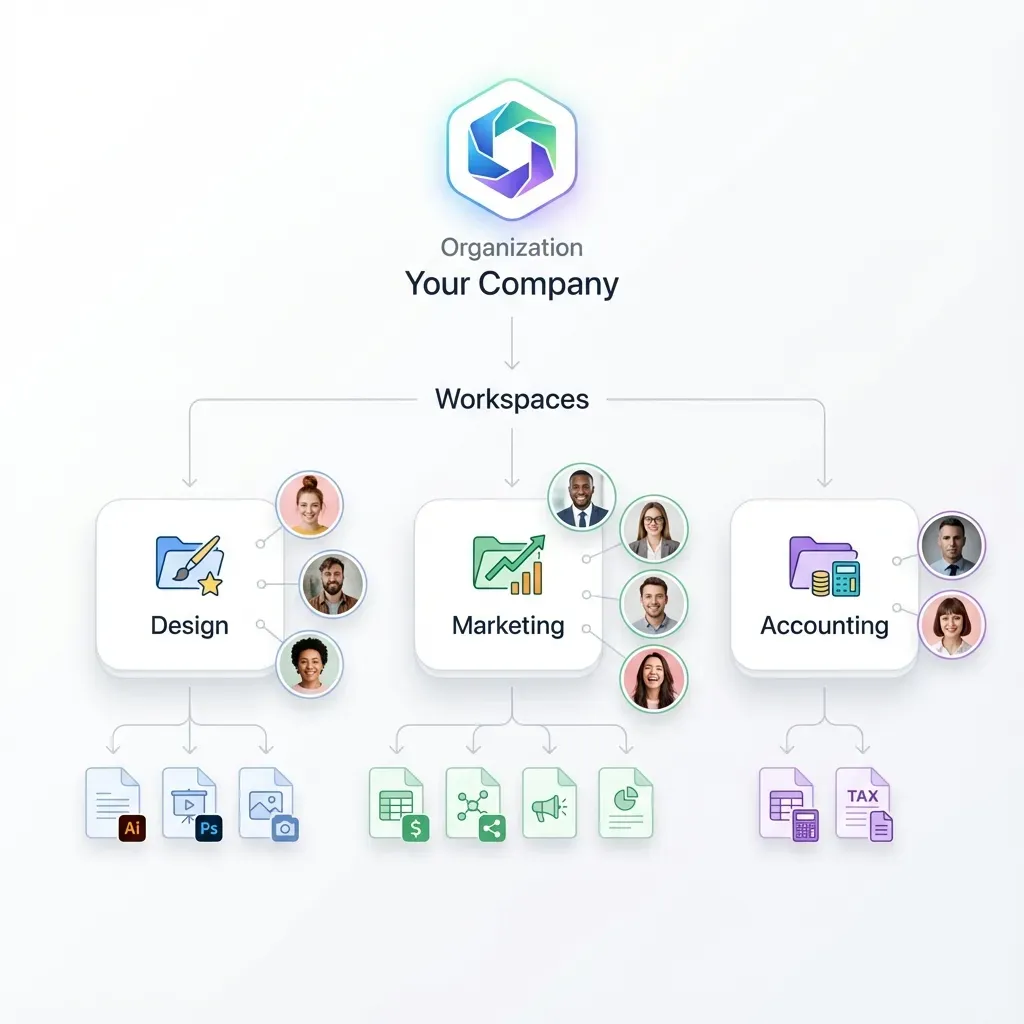
Modern legal infrastructure replaces mapped network drives with matter-centric cloud workspaces. A matter-centric architecture organizes files around the client and case rather than an arbitrary folder tree. Each legal matter receives an isolated workspace containing structured subfolders: Pleadings, Discovery, Correspondence, Work Product, and Client Records.
This model provides clear operational advantages over legacy file shares. File access occurs through encrypted web interfaces and native desktop integrations without fragile VPN connections. Version histories record every modification, preventing accidental file overwrites when multiple attorneys review a brief. Scoped permissions restrict access to authorized team members, enforcing matter boundaries across the entire firm.
Matter-Centric Isolation and Ethical Walls
Ethical walls are mandatory in legal practice to prevent conflicts of interest and protect sensitive client confidences. On traditional Windows file servers, permissions are managed through Active Directory security groups applied to nested folders. Over years of casework, inherited folder permissions degrade, creating permission creep where unauthorized staff gain unintended access to sealed files.
In modern legal workspaces, ethical walls are enforced through workspace-level access boundaries. Instead of relying on complex folder inheritance:
- Dedicated Matter Workspaces: Each matter operates as an independent workspace with an explicit access list. Attorneys and staff screened due to a conflict of interest are completely excluded from the workspace.
- Search Boundary Containment: Excluded users cannot see the workspace, browse its directory, or view search results from its contents. Internal document searches only query files within workspaces the user has explicit permission to view.
- Granular Permission Tiers: Roles are assigned based on casework responsibilities: Workspace Administrator (partner), Member (associate or paralegal with read/write access), and Viewer (read-only access for reviewers or external co-counsel).
Advisory file locking provides additional control during collaborative drafting. Through MCP storage tooling, an attorney can acquire a temporary lease on a contract draft. Other team members see that the file is locked, preventing conflicting concurrent edits while preserving all prior revisions in version history.
Secure Client Document Exchange and E-Signature
Exchanging confidential case files via unencrypted email attachments introduces security risks and file size limitations. Corporate email gateways regularly reject attachments exceeding standard gateway file size limits, forcing attorneys to resort to unmanaged consumer transfer tools.
Modern cloud workspaces replace email attachments with branded, access-controlled share portals:
- Scoped Share Links: Files and discovery sets can be delivered via durable or expiring links protected by passwords and download restrictions. Fastio provides branded shares (Send, Receive, and Exchange) that allow law firms to present custom-branded portals for client file intake and delivery.
- Secure Document Dropboxes: Receive-style shares allow clients, expert witnesses, and opposing counsel to upload discovery files, financial statements, and medical records directly into a matter workspace without creating an account or seeing other workspace contents.
- Integrated E-Signature: Engagement letters, retainer agreements, and settlement releases can be sent for electronic signature directly from the matter workspace. Fastio includes e-signature capabilities on every plan, allowing administrators to route documents to signers in sequence or in parallel, apply optional one-time passcodes, generate a tamper-evident audit certificate, and automatically file the executed agreement back into the matter workspace.


Modernize Your Law Firm File Infrastructure
Deploy structured matter workspaces with granular access controls, per-file version history, and an append-only audit log. Monthly plans start with a 14-day free trial, which requires a credit card.
Document Intelligence and Structured Extraction in Legal Practice
The primary challenge for law firms is rarely storing files; it is finding and extracting specific information across thousands of complex legal documents. Traditional keyword searches fail when searching for concepts that use varied terminology, such as searching for non-compete restrictions when a contract phrases the covenant as a covenant against competition.
Modern legal workspaces integrate document intelligence directly into the file layer, turning static case folders into live, searchable knowledge bases. When Intelligence Mode is activated on a matter workspace, files are automatically indexed for hybrid search, combining traditional full-text keyword indexing with semantic understanding.
Attorneys and paralegals can query an entire discovery repository using natural language questions. The system returns answers grounded in matter documents, complete with precise citations pointing to the source page and paragraph. This accelerates exhibit review, deposition preparation, and factual investigations without requiring manual tagging across every file.
Structured Contract and Discovery Extraction
Legal practices spend hundreds of non-billable administrative hours manually copying data from documents into spreadsheets. Legal IT consultants address this inefficiency by implementing structured document extraction.
Fastio provides Metadata Views to convert unstructured legal documents into structured, queryable tables:
- Custom Schema Design: Users describe the target fields in plain English (such as Counterparty Name, Effective Date, Governing Law, Liability Cap, and Termination Notice Window). The extraction engine automatically creates typed schema columns (Text, Date & Time, Decimal, Boolean, JSON).
- Broad Document Support: Metadata Views extract structured data from native PDFs, scanned pages, Word documents, and discovery images without requiring manual OCR templates or extraction rules.
- Dynamic Expansion: Legal teams can add new extraction columns at any time across existing matter files without reprocessing the entire collection. Connected AI agents can query and filter these Metadata Views directly through the Fastio MCP toolset to surface key terms across large contract portfolios.
Litigation teams use this capability to index case docket numbers, deposition dates, and witness names, while transactional practices extract key commercial terms across hundreds of vendor agreements.
Evidentiary Audit Trails and Activity Feeds
Maintaining an auditable chain of custody is a foundational requirement for legal technology. If an opposing party claims a critical document was altered or deleted, the firm must be able to prove when the file arrived, who viewed it, and what revisions occurred.
Modern legal workspaces maintain an append-only audit log that records every workspace event:
- User access logs: Tracking file views, downloads, link creations, and permission modifications.
- Per-file version history: Retaining every historical version of a draft, allowing teams to restore prior iterations and review specific historical edits.
- Activity monitoring: Fastio provides an events feed accessible via WebSocket or long-poll subscriptions, allowing internal IT monitors to log workspace events in real time.
Fastio runs on cloud infrastructure partners, including Google Cloud Platform and Cloudflare, that are certified to industry-leading security standards. These architectural controls give managing partners confidence that client records remain protected from unauthorized tampering.
How to Select a Legal Technology Advisor and Manage Cutover
Hiring a law firm IT consulting partner is an operational investment that directly affects practice productivity. Generalist managed service providers often lack familiarity with legal software workflows, leading to misconfigured document management systems and disgruntled partners.
When evaluating a legal IT advisor or technology consultant, firm leadership should look for specific domain competencies:
- Experience with Legal Applications: The advisor must demonstrate hands-on experience migrating systems like NetDocuments, iManage, Clio, Worldox, and specialized billing platforms.
- Transparent Pricing Models: Reputable consultants offer clear statements of work with fixed-fee project phases for discovery, migration, and deployment, rather than open-ended hourly billing that leads to budget overruns.
- Data Hygiene and Cleanup Expertise: A quality advisor audits and cleans folder structures before migration, resolving path length violations and eliminating duplicate drafts rather than simply copying messy file trees.
- Comprehensive User Onboarding: Technical cutover accounts for only half of project success; user adoption determines the rest. The advisor must deliver role-based training tailored separately for partners, associates, and administrative support staff.
Firms evaluating modern workspace options can test deployment workflows on Fastio. Creating an account is free, while active matter collaboration runs through an organization on a paid subscription. Plans scale storage allowances, seat counts, and workspace limits to support boutique practices and multi-office partnerships alike.
Avoiding Common Legal Migration Pitfalls
Legal infrastructure modernizations often stumble due to predictable planning errors:
- Ignoring Large File Demands: Deposition videos, digital forensics images, and high-resolution trial exhibits often span dozens of gigabytes. Standard consumer sync tools choke on these payloads. Fastio supports massive single-file uploads across all plans, allowing litigation teams to move multi-gigabyte media files and disk images without splitting archives.
- Premature Server Decommissioning: Rushing to turn off on-premise hardware before completing post-migration validation can leave the firm vulnerable if delta files were missed. Maintain legacy systems in read-only mode for a defined validation period before final hardware disposal.
- Underestimating Change Management: Attorneys accustomed to mapped drive letters often resist web interfaces. Advisors must configure native desktop access and provide quick-reference cheat sheets to maintain productivity.
Long-Term Workspace Governance and Retention
A successful IT consulting engagement leaves the firm with sustainable operational policies. Consultants assist managing partners in establishing repeatable workspace governance:
- Standardized Matter Templates: Every new matter initiates from a standardized folder structure, maintaining consistent document classification across practice groups.
- Defensible Records Retention: Establishing automated archiving workflows for closed matters. Once a case closes and accounting completes final billing, the matter workspace transitions to read-only archive status.
- Cloud Integration Pathways: For firms maintaining existing cloud repositories, Fastio provides Cloud Sync for Google Drive, Dropbox, Box, and OneDrive on a scheduled or on-demand basis, allowing staged migrations without local hardware bottlenecks.
By combining disciplined IT advisory guidance with modern cloud workspaces, law firms eliminate server maintenance burdens, protect client confidentiality, and provide attorneys with modern tools to practice law effectively.
Frequently Asked Questions
When should a law firm hire an IT consultant?
A law firm should hire an IT consultant when facing critical technical transitions, including migrating off aging on-premise servers, replacing legacy document management software, addressing persistent remote access issues, or responding to client security audits. Consulting support is also valuable when evaluating cloud infrastructure, consolidating fragmented software tools, or establishing structured matter archiving policies.
How much does legal IT consulting cost?
Legal IT consulting costs depend on project scope, firm size, and total data volume. Engagements typically follow two primary pricing models: hourly billing for open-ended advisory and ongoing maintenance, or fixed-fee milestones for defined deliverables such as cloud file migrations and infrastructure assessments. Boutique practices executing straightforward file moves incur lower overall consulting fees, whereas multi-office firms migrating complex database environments with millions of records require larger budgetary allocations to cover discovery, pilot testing, and staff onboarding.
What should be included in a law firm IT assessment?
A comprehensive law firm IT assessment should inventory all hardware, on-premise servers, network shares, practice management databases, and unmanaged local workstation storage. It must evaluate security controls, user access permissions, ethical wall enforcement, backup redundancy, remote access performance, and software licensing. The assessment should conclude with a prioritized remediation roadmap identifying immediate risks and recommended infrastructure upgrades.
How do law firm IT consultants migrate files without losing metadata?
Consultants preserve file metadata by avoiding basic drag-and-drop browser uploads, which overwrite filesystem creation and modification dates with the upload timestamp. Instead, they use direct API calls, scripted migration utilities, and dedicated cloud import tools that preserve original operating system timestamps. They also avoid unvetted file conversion scripts that could alter embedded document properties, revision histories, or Bates numbering.
How are ethical walls maintained in cloud workspaces?
Ethical walls are maintained by transitioning from fragile folder-level inheritance on network drives to matter-centric workspace isolation. In modern legal workspaces, each matter operates as an independent workspace with explicit, role-based access lists. Conflicted attorneys and staff are excluded from the matter workspace entirely, preventing them from viewing, searching, or accessing case records or audit histories.
What is the difference between general IT support and legal IT consulting?
General IT support focuses on basic hardware troubleshooting, operating system updates, printer connectivity, and generic office software. Legal IT consulting addresses the specialized operational, regulatory, and evidential requirements of legal practice. This includes managing complex document management systems, preserving evidentiary file metadata, configuring ethical walls, supporting litigation load files, and establishing defensible matter archiving.
How do law firms handle large discovery files and deposition video during cloud migration?
Handling large litigation files requires infrastructure that supports high file-size thresholds without crashing local synchronization clients. Legal IT consultants use cloud workspaces capable of handling large single-file payloads, such as Fastio's support for multi-gigabyte files on all subscription tiers. Direct cloud-to-cloud import bypasses local office bandwidth limitations, moving large media files directly between servers.
Related Resources

Modernize Your Law Firm File Infrastructure
Deploy structured matter workspaces with granular access controls, per-file version history, and an append-only audit log. Monthly plans start with a 14-day free trial, which requires a credit card.