How to Build AI Apps with GitHub Spark and Copilot
US searchers look up "github spark" about 4,400 times a month, yet many results still mix it up with Apache Spark or stop at launch-day recaps. GitHub Spark turns natural-language prompts into fullstack React apps with a managed data store, GitHub auth, AI features, and one-click deploy under GitHub Copilot plans. This guide walks from the first app at github.com/spark through Copilot agent workflows, AI credit billing, and the asset handoff teams need once the prototype is live.


What GitHub Spark is (and what it is not)
US searchers look up "github spark" about 4,400 times a month, with a keyword difficulty of 32 and CPC around $26.34. That mix of volume and commercial intent is why so many results still collide with Apache Spark, the open-source data engine, or restate launch posts without showing the build path. This guide exists for the other half of the SERP: people who want a working AI web app, not a cluster computing tutorial.
GitHub Spark turns natural-language prompts into fullstack web apps with data storage, AI features, GitHub authentication, and one-click deployment. GitHub's own docs put it plainly: describe what you want, get a live app, iterate with prompts or code, then publish to a managed runtime. The product is in public preview and sits inside the GitHub Copilot surface, not as a standalone IDE product.
Spark is not Apache Spark. Apache Spark is a unified analytics engine for large-scale data processing. If you are wiring ETL jobs or DataFrames, you are in the wrong article. GitHub Spark is an app builder aimed at prototypes, internal tools, personal apps, and early SaaS experiments that ship as TypeScript and React.
What you get out of the box, per official docs:
- A generated React + TypeScript app (Spark always generates that stack)
- A managed key-value data store on Azure (Cosmos DB) when the app needs persistence, sized for small records up to 512 KB per entry
- GitHub Models integration so AI features (summaries, tags, generation) can be prompted in without wiring your own inference stack
- GitHub sign-in for app users, with visibility controls (only you, a GitHub org, or all GitHub users)
- One-click publish to Azure Container Apps, with hosting and inference included in the integrated runtime
- Optional Codespaces sync, a linked repository with two-way sync, and access to GitHub Copilot agent mode and the cloud agent once the repo exists
Who it fits: PMs who can describe a workflow, founders validating an idea, and developers who want a fast loop before investing in custom infrastructure. Who it does not fit yet: apps that need a full relational schema, multi-tenant isolation beyond GitHub auth defaults, or heavy binary assets inside the Spark key-value store.
Access is gated by plan. GitHub's tutorial lists Copilot Pro+, Copilot Max, or Copilot Enterprise as prerequisites. The product page currently frames Spark as offered on Copilot Pro+ and Enterprise, with broader availability planned. Org and enterprise admins can restrict access through existing Copilot policies.
Related guides
- How to Set Up MCP Servers in VS CodeGuide to vscode mcp server setup: Model Context Protocol (MCP) servers in VS Code connect GitHub Copilot Chat to...
- How to Configure the Base44 GitHub App IntegrationSetting up the Base44 GitHub App integration enables teams to sync visual configurations to a repository. This guide...
- How to Build an AI Code Review Agent with Fastio APIBuilding an AI code review agent with the Fastio API lets developers pull repository diffs into an agentic workspace...
- A Developer Guide to the Base44 Core App DashboardThe Base44 core app dashboard is the admin interface for managing production environment variables, database entities,...
- Base44 File Storage Setup: Media Libraries and External Cloud PersistenceBase44 file storage setup involves configuring backend media libraries to store, manage, and deliver application...
- Base44 Large File Upload Architecture: Chunked Transfer & Storage StagingBase64 encoding increases file payload sizes by approximately 33%, causing memory spikes and gateway timeouts when...
More on this subject: AI Coding Assistants (82 guides)
Build your first Spark app in five steps
Featured-snippet answer first: open github.com/spark, describe the app in one detailed prompt, iterate in the live preview, refine AI prompts and data, then click Publish. Below is the same flow expanded with the decisions that matter in practice.
1. Start at github.com/spark with a sharp prompt
Sign in with a GitHub account that has an eligible Copilot plan. On the Spark homepage, write the app as if you were briefing a strong junior engineer. Specificity wins. GitHub's official tutorial uses a marketing assistant example that asks for copy, visual strategy, and target audience from a product brief. You can also drop a markdown brief or upload a mock, sketch, or screenshot as a visual reference.
A useful first prompt names the app, the primary user action, what the AI should return, and how results should be laid out. Spark will always produce TypeScript and React. If you care about a specific interaction (save favorites, export CSV, multi-step form), say so in the first message so the data model starts closer to where you need it.
2. Iterate in the live preview
After generation, use the Iterate tab to change behavior in natural language. Spark surfaces detected errors and offers Fix All. Use the target icon to select a specific UI element when you only want that piece changed. Manual edits in the Code panel include Copilot inline suggestions and update the preview immediately.
Treat early iterations as product discovery, not as final architecture. Keep prompts short and sequential: one feature or fix per message. That makes it easier to reverse a bad change and keeps AI credit burn predictable.
3. Style, assets, and data
Use the Theme tab for typography, colors, radius, and spacing. Upload logos, images, videos, or documents in the Assets tab, then tell Spark how those assets should appear. When the app needs persistence, Spark can provision the managed key-value store automatically. GitHub documents a Favorites-style flow: ask Spark to save and list results, then inspect values in the Data tab. If you do not want persistence, say so explicitly ("store data locally" or "don't persist data").
Remember the store limits: small records, not a document lake. Large brand kits, design exports, or research PDFs belong outside the Spark KV store (more on that in the handoff section).
4. Tune AI features in the Prompts tab
Spark detects when AI is needed, generates system prompts, picks models via GitHub Models, and wires inference for you. Open Prompts, read each generated prompt, and edit the wording for tone, output shape, and constraints. For a marketing app, that might mean three separate prompts for copy, visual strategy, and audience. Re-test the live app after every prompt change. This usually pays off more than rewriting React by hand for model behavior.
5. Publish, set visibility, then optional repo + Codespaces
Click Publish. Default visibility is private to you. You can open the app to a GitHub organization or to all GitHub users. Separately choose data access: full write, or read-only so others can view without creating, editing, or deleting records. GitHub warns that published app data is shared across users who can access the spark. Strip private test data before widening visibility.
When you need team development, create a repository from Spark. Prior history is committed, and two-way sync keeps Spark and the main branch aligned. From there, open a Codespace for full IDE work with GitHub Copilot agent mode, or assign issues to the Copilot cloud agent for background pull requests.
A starter prompt you can adapt
Use this as a template, not a magic spell:
Build an app called "Weekly Standup Digest."

Users paste notes from a team standup. On submit, call a model to return:
1) A concise executive summary
2) Action items with owners if mentioned
3) Open risks or blockers

Show the three blocks in a clean card layout. Let users save digests to a list
they can reopen later. Style should feel like a modern internal tool.
After the first generation, iterate with single-purpose messages: "Add export to markdown," "Make the action items editable," "Hide empty risk section."
GitHub Spark with GitHub Copilot: agent mode and the cloud agent
Spark is not a replacement for GitHub Copilot. It is a path into the same family of tools. Official docs describe two high-value junctions: agent mode inside a Codespace, and the Copilot cloud agent once a repository exists.
Open a Codespace from Spark when you need multi-file refactors, debugging, tests, or libraries that the natural-language loop is fighting. In agent mode, Copilot chooses files, proposes edits and terminal commands, and keeps working the task until it is done or stuck. Use Edit mode for review-style suggestions and Ask mode when you need an explanation of generated code or a Spark error. Changes in the Codespace sync back to Spark.
After you link a repository, the cloud agent can take issues or PR prompts and work in the background: bug fixes, refactors, and test coverage. That is the handoff from "vibe-built prototype" to "normal GitHub team process." Issues, pull requests, project boards, and GitHub Actions all become available once the repo exists.
Practical split of labor:
- Spark Iterate tab: product shape, layout, AI prompts, small feature adds
- Spark Code panel: light edits with live preview
- Codespace + Copilot agent mode: structural code work, dependency issues, deeper debugging
- Repo + cloud agent: async improvements while you review the live app with stakeholders
Enterprise note: if Codespaces is disabled, users can still use the Spark interface but cannot open the underlying codespace. Spark still draws on AI credits and inherits enterprise access policies where admins enable it.



Keep Spark prototypes and project files in one workspace
Store briefs, brand assets, and agent exports next to your app work with Intelligence Mode, version history, and MCP access. Monthly plans start with a free trial of up to 14 days.
Billing, Spark messages, and deployment limits
Is GitHub Spark free? Not as a standalone free product. You need an eligible paid GitHub Copilot plan (commonly Pro+ or Enterprise for Spark access today). Creating prompts in Spark consumes GitHub AI credits, metered by token usage and model, under a dedicated Spark SKU so you can budget Spark separately from other Copilot features.
How billing works in practice:
- Each natural-language Spark message (Iterate prompts and targeted natural-language edits) burns AI credits
- Manual code editing is unlimited relative to message caps, but your plan still defines overall AI credit allowances
- GitHub's Spark product page has listed monthly Spark message entitlements such as up to 375 messages/month on Copilot Pro+ and up to 250 on Copilot Enterprise, with the option to purchase more, plus limits like 10 active app building sessions at a time
- Deployed apps currently do not incur separate charges, but GitHub applies usage limits on HTTP requests, data transfer, and storage. Limits apply across all sparks you own. Hitting a limit unpublishes the spark for the rest of the billing period
- Future pay-as-you-go for extra runtime is called out as coming; treat current limits as soft production ceilings, not infinite hosting
Budget tips from the official billing model:
- Prefer one well-scoped message over five vague ones
- Do visual polish in Theme and Code when you can, and save messages for behavioral changes
- Set a Spark-specific budget in GitHub billing analytics if your org runs many prototypes
- Watch that shared data store: a public demo with write access can grow storage and request volume quickly
Plan language changes over time. Confirm current entitlements on GitHub Spark billing and your Copilot plan page before you commit a team rollout.
After the prototype: assets, handoff, and team collaboration
Most writeups stop at Publish. That is where real teams start to struggle. A Spark app is live, but the surrounding work product is scattered: prompt drafts, Figma exports, customer interview notes, sample datasets, screenshots for stakeholders, and the repo itself. Spark's managed store is for small app records. It is not your design system archive, contract folder, or multi-agent artifact tray.
Start with the simple options teams already use. Keep static marketing assets in Google Drive or Dropbox. Put production binaries and backups in S3 or another object store. Keep application source in the GitHub repo Spark creates. Those tools work. They also fragment context: the PM's brief lives in one tab, the design review in another, and the AI agent that might generate reports has no shared memory of either.
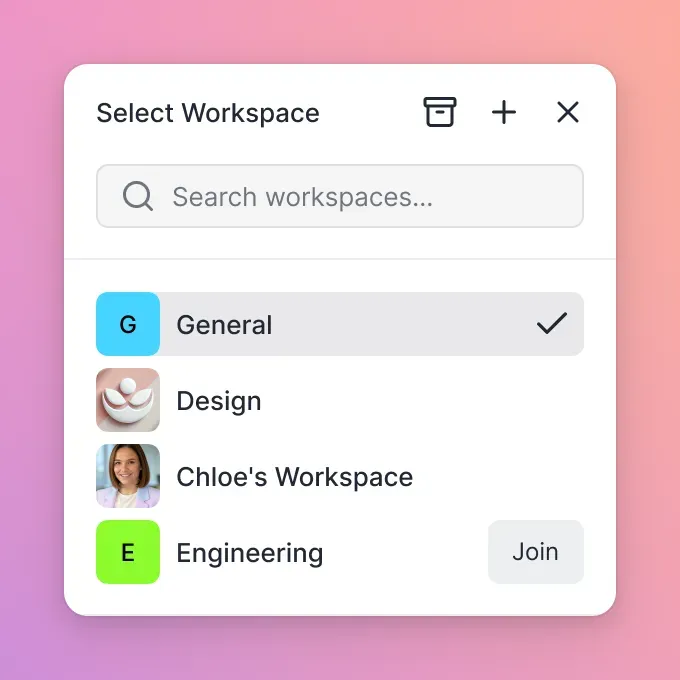
When the handoff is agentic, or when humans and agents need the same files with permissions and history, add a shared intelligent workspace. Fast.io is built for that layer. Org-owned workspaces hold the brief, brand assets, exported CSVs, and review notes next to each other. Enable Intelligence Mode so files are indexed for semantic search and citation-backed chat. Use branded Send, Receive, and Exchange shares when an external reviewer should see a package without a full seat. Per-file version history keeps concurrent agent edits auditable. Agents connect through Fast.io's MCP server (Streamable HTTP at /mcp, legacy SSE at /sse; see mcp.fast.io/skill.md), while humans use the UI. Ownership transfer covers the common pattern where an agent scaffolds the org and a human takes billing ownership.
A concrete post-Spark workflow:
- Publish the spark read-only for stakeholder demos.
- Create the GitHub repository and invite collaborators for code.
- Upload the original prompt brief, mockups, and sample outputs to a Fast.io workspace named for the project.
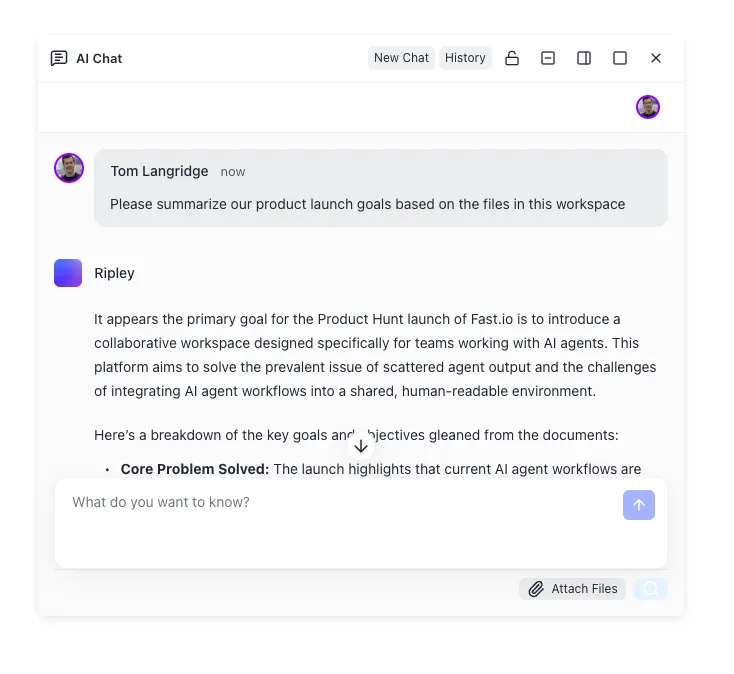
- Turn on Intelligence so anyone can ask "what did we decide about data retention?" and get cited answers.
- If you collect PDFs, invoices, or policy docs during validation, use Metadata Views to extract structured fields into a filterable grid instead of retyping them.
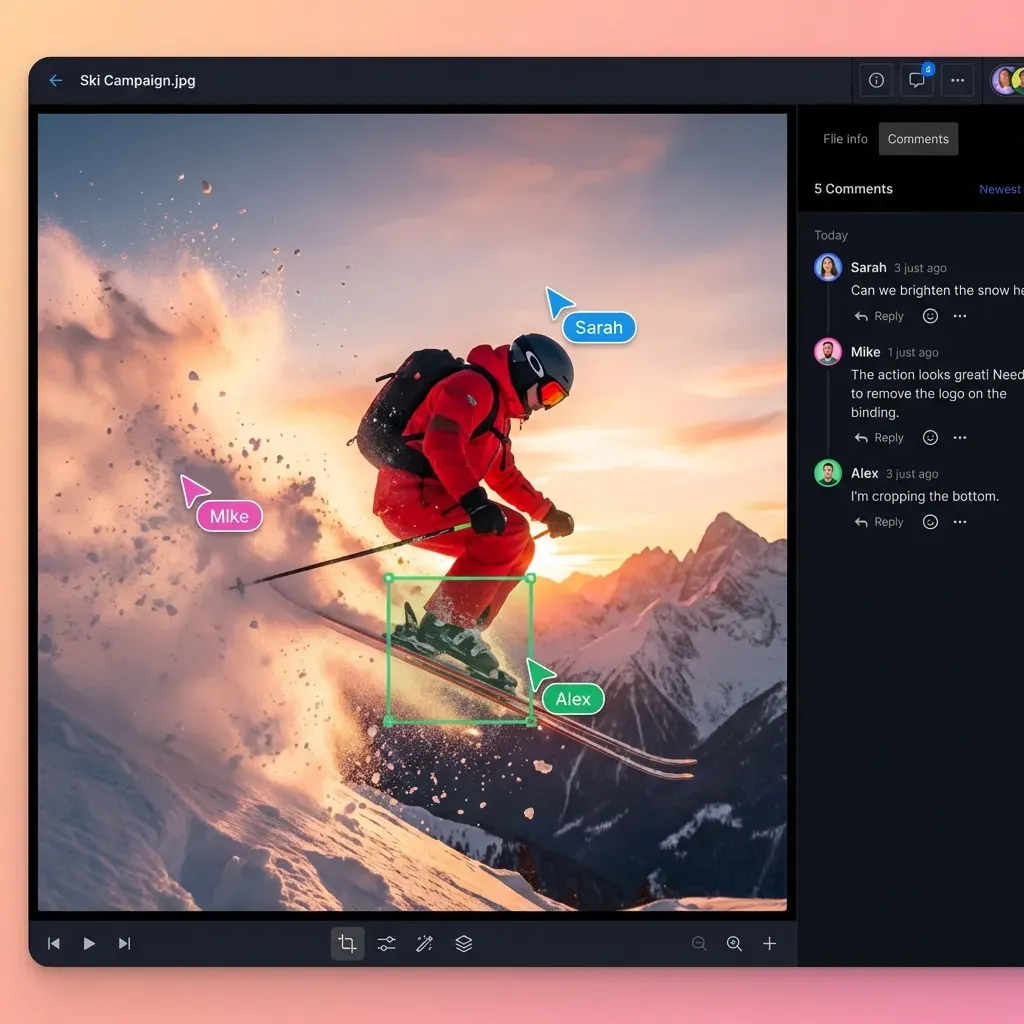
- Collect review feedback with anchored comments in the workspace when the prototype graduates into a real shipping plan.
Fast.io plans start at Starter ($9.99/mo), Business ($49.99/mo), and Enterprise ($199.99/mo). Monthly plans start with a trial of up to 14 days (credit card required); annual plans have no trial. Production work runs on a paid subscription after the trial. For agent storage patterns more broadly, see /storage-for-agents/.
The point is not to replace Spark. Spark is the builder and runtime for the app shell. The workspace is where the research, assets, and human decisions around that app stay findable after the demo link goes out.
Limits, good fit cases, and a practical checklist
GitHub documents hard constraints you should design around from day one.
- Opinionated stack: React and TypeScript. External libraries are allowed but not guaranteed to work with Spark's SDK. Test after every add.
- Shared data by default: all users of a published spark share the app data store unless you keep the app private or mark data access read-only.
- Small records: the managed store targets entries up to 512 KB. Do not park large media or multi-megabyte documents there.
- Auth model: users sign in with GitHub. That is excellent for developer-facing tools and internal GitHub-centric orgs. It is a poor fit if your end users are non-GitHub customers who need email/password or social login only.
- Public preview: features, limits, and billing details can change. Re-check docs before a board demo or customer pilot.
- Suggestions matching public code: GitHub notes that the Copilot setting which blocks suggestions matching public code may not work as intended in Spark.
Strong fit cases:
- Internal tools that replace a spreadsheet workflow
- AI-assisted drafts (copy, tags, summaries) with a thin UI
- Clickable prototypes you can put in front of users the same day
- Personal utilities for a GitHub-native audience
Weak fit cases:
- Multi-tenant SaaS with complex isolation requirements
- Heavy media pipelines or large file collaboration inside the app database
- Apps that must leave the React/TypeScript path
- Long-lived production systems that need independent infrastructure teams and custom SLAs
Pre-publish checklist:
- Delete private test data from the Data tab.
- Decide visibility (private / org / all GitHub users).
- Prefer read-only data access for demos.
- Create the repository if more than one person will touch code.
- Confirm AI credit budget headroom for the next week of iteration.
- Park source-of-truth assets (briefs, brand files, research) in a durable shared workspace, not only in chat history.
- Note the app URL and rename carefully; Spark can re-route after name changes, but stakeholders hate broken bookmarks.
Spark compresses the distance from idea to URL. GitHub Copilot extends that into real engineering. Your job after publish is keeping the surrounding knowledge, assets, and ownership as disciplined as the demo looked on day one.
Sources
References used to verify factual claims in this guide.
-
US searchers look up "github spark" about 4,400 times a month, with keyword difficulty 32 and CPC around $26.34. Spark is offered with Copilot Pro+ (product page lists up to 375 Spark messages/month) and Copilot Enterprise (up to 250 Spark messages/month), with 10 active app building sessions at a time.
-
GitHub Spark turns natural-language prompts into fullstack web apps with data storage, AI features, GitHub authentication, and one-click deployment. Spark always generates TypeScript and React apps and can provision a managed key-value store on Azure (Cosmos DB) for records up to 512 KB per entry.
-
Each prompt to Spark consumes AI credits; usage is attributed to a dedicated Spark SKU for budgeting. Deployed Spark apps do not currently incur charges but are limited by HTTP requests, data transfer, and storage; hitting a limit unpublishes the spark for the rest of the billing period.
-
Prerequisites for the official Spark tutorial include Copilot Pro+, Copilot Max, or Copilot Enterprise. Published spark data is shared across users who can access the app; read-only data access prevents others from creating, editing, or deleting content.
Frequently Asked Questions
What is GitHub Spark?
GitHub Spark is a GitHub Copilot-linked app builder that turns natural-language prompts into fullstack web apps (React and TypeScript) with a managed key-value data store, GitHub authentication, AI features via GitHub Models, and one-click deployment to a managed Azure runtime. It is not Apache Spark, the data processing engine.
Is GitHub Spark free?
No. Spark access requires an eligible paid GitHub Copilot plan (commonly Copilot Pro+ or Copilot Enterprise; GitHub's tutorial also lists Copilot Max). Prompts consume GitHub AI credits under a dedicated Spark SKU. Manual code editing is unlimited relative to message caps, but you still need the paid plan that unlocks Spark.
How is GitHub Spark billed?
Each prompt to Spark consumes AI credits based on tokens and model choice, tracked on a Spark SKU so you can budget it separately from other Copilot usage. Deployed apps do not currently add a separate charge, but GitHub enforces limits on HTTP requests, data transfer, and storage; hitting a limit unpublishes the spark for the rest of the billing period. Confirm current entitlements in GitHub's Spark billing docs.
Does GitHub Spark work with Copilot?
Yes. Spark is part of the GitHub Copilot product family. You can edit with Copilot inline suggestions in Spark, open a synced Codespace for Copilot agent mode, and, after creating a repository, use the Copilot cloud agent for background pull requests. Spark does not replace Copilot chat or code completions; it adds a natural-language path to a hosted fullstack app.
What stack does GitHub Spark generate?
Spark always generates TypeScript and React apps. You can edit code in Spark or a Codespace, and you may add external libraries, but GitHub warns that compatibility with Spark's SDK is not guaranteed and you should test thoroughly.
Where should I store design assets and research for a Spark project?
Keep app records that the UI needs in Spark's managed store (small key-value entries). Keep design exports, interview notes, brand kits, and large files in a shared workspace such as Google Drive, S3, or Fast.io. Fast.io adds Intelligence Mode for semantic search, version history, branded shares, and MCP access for agents when humans and agents need the same project files.
Can my team collaborate on a Spark app?
Yes. Create a repository from Spark for two-way sync with main, invite collaborators through normal GitHub permissions, and use issues, pull requests, and the Copilot cloud agent. For non-code collaboration (briefs, assets, reviews), use a shared workspace outside the Spark data store.
Related Resources

Keep Spark prototypes and project files in one workspace
Store briefs, brand assets, and agent exports next to your app work with Intelligence Mode, version history, and MCP access. Monthly plans start with a free trial of up to 14 days.