Devin AI Enterprise: Features, Security Controls, and Team Setup
Cognition lists Devin Teams at $80 per month plus $40 per full developer seat, while Devin Enterprise is only 'Let's talk' packaging above that tier. The gap is where VPC deployment, multi-organization admin, order-form ACU billing, and enterprise identity controls live. This guide maps those controls and a practical team setup sequence for Devin AI buyers.


Where Devin Enterprise sits above Teams and Pro
Cognition's pricing page lists Devin Teams at $80 per month plus $40 per full developer seat, while Devin Enterprise is labeled only "Let's talk." That packaging gap is the whole product story. Self-serve Pro is $20 per month and Max is $200 per month for individuals. Teams adds shared billing, an admin dashboard, and collaboration for unlimited members. Enterprise is the Devin AI tier where dedicated deployment options, multi-organization admin, identity provider login, and order-form Agent Compute Unit (ACU) contracts appear.
Devin Enterprise is Cognition's organization-grade Devin offering. Public marketing and docs describe VPC-oriented deployment choices, centralized enterprise admin controls, MultiDevin parallel work, event-driven automation, SOC 2 Type 2 claims, and dedicated support with assigned forward-deployed engineering help. If you only read Pro pricing recaps online, you miss the admin surfaces that determine whether a large engineering org can run Devin without blowing budgets or mixing repository access across business units.
Devin AI is Cognition's autonomous software engineering agent. On Enterprise, that agent is not just a stronger model dial. It is an operator you provision like a contractor fleet: identities, org boundaries, repo grants, machine environments, and hard ACU ceilings. Cognition's customer write-up for Nubank reports an 8x engineering time efficiency gain and over 20x cost savings on a multi-million-line ETL migration delegated to Devin. Those outcomes only hold when review gates, access boundaries, and consumption controls exist around the agent.
This guide stays on official Cognition pages: enterprise marketing, pricing, billing docs, organization planning, and deployment architecture. Fast.io appears later only as a shared workspace layer for agent artifacts and human handoffs around Devin AI, not as a built-in Devin feature.
Helpful context while you evaluate: Fast.io Workspaces, Fast.io AI, and storage for agents.

Related guides
- Claude SharePoint Permissions: Enterprise Access Controls and SetupClaude connects to SharePoint through Microsoft Graph delegated permissions, requiring tenant-level admin consent in...
- Claude Enterprise Plan: Features, Security, Compliance, and Deployment OptionsClaude Enterprise bundles four product surfaces, Chat, Code, Cowork, and Security, under one admin umbrella with SOC 2...
- Devin AI Cloud: Sandbox Architecture, Dedicated VPCs, and OutpostsDevin AI Cloud separates agent reasoning from code execution through a split architecture composed of a centralized...
- Devin AI Security: Data Handling, Secrets, and Admin ControlsCognition states that paid Devin plans may use customer data for model training by default unless you opt out, while...
- Devin for Terminal: Setup and CLI Command ReferenceDevin for Terminal provides a command line interface to execute local and cloud-based AI agent sessions directly from...
- Devin AI Changelog: Latest Features, Releases, and Product UpdatesThe Devin AI changelog is Cognition's official chronological record of feature updates, CLI improvements, security...
More on this subject: Devin (103 guides)
What Enterprise-only controls add over Teams and Pro
Featured comparison buyers actually need is not Free versus Pro. It is Teams versus Enterprise. Teams already covers shared workspaces, unlimited members, centralized billing, an admin dashboard with analytics, and priority support. Enterprise inherits those collaboration basics, then adds controls that security and platform teams usually put on a procurement checklist.
Controls that show up on Enterprise packaging
From Cognition's pricing and enterprise pages, Enterprise-focused capabilities include:
- Highest priority support and a dedicated account team, with live onboarding and training called out on the enterprise page
- Centralized enterprise admin controls across multiple Devin organizations
- Dedicated deployment option, including virtual private cloud (VPC) oriented models on major clouds
- Identity provider (IdP) integration for enterprise login, including OIDC-based flows documented for Okta, Microsoft Entra ID, and generic OIDC providers
- Audit logs and fine-grained access controls
- Custom terms and access to early feature releases on the plan comparison
- MultiDevin: manager Devins overseeing worker Devins against large parallel backlogs
- Event-driven automation: new Devin sessions spinning up from on-call tickets, CI failures, and similar triggers
- SOC 2 Type 2 compliance claims and a public Trust Center for evidence packages
- Statement that Enterprise customer data is kept in a controlled environment and is not used for training without contractual consent language on the enterprise positioning
What Teams already covers without Enterprise
Teams is enough for many mid-size engineering groups:
- Unlimited team members with share-and-collaborate workflows
- Centralized billing and an admin dashboard with analytics
- Priority support without a custom order form
- Concurrent sessions that scale beyond individual Max limits on the plan matrix
Buy Teams when you need shared seats and visibility. Buy Enterprise when you need multi-organization isolation, order-form ACU pools, IdP-driven access, dedicated networking, or contractual support depth.
Capability exclusives worth pressure-testing in a sales call
MultiDevin and event-driven automation are marketed as exclusive enterprise power features. Ask for a concrete demo on your backlog shape: a large modernization program versus a stream of CI flakiness. Also ask which actions stop when an organization hits its ACU limit. Billing docs are explicit: once a per-organization ACU limit is reached, all Devin activity for that organization stops until an enterprise admin raises the limit.

How VPC deployment options trade off
Marketing copy says "deploy in your virtual private cloud." Deployment docs are more precise. Devin's architecture always keeps the "brain" (the intelligence service) in Cognition's cloud. The variable is where the Devbox runs: the secure virtual environment that shells, browsers, and code edits execute inside.
Two primary models
Enterprise Cloud. Brain and Devbox both run in Cognition's multi-tenant cloud. Each session gets an isolated machine. Setup is fastest. This model fits when source control and artifact stores are public or can accept IP allowlisting. MFA VPN access to internal resources is not compatible with Enterprise Cloud.
Customer Dedicated Deployment. Cognition hosts Devin in an auto-scaling, customer-isolated single-tenant VPC. Your network connects with AWS Private Link (preferred) or an IPSec tunnel so the Devbox can reach private SCM systems, artifact stores, and internal tools. OpenVPN is supported for this model. This is the path when private networks cannot use simple allowlists.
Tradeoffs platform teams actually debate
Speed to first PR. Enterprise Cloud can be minutes after contracts and IdP setup. Dedicated networking projects run longer because Private Link, DNS, and routing must work before agents can clone private repos.
- Network reach. Self-hosted GitHub Enterprise Server, private Artifactory, or MFA-gated tools push you toward dedicated deployment.
- Workstation access. End-user machines still need HTTPS access to
*.devinapps.comfor interactive IDE and desktop session tools. Corporate proxies that block that domain break the interactive experience even if the Devbox can reach git. - Control narrative. Dedicated deployment improves tenant isolation. It does not move the brain into your VPC. Procurement language should match that architecture, not oversell "fully on-prem agent intelligence."
- Cloud providers. Enterprise marketing mentions support for major clouds. Deployment FAQs send GCP questions to sales. Confirm your region and cloud constraints in the order form.
Treat VPC language as a networking design choice, not a checkbox that automatically satisfies every regulator. Pair it with repository least privilege, secrets hygiene, and human review of every production-bound change.
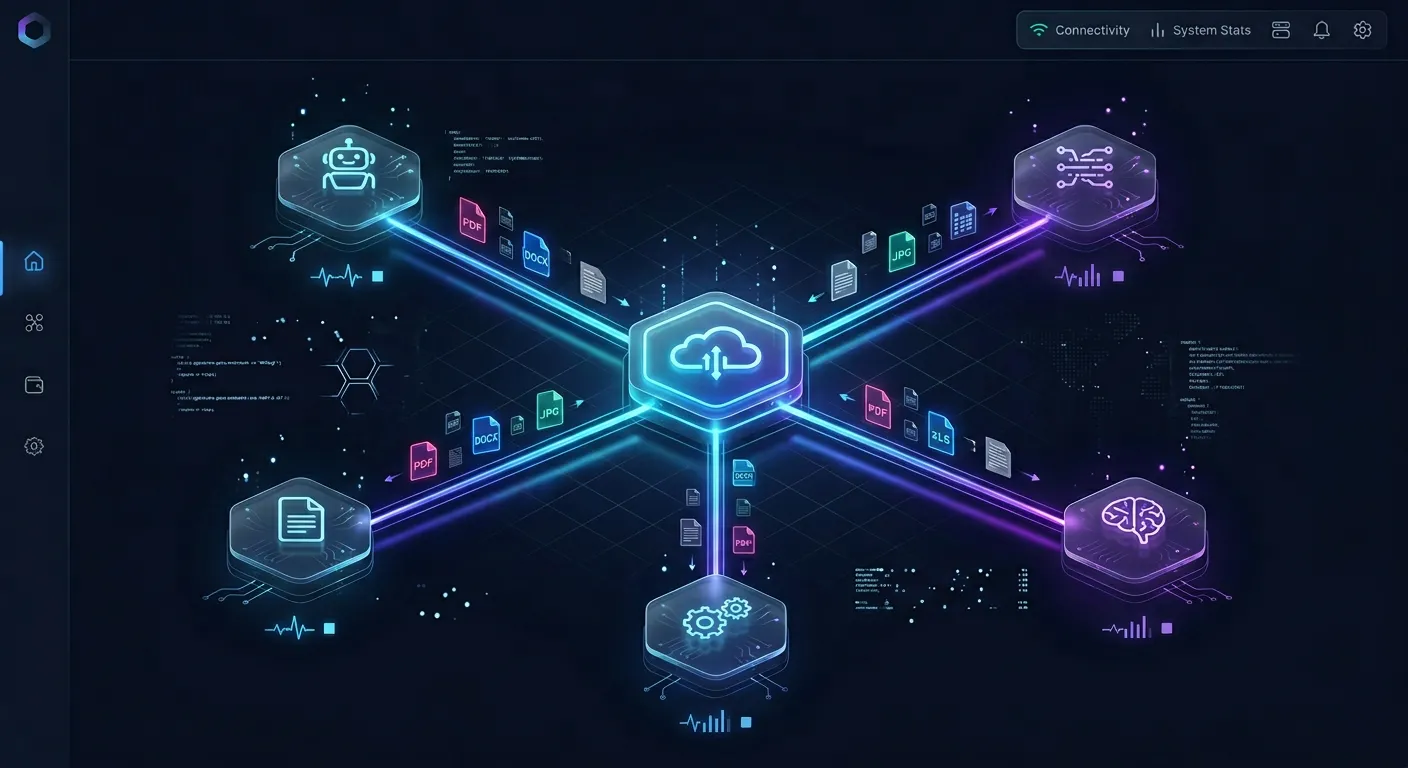


Keep Devin AI handoffs in one durable workspace
Store migration reports, review packs, and agent outputs in a shared Fast.io workspace with version history, Intelligence Mode search, and MCP access for agents. Monthly plans start with a trial of up to 14 days (credit card required); annual plans have no trial.
Multi-organization structure, roles, and team setup
Multi-organization management is the admin surface most Pro pricing articles skip. In Devin Enterprise, organizations are logical boundaries. Each organization gets its own shared Devin machine, repository access set, membership list, and ACU tracking. Users can belong to several organizations, with permissions scoped per organization.
Recommended mapping pattern
Cognition's organization guide recommends mapping each Devin organization to a GitHub or GitLab team, which often mirrors IdP groups and product lines. Example shapes that work:
- Product-line orgs: e-commerce, analytics, payments, each with the repos that product owns
- Platform org: infrastructure, security tooling, shared deployment scripts
- Migration org: temporary org with a hard ACU ceiling for a one-time modernization program
Avoid splitting frontend and backend of the same product into two orgs if they share most repositories. Every member of an organization can access every repository granted to that organization. Over-sharing repos is a security problem. Over-splitting orgs is an admin tax.
Default roles and custom RBAC
Default roles from the getting-started docs:
- Enterprise admins: enterprise settings, create organizations, invite users, connect source control at the account level, manage billing
- Organization admins: invite members into their organization
- Members: run Devin sessions with full access inside their organization
Custom roles add two scopes. Organization-level roles control DeepWiki, Ask Devin, sessions, secrets, knowledge, snapshots, API keys, MCP servers, metrics, and consumption visibility inside one org. Account-level roles span the enterprise: manage organizations, membership, git integrations, chat and ticket integrations, billing, and cross-org session visibility. Each user currently gets one organization role per org and one account-level role. IdP groups can auto-assign roles when the provider sends group membership in the auth assertion.
Practical setup sequence
- Create the enterprise account and pick Enterprise Cloud or Customer Dedicated Deployment with sales and security.
- Configure IdP login (Okta, Microsoft Entra ID, or generic OIDC as documented) and map IdP groups to roles.
- Create organizations that match product or cost centers, not every git team name.
- Connect source control (GitHub, GitHub Enterprise, GitLab, Bitbucket, Azure DevOps) from the enterprise admin connected-accounts settings described in Cognition's getting-started docs.
- Grant repositories to organizations using least privilege. Pilot one repo before monorepo access.
- Invite members, assign org membership, and verify each person lands in the right org count.
- Set per-organization ACU limits in enterprise organization admin before broad rollout.
- Define who can manage secrets, MCP servers, and sessions. Reviewers without "Use Devin Sessions" still need a path to DeepWiki or session view permissions if they only evaluate output.
- Document playbooks and knowledge for repeated migrations or backlog classes before you scale MultiDevin.
Where agent artifacts should live
Devin sessions produce pull requests, migration reports, test logs, and review notes. Many teams leave those only in git and chat threads. Object storage such as Amazon S3 works for archival dumps. Google Drive or Dropbox work for human-readable handoffs but are weak for concurrent agent writes and API-first access. A shared intelligent workspace is a better middle layer when platform teams want durable, permissioned, searchable artifacts outside any single Devin VM.
Fast.io can fill that layer around Devin AI without pretending to be part of Cognition's product. Agents and humans share org-owned workspaces with per-file version history, granular permissions, and a detailed activity log. Intelligence Mode indexes files for hybrid full-text and semantic search. Metadata Views turn migration trackers, invoices, or compliance PDFs into queryable schemas when structured fields matter more than free-text search. Fast.io exposes its MCP server over Streamable HTTP at https://mcp.fast.io/mcp/code, the address for coding agents such as Devin, so agents can read and write the same workspace humans open in the UI. Ownership transfer lets an agent scaffold structure, then hand the org to a human. Plans are Starter ($9.99/mo), Business ($49.99/mo), and Enterprise ($199.99/mo); monthly plans start with a trial of up to 14 days (credit card required), and annual plans have no trial. Real work requires a paid organization after the trial ends.
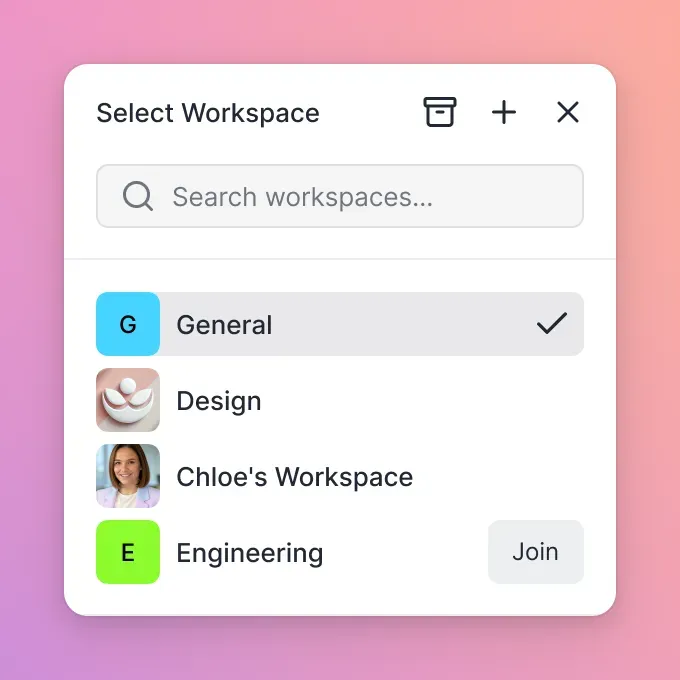
Handoff pattern that keeps humans in control
For a modernization program, keep Devin's changes in pull requests with required human reviewers. Store runbooks, acceptance checklists, and session insight exports in a shared workspace so on-call engineers can find them without reopening every Devin session. When an agent prepares client-facing summaries, use branded shares with per-recipient access and expiration for external review, then keep the canonical files org-owned. Downstream systems can follow the workspace's events feed over WebSocket or long-poll to learn when artifacts land.
How ACU billing and org limits work
Enterprise customers are billed in Agent Compute Units at the rate set in their order form. Contact sales for pricing. Enterprise ACUs are distinct from self-serve quota and on-demand credits. Docs state Enterprise ACUs represent work that adheres more strictly to task planning and end-to-end testing under the enterprise plan.
Who sees what
- Enterprise admins track enterprise ACU consumption in enterprise consumption settings
- Organization admins track organization consumption in organization consumption analytics
- Any user can see ACU cost for a specific session from Session Insights
- Personal analytics can show a user's own ACU use across organizations when the enterprise enables that feature and grants View Personal Analytics
Hard org limits
Enterprise admins set per-organization ACU limits from the organizations list in enterprise settings. Open Manage on an organization to set a limit or rename the org. When the limit is hit, Devin activity in that organization stops and users are told to contact the enterprise admin. That is the right default for pilot orgs and for business units with fixed AI budgets.
What burns ACUs
Usage docs apply across pricing models. Consumption follows work Devin actually performs: planning, context gathering, task execution, browser actions, code execution, plus a smaller share of VM time and network bandwidth. Windows sessions consume about 9% more usage than equivalent Linux sessions. Devin does not consume usage while sleeping, waiting for a human reply, waiting for tests, or during repository setup and clone. Idle sessions typically sleep after roughly a tenth of an ACU of inactivity.
Cost control habits that also improve quality:
- Scope one end goal per session instead of multi-objective chats
- Split large migrations into parallel sub-tasks (no concurrent session limits on Enterprise for this pattern)
- Keep prompts specific; drop irrelevant context
- Prefer Linux sessions unless Windows is required
- Watch Session Insights early in a pilot to build a unit-cost model before you set org caps
Budgeting conversation for finance
Ask sales for the ACU unit price on the order form, the initial pool size, rollover rules if any, and what happens at pool exhaustion at the enterprise level versus org limits. Align org limits to product P&L lines so overages show up as product-line decisions, not a surprise shared pool drain.
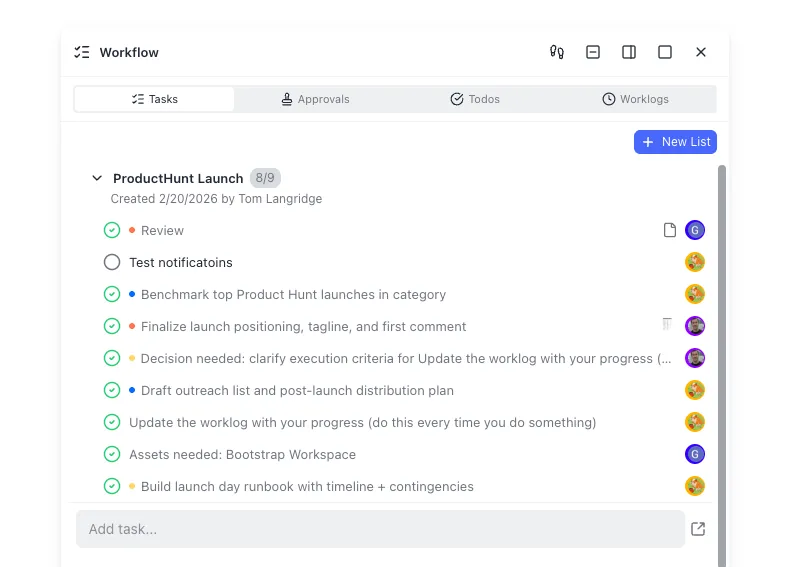
When Devin Enterprise is the right buy
Choose Devin Enterprise when at least two of these are true:
- You need more than one Devin organization with separate repo grants and ACU budgets
- Security requires IdP-based login, custom RBAC, audit trails, and a Trust Center package
- Networking requires Private Link, IPSec, or OpenVPN access to private SCM and artifact stores
- You plan MultiDevin or event-driven automation against CI and ticket systems at volume
- You want a dedicated account team and contractual terms beyond Teams self-serve
Stay on Teams when a single collaborative workspace, centralized billing, and admin analytics are enough, and your repos are reachable without dedicated networking.
Pilot design that produces a real decision
Run a 4 to 6 week pilot in one organization with a hard ACU ceiling:
- Pick a backlog class Cognition's use-case library already validates: Java upgrades, JS to TypeScript, vulnerability remediation from scan reports, or monorepo submodule extraction.
- Write acceptance tests and CI gates before the first Devin session.
- Measure human review time, merge rate, and ACU per merged change, not vanity session counts.
- Expand to a second organization only after org-limit and repo-grant patterns feel boring.
Cognition's use-case overview states customers achieve 6-12x efficiency gains when they use Devin on large projects broken into isolated, repetitive tasks with clear instructions and objective verification. Your pilot should test whether your work actually fits that shape.
After the agent finishes
Production readiness is a human problem. Keep required reviews on every PR. Store migration evidence, runbooks, and exception lists in a durable workspace humans and agents can both reach. Fast.io is one option for that coordination layer, alongside git history and your existing knowledge base. Enable Intelligence Mode on workspaces that hold long-running program docs so people can ask grounded questions with citations.
Devin Enterprise is worth the sales process when you are ready to treat Devin AI as managed capacity with org walls, identity, networking, and ACU math. It is the wrong buy if you only wanted a higher individual quota. For that, Max or Teams is the simpler path on the public price list.
Sources
References used to verify factual claims in this guide.
-
Devin Teams is $80/month for the team plan plus $40/month per full developer seat; Enterprise is custom 'Let's talk' packaging Pro is $20/month and Max is $200/month on the public price list Enterprise packaging includes highest priority support, dedicated account management, identity provider login, centralized enterprise admin controls, and dedicated deployment options
-
Devin Enterprise markets VPC deployment, MultiDevin, event-driven automation, SOC 2 Type 2, audit logs, fine-grained access controls, and custom IdP integration Nubank case metrics on the enterprise page cite 8x engineering time efficiency and over 20x cost savings on migration scope delegated to Devin
-
Enterprise customers are billed in ACUs at order-form rates; enterprise and org admins track consumption; per-org ACU limits stop activity when reached
-
Usage accrues from work performed; Windows sessions use about 9% more than Linux; sleep after roughly a tenth of an ACU of inactivity; no usage while sleeping or waiting for human/tests/clone setup
-
Organizations are self-contained units with shared Devin machine, repo access, members, and ACU tracking; multi-org hierarchy and mapping guidance documented
-
Enterprise Cloud vs Customer Dedicated Deployment architectures; brain always in Cognition cloud; Private Link or IPSec for dedicated; MFA VPN incompatible with Enterprise Cloud
-
Customers achieve 6-12x efficiency gains on suitable large, parallelizable projects with clear verification
-
Fast.io org plans Starter $9.99/mo, Business $49.99/mo, Enterprise $199.99/mo; monthly plans start with a 14-day trial (credit card required)
Frequently Asked Questions
What is included in Devin Enterprise?
Devin Enterprise includes everything on Teams plus highest-priority support, dedicated account management, enterprise identity provider login, centralized multi-organization admin controls, and a dedicated deployment option. The enterprise product page also highlights MultiDevin parallel agents, event-driven automation, VPC-oriented deployment, audit logs, fine-grained access controls, SOC 2 Type 2 claims, and assigned onboarding support.
Does Devin Enterprise support VPC deployment?
Yes. Cognition documents VPC-oriented options, including Customer Dedicated Deployment in a customer-isolated single-tenant VPC with AWS Private Link or IPSec connectivity. Enterprise Cloud keeps Devboxes in Cognition's multi-tenant cloud for faster setup. In both models the Devin brain remains in Cognition's cloud; the Devbox location and networking path change.
How is Devin Enterprise billed?
Enterprise customers are billed in Agent Compute Units (ACUs) at the rate on their order form. Pricing is custom ("Let's talk" on the public page). Enterprise admins can set per-organization ACU limits; when a limit is hit, Devin activity in that organization stops until an admin raises it. Admins track consumption at enterprise and organization levels, and any user can see per-session ACU cost in Session Insights.
How do multi-organization setups work in Devin Enterprise?
Enterprise admins create multiple organizations under one enterprise account. Each organization has its own shared Devin machine, repository grants, members, and ACU tracking. Users may join several organizations with independent permissions. Cognition recommends mapping Devin organizations to product lines or git teams so repo access and cost allocation stay clear.
What roles exist for Devin Enterprise admins and members?
Default roles include enterprise admins, organization admins, and members. Enterprise admins manage enterprise settings, organizations, billing, and source control connections. Organization admins invite members. Members run sessions inside their org. Custom RBAC adds organization-level and account-level permission sets, including control over secrets, API keys, MCP servers, metrics, and session visibility. IdP groups can auto-assign roles.
When should a team choose Teams instead of Enterprise?
Choose Teams when you need shared seats, centralized billing, collaboration, and an admin dashboard without multi-org isolation, dedicated networking, or custom ACU contracts. Teams is listed at $80 per month plus $40 per full developer seat. Move to Enterprise when security, networking, multi-org budgets, or dedicated support requirements exceed that model.
Related Resources

Keep Devin AI handoffs in one durable workspace
Store migration reports, review packs, and agent outputs in a shared Fast.io workspace with version history, Intelligence Mode search, and MCP access for agents. Monthly plans start with a trial of up to 14 days (credit card required); annual plans have no trial.