Devin AI vs. GitHub Copilot: Autonomous Agent vs. Editor Autocomplete
Choosing between Devin AI and GitHub Copilot represents a decision between autonomous cloud sandboxes and IDE-integrated code completions. While Copilot acts as an inline helper under direct developer supervision, Devin operates asynchronously in isolated virtual machine containers. This analysis compares their architecture, execution security, pricing structures, and explains how shared workspaces prevent context silos.


Why Devin AI and GitHub Copilot Divide the Development Workflow
GitHub Copilot reached 4.7 million paid subscribers by January 2026, establishing editor-integrated code completion as the baseline developer utility [Microsoft Earnings Q2 2026]. This adoption demonstrates the value of inline code suggestions, yet it also highlights a growing software engineering challenge. As projects scale, developers need tools that can execute tests, install packages, and refactor whole repositories independently, rather than just completing the next line of code. Choosing between Devin AI and GitHub Copilot depends on whether you need an autonomous software developer working in a secure container sandbox or an inline partner suggesting code autocomplete in your local editor. Connect your local tools and agent workflows to a Fastio workspace to turn local outputs into shared team assets.
Competitors often frame these tools purely on model intelligence, but the true differentiator is the execution environment. Local extensions run fast and have immediate access to your development credentials, but they expose your local machine to potential security risks and isolate the agent's context on a single laptop. Cloud-native agents keep execution safe and central, but they introduce context synchronization overhead. To evaluate which model fits your workflow, teams must examine the underlying mechanics of cloud sandboxes and local execution frameworks.
Rather than looking at autocomplete and autonomous agents as identical products, engineering teams must recognize that they represent two different developer patterns. One pattern aims to automate the physical act of typing code while keeping the developer as the driver. The other pattern attempts to automate the entire software development lifecycle, treating the AI as an independent worker that delivers completed tasks.
Related guides
- Cline vs Codeium: Autonomous Coding Agent vs In-Editor AssistantChoosing between Cline and Codeium comes down to execution autonomy versus in-editor code completion. Cline operates as...
- Hermes Agent vs Cursor: Always-On Agent vs AI Code EditorNous Research Hermes Agent is an always-on autonomous agent that runs outside the IDE with self-improving skills and...
- How to Use MCP Servers with GitHub CopilotGitHub Copilot's MCP integration lets Copilot Chat connect to external MCP servers for file storage, databases, and...
- The Best Storage for GitHub Copilot Workflows: Object Storage vs Intelligent WorkspacesEvaluating storage for GitHub Copilot workflows requires looking beyond raw gigabytes to active context delivery. While...
- GitHub Copilot Limits: Plan Quotas, Rate Caps, and Context BoundariesUnderstanding GitHub Copilot limits requires tracking how monthly quotas, chat throttling, and workspace indexing rules...
- GitHub Copilot Rate Limits: Tier Caps, Throttling, and SolutionsGitHub Copilot rate limits govern request frequency and model usage to prevent service degradation during burst coding...
More on this subject: GitHub Copilot (137 guides)
How Devin AI Operates as an Autonomous Cloud Engineer
Devin AI is designed to act as an independent, autonomous software engineer. Instead of functioning as an IDE helper, Devin operates as an asynchronous worker that takes a high-level task description and executes it from beginning to end. This is made possible by Devin's split architecture: the Brain, which is a stateless reasoning engine hosted in Cognition's cloud, and the Devbox, an isolated virtual machine container where all code execution occurs.
When a developer assigns a task, Devin spins up a secure, Linux-based virtual machine sandbox. The sandbox boots from a clean, versioned snapshot, ensuring a reliable starting state. Devin then clones the repository, plans the required modifications, installs dependencies, and runs tests. If a build fails, the agent uses its built-in browser to search documentation, debugs the error, and iterates until the tests pass. The human developer does not watch the code write in real time; they review the resulting pull request once the run is complete.
This asynchronous model is powered by Devin's tiered, self-serve pricing. Pro plans cost 20 dollars monthly, while Max plans cost 200 dollars monthly. Centralized team administration starts at 80 dollars monthly for the base subscription, with customized enterprise options billed on Agent Compute Unit consumption [Cognition Pricing]. Agent Compute Units measure the exact virtual machine CPU, memory, and model tokens consumed during execution. Devin also uses a routing mechanism called Fusion, which selects the optimal model for each step to control execution costs.
The Benefits of Cloud Container Isolation
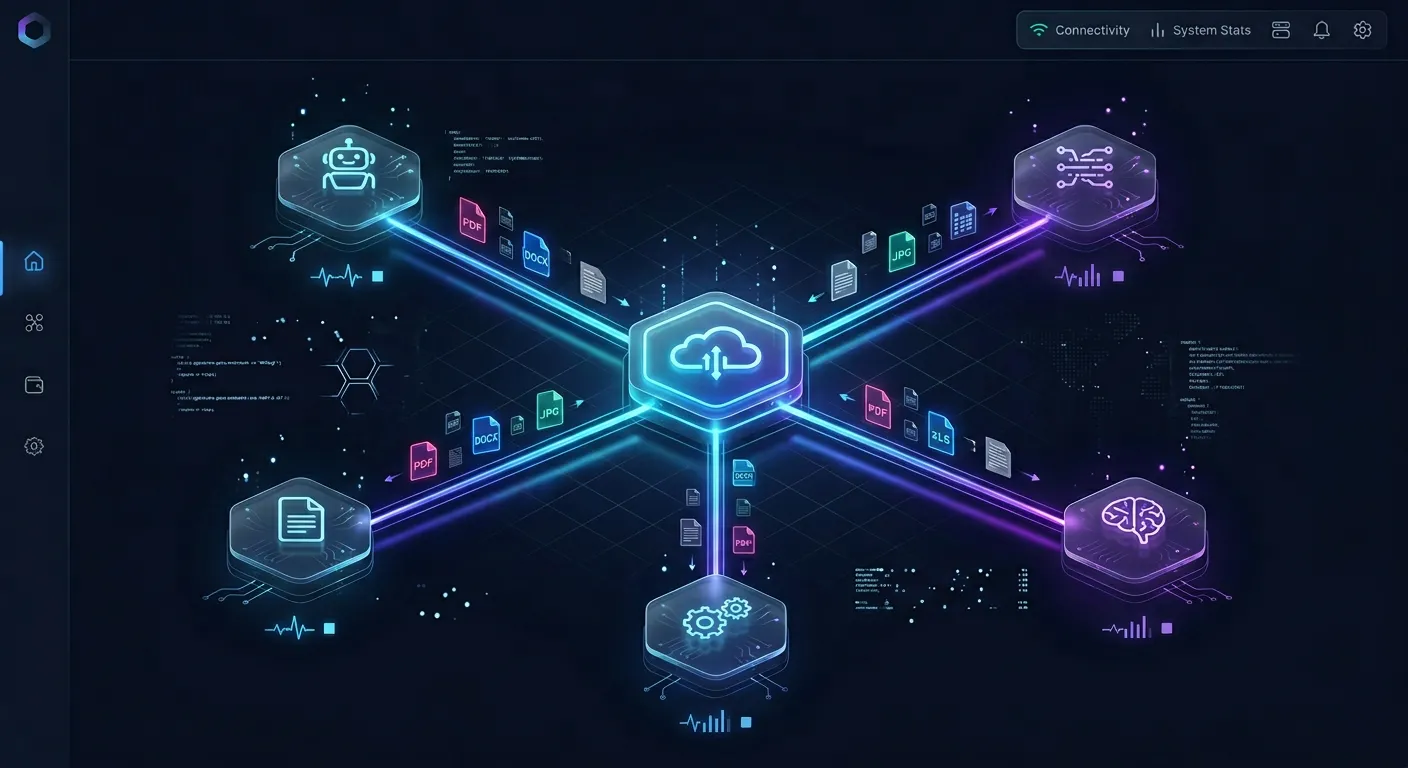
The primary advantage of Devin's cloud sandbox is safety. Because the container is ephemeral and isolated, Devin can execute shell commands, run package installs, and compile arbitrary code without risking your local machine's security. If the agent accidentally runs a destructive command or downloads a compromised package, the damage is restricted to that temporary container. Once the task finishes, the virtual machine is destroyed.
This isolation also simplifies reproducible builds. Because every session starts from a clean snapshot, there is no risk of state leakage or environmental pollution from previous tasks. Devin does not depend on local environment variables or pre-installed system packages, making it easy to run complex tests under identical conditions.
Understanding the Handoff Gap
However, Devin's asynchronous design introduces a collaboration gap. Because the agent works in its own cloud container, its session logs and modified files are remote. When the agent needs human input, such as an API credential or clarification on a requirements document, the human must log into the Devin web interface to respond.
If the human developer needs to pick up the agent's work mid-task, they cannot easily pull the container's state to their local machine. This separation makes it difficult to pair-program with the agent in real time. The handoff between Devin and the human developer is transactional, relying on pull requests and formal approval steps rather than immediate shared context.
GitHub Copilot and the Evolution of IDE-Integrated Autocomplete
GitHub Copilot takes the opposite approach, bringing assistance directly into your local development environment. As an extension, Copilot runs natively inside code editors like VS Code, JetBrains, and Xcode [GitHub Copilot Official Documentation]. It analyzes the surrounding file context, comments, and open tabs to predict the next few lines of code or suggest whole blocks of logic. The developer reviews the suggestion, accepts it, and runs compilation and tests on their local machine.
Copilot has evolved from simple line completion to support more advanced agentic workflows. Copilot Agent Mode allows the tool to research a local codebase, generate multi-file edits, and execute terminal commands to fix bugs or implement features. The tool also includes Copilot Workspace, a web-based environment designed to convert GitHub Issues into implementation plans, allowing developers to test changes in a cloud sandbox before generating pull requests.
Despite these advanced features, Copilot maintains a strict human-in-the-loop philosophy. The tool requires explicit user approval before running write operations or executing terminal commands, making it a pair programmer that stays under your direct supervision. This local access provides speed and allows the tool to use your local compiler, git keys, and environment variables. However, it also introduces security risks. If the agent runs an incorrect script or attempts to modify system files, it can corrupt your local operating system or leak sensitive credentials.

Real-Time Terminal Pair Programming
Copilot is built for developers who want immediate terminal control. Because it runs locally, you can watch it edit the code, run local test commands, and inspect the output in real time. If it goes down a wrong path, you can interrupt it, correct its assumptions, and guide it toward the right solution. There is no need to wait for a background virtual machine to complete a long-running execution loop.
Developers configure their local project dependencies in package.json and compiler settings in tsconfig.json. Because Copilot operates directly on these local configuration files, it can identify project structure and suggest context-aware changes instantly.
Understanding the Local Permission Sandbox
To protect local filesystems from accidental damage or malicious scripts during agentic terminal runs, Copilot implements security controls. Developers can restrict terminal execution by defining a command approval list, requiring the IDE to prompt for permission before running commands. This local guardrail keeps developers in control of the execution boundary.
However, local execution inherits the developer's user privileges. If a project contains a prompt injection in a dependency, a local agent could be tricked into reading configuration credentials. Developers must remain alert, inspect proposed modifications, and avoid granting unrestricted shell access to the agent.
The Token-Credit Pricing Architecture
Pricing for Copilot uses a credit-based model [GitHub Copilot Official Documentation]. Subscriptions include a monthly pool of GitHub AI Credits based on token consumption, with plans starting at 10 dollars monthly for Copilot Pro, 39 dollars monthly for Copilot Pro+, and 100 dollars monthly for Copilot Max. Team plans cost 19 dollars monthly per user for Copilot Business and 39 dollars monthly per user for Copilot Enterprise.
Standard code completions remain unlimited and do not consume credits, but advanced agentic chat sessions draw from your monthly credit balance. This ensures cost predictability for basic coding, while giving developers pay-as-you-go access to autonomous capabilities when needed.
Compare Devin AI and GitHub Copilot: A Side-by-Side Reference
The choice between Devin AI and GitHub Copilot hinges on your team's specific execution, pricing, and security requirements. Understanding these trade-offs side-by-side helps engineering teams deploy the right tool, balancing speed against safety.
The table below summarizes the differences:
For high-volume, routine tasks like updating dependencies or expanding test coverage across a legacy codebase, Devin's remote container sandbox is effective. You assign the task and walk away, confident that the execution is isolated in the cloud and will not disrupt your local machine.
For complex, ambiguous problems where you need to steer the agent's reasoning or debug systems-level issues, GitHub Copilot's speed is valuable. The usage-based credit pricing allows you to scale costs with your exact usage, while the interactive commands keep you in control of every code change.


Unify Devin AI and GitHub Copilot files in one persistent workspace
Route code outputs from Devin AI and GitHub Copilot into a shared Fastio workspace with per-file version history and a detailed activity log. Monthly plans start with a trial of up to 14 days (credit card required); annual plans have no trial.
Bridging the Context Silo: Shared Persistent Workspaces for AI Agents
While both tools offer capabilities, deploying them across a team reveals a shared limitation: context silo. When you run Copilot's Agent Mode locally, the execution history and file context remain on your machine. When Devin runs in the cloud, its intermediate files are locked inside a remote container. If a colleague needs to review the agent's logs, collaborate on a generated note, or resume a task, they face a broken handoff.
To coordinate developer agents, teams must move beyond local filesystems or standard object storage. Traditional options like Amazon S3 or Google Drive provide basic storage, but they lack the version history and agent-native interfaces required for modern workflows. Fastio solves this by providing a cloud workspace built specifically for human-agent collaboration.
Fastio exposes a consolidated Model Context Protocol (MCP) server through Streamable HTTP at /mcp and legacy SSE at /sse (documentation: llms.txt). By connecting Copilot or Devin to the Fastio MCP server, agents can read and write files in a secure, centralized workspace. This architecture ensures that agent output becomes team output, tracked by a detailed activity log and governed by granular permissions. For teams deploying local agents, Fastio workspace configurations can be managed in astro.config.mjs.

Shared Workspaces and Version History
Fastio files are stored in org-owned workspaces that preserve complete version history. If Devin generates a prototype or refactors a directory, it saves the files directly to Fastio via MCP. A developer using Copilot can then open the same workspace, retrieve the files, and continue the task. Every single modification is recorded in the activity log, ensuring transparency.
This central repository supports URL Import, allowing agents to pull files from Google Drive, OneDrive, Box, or Dropbox via secure OAuth. The data is pulled directly to the workspace, eliminating the need for local input/output or complex terminal download scripts. If a task requires input from multiple agents, the workspace serves as the shared state layer, preserving context across sessions.
Workspace Intelligence and RAG Search
Fastio includes Intelligence Mode, which automatically indexes every file in a workspace for retrieval-augmented generation. When a developer enables Intelligence, agents can query the workspace using semantic search, retrieving context-backed answers with citations. This eliminates the need to load large code files into the model context window.
For structured data tasks, Metadata Views turn documents into a live, queryable database. Instead of writing custom parsing scripts or OCR rules, developers describe the columns they want in plain English. The AI designs a typed schema (supporting Text, Integer, Decimal, Boolean, URL, JSON, and Date & Time), scans the workspace, and extracts structured fields from PDFs, images, and notes. Agents can create Views, trigger extraction, and query results via the MCP server, providing a structured data extraction layer for automated pipelines.
Team Handoff and Administrative Handoffs
When coding agents complete a task, Fastio allows for a secure ownership transfer from agent to human. The agent generates a claim link to transfer the organization settings and workspace contents to a human administrator. Once the transfer is complete, the human developer assumes full ownership of the resources and starts a paid subscription.
Monthly plans start with a trial of up to 14 days, which requires a credit card to activate [Fastio Pricing]. Paid plans are designed for teams of different sizes: the Starter plan is priced at 9.99 dollars monthly, the Business plan is priced at 49.99 dollars monthly, and the Enterprise plan is priced at 199.99 dollars monthly [Fastio Pricing]. By routing agent reads and writes through a centralized MCP workspace, you eliminate context silos and enable handoffs between AI systems and human engineers.
Sources
References used to verify factual claims in this guide.
-
GitHub Copilot reached 4.7 million paid subscribers by January 2026
-
Pro plans cost 20 dollars monthly, while Max plans cost 200 dollars monthly. Centralized team administration starts at 80 dollars monthly for the base subscription, with customized enterprise options billed on Agent Compute Unit consumption
-
Subscriptions include a monthly pool of GitHub AI Credits based on token consumption, with plans starting at 10 dollars monthly for Copilot Pro, 39 dollars monthly for Copilot Pro+, and 100 dollars monthly for Copilot Max. Team plans cost 19 dollars monthly per user for Copilot Business and 39 dollars monthly per user for Copilot Enterprise.
-
Monthly plans start with a trial of up to 14 days (credit card required); annual plans have no trial. Paid plans are designed for teams of different sizes: the Starter plan is priced at 9.99 dollars monthly, the Business plan is priced at 49.99 dollars monthly, and the Enterprise plan is priced at 199.99 dollars monthly
Frequently Asked Questions
Is Devin AI better than GitHub Copilot?
Devin AI is not universally better than GitHub Copilot; they serve different workflows. Devin excels at autonomous, background tasks like codebase-wide dependency updates and test expansion in its secure cloud devbox. GitHub Copilot is better for real-time autocomplete and interactive, IDE-integrated pair programming where you want constant, line-by-line control.
Can Devin AI replace GitHub Copilot?
Devin AI cannot fully replace GitHub Copilot because they serve complementary developer roles. Copilot is designed to speed up manual typing and interactive coding within your editor, whereas Devin is optimized to handle delegatable, multi-file tickets asynchronously in the cloud. Many teams use Copilot for active development and Devin for background tasks.
Does GitHub Copilot have agent capabilities like Devin?
Yes, GitHub Copilot has agent capabilities through its Agent Mode and Copilot Workspace. Agent Mode allows Copilot to plan edits, modify files, and run terminal commands locally. However, unlike Devin's fully autonomous cloud VM execution, Copilot operates directly on your local machine and uses a human-in-the-loop model that requires user approval for changes.
Related Resources

Unify Devin AI and GitHub Copilot files in one persistent workspace
Route code outputs from Devin AI and GitHub Copilot into a shared Fastio workspace with per-file version history and a detailed activity log. Monthly plans start with a trial of up to 14 days (credit card required); annual plans have no trial.