Devin AI vs. ChatGPT: Which AI Tool Fits Your Development Workflow?
Devin AI and ChatGPT represent two distinct approaches to artificial intelligence in software engineering. While ChatGPT functions as a conversational assistant requiring prompt-by-prompt guidance, Devin is a specialized autonomous agent designed to independently execute software workflows in a sandbox. This comparison outlines their core differences, runtime environments, and how teams can persist agent files across development cycles.


The Core Divide Between Conversational Prompts and Autonomous Sandboxes
According to the 2024 Stack Overflow Developer Survey, 76% of developers reported using or planning to use AI tools in their development processes, with ChatGPT standing as the most widely used conversational assistant [Stack Overflow 2024 Survey]. And according to the 2025 Stack Overflow Developer Survey, this number grew to 84% of developers. This widespread adoption highlights a shift in engineering workflows, but it also creates a choice between two different interaction models: conversational chat assistants and autonomous agents. Choosing between these tools depends on whether your team wants an interactive helper to answer questions and write boilerplate code, or an independent worker to execute complex tasks in isolation.
While ChatGPT is a general conversational assistant requiring prompt-by-prompt guidance, Devin is a specialized autonomous agent designed to independently execute software workflows in a sandbox. ChatGPT relies on chat prompts for code generation, requiring you to copy, paste, run, and debug the output on your own machine. In contrast, Devin executes shell commands autonomously in its own VM, using its own terminal, editor, and browser to complete multi-step tasks.
Competitors often compare these tools based on the raw intelligence of their underlying models, but the execution environment is the true differentiator. A conversational assistant requires you to manage the local environment, test suites, and file organization. An autonomous agent manages its own environment but introduces context challenges, especially when its temporary virtual workspace is destroyed. To integrate either tool successfully, teams must evaluate alternatives like local files, Amazon S3, or Google Drive, and consider how a Fastio persistent workspace can keep agent output organized.
Related guides
- OpenClaw vs Manus: Which AI Agent Platform Fits Your WorkflowOpenClaw crossed 370,000 GitHub stars in under six months while Manus AI hit $100M ARR before its $2B Meta acquisition...
- GitHub Copilot vs ChatGPT: Which AI Tool is Best for Coding?Choosing between GitHub Copilot and ChatGPT depends on where you are in the software development lifecycle. This...
- How to Use Devin AI: A Developer's Getting Started TutorialLearn how to use Devin AI as an autonomous software engineer to solve coding tickets from scratch. This developer...
- How to Use the Devin IDE to Review and Take Over Agent WorkNubank reported 8-12x engineering efficiency and over 20x cost savings when people reviewed Devin's changes instead of...
- Devin AI Credits: On-Demand Pricing, Rollover Rules, and Usage QuotasDevin on-demand credits are prepaid usage credits that fund tasks exceeding included plan quotas, power team...
- How to Try Devin AI for FreeA Devin AI free trial is Free at $0 per month with limited agent usage, not a short coupon clock. Pro starts at $20 per...
More on this subject: Devin (104 guides)
How ChatGPT Supports Interactive Coding and Architectural Advice
ChatGPT operates as an interactive conversational partner, responding directly to user prompts inside a chat interface. It is highly capable at explaining complex technical concepts, generating code snippets, translating logic between languages, and proposing architectural designs. When you ask ChatGPT a coding question, it draws on its training data to write clean, documented functions that you can copy into your project.
However, ChatGPT has no direct local file access or persistent environment where it can compile and execute code. The developer remains the driver of the execution loop. If the generated code contains an error or fails a unit test, you must copy the error log, paste it back into the chat interface, and ask ChatGPT to generate a corrected version. This prompt-by-prompt guidance keeps you in complete control, but it also limits the speed of complex tasks.
OpenAI provides several tiers for ChatGPT, starting with a free tier that offers access to standard models. The Plus subscription costs 20 dollars per month, providing higher limits and advanced models. For collaboration, the Team plan costs 25 dollars per month per user (billed annually) pricing, which offers shared workspace settings and higher usage quotas. Enterprise tiers are also available for organizations requiring custom administration and advanced data privacy controls.
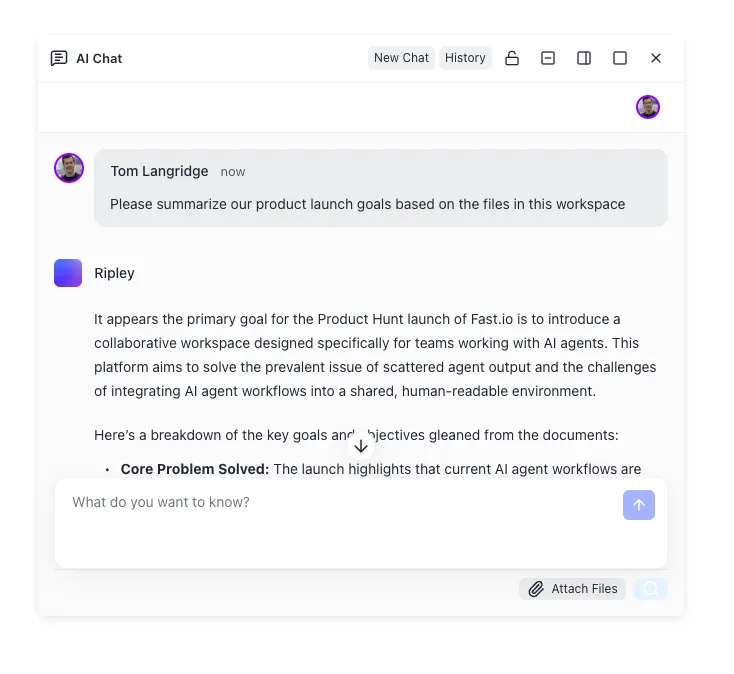
Because ChatGPT does not maintain a persistent workspace, managing the code snippets and scripts it generates can be difficult. Developers often use local files or basic cloud storage as alternatives to hold these snippets, but these options do not support shared team context. A collaborative space like Fastio Collaborative Notes solves this issue. Fastio Collaborative Notes provide real-time co-editing where developers and agents can store, refine, and edit ChatGPT outputs in one versioned file, keeping the entire team in sync.
How Devin AI Executes Development Tasks in a Dedicated Virtual Machine
Devin AI represents a shift from interactive prompting to complete task delegation. Instead of waiting for you to copy and paste code, Devin acts as an autonomous teammate. It uses a split architecture composed of a reasoning engine, known as the Brain, and a secure, Linux-based virtual machine, known as the Devbox.
When you assign a task to Devin, it creates a plan, clones your repository, and executes commands inside its Devbox. Devin runs package managers, compiles source files, executes test suites, and uses an embedded browser to read documentation or debug API endpoints. If a test fails, Devin inspects the error logs, adjusts the code, and re-runs the test suite autonomously. The human developer reviews the progress on a web dashboard and receives a completed pull request once the task is finished.
Cognition uses a consumption-based pricing model for Devin, centered on Agent Compute Units (ACU) that track active virtual machine execution. The Pro Plan starts at 20 dollars per month, giving a base allocation of compute time with pay-as-you-go billing for extra usage. The Teams Plan starts at 80 dollars per month, offering central billing, shared workspace views, and team management tools. Enterprise plans provide custom volume guarantees, single-tenant private clouds, and direct connections to corporate virtual private networks.
A key challenge with Devin is its ephemeral workspace. The Devbox resets to a clean snapshot at the start of every session to ensure a reproducible build environment. This prevents state leakage, but it means any build logs, test reports, or intermediate documents are lost when the session ends. Developers can export these files to S3 or Google Drive, but these storage systems lack version history. A Fastio shared workspace offers a persistent alternative. By exporting Devin files to Fastio, teams preserve a complete, versioned record of the agent's work, ensuring that no diagnostic output or documentation is lost.


Persist Devin and ChatGPT files in one workspace
A centralized, intelligent repository for code scripts, build logs, and architecture documentation, with versioning and search built in. Starts with a 14-day free trial.
Devin AI vs. ChatGPT: Comparing Autonomy, Environments, and Interaction Models
Evaluating Devin AI vs ChatGPT requires looking at how they interact with your codebase, how they execute commands, and how they handle files. While chat assistants excel at quick advice, autonomous agents are built to offload entire development pipelines.
The table below outlines the core differences between these tools:
Comparisons often ignore workspace persistence and local file access patterns, which are critical for team integration. With ChatGPT, file access is entirely manual; you must drag files into the chat or copy code blocks. With Devin, file access is automated within its temporary Devbox, but the files disappear once the container is destroyed. Managing these access patterns is essential to prevent developers from losing track of code, documentation, and logs. Teams need a persistent, secure workspace that bridges the gap between these tools and the human developers who manage them. A Fastio workspace provides a centralized context layer that tracks every contribution.
Why Teams Need Shared Workspaces to Manage Agent Output
Whether you use ChatGPT for interactive development or Devin for autonomous runs, integrating AI into your team requires a stable workspace. Running code in ephemeral containers or copying snippets into chat windows creates context silos. If a team member needs to verify a change, check a build log, or collaborate on a script, they cannot easily access the agent's internal files.
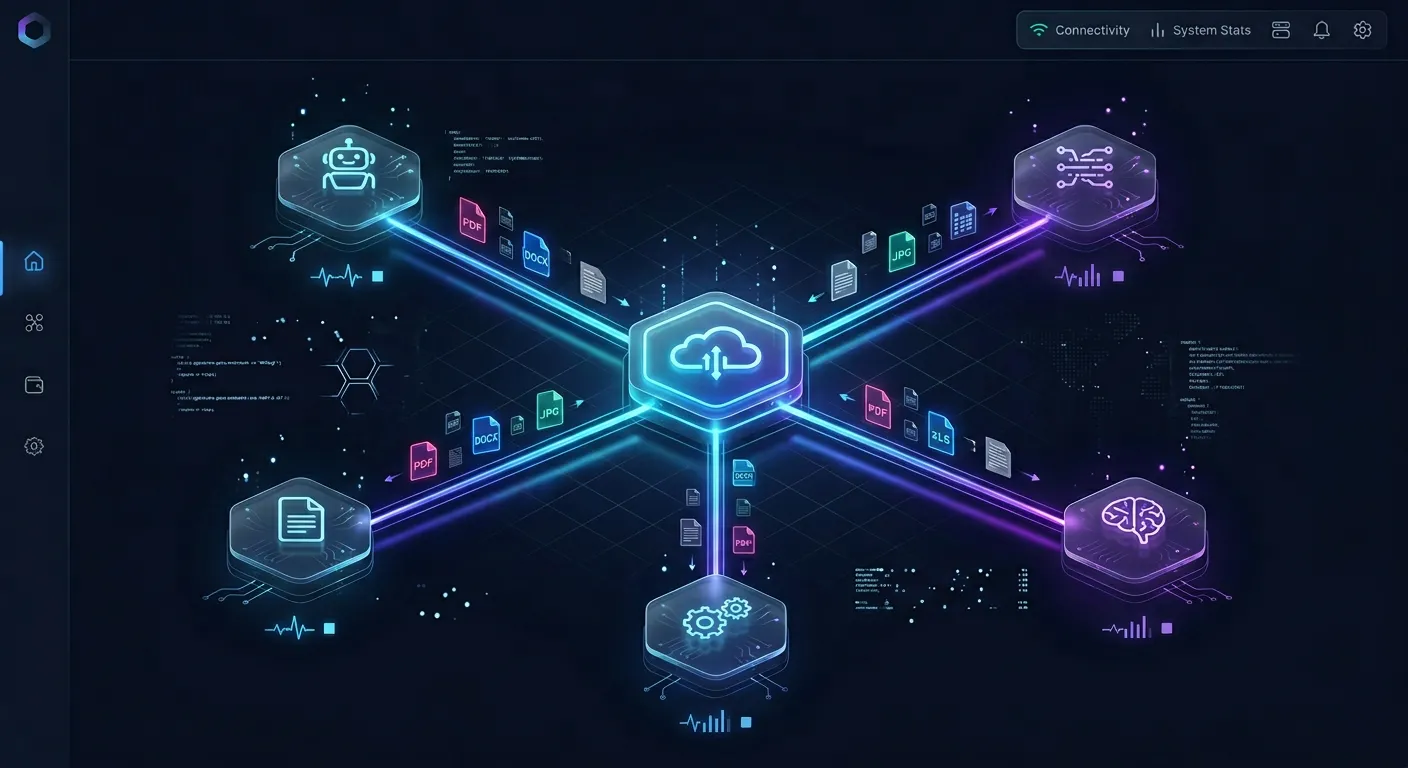
Fastio provides the persistent coordination layer for human-agent teams. Rather than a simple folder storage service, Fastio functions as an intelligent workspace. When agents or developers upload files, Fastio's Intelligence Mode automatically indexes the documents, enabling semantic search, project summarization, and citation-backed RAG chat. This is separate from Metadata Views, which turn documents into a queryable database by extracting structured fields, like contract dates or invoice totals, into a spreadsheet Metadata Views.
For agent workflows, Fastio offers native Model Context Protocol (MCP) access, exposing Streamable HTTP at https://mcp.fast.io/mcp/code for coding agents such as Devin, while ChatGPT connects through the Fastio plugin, with a custom MCP server at https://mcp.fast.io/mcp/operations as an alternative. Agents can connect directly to the mcp.fast.io server to read files, write updates, and query the workspace. Human users can grant long-lived, scoped API keys to their agents, ensuring secure, granular permissions.
Creating an account is free, but executing work requires an organization on a paid subscription. Monthly plans start with a trial of up to 14 days (credit card required); annual plans have no trial. The flow is simple: an agent signs up free, builds the workspaces, and hands off ownership to a human teammate using a claim link. The human then starts the 14-day trial on one of the pricing plans: Starter at 9.99 dollars per month, Business at 49.99 dollars per month, or Enterprise at 199.99 dollars per month. This ownership transfer ensures that the human retains the final assets and access controls. Every action is recorded in the activity log, and file version history preserves previous edits, making human-agent collaboration auditable and safe.

Sources
References used to verify factual claims in this guide.
-
According to the 2024 Stack Overflow Developer Survey, 76% of developers reported using or planning to use AI tools in their development processes, with ChatGPT standing as the most widely used conversational assistant According to the 2025 Stack Overflow Developer Survey, this number grew to 84% of developers
-
While ChatGPT is a general conversational assistant requiring prompt-by-prompt guidance, Devin is a specialized autonomous agent designed to independently execute software workflows in a sandbox. The Pro Plan starts at 20 dollars per month, giving a base allocation of compute time with pay-as-you-go billing for extra usage. The Teams Plan starts at 80 dollars per month, offering central billing, shared workspace views, and team management tools. Devin Pro starts at 20 dollars per month and the Teams plan starts at 80 dollars per month. Devin uses a consumption-based model based on Agent Compute Units (ACU) which track VM runtime, with Pro plans starting at 20 dollars per month for a baseline quota plus pay-as-you-go credits.
-
The Plus subscription costs 20 dollars per month, providing higher limits and advanced models. For collaboration, the Team plan costs 25 dollars per month per user (billed annually), which offers shared workspace settings and higher usage quotas. ChatGPT is billed as a flat-rate monthly subscription, starting at 20 dollars per month for Plus and 25 dollars per month per user for Team.
-
The human then starts the 14-day trial on one of the paid plans, Starter at 9.99 dollars per month, Business at 49.99 dollars per month, or Enterprise at 199.99 dollars per month. Monthly plans start with a trial of up to 14 days (credit card required); annual plans have no trial.
Frequently Asked Questions
Is Devin AI better than ChatGPT?
Choosing between Devin AI and ChatGPT depends on your specific development needs. Devin is better for delegating complete software tasks autonomously, such as fixing bugs, running tests, and opening pull requests inside its own sandbox VM. ChatGPT is better for interactive tasks like brainstorming architectures, writing short code snippets, and explaining technical concepts, where you want to remain the direct driver of the code.
Does Devin AI use ChatGPT?
No, Devin AI does not use ChatGPT. Devin is built by Cognition and powered by its own proprietary reasoning models and agent scaffolding. While it may use various large language models behind the scenes for language parsing, its core architecture is an autonomous agent system that runs commands, compiles code, and browses the web inside an isolated Devbox virtual machine.
How do Devin and ChatGPT handle file persistence?
ChatGPT has no built-in file persistence, relying on ephemeral chat histories where you must manually copy and paste code blocks. Devin has access to an active filesystem inside its Devbox container, but this sandbox is ephemeral and resets at the end of each session. To persist files, Devin must push code to GitHub or write to external storage. Fastio workspaces solve this by providing a persistent, versioned storage layer for agent logs and build files.
What are the pricing differences between Devin and ChatGPT?
ChatGPT is billed as a flat-rate monthly subscription, starting at 20 dollars per month for Plus and 25 dollars per month per user for Team. Devin uses a consumption-based model based on Agent Compute Units (ACU) which track VM runtime, with Pro plans starting at 20 dollars per month for a baseline quota plus pay-as-you-go credits.
Related Resources

Persist Devin and ChatGPT files in one workspace
A centralized, intelligent repository for code scripts, build logs, and architecture documentation, with versioning and search built in. Starts with a 14-day free trial.