Devin AI Core Plan: What It Was and What Replaced It
Devin AI Core was a legacy self-serve plan. Cognition's billing docs state Core users were migrated to Free and can keep remaining on-demand credits. Current self-serve tiers are Free, Pro at $20/month, Max at $200/month, and Teams from $80/month, with Enterprise available separately. This guide maps what Core meant, what replaced it, and when to upgrade.


Devin AI Core is legacy, not a current plan
Cognition's self-serve billing docs state that legacy Core plan users have been migrated to the Free plan and can continue using any remaining on-demand credits. That single line is the fact most older pricing posts miss. If you still see "Devin Core" listed as the live $20 entry tier, you are reading a snapshot of an earlier catalog, not the plan map on docs.devin.ai and devin.ai/pricing.
Devin AI Core was the early self-serve tier that many third-party writeups associated with the Devin 2.0 era. Cognition's Devin 2.0 announcement described a flexible paid plan starting at $20, and contemporaneous marketing language referred to that entry paid tier as Core. The product later reorganized self-serve into Free, Pro, Max, and Teams. Official docs now treat Core as a legacy ACU-based plan, not a plan you can still buy by name.
That gap is why this article exists. Search results for "devin ai core" and "devin core pricing" still surface pages that treat Core as current. The authoritative answer is shorter:
- Does Devin Core still exist as a sellable plan? No. Self-serve docs describe it only under legacy migration.
- What plan replaced Core for former Core accounts? Free, with remaining on-demand credits retained.
- What is the current $20 individual plan? Pro, not Core.
- What are the live self-serve options? Free, Pro ($20/month), Max ($200/month), Teams ($80/month minimum).
Sign-up and plan changes run through app.devin.ai. Treat devin.ai/pricing as the marketing price list and the self-serve billing guide as the mechanics source when the two differ in detail.

Related guides
- How to Use Cline Plan Mode EffectivelyCline Plan mode is read-only by design. Official docs separate thinking from doing, with three task-size paths and...
- Is Manus AI Free? Free Plan, Credits, and LimitsManus AI is free to start on a limited-credit Free plan, but heavier autonomous agent work usually needs paid Pro or...
- Is Devin AI Free? Free Plan Limits and Paid Upgrade PathsDevin AI is free to start: Cognition lists a Free plan at $0 with light agent quota, limited models, and unlimited...
- How to Manage Files Generated by Devin AIDevin AI generates dozens to hundreds of files per session, but its workspace resets between runs. This guide covers...
- How to Connect Devin AI to VS CodeConnecting Devin AI to VSCode (Visual Studio Code) bridges local development environments with autonomous cloud...
- How to Try Devin AI for FreeA Devin AI free trial is Free at $0 per month with limited agent usage, not a short coupon clock. Pro starts at $20 per...
More on this subject: Devin (103 guides)
What the Core plan was during the ACU era
Before the current Free/Pro/Max/Teams ladder, Devin self-serve pricing leaned harder on Agent Compute Units (ACUs) and prepaid usage. Core sat at the bottom of that commercial story for many buyers: a low fixed entry price, then more work paid for with usage credits.
How Core showed up in the market
Third-party pricing guides from the Core period typically described it as:
- Entry self-serve access around $20/month
- Pay-as-you-go ACUs for work past the included allowance
- A fit for freelancers and individuals testing autonomous coding sessions
- Not the multi-seat, admin-heavy tier that larger orgs wanted
Cognition's Devin 2.0 post framed the product shift around an agent-native IDE experience and a flexible plan starting at $20. That launch is the historical root of the "Core" brand in many blogs. It is useful history. It is not the live catalog.
What Core was not
Core was not Enterprise. It was not a multi-member Teams subscription in the current full-seat/flex-seat sense. It also was not the same product surface as today's Free plan, even though migration routes Core accounts to Free. Free is a current tier with limited agent usage plus product access such as Devin Review and DeepWiki. Legacy Core was a different packaging of ACU-era self-serve access.
Why the name still appears in search
Two forces keep "devin ai core" alive:
- Cached third-party posts that never updated after the Free/Pro/Max/Teams restructure
- Billing language in official docs that still names Core when explaining migration from legacy ACU plans
If you manage finance or tool inventory, update internal notes from "Devin Core" to the account's actual current plan in Settings > Plans. If the account was migrated, expect Free plus any leftover on-demand credits, not a permanent Core SKU.

What replaced Core: Free, Pro, Max, Teams, and Enterprise
Current self-serve plans are documented as four tiers you can start at app.devin.ai. Enterprise sits outside that self-serve ladder with custom commercial terms.
Current plan map
Prices above come from Cognition's public pricing page and self-serve billing docs (accessed 2026-07-19). Always re-check those pages before budgeting, because marketing tables and billing docs can lag each other by a release.
Free: the landing zone for former Core accounts
Official migration language is explicit:
- Legacy Core users were moved to Free
- Remaining on-demand credits can still be used
- To purchase additional on-demand credits after that migration path, docs direct users to upgrade to Teams
Free is not unlimited autonomous engineering. Billing docs list limited Devin usage plus access to Devin Review and DeepWiki. The public pricing page also highlights unlimited inline edits and Tab completions on Free, with light agent quota and limited model availability. Upgrade from Free to any paid plan is available from Settings > Plans.
Pro at $20/month: the modern individual paid step
Pro is the plan most people mean when they still say "Core pricing." It is $20/month for a single user. Docs describe Pro as the entry-level individual plan for someone who uses Devin regularly. It includes:
- Daily and weekly usage quota across Devin sessions, Devin CLI, and Devin Desktop
- Pay-as-you-go on-demand credits after quota
- Product integrations documented for Pro (including MCP)
Pro cannot host additional org members. Shared multi-user work needs Teams.
Max at $200/month: larger individual quota
Max is everything in Pro plus a significantly larger weekly quota and no daily cap. It remains a single-user plan. Choose Max when one developer consistently burns Pro capacity, not when the real problem is multiple people sharing one bill.
Teams from $80/month: the multi-person replacement path
Teams is the self-serve plan for groups:
- $80/month minimum
- Unlimited members
- Full seats at $40/month each with Pro-equivalent quota and Devin Desktop access
- Flex seats at $0 that draw only from shared on-demand credits and do not include Devin Desktop
- Shared on-demand credit pool across the team
The $80 floor can be met with combinations of full seats and prepaid on-demand credits. Two full seats ($40 × 2) hit the minimum with no included credit remainder. Fewer full seats fill the gap with prepaid credits the team can spend.
For a former Core individual who only needs more paid headroom for themselves, Pro or Max is usually the cleaner upgrade than Teams. For a former Core user who now needs teammates on one subscription, Teams is the documented multi-seat path.
Enterprise
Enterprise is custom. Public marketing positions it above Teams with higher-touch support, admin controls, and deployment options for large organizations. If you need a signed order form and dedicated commercial terms, contact Cognition rather than trying to force Enterprise features onto self-serve Pro.
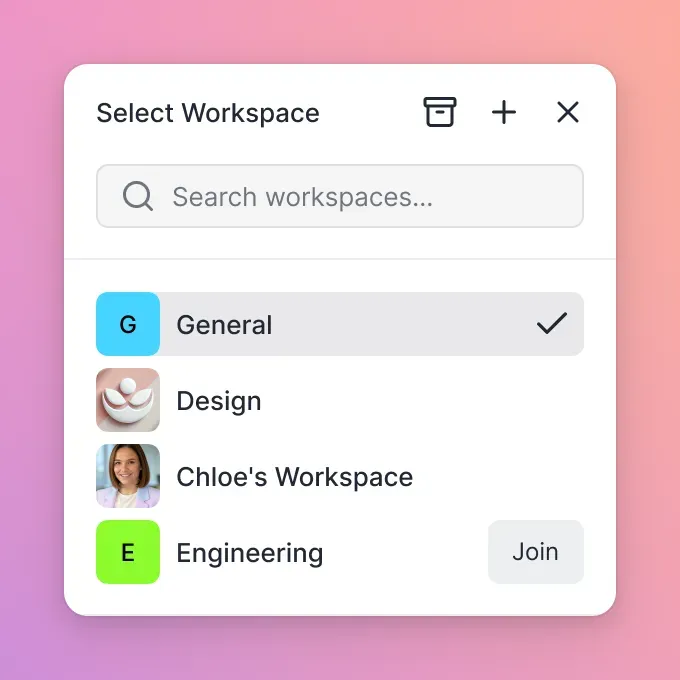


Keep Devin session artifacts in one shared workspace
Store plans, screenshots, and review packs next to human feedback with version history, Intelligence Mode, and MCP access. Monthly Starter, Business, and Enterprise plans start with a trial of up to 14 days (credit card required).
Core vs Free vs Pro
Use this comparison when an invoice, blog post, or teammate still says "Core."
Decision rules that hold up in practice
Stay on Free (including migrated Core accounts) when you only need light agent runs, Review, DeepWiki, and unlimited edit/Tab assist. Spend remaining on-demand credits deliberately on tasks with clear success criteria so you do not burn residual balance on vague sessions.
Upgrade to Pro when you are one developer, you hit Free limits often, and you want a predictable $20/month base with quota that refreshes on a calendar cadence. Pro is the correct mental replacement for "I want the old $20 Core idea, but current."
Upgrade to Max when you alone exceed Pro quota week after week and still do not need seats for teammates.
Upgrade to Teams when more than one person needs Devin under one bill, you want full vs flex seat design, or you are on the legacy credit path and need to purchase additional on-demand credits per the migration note.
Talk to sales for Enterprise when procurement, deployment isolation, or organization-wide admin requirements exceed self-serve Teams.
Practical migration checklist for former Core users
- Open Settings > Plans and confirm the account shows Free, Pro, Max, or Teams, not Core.
- Open Settings > Usage and note remaining on-demand credit balance and any auto-reload rules.
- If residual credits remain, run one small, well-scoped session to confirm billing still draws them before you change plans.
- If you need more capacity as a solo developer, compare Pro ($20) vs Max ($200) against last month's actual session volume.
- If teammates need access, model Teams cost as max($80, full_seats × $40) plus any on-demand top-ups.
- Download invoices while you still know which period was "legacy Core" for finance records.
- Update runbooks, vendor lists, and cost centers so "Devin Core" is marked legacy.
Where agent output goes after a Devin session
Plan choice answers "how much Devin can I run." It does not answer "where do diffs, logs, design notes, and review packs live after the session ends." Devin sessions produce artifacts. Humans still need a shared place to review, version, and hand those files off.
Common storage patterns teams already use
Many engineering groups start with defaults they already trust:
- Git hosting for code that belongs in a pull request
- Object storage such as Amazon S3 for bulk dumps and build outputs
- Google Drive or Dropbox for decks, screenshots, and non-code review packs
Those tools work. They also leave gaps when agents and humans need the same intelligent workspace. Object storage is durable but weak for non-developer review UX. Consumer drives are easy for people and awkward for agents that need API or MCP access, concurrent version history, and queryable document structure.
Fast.io as the coordination layer around Devin AI
Fast.io is not a Devin AI feature and not a substitute for Cognition's billing plans. It is a cloud workspace platform for agentic teams where humans and agents share the same files, permissions, and intelligence layer.
Practical fit around Devin workflows:
- Shared workspaces hold session notes, exported patches, screenshots, and design docs in one org-owned space
- Per-file version history keeps concurrent agent and human edits recoverable
- Intelligence Mode indexes files for semantic search and citation-backed chat once enabled
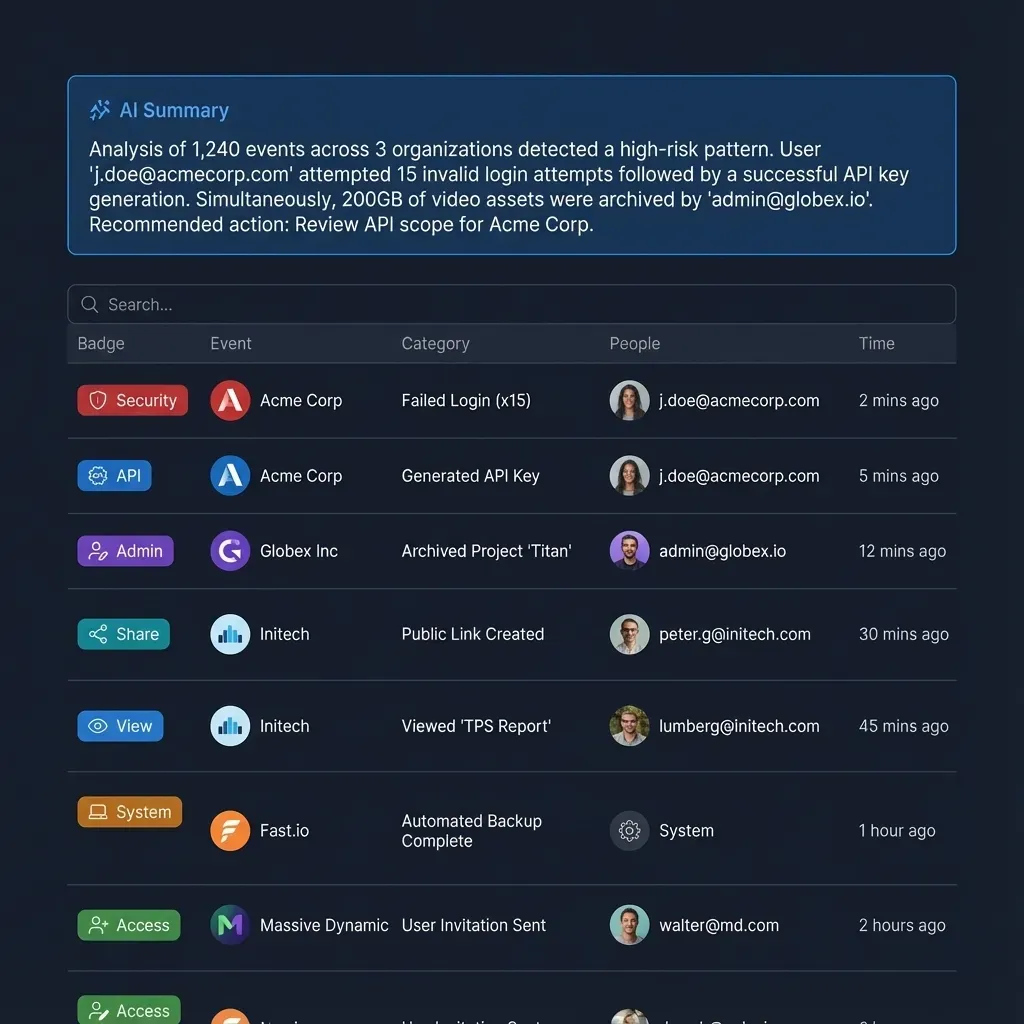
- Metadata Views turn mixed document dumps into a sortable extraction grid when you need structured fields from PDFs, images, or spreadsheets (document data extraction)
- Branded Send/Receive/Exchange shares move review packs to stakeholders without email attachment chaos
- Consolidated MCP tools over Streamable HTTP (
https://mcp.fast.io/mcp/code, the address for coding agents such as Devin) let agents operate on the workspace through MCP - Ownership transfer lets an agent scaffold an org and hand it to a human admin
Real work on Fast.io requires an organization on a paid subscription. Plans start at Starter $9.99/mo, Business $49.99/mo, and Enterprise $199.99/mo. Monthly plans start with a trial of up to 14 days (credit card required); annual plans have no trial. The organization chooses its plan before any workspace is created; an agent can then build the structure and transfer ownership to a human who is already a member.
A simple handoff pattern
- Run Devin on a scoped task under the right Cognition plan (Free residual credits, Pro, Max, or Teams).
- Land code in git for review as usual.
- Store non-code artifacts (plans, screenshots, QA notes, client-facing summaries) in a Fast.io workspace with Intelligence enabled.
- Collect sign-off in a comment on the file when a human must review it before anything leaves the team.
- Share the final pack through a branded share or portal when external reviewers need access.
That split keeps Cognition's plan decision about agent compute, and Fast.io's decision about durable collaboration storage, instead of forcing one product to answer both questions.
Billing mechanics that matter more than the Core name
Once you stop hunting for Core as a live SKU, these mechanics determine cost control.
Quotas vs on-demand credits
Paid individual plans and Teams full seats include a usage allowance that refreshes on a calendar basis. Pro and Teams full seats use daily and weekly allowances. Max uses a weekly allowance without a daily cap. When included allowance is gone, on-demand credits keep sessions running.
On-demand credits are prepaid dollar-value usage. Official docs state they roll over month to month and purchased credits do not expire. Teams shares one credit pool. Admins can top up credits, configure auto-reload, and set session spending limits from Settings.
For legacy ACU users, docs state on-demand credits map to the same dollar value as the ACUs people already understood. That continuity is intentional: the unit branding changed more than the "prepaid usage past plan quota" idea.
Seat design on Teams
Full seats are fixed cost with included quota. Flex seats are free seats that only spend shared on-demand credits. Give full seats to people who use Devin every week. Keep flex seats for occasional reviewers and trial users. Mis-seating is a common way Teams bills surprise people: too many full seats inflates fixed cost; too many flex seats with heavy users drains the shared credit pool.
Devin Review and Automations spend
On Teams, Automations and Devin Review draw from shared on-demand credits rather than full-seat quota. If credits run out, Automations stop and Devin Review falls back to its smart diff viewer until you top up. Public GitHub PR review via devinreview.com can remain free for public PRs without consuming on-demand credits.
How this differs from Fast.io billing
Devin bills agent usage and seats inside Cognition's product. Fast.io plans (Starter, Business, or Enterprise) include seats and storage, bill extra storage and bandwidth by use, and include a monthly AI credit allowance, with extra AI credits billed by use. Do not expect Devin Pro to include Fast.io storage, and do not expect a Fast.io plan to include Devin sessions. Budget them as adjacent tools in one agentic workflow, not as interchangeable line items.
Sources
References used to verify factual claims in this guide.
-
Legacy Core plan users have been migrated to the Free plan and can continue using any remaining on-demand credits Pro is $20/month; Max is $200/month; Teams starts at $80/month minimum Current self-serve plans are Free, Pro, Max, and Teams; Pro and Max are single-user plans Teams full seats are $40/month; flex seats are free and draw from shared on-demand credits On-demand credits roll over month-to-month and purchased credits never expire To purchase additional credits after Core migration, upgrade to the Teams plan
-
Public pricing lists Free at $0, Pro at $20/month, Max at $200/month, and Teams at $80/month plus $40/mo per full seat
-
Devin 2.0 introduced a flexible new plan starting at $20
Frequently Asked Questions
What is Devin AI Core?
Devin AI Core was a legacy self-serve plan from Cognition's earlier ACU-based packaging. It was commonly associated with the early $20 entry tier around the Devin 2.0 launch. Official self-serve billing docs now treat Core as legacy and describe migration of Core users to the Free plan.
Does Devin Core still exist?
Not as a plan you can newly purchase under the Core name. Cognition's self-serve docs list Free, Pro, Max, and Teams as the current self-serve plans, and mention Core only when explaining migration from legacy ACU-based plans.
What plan replaced Devin Core?
For accounts that were on Core, Cognition migrated users to Free and let them keep remaining on-demand credits. For new individual paid access at the familiar $20 price point, the current plan is Pro. Multi-person orgs should look at Teams from $80/month minimum, and power users at Max for $200/month.
Can former Core users still spend leftover credits?
Yes. Billing docs state legacy Core plan users can continue using any remaining on-demand credits after migration to Free. To purchase additional credits on that migration path, the docs direct users to upgrade to Teams.
Is Pro the same as the old Core plan?
No. Pro is a current individual plan at $20/month with documented daily and weekly quotas and on-demand overage. Core is a legacy SKU. Price similarity does not mean the packaging, quotas, or product surface are identical.
How much is Devin Teams after Core?
Teams has an $80 per month minimum. Full seats cost $40 per month each. Flex seats are free and spend shared on-demand credits. Enterprise remains custom pricing outside self-serve.
Where should Devin session files go after a run?
Code usually lands in git. Non-code artifacts often end up in S3, Google Drive, Dropbox, or a dedicated agent workspace. Fast.io is one option for shared, versioned, MCP-accessible workspaces with Intelligence Mode and Metadata Views when agents and humans need the same handoff layer.
Related Resources

Keep Devin session artifacts in one shared workspace
Store plans, screenshots, and review packs next to human feedback with version history, Intelligence Mode, and MCP access. Monthly Starter, Business, and Enterprise plans start with a trial of up to 14 days (credit card required).