Cline vs Codex: Open Agent vs OpenAI Coding Stack
The Cline vs Codex comparison is often framed as either-or, yet Cline's official OpenAI docs document both a key-based API path and OpenAI Codex subscription OAuth. This guide separates Codex-as-product from Codex-as-Cline-provider, then maps Plan/Act, MCP, and where agent output should live after the session ends.


Why Cline vs Codex is often framed incorrectly
Teams comparing the two are choosing a coding-agent stack where model spend, runtime ownership, and review controls matter.
Most comparison pages treat Cline and Codex as two products fighting for the same seat. That framing misses a documented fact in Cline's own provider docs: Cline can reach OpenAI in two ways. One is a classic OpenAI API key. The other is OpenAI Codex subscription OAuth, described as "Sign in with OpenAI" with no API key entry. Available models then depend on the OpenAI plan. In other words, "Cline vs Codex" can mean either open agent runtime versus OpenAI's coding product, or open agent runtime that uses Codex models as a provider path.
Keep those two meanings separate:
- Codex as product: OpenAI's coding stack across ChatGPT, the Codex IDE extension, Codex CLI, and Codex cloud environments
- Codex as Cline provider: OpenAI models reached through Cline's OpenAI key path or OpenAI Codex OAuth path
Cline is an open agent that lives in your editor and terminal. Official overview docs describe it as an AI coding agent that reads and writes files, runs terminal commands, can use a browser, and requires explicit approval for actions so you stay in control. Surfaces include the VS Code extension, JetBrains plugin, CLI (npm i -g cline), Kanban for parallel agents, and an SDK (@cline/sdk) built on the same agent core. Model access is multi-path: Cline usage billing, ClinePass at a flat $9.99/month for selected open coding models, or bring-your-own-key for cloud and local runtimes.
OpenAI Codex is a coding agent stack from OpenAI. Product materials position Codex in ChatGPT as a place to complete pull requests, refactors, reviews, and parallel agent work, with the same agent available in the editor and terminal, tied to a ChatGPT account. Official CLI docs describe Codex as a terminal loop that inspects a local repository, edits files, runs tools already on the machine, supports codex exec for scripts and CI, and connects external tools with MCP via codex mcp. Install paths include the standalone installer and npm i -g @openai/codex. The public openai/codex repository is a major open project surface for the CLI and related runtime.
Once you split product from provider, the decision criteria stop sounding like brand loyalty and start sounding like engineering constraints: who owns the agent runtime, which models you can swap, how planning and approvals work, whether MCP is first-class, and where durable artifacts go when humans need to review them.
The rest of this guide stays on that map: what each system optimizes for, how Plan/Act and MCP change the day-to-day loop, when the hybrid "Cline with Codex models" setup is rational, and how shared workspaces prevent agent output from dying on one laptop.
Related guides
- Best Devin AI Alternatives: Open-Source and Terminal Coding AgentsA 2026 study of over 128,000 GitHub projects shows that up to 28.66% of repositories now deploy active coding agents...
- How to Build an Open Source AI Detector Stack with Hermes AgentOpenAI's own GPT-2 detector team reported about 95% accuracy and still said that is not enough for standalone decisions...
- Kilo Code vs Cline: Open-Source Coding Agent ComparisonCline is free for individual developers under Apache 2.0, with its public repo past 64,000 GitHub stars, while pairwise...
- Cline vs Trae: Open-Source Coding Agent vs ByteDance AI IDE ComparedCline and ByteDance's Trae represent two divergent philosophies for agentic software engineering. Cline embeds a...
- Cline vs Aider: IDE Agent vs Git CLI PairingCline vs Aider is less a quality contest and more a control-model choice. Cline is an approval-gated multi-surface...
- Cline vs OpenCode: In-Editor Agent or Terminal Agent?Cline and OpenCode represent two distinct design models for open-source AI coding agents: in-editor assistance and...
More on this subject: Cline (105 guides)
What Cline optimizes for as an open coding agent
Cline's product thesis is agent control with flexible models. You install an agent surface (extension, CLI, or both), pick a provider, then supervise tool use. The agent is not locked to one model vendor. That is why multi-provider comparison pages keep landing on Cline when teams want Claude for hard refactors one week and a cheaper or local model the next.
Plan mode and Act mode
Official Plan & Act docs make the dual-mode system concrete. Plan mode is where you and Cline figure out what you are building. In Plan mode, Cline can read the codebase, run searches, and discuss strategy, but it cannot modify files or execute commands. That constraint is intentional: the conversation stays on understanding and approach instead of half-finished edits.
Act mode is for execution. Context from planning carries over, so you do not restate the plan. Cline can edit files, run commands, and implement the strategy. Docs recommend planning first for non-trivial work, and they document cycling between modes when unexpected complexity shows up.
Practical sizing from the same docs:
- Small tasks: Act only (typos, missing imports, obvious one-line fixes)
- Medium tasks: Plan, then Act (new endpoint, UI component, bug that needs investigation)
- Large tasks:
/deep-planningfor systematic exploration, affected files, and a detailed plan before implementation
You can also assign different models to Plan and Act. Settings support separate models per mode, so a stronger reasoning model can plan while a faster model implements. That is a cost-control feature as much as a quality feature.
Approval and human control
Overview docs state that every action requires explicit approval and that you stay in control. For engineering teams that already distrust "just let the agent run," that default is the product. Auto-approve can exist as a later convenience for safer tool classes, but the documented design center is human confirmation before disk and shell changes.
Surfaces beyond the IDE
Cline is not only a VS Code sidebar. Official applications include:
- CLI for interactive chat or headless automation (
npm i -g cline) - Kanban for parallel agents with per-card worktrees (
npx kanban) - VS Code extension and JetBrains plugin
- SDK (
@cline/sdk) for embedding the same core in your own tools
Other IDE support paths include Cursor, Devin Desktop (formerly Windsurf), and ACP-mode editors such as Zed and Neovim. Enterprise docs describe governance, team management, and observability integrations on top of the same runtime. For this comparison, the important point is architectural: Cline is a multi-surface open agent, not a single proprietary IDE chat pane. If Cursor is the surface pulling your team's attention rather than Codex, the Cline alternatives roundup lines it up against Claude Code, Roo Code, Aider, GitHub Copilot, and Continue too.
MCP as the extension plane
Cline MCP docs describe Model Context Protocol as the way to connect external tools and data sources. You can run local STDIO servers or remote hosted servers. Remote setup supports Streamable HTTP (recommended) and legacy SSE. Configuration can live in CLI MCP settings (~/.cline/mcp.json) or in the IDE MCP panel. Security basics in those docs are blunt: only install servers you trust, keep secrets in environment variables, limit auto-approve, and review tool calls before approval.
That MCP posture matters when you connect storage, issue trackers, internal APIs, or a workspace platform. The agent runtime stays local or IDE-bound; the tools and durable files can live elsewhere.
What OpenAI Codex optimizes for as a coding stack
OpenAI Codex is best evaluated as a stack, not a single binary. Marketing and product pages present Codex in ChatGPT as an agentic coding environment for pull requests, refactors, reviews, and parallel work with worktrees and cloud environments. The same agent is positioned across ChatGPT, an IDE extension, and the terminal, connected by a ChatGPT account. Pricing entry points shown on the Codex product page include ChatGPT Plus at $20/month, Pro from $100/month, and Business at $20 per user per month (team packaging with admin controls).
Codex CLI in daily work
Official CLI docs describe a terminal-first loop: inspect files, make edits, run tools already installed on the machine, and stay in control through model, reasoning effort, permissions, and command boundaries. Install options include a standalone installer for macOS/Linux and npm (npm i -g @openai/codex). First run walks through sign-in (including Sign in with ChatGPT). Interactive sessions and non-interactive codex exec cover both human-driven work and pipeline automation.
Documented CLI capabilities that matter for comparison:
- Resume saved chats in a repository
- Image inputs for screenshots and diagrams
- Subagents for splitting investigation
- Live web search when tasks need current external context
- Handoff to Codex cloud from the terminal
- MCP connections via
codex mcp - Permission modes that set when edits or commands can run without asking
- Dedicated review flows against uncommitted changes, a commit, or a base branch without modifying the working tree
Skills and plugins package team standards and tool connections so the agent applies them consistently. That is OpenAI's product answer to "how do we encode how we work here?" without leaving the Codex surfaces.
Cloud, IDE, and ChatGPT surfaces
Codex is not only local. Product materials emphasize multi-agent workflows, background automations (issue triage, alert monitoring, CI/CD-style work), and cloud environments that let agents run while you are not glued to a terminal. The IDE extension targets in-editor work. ChatGPT hosts a higher-level command center for parallel agent tasks. If your team already standardizes on ChatGPT accounts and wants one vendor for model quality plus agent UX, that packaging is the draw.
Open source CLI versus product packaging
The openai/codex GitHub repository is public and actively developed, with a very large star count on the project page. Treat that as the open implementation surface for the CLI and related components, not as proof that every ChatGPT Codex feature is free or self-hosted end-to-end. Authentication, model access, and cloud execution still sit inside OpenAI's account and plan system. For procurement, "open-source CLI" and "ChatGPT-connected coding agent product" are related but not identical purchase decisions.
Where Codex wins on intent
Choose the Codex product stack when you want OpenAI's coding models tightly integrated with ChatGPT identity, when terminal-first OpenAI tooling is the default, when cloud parallel agents are part of the pitch, and when your team prefers one vendor's skills/plugins ecosystem over multi-provider agent configuration. Choose it less often when model portability, non-OpenAI providers, or an open agent core under your own operational control are non-negotiable.



Keep Cline and Codex output in one reviewable workspace
Connect your coding agent to a shared Fast.io workspace over MCP for versioned files, hybrid search, and human handoff. Start with a 14-day free trial.
Runtime, models, MCP, and controls side by side
Head-to-head evaluation is clearer when you score systems on operational axes instead of feature laundry lists.
Runtime ownership
Cline's runtime is the open agent core you install and configure. You decide the surface (IDE, CLI, Kanban, SDK), the model provider, and which MCP servers attach. Codex's runtime is OpenAI's coding agent product family. You still run a local CLI or IDE extension, but identity, models, and cloud execution lean into the OpenAI account system. If your platform team wants to treat the agent runtime as something they can inspect, fork, and instrument independently of a single model vendor, Cline matches that preference. If your platform team wants the shortest path into OpenAI's coding stack, Codex matches that preference.
Model strategy
Cline is multi-provider by design. Overview docs list usage billing, ClinePass, and bring-your-own-key for cloud or local runtimes. OpenAI can be just another provider. Codex as product is optimized for OpenAI coding models and ChatGPT-connected access. Hybrid setups exist: Cline's OpenAI docs document both API key setup and OpenAI Codex OAuth, so a team can keep Cline's Plan/Act loop while buying model time through an OpenAI subscription path. That hybrid is not "Codex the product." It is Cline the runtime with OpenAI models behind it.
Cost shape differs too. Cline can route Plan and Act to different models for quality versus speed. API-key OpenAI usage is metered against OpenAI pricing. Codex OAuth availability depends on the OpenAI plan. Codex product packaging bundles agent access with ChatGPT plan tiers. There is no universal cheaper winner; there is only a clearer cost center (provider invoices you control versus ChatGPT plan packaging).
IDE versus CLI versus cloud
Both systems cover more than one surface now. Cline is still strongest in the "agent in my editor with visual approval" story, with CLI and Kanban expanding the map. Codex is strongest in the "OpenAI agent across ChatGPT, IDE, CLI, and cloud" story. If your developers live in VS Code diffs all day, Cline feels natural. If your developers live in terminal sessions and ChatGPT task boards, Codex feels natural. Many teams will run both for different personas rather than forcing a single winner.
Approval models
Cline documents explicit approval as a core safety property of the agent loop. Plan mode hardens that further by blocking edits and commands during exploration. Codex CLI docs emphasize permission modes, sandbox boundaries, and writable roots, plus review commands that inspect changes without rewriting the tree. Both systems take control seriously. The UX language differs: Cline leans on Plan/Act and step approvals; Codex leans on permission modes, review presets, and cloud/local task management.
MCP extensibility
Both ecosystems document MCP. Cline's docs cover IDE and CLI configuration, Streamable HTTP, legacy SSE, and local STDIO, with concrete JSON shapes for remote servers. Codex CLI docs document codex mcp for adding local or remote servers and inspecting available tools. For a workspace platform that exposes Streamable HTTP at /mcp and legacy SSE at /sse, either agent can be a client if you configure the endpoint and auth headers correctly. Cline's remote server UI and CLI wizard lower the configuration friction for mixed IDE teams. Codex's CLI path fits terminal-first GitOps style config.
Example remote MCP entry shape from Cline docs (pattern only; point the URL at your workspace MCP endpoint and token):
{
  "mcpServers": {
    "workspace-storage": {
      "type": "streamableHttp",
      "url": "https://example.com/mcp",
      "headers": {
        "Authorization": "Bearer YOUR_TOKEN"
      },
      "disabled": false,
      "autoApprove": []
    }
  }
}
Keep autoApprove empty until you trust a tool class. Review tool calls the first time you connect a new server. For Fast.io endpoint details and agent storage patterns, use /storage-for-agents/.
Enterprise and team controls
Cline enterprise materials describe team management, remote configuration, model and tool controls, and observability integrations. OpenAI packages team admin and shared workspace concerns through ChatGPT Business and related enterprise offerings. Map these to your existing identity and audit requirements rather than assuming either agent replaces your security stack. Neither coding agent is a complete file governance system by itself.
When Cline should use OpenAI Codex models
The hybrid path is the part most "cline vs openai codex" pages skip. Cline's OpenAI provider page documents two setup routes.
Path 1: OpenAI API key
Create a key in the OpenAI platform, open Cline settings, choose OpenAI as the API provider, paste the key, and select a model. Optional base URL supports proxies or custom endpoints for teams that already front OpenAI with their own gateway. This path is pure API metering: you pay OpenAI for tokens under your platform account.
Path 2: OpenAI Codex OAuth
In Cline settings, choose OpenAI Codex as the API provider, click Sign in with OpenAI, complete browser OAuth, return to Cline, and choose a model. Notes in the docs are short and important: no API key entry is required, and available models depend on your OpenAI plan. This path is for teams that already hold OpenAI subscription access and want Cline's agent UX without managing keys in every developer environment.
When the hybrid is rational
Use Cline with OpenAI models when:
- You like Cline's Plan/Act workflow and multi-surface runtime
- You still want OpenAI model quality for some or all tasks
- Different developers need different models, but one agent UX
- You want MCP and local approval habits that already match Cline
- Procurement already has OpenAI access, and Cline is the preferred agent runtime
Prefer Codex product surfaces when:
- ChatGPT is already the team command center for coding tasks
- Cloud parallel agents and ChatGPT-native packaging matter more than multi-provider choice
- Terminal OpenAI CLI plus IDE extension is enough without a second agent product
- Skills/plugins inside Codex are the team's extension model of choice
Prefer Cline without OpenAI when:
- You need Anthropic, Google, OpenRouter, or local models as first-class options
- Cost optimization means routing Plan and Act to different non-OpenAI models
- You want the open agent core as the long-term runtime independent of any single model vendor
A practical team pattern is not pure monogamy. Platform engineering standardizes one or two agent runtimes, documents MCP endpoints, and lets model choice float inside policy. Individual contributors may use Codex CLI for deep OpenAI terminal sessions while the VS Code cohort stays on Cline with OpenAI Codex OAuth for model access. The shared requirement is where the work products land after either agent finishes.
Where agent output should live after Cline or Codex finishes
Local git is still the source of truth for code. Agent sessions still dump intermediate artifacts everywhere else: design notes, migration plans, review writeups, generated fixtures, screenshots, client-ready packages, and runbooks. Teams try laptop folders first, then generic object storage such as S3, then consumer drives like Google Drive or Dropbox. Those options work for raw bytes. They get awkward when agents and humans need the same semantic search, permissions, and handoff model.
A durable agent workspace should give you:
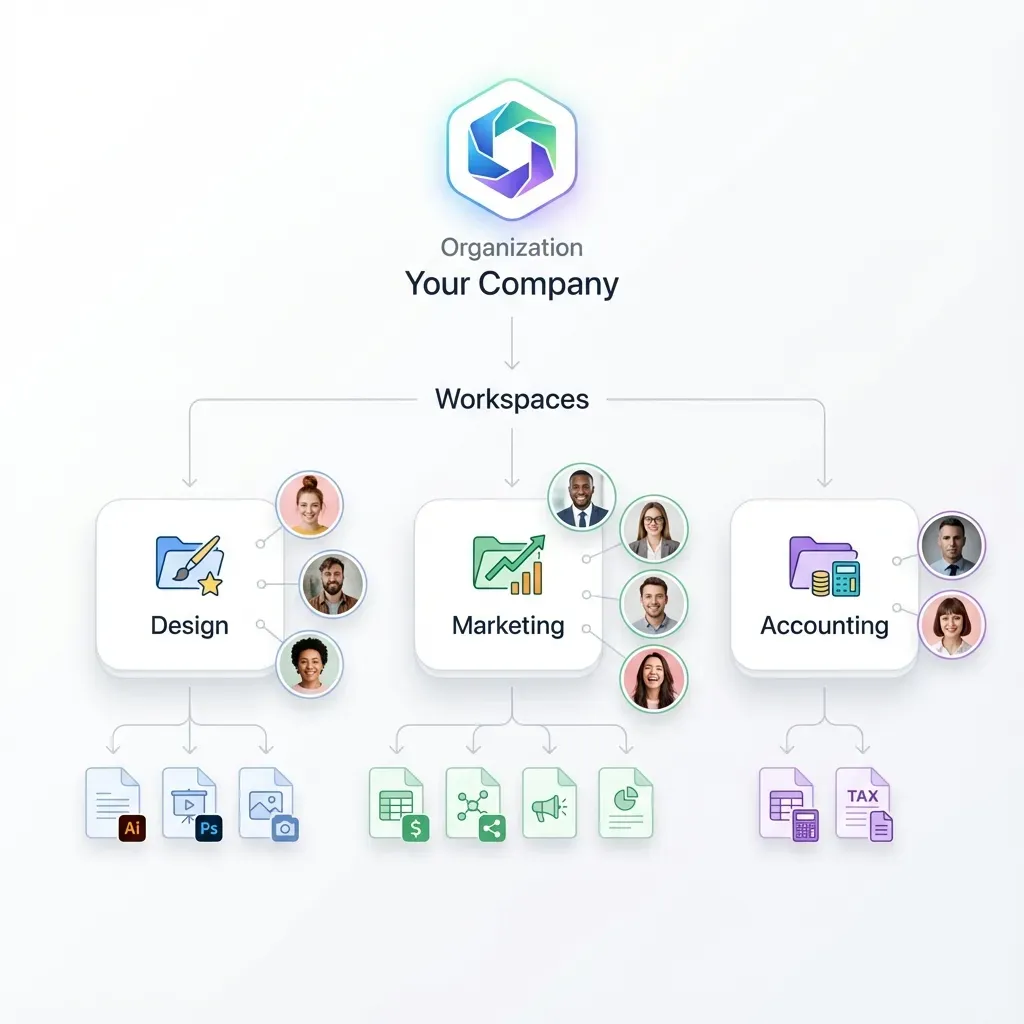
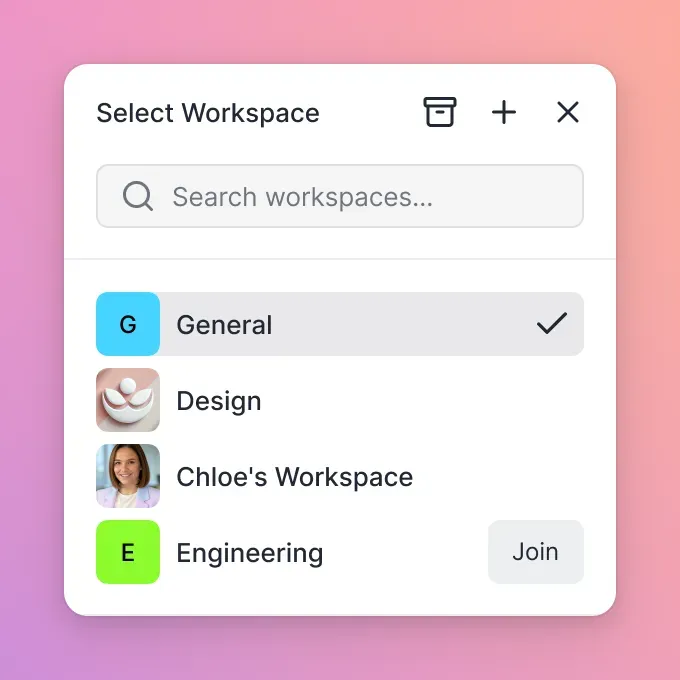
- Shared org-owned folders both humans and agents can use
- Per-file version history when concurrent agents overwrite drafts
- Granular permissions at org, workspace, folder, and file levels
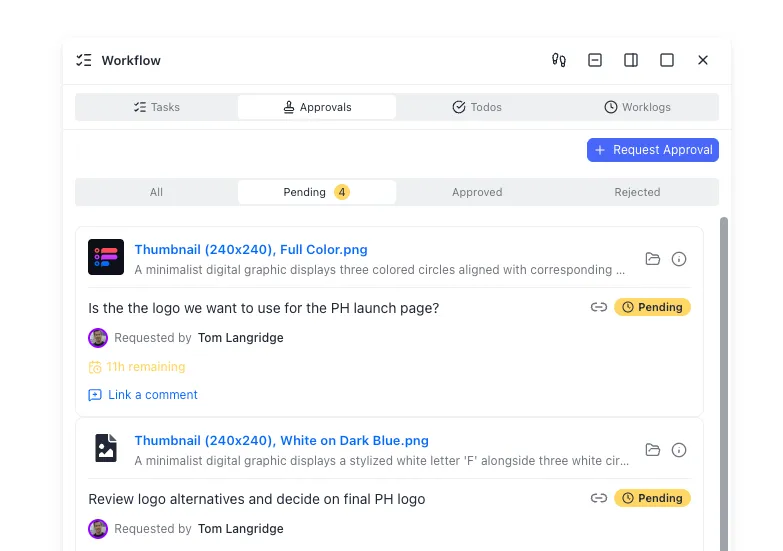
- A detailed activity log of who (or what) changed what
- Programmatic access so agents do not scrape a browser UI
Fast.io is built as workspaces for agentic teams rather than as a generic dump bucket. Agents and humans share the same workspaces. Humans use the UI; agents use the Fast.io API or the consolidated MCP toolset over Streamable HTTP at /mcp and legacy SSE at /sse. Intelligence Mode can index files for hybrid search (full-text, semantic, and metadata-value filters) and citation-backed chat. Metadata Views turn documents into typed, queryable fields when you need structured extraction instead of only summaries. Branded shares (Send, Receive, Exchange) support durable or expiring delivery with per-recipient access. Ownership transfer lets an agent create structure and hand the org to a human while keeping admin access. Plans are Starter at $9.99/month, Business at $49.99/month, and Enterprise at $199.99/month. Monthly plans start with a trial of up to 14 days that requires a credit card before real workspace work continues on a paid subscription.
Connect either Cline or Codex as an MCP client when you want the agent to write plans, patches, and delivery packages into a reviewable workspace instead of a private temp directory. Fast.io's WebSocket events feed can notify a connected integration when files change, while the activity feed supports polling. URL import can pull source material from Google Drive, OneDrive, Box, or Dropbox without bouncing every file through a laptop. Collaborative Notes keep humans in the same room as agent output without exporting to yet another tool.
The agent choice (Cline, Codex, or Cline-with-Codex-models) still matters for day-to-day coding feel. The workspace choice decides whether that coding feel becomes team output with history, permissions, and search, or a stack of local diffs only one person can find on Monday morning. For storage-for-agents patterns and MCP setup details, start at /storage-for-agents/.
Sources
References used to verify factual claims in this guide.
-
Cline supports OpenAI via API key and via OpenAI Codex subscription OAuth (Sign in with OpenAI, no API key); available OAuth models depend on the OpenAI plan
-
Cline is an AI coding agent in the editor and terminal that reads/writes files, runs commands, can use a browser, and requires explicit approval for actions ClinePass is documented as a flat $9.99/month subscription for selected open coding models
-
Plan mode can explore and discuss but cannot modify files or execute commands; Act mode implements with carried-over context; separate models per mode are supported
-
Cline MCP supports local STDIO and remote Streamable HTTP or legacy SSE servers, with configuration via IDE MCP panel or CLI
-
Codex CLI inspects local repositories, edits files, runs local tools, supports permissions, review, skills/plugins, cloud handoff, and MCP via codex mcp; install includes standalone installer and npm i -g @openai/codex
-
Codex in ChatGPT is positioned for PRs, refactors, reviews, parallel agents, IDE and CLI surfaces; plan entry points include Plus $20/mo, Pro from $100/mo, Business $20/user/mo
-
Fast.io plans include Starter $9.99/month, Business $49.99/month, Enterprise $199.99/month with a 14-day free trial requiring a credit card
Frequently Asked Questions
Is Cline better than OpenAI Codex?
It depends on the job. Cline is stronger when you want an open multi-provider agent with explicit Plan/Act modes, broad IDE/CLI surfaces, and MCP under your configuration. OpenAI Codex is stronger when you want OpenAI's coding stack across ChatGPT, IDE, CLI, and cloud with ChatGPT-connected packaging. Many teams use both for different workflows rather than declaring a single winner.
Can Cline use OpenAI Codex models?
Yes. Cline's official OpenAI provider docs document two paths: an OpenAI API key for direct platform access, and OpenAI Codex subscription OAuth via Sign in with OpenAI without entering an API key. Available models on the OAuth path depend on your OpenAI plan. That hybrid keeps Cline as the agent runtime while OpenAI supplies models.
What is the difference between Cline and Codex CLI?
Cline CLI is part of Cline's multi-surface open agent (alongside IDE extensions, Kanban, and an SDK) and can talk to many model providers. Codex CLI is OpenAI's terminal coding agent, installed via the OpenAI installer or npm package @openai/codex, oriented around OpenAI sign-in, permissions, review, skills/plugins, and optional cloud handoff. Both can extend with MCP; the product center of gravity differs.
Should I compare Cline to Codex the product or Codex as a provider?
Both, but separately. Codex the product is OpenAI's coding agent stack. Codex as a provider is the OpenAI model path Cline can use through API keys or Codex OAuth. Mixing those meanings produces confusing recommendations. Decide runtime first, then model path.
How do Plan and Act modes change the Cline vs Codex decision?
Plan mode forces exploration without file edits or command execution, then Act mode implements with carried-over context. That dual mode is a documented Cline workflow advantage for structured multi-file work. Codex emphasizes permission modes, review commands, and task packaging instead of an identical Plan/Act product split. If your team wants a hard planning gate before tools fire, Cline's documented mode switch is a direct fit.
Can both agents connect to shared storage with MCP?
Yes, when the storage layer exposes MCP. Cline docs support local STDIO and remote Streamable HTTP or legacy SSE servers. Codex CLI docs include codex mcp for local and remote servers. Fast.io exposes Streamable HTTP at /mcp and legacy SSE at /sse so either agent can read and write shared workspaces with version history and search when configured as a client.
Where should files go after a Cline or Codex session?
Keep source code in git. Put intermediate plans, review packs, client deliverables, and long-lived agent artifacts in a shared workspace with permissions, version history, and programmatic access. Local disks and generic drives are fine for short experiments. They fail when multiple humans and agents need the same audit trail and search layer.
Related Resources

Keep Cline and Codex output in one reviewable workspace
Connect your coding agent to a shared Fast.io workspace over MCP for versioned files, hybrid search, and human handoff. Start with a 14-day free trial.