Best Cline Alternatives for AI Coding Agents
Cline reports 8.0M+ installs and a free open-source product for individuals, so cost alone rarely drives a switch. Developers still search for cline alternatives when they want a polished IDE, a stronger terminal agent, custom modes, or team-managed workflows. This guide ranks six tools by that decision split, not by recycled feature lists.


Cline set a free baseline. The real choice is architecture.
Cline markets 8.0M+ installs across platforms and prices its open-source product as free for individual developers, with usage-based inference or bring-your-own-key billing as the only required spend. That free baseline is the cost floor every cline alternative has to beat. It also explains why "cheaper than Cline" is usually the wrong frame.
US search demand for "cline alternatives" sits around 90 queries per month (DataForSEO), which is modest volume with high commercial intent. People who search this phrase already use or evaluated Cline. They want a different runtime shape: local models only, a full AI IDE, a terminal-first agent, multi-agent modes, or team controls Cline's open-source path does not prioritize.
Cline alternatives are AI coding tools that replace or complement Cline for agentic coding, autocomplete, or team-managed development workflows. The useful shortlist, with best-for labels:
- Cursor: best for IDE-native multi-file editing
- Claude Code: best for terminal-first deep refactors
- Roo Code: best open-source Cline-family fork with modes
- Aider: best git-native local pair programming
- GitHub Copilot: best for GitHub-native teams
- Continue: best open-source multi-IDE agent surface
Quick comparison before the detail:
- Cline (baseline): free open-source agent for individuals; BYOK or pay-as-you-go inference; VS Code, CLI, and JetBrains paths; MCP and Plan/Act workflow
- Cursor: paid IDE product; strongest polish and tab completions; less "stay in stock VS Code"
- Claude Code: Anthropic terminal agent; included with Claude Pro and above
- Roo Code: Cline-origin open-source extension; custom modes and orchestrator-style task split
- Aider: free Apache-2.0 terminal pair programmer; maps the repo and auto-commits
- GitHub Copilot: subscription coding agent inside GitHub and major IDEs
- Continue: open-source CLI plus VS Code and JetBrains extensions; model-agnostic
The rest of this article is decision criteria first, then tool detail, then where agent output should live when more than one person has to review it.
Related guides
- Best Replit Alternatives in 2026Replit crossed 50 million users in early 2026, but its February pricing overhaul pushed many developers to evaluate...
- Best Devin AI Alternatives: Open-Source and Terminal Coding AgentsA 2026 study of over 128,000 GitHub projects shows that up to 28.66% of repositories now deploy active coding agents...
- What Is Cline? Open-Source AI Coding Agent ExplainedCline reports 8.0M+ installs across platforms and ships as Apache 2.0 open source, which is why developers keep asking...
- Cline vs Cursor: Comparing the Top AI Coding ToolsAccording to the JetBrains AI Pulse Survey, 18% of developers report using Cursor at work, while GitHub Copilot...
- Kilo Code vs Cline: Open-Source Coding Agent ComparisonCline is free for individual developers under Apache 2.0, with its public repo past 64,000 GitHub stars, while pairwise...
- Cline vs Void: Open-Source Coding Agent vs Standalone Editor ForkCline is a modular, open-source autonomous coding agent that operates inside standard VS Code, while Void was an...
More on this subject: Cline (105 guides)
How to evaluate Cline alternatives beyond feature lists
Most "best of" posts list the same five names and stop. The split that actually predicts satisfaction is architectural.
Local runtime vs cloud-managed runtime
Local-first tools (Cline with Ollama or LM Studio, Aider with local models, many Continue setups) keep code on your machine and send only model traffic you configure. Cloud-managed products (Cursor, Claude Code via Anthropic plans, GitHub Copilot) trade that control for polish, hosted models, and less key plumbing. If your org forbids shipping source to third-party model hosts, local BYOK tools stay in the race even when the UI is rougher.
Editor-native vs terminal-native
Editor-native agents live in VS Code, JetBrains, or a fork of VS Code. They win when you want diffs, inline chat, and continuous human approval in the same surface where you already debug. Terminal-native agents win when you want headless runs, scriptable sessions, and less UI chrome. Cline spans both (extension plus CLI). Claude Code and Aider are terminal-first. Cursor is editor-first by design.
Approval loop vs autopilot
Cline's default posture is human-in-the-loop: Plan, then Act, with approval on steps. Roo Code and several Cline forks push harder into auto-approve and multi-mode orchestration. Cursor and Claude Code can run long agent sessions, but the UX and safety defaults differ. If you need step-level control on production code, pick the tool whose approval model matches your risk tolerance rather than the one with the highest demo video velocity.
Cost model: free software vs free to operate
Cline's open-source product is free software. Inference still costs money unless you run local weights. Cursor and Copilot charge product subscriptions. Claude Code usage is tied to Claude Pro, Max, Team, or API credits. Aider is free software with pure BYOK economics. When comparing, write down expected monthly model spend for your actual workload, not the sticker price of the shell.
Team surface area
Individual agents optimize for a single developer's laptop. Team workflows need shared artifacts: PR review, design docs, client deliverables, audit trails. Coding agents produce files. They do not replace the workspace where humans and agents coordinate on those files after the commit lands.



Keep agent code changes, share the artifacts
Use your coding agent for the repo, then put deliverables in a shared Fast.io workspace with MCP access.
What are the best Cline alternatives by job fit?
Each entry below assumes Cline's free open-source product for individuals as the cost baseline. Prices change; treat subscription numbers as orientation, then confirm on the vendor site before you buy.
A practical way to pilot any alternative: pick one recurring task (for example, "open a PR that renames a package and updates imports"), run it three times on Cline and three times on the candidate tool, and score only what you can measure: minutes to a clean diff, number of human interventions, and whether the change reverts cleanly. If the new tool does not win two of those three metrics on a familiar repo, the switching cost is not worth it.
One hard constraint applies to every option: model quality and repo size dominate product marketing. A strong model on a messy monorepo will outrun a weaker model on a polished IDE. Budget inference separately from the shell, and keep a rollback path (git branch, agent transcript, or both) so a bad agent session never becomes permanent.
Here is the shortlist at a glance. This review was last checked on September 2, 2026. Surfaces, licensing, capabilities, trade-offs, and pricing change quickly, so verify each item in the vendor's current documentation before choosing.
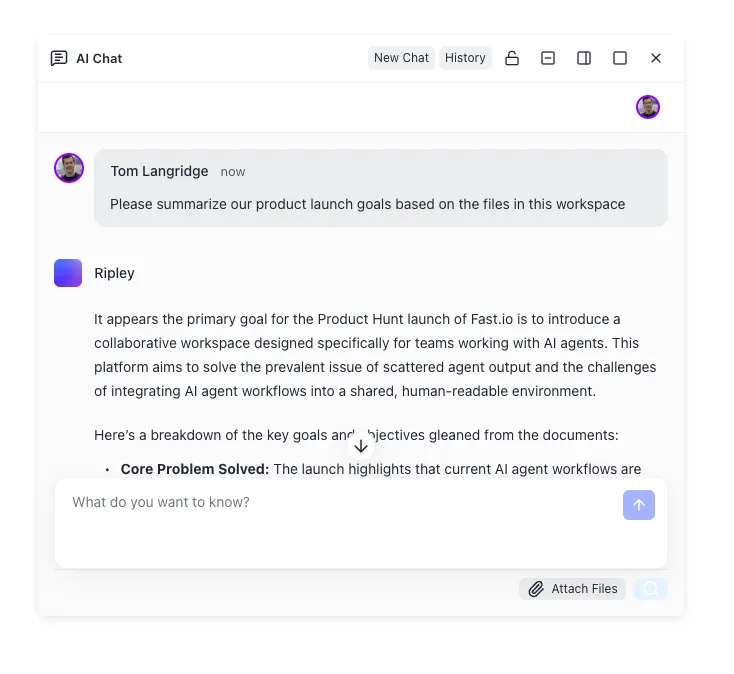
1. Cursor: best for IDE-native multi-file editing
Cursor is a VS Code-based AI IDE with codebase indexing, multi-file agent edits, and fast tab completion. Developers leave Cline for Cursor when they want the agent woven into every keystroke rather than a sidebar agent that plans and acts in discrete steps.
Strengths
- Whole-project context that keeps suggestions grounded in real symbols and paths
- Multi-file edit flows that feel like an editor feature, not a chat add-on
- Strong completion latency compared with pure agent extensions
Limitations
- You adopt Cursor's IDE product, not a thin extension on stock VS Code
- Subscription and credit-style usage can climb for heavy agent sessions
Best for: Developers who want a polished AI IDE and will switch editors for it.
Pricing shape: Limited free usage plus paid individual and business plans. Confirm current Pro and Business rates on Cursor's site; expect a recurring product fee on top of model usage.
2. Claude Code: best for terminal-first deep refactors
Claude Code is Anthropic's terminal coding agent. You point it at a repo, describe the job in natural language, and it reads, edits, runs commands, and manages git-related work from the shell. It is the clearest "different product category" alternative to Cline's VS Code-first experience.
Strengths
- Strong multi-step reasoning on large refactors and architecture changes
- Native fit for developers who already live in the terminal and CI scripts
- Included with Claude paid plans rather than sold only as a separate IDE
Limitations
- Not a free open-source agent runtime like Cline for individuals
- Less visual diff workflow than editor-native tools unless you pair it with your own editor
Best for: Engineers who want a high-quality terminal agent and already pay for Claude Pro or higher.
Pricing shape: Claude Code is included with Claude paid plans. Pro starts at about $20/month; Max tiers raise usage caps substantially. API usage is billed separately if you authenticate with an API key instead of a subscription.
3. Roo Code: best open-source Cline-family fork with modes
Roo Code started as a fork of Cline and evolved its own product direction: specialized modes (code, architect, ask, debug-style workflows), stronger customization, and orchestrator-style task breakdown. If you like Cline's VS Code agent model but want more mode switching and parallel task routing, Roo is the closest sibling on the list.
Strengths
- Familiar Cline-family interaction model with extra mode control
- BYOK model flexibility similar to other open-source agents
- Useful when one agent persona is not enough for plan vs implement vs review
Limitations
- Fork ecosystems move fast; feature parity with upstream Cline is not automatic
- Stability tradeoffs can favor Cline for conservative production use
Best for: Power users who want open-source agent modes without leaving the VS Code extension pattern.
Pricing shape: Open-source client; you pay model providers or local inference costs.
4. Aider: best git-native local pair programming
Aider is an open-source terminal pair programmer under Apache 2.0. It maps the codebase, edits files in place, and auto-commits with readable messages so every agent change is a git object you can diff or revert. Aider reports tens of thousands of GitHub stars and millions of installs, which makes it one of the most established terminal agents outside the big IDE vendors.
Strengths
- Git-first workflow that fits review culture and rollback habits
- Works with cloud APIs and local models
- Minimal product tax: free software, BYOK economics
Limitations
- No full IDE chrome; pairing with an editor is on you
- Less "productized" team admin than Copilot or Cursor Business
Best for: Developers who want a free, local-friendly agent that treats git as the source of truth.
Pricing shape: Free to install. Pay only your LLM provider, or run local models for near-zero inference cost.
5. GitHub Copilot: best for GitHub-native teams
GitHub Copilot sits inside the GitHub platform and major IDEs. Teams pick it over Cline when coding agents must line up with issues, pull requests, org policy, and existing seat management rather than a bring-your-own-key extension.
Strengths
- Tight GitHub workflow integration for PR-centric teams
- Familiar subscription packaging for engineering orgs
- Broad IDE coverage without a full IDE fork
Limitations
- Less open-source runtime control than Cline, Roo, Aider, or Continue
- Billing and model options follow GitHub's product roadmap, not your local Ollama box
Best for: Organizations standardized on GitHub that want managed AI coding with org admin paths.
Pricing shape: Paid individual and org plans with usage-based components on current packaging. Check GitHub's pricing page for the active credit model before budgeting agent-heavy work.
6. Continue: best open-source multi-IDE agent surface
Continue is an open-source coding agent available as a CLI, VS Code extension, and JetBrains plugin. It targets developers who want agent, chat, edit, and autocomplete surfaces without a proprietary IDE. The project has been acquired by Cursor, and the maintainers shipped a polished final open-source release line; the codebase remains useful as a model-agnostic foundation.
Strengths
- One open-source stack across CLI and multiple IDEs
- Strong BYOK and local-model story
- Good fit when you need custom rules and CI-oriented AI checks
Limitations
- Acquisition changes long-term product certainty compared with pure independent projects
- Agentic depth can lag Cline or Claude Code depending on your setup
Best for: Teams that want open-source agent plumbing across VS Code and JetBrains with full model choice.
Pricing shape: Free open-source client. Inference costs follow whatever models you connect.
Where agent output needs a shared workspace
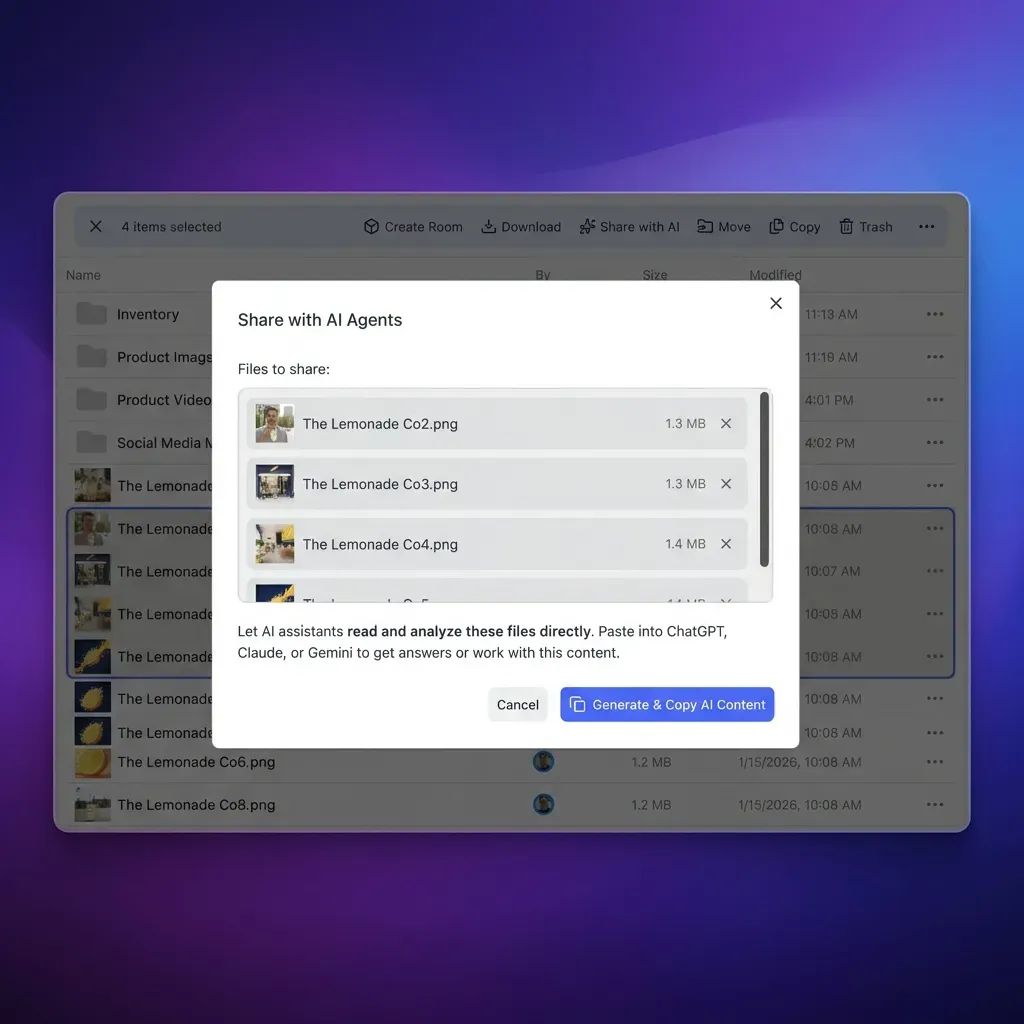
Coding agents write to a laptop disk or a git remote. That is enough for individual work. It breaks down when a second developer, a reviewer, or a client needs the same artifacts without cloning every branch and hunting for the right export.
Local folders and git remotes remain the default for source. Object storage (S3 and similar) works for bulk artifacts. Consumer drives like Google Drive or Dropbox cover casual handoff. Those options still leave gaps for agentic teams: semantic search over mixed deliverables, per-file version history humans and agents both trust, and a path to hand an agent-built workspace to a human without rebuilding access rules.
Fast.io is a file workspace for that handoff, not a Cline alternative. Agents and people can share files through a workspace with MCP access. Plans are Starter at $9.99/mo, Business at $49.99/mo, and Enterprise at $199.99/mo, each starting with a 14-day free trial that requires a credit card.
Practical pattern many teams use:
- Run Cline, Claude Code, or Aider against the repo for code changes
- Push source through git as usual
- Drop build outputs, research notes, screenshots, and client packages into a shared Fast.io workspace
- Let reviewers query the workspace with search and chat instead of re-asking the agent for context
That split keeps the coding agent honest about what it is good at, and puts durable coordination in a workspace designed for agents and people together. Agent onboarding notes live at fast.io/llms.txt.
How to pick the right Cline alternative
Use this as a short decision tree, not a universal ranking.
Stay on Cline if the free open-source product for individuals, Plan/Act approvals, MCP extensions, and multi-surface runtime already match how you work. Switching has a real switching cost; do not churn for a blog post list.
Pick Cursor if editor polish and multi-file IDE agents matter more than staying on stock VS Code or pure BYOK economics.
Pick Claude Code if terminal-native depth is the job and you already budget for Claude Pro or higher.
Pick Roo Code if you want a Cline-family open-source agent with stronger mode and orchestration knobs.
Pick Aider if git-native, local-friendly, free software pair programming is the priority.
Pick GitHub Copilot if org packaging and GitHub workflow integration beat open-source agent flexibility.
Pick Continue if you need an open-source agent surface across VS Code and JetBrains with full model choice.
For team handoff of non-source artifacts, keep the coding agent and use a separate shared workspace rather than forcing the agent product to double as document storage. The best Cline alternative is often another coding agent plus a clear place for the work to land.
Sources
References used to verify factual claims in this guide.
-
Cline reports 8.0M+ installs across all platforms.
-
The Cline open-source extension is free for individual developers; users pay for AI inference on a usage basis or bring their own keys.
-
Cline is an AI coding agent for editor and terminal with Plan/Act style control, multi-file edits, MCP extension, multi-surface apps, and model choice including BYOK and local runtimes.
-
US monthly search volume for 'cline alternatives' is about 90 (DataForSEO).
-
Aider is open-source terminal pair programming with codebase maps, git auto-commits, cloud and local LLMs, and reports 44K GitHub stars and 6.8M installs on its site.
-
Claude Code is included with Claude paid plans; Pro is the entry paid plan commonly listed around $20/month with Max tiers from $100/month.
Frequently Asked Questions
What is the best alternative to Cline?
There is no single best alternative. Cursor is the strongest IDE-native pick, Claude Code is the strongest terminal-first pick, and Roo Code or Aider are the strongest open-source paths depending on whether you want a VS Code agent or a git-native CLI. Match the tool to local vs cloud, editor vs terminal, and approval style before you compare feature grids.
Is Cursor better than Cline?
Cursor is better when you want a full AI IDE with deep indexing and fast completions. Cline is better when you want free open-source software, human-in-the-loop Plan/Act control, BYOK or local models, and multiple supported surfaces. Many developers use both for different jobs rather than declaring a permanent winner.
What open source alternatives to Cline exist?
Roo Code (a Cline-family VS Code agent with modes), Aider (terminal pair programming with git auto-commits), and Continue (CLI plus VS Code and JetBrains extensions) are the main open-source alternatives. Cline itself remains Apache-2.0 open source for individuals, so open source is not only an alternatives story.
Is Cline free?
Yes for individual developers on the open-source product. Official Cline pricing states the open-source extension is free; you pay for AI inference on a usage basis or bring your own API keys. Enterprise features such as centralized team controls are a separate custom track.
Can I run Cline alternatives fully local?
Aider, Continue, Roo Code, and Cline itself can connect to local model runtimes such as Ollama or LM Studio depending on configuration. Cursor, Claude Code, and GitHub Copilot are more cloud-product oriented even when they offer private deployment options for some customers. If air-gapped source handling is mandatory, start with BYOK open-source agents and verify your model host policy.
Where should agent-generated files live for a team?
Source should stay in git. For shared deliverables, research packs, and client-facing packages, use a workspace with permissions, version history, and search. Local disks and consumer drives are fine for individual drafts. A separate shared workspace can provide durable context when agents and people need the same files.
Related Resources

Keep agent code changes, share the artifacts
Use your coding agent for the repo, then put deliverables in a shared Fast.io workspace with MCP access.