How to Scale Canva Video Editor Asset Pipelines with Clay Automation
Outbound GTM teams can scale their Canva video editor workflows by connecting Clay data enrichment tables with the Canva Connect API. By automating the visual asset pipeline, creative teams reduce production cycles by 60% and ensure personalized videos reach clients faster. This guide explains how to construct the automation, structure the API payloads, and manage raw assets in secure, version-controlled workspaces.


The Visual Bottleneck in Modern Outbound Pipelines
According to Wistia's video marketing report, videos under two minutes drive the highest audience engagement, with standard completion rates peaking at 52% [Wistia Video Marketing Statistics]. In personalized sales outreach and scale-driven marketing campaigns, GTM teams use these short videos to explain features or present customer data in real time. However, manually editing templates in the Canva Video Editor to customize individual assets introduces a massive creative bottleneck. Automating visual design tasks reduces production cycles by 60%, shifting design team hours from manual clip rendering to strategic campaign execution [Kissflow Workflow Automation Statistics].
When executing visual campaigns at scale, teams must customize individual video backgrounds, prospect logos, and personalized metrics. Manual design systems cannot keep pace with outbound sales tables that generate hundreds of qualified leads per day. A typical designer spending ten minutes per video will need over eighty hours of labor to produce five hundred custom clips. This labor-intensive rendering process limits outbound volume, prevents real-time lead response, and introduces human error during data copy operations.
To resolve this bottleneck, growth engineers connect data-enrichment platforms like Clay to the Canva Connect API. This programmatic pipeline allows outbound campaigns to run visual asset personalization dynamically. Rather than manually copying contact data into a browser editor, teams write data enrichment scripts that feed prospect records into brand templates, outputting finished videos in minutes.
Fast.io acts as the persistent coordination workspace for this pipeline, providing a secure repository where human designers, data tables, and automation scripts access the same media assets. By establishing a shared asset foundation, teams coordinate input media and output files without running into local storage limits or security issues. Let us review the steps required to construct this data-driven video generation pipeline.
Related guides
- Best OpenClaw Tools for AI Video Editing AutomationOpenClaw's ecosystem includes both built-in video generation tools and community-developed editing skills that handle...
- Hermes Agent vs Cursor: Always-On Agent vs AI Code EditorNous Research Hermes Agent is an always-on autonomous agent that runs outside the IDE with self-improving skills and...
- How to Automate JPG to PNG Conversion in Clay PipelinesConverting source images from JPG to PNG in automated Clay pipelines standardizes outbound assets to preserve visual...
- How to Automate Canva AI Video Generator Workflows with ClayGrowth teams can bypass the direct integration gap between Clay's data tables and Canva's video generator tools by...
- How to Build End-to-End Clay Automation Workflows for Outbound OutreachClay automation workflows allow revenue teams to schedule tables and automatically execute data enrichment cascades....
- How to Coordinate DaVinci Resolve Video Editor Pipelines with Clay OutboundOutbound GTM teams can scale personalized video outreach by connecting Clay enrichment tables with DaVinci Resolve...
More on this subject: Clay and GTM Agents (82 guides)
How to Configure Canva Video Editor Templates and Clay Mapping
To automate video generation, a designer must first create a master template within the Canva Video Editor. This template contains static background elements, audio tracks, and branded animations. You also define specific placeholder variables for the text layers and video frames that will receive dynamic data.
Once the design is complete, you publish it as a Brand Template. The Canva Connect API interacts only with published Brand Templates, protecting the master design from accidental modification. Before writing the enrichment script, you call the Canva template dataset endpoint to retrieve the exact field names and variable formats.
The following structured format shows how data fields in Clay map directly to text and media placeholders in Canva templates:
The data mapping flows programmatically in a three-step sequence. First, the data table in Clay collects and enriches prospect data. Second, the script retrieves external assets like prospect company logos and uploads them to the Canva media library. Third, the script sends the mapped data payload to the autofill endpoint.
Because the Canva Connect API does not accept external URLs directly inside the autofill request, you must upload images and logos using the asset-uploads endpoint before starting the autofill job. The Canva API generates a unique asset identifier for each uploaded file, which you then pass as the target image asset ID in your JSON payload.
How to Orchestrate the Canva Video Editor Asset Pipeline
Scaling an automated visual pipeline requires a reliable storage system to manage input media, raw assets, and output files. For basic storage, organizations often turn to options like local file systems, Amazon S3, or Google Drive. However, these services operate as simple folders, requiring developers to write custom code to handle version history, search indexing, and team collaboration.
Amazon S3 provides rapid programmatic access, but it lacks a visual user interface for non-technical designers, making asset review difficult. Google Drive offers a familiar interface, but it lacks detailed per-file version history details for API modifications, and its API triggers are slow and rate-limited.
Fast.io provides an intelligent workspace platform designed to coordinate these data pipelines. Instead of treating storage as simple cloud folders, Fast.io workspaces serve as a shared collaboration layer where human GTM teams and autonomous agents work together. When a scraping agent writes raw graphic assets to a shared workspace, the file is automatically versioned, maintaining a detailed file version history that ensures concurrent agent edits remain auditable.
To make creative data useful before sending it to the Canva Video Editor, developers can use Metadata Views inside their workspace. Fast.io's Metadata Views turn raw documents into a live, queryable database. Users describe the fields they want extracted in natural language, and the AI designs a typed schema (supporting Text, Integer, Decimal, Boolean, URL, JSON, and Date & Time). The platform scans files like PDFs, images, or briefs, extracts the target data, and populates a spreadsheet grid. This structured database is detailed at the Metadata Views product page.
By integrating Fast.io workspaces with Clay enrichment pipelines, teams benefit from:
- Clean cloud import allows GTM teams to pull raw asset files from Google Drive, OneDrive, Box, or Dropbox via OAuth without local network I/O.
- Automated indexing enables hybrid search across filenames and document contents, combining full-text matching with semantic retrieval.
- Scoped API access and the Model Context Protocol (MCP) server let agents read, write, and query files programmatically, which is configured via the Fastio Storage for Agents interface.
- Secure ownership transfer permits external developers to build workspaces, configure schemas, and hand off control via a secure claim link.
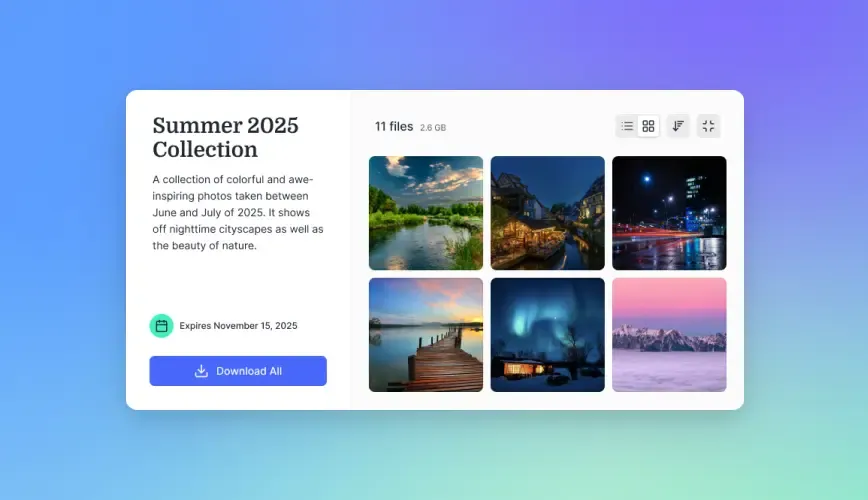


Coordinate your Canva video workflows in Fastio workspaces
Store your raw assets and generated output files in a shared workspace with automatic version history, HLS streaming, and Metadata Views. Get started with a 14-day free trial on our Starter plan at $9.99/mo, Business plan at $49.99/mo, or Enterprise plan at $199.99/mo.
How to Implement the Code: Automated Autofill and Handoff
The core automation runs on an external script or webhook that processes Clay rows. When a new lead is enriched in Clay, an HTTP request triggers a Node.js function. This script fetches the necessary assets from Fast.io, uploads them to Canva, and triggers the video creation job.
The following Node.js code shows how to implement this automation:
import fetch from 'node-fetch';
async function triggerCanvaVideoAutofill(templateId, clayRowData) {
  const apiKey = process.env.CANVA_API_KEY;
  const authHeaders = {
    'Authorization': `Bearer ${apiKey}`,
    'Content-Type': 'application/json'
  };
  const uploadRes = await fetch('https://api.canva.com/v1/asset-uploads', {
    method: 'POST',
    headers: authHeaders,
    body: JSON.stringify({
      asset_url: clayRowData.logoUrl,
      name: `${clayRowData.companyName}_logo`
    })
  });
  const { asset_id: logoAssetId } = await uploadRes.json();
  const autofillRes = await fetch('https://api.canva.com/v1/autofills', {
    method: 'POST',
    headers: authHeaders,
    body: JSON.stringify({
      brand_template_id: templateId,
      title: `Outreach Video - ${clayRowData.companyName}`,
      data: {
        first_name: { type: 'text', text: clayRowData.firstName },
        metric_text: { type: 'text', text: clayRowData.personalizedMetric },
        company_logo: { type: 'image', asset_id: logoAssetId }
      }
    })
  });
  const { job_id: jobId } = await autofillRes.json();
  return jobId;
}
After the Canva Connect API completes the design autofill job, it sends a webhook notification to your server. The script retrieves the generated video link and uses Fast.io's chunked uploads to save the finished MP4 file directly into the client workspace.
Once the file is saved in the workspace, Fast.io's collaboration features support the handoff. A human designer can review the generated asset and add feedback using comments anchored directly to video timestamps.
This collaboration is made possible by Fast.io's ownership transfer feature. A RevOps agency or automation agent can build the entire pipeline and workspaces under a temporary account. When the setup is complete, the builder transfers ownership to the client's internal administrator via a secure claim link, while retaining workspace access to maintain the pipeline.
How to Manage Scaling Limits and Deliver Video Assets
Scale-driven pipelines must be built to handle API rate limits and file size constraints. The Canva Connect API enforces a rate limit of 60 requests per minute per user. If your Clay workflow enriches more than sixty leads in a minute, the script must queue requests to prevent execution failures.
Video rendering also introduces latency. Unlike static image generation, rendering high-definition MP4 files takes time, often requiring several minutes per file depending on length. To prevent delays in team review, Fast.io supports HLS video streaming. Reviewers watch generated videos instantly inside the browser without downloading the full files, saving bandwidth and accelerating reviews.
For client delivery, GTM teams use Fast.io's branded shares. Instead of sending heavy email attachments, you generate a secure, expiring share link with per-recipient access control. You can revoke access individually or set the link to expire automatically.
Fast.io plans fit any team size, starting with the Starter plan at $9.99/mo, the Business plan at $49.99/mo, and the Enterprise plan at $199.99/mo [Fastio pricing plans]. Monthly plans start with a Business Trial of up to 14 days that requires a credit card [Fastio free trial], allowing you to test workspace collaboration, RAG search, and Metadata Views. Compare details on the Fastio pricing page.
Sources
References used to verify factual claims in this guide.
-
Videos under two minutes drive the highest audience engagement, with standard completion rates peaking at 52%.
-
Automating visual design tasks reduces production cycles by 60%, shifting design team hours from manual clip rendering to strategic campaign execution.
-
The Canva Connect API enforces a rate limit of 60 requests per minute per user.
-
Fastio workspace plans start at $9.99/mo for Starter, $49.99/mo for Business, and $199.99/mo for Enterprise. Fastio's monthly plans start with a Business Trial of up to 14 days (credit card required); annual plans have no trial.
Frequently Asked Questions
Is the Canva video editor free?
Yes, the Canva video editor is available for free, offering basic editing capabilities, templates, and media assets. However, running automated design pipelines via the Canva Connect API requires access to brand templates and developer settings, which are features of Canva Enterprise accounts.
Can you collaborate on the Canva video editor?
Yes, Canva supports real-time collaboration, allowing multiple users to edit the same video design simultaneously in the browser. For team-wide workflows, the generated videos are saved into Fast.io workspaces, where humans and agents manage versions, stream media previews, and collaborate with anchored comments.
How do I automate template editing in Canva?
You can automate template editing by connecting data tables in Clay to the Canva Connect API. By mapping database columns to text and image placeholders inside a Canva Brand Template, the design autofill API programmatically generates custom personalized designs for each record.
Related Resources

Coordinate your Canva video workflows in Fastio workspaces
Store your raw assets and generated output files in a shared workspace with automatic version history, HLS streaming, and Metadata Views. Get started with a 14-day free trial on our Starter plan at $9.99/mo, Business plan at $49.99/mo, or Enterprise plan at $199.99/mo.