How to Build an Agentic AI System from Scratch
Most agentic AI tutorials stop at the orchestration layer: pick a framework, define agents, connect an LLM. But production systems need persistent storage, file management, human handoff, and observability that frameworks alone don't provide. This guide walks through every component of the stack, from choosing your reasoning model to deploying a system that teams actually use.

What Makes an AI System Agentic
A chatbot takes a prompt and returns text. An agentic system takes a goal, breaks it into steps, decides which tools to call, tracks progress, and keeps working until the goal is met or it needs human input.
An agentic AI system is a software architecture where one or more AI agents autonomously plan actions, use tools, maintain memory across sessions, and collaborate to complete complex goals. This goes beyond wrapping an LLM in an API call. It requires a runtime environment, persistent state, and coordination logic that most chat-based applications never need.
Three properties separate agentic systems from standard LLM applications:
Autonomy. The agent decides what to do next based on observations, not rigid scripts. It can loop, retry, and revise its plan when earlier steps produce unexpected results.
Tool use. The agent calls external APIs, queries databases, reads and writes files, and triggers notifications. It acts on the world, not just describes it.
Persistence. The agent remembers past interactions, stores intermediate work products, and picks up where it left off across sessions.
Most tutorials cover autonomy and tool use well. Persistence is where the gap between a demo and a production system widens fast.
Building an agentic system from scratch follows seven steps:
- Choose your LLM and configure it for tool calling
- Add planning and task decomposition
- Implement tool integration through MCP
- Set up persistent memory across sessions
- Add workspace storage for agent artifacts
- Configure human handoff and ownership transfer
- Deploy with observability and security controls
The rest of this guide walks through each step in detail, including the infrastructure layer that most tutorials skip entirely.
Related guides
- How to Build TypeScript Agents with Mastra AI FrameworkMastra is an open-source TypeScript framework for building AI agents and workflows, offering built-in tool integration,...
- Agentic AI Architecture: Components, Patterns, and Design GuideAgentic AI architecture is the layered system design that lets autonomous agents perceive inputs, reason about goals,...
- Agentic AI Design Patterns: Proven Patterns for Building Autonomous SystemsAgentic AI design patterns are reusable architectural templates for building autonomous AI systems that can plan, use...
- Agentic AI Use Cases: 12 Real-World Applications in 2026Agentic AI has moved from experimental pilots to production deployments across financial services, healthcare, and...
- Best AI Agent Frameworks for Java in 2026Java developers building AI agents no longer need to switch to Python. Eight production-viable frameworks now offer...
- 7 AI Agent Templates That Actually Save You Time in 2026AI agent templates give you a working foundation instead of an empty file. This guide covers seven proven starter kits...
More on this subject: Agent Frameworks and Patterns (52 guides)
Five Components Every Agentic System Needs
Before choosing a framework or writing any code, understand the five layers you're building. Every agentic system, whether it uses a single agent or coordinates a fleet of twenty, needs these components working together.
Reasoning Engine
Your LLM is the core. For agentic workloads, you need a model with strong instruction following, reliable tool calling, and enough context window to hold a working plan. Claude, GPT-4, Gemini, and open-weight models like Llama all support tool calling. The model choice matters less than how you configure it: give clear goals, specify output formats, and define explicit boundaries for when to stop or escalate to a human.
Pick a model that balances cost and capability for your use case. A document summarization agent might work fine with a smaller, cheaper model. An agent that writes and debugs code across multiple files needs a frontier model with a large context window and strong reasoning.
Planning Module
Planning turns a high-level goal into executable steps. The ReAct pattern (Reasoning + Acting) is the most production-proven approach: the agent reasons about what to do, takes an action, observes the result, then reasons again. For workflows that branch based on intermediate results, tree-of-thought planning lets the agent explore multiple approaches before committing to one.
A practical planning prompt gives the agent a clear procedure:
For each goal:
1. Break it into 3-5 specific sub-tasks
2. Execute each sub-task using available tools
3. After each tool call, evaluate whether the result answers the sub-task
4. If not, adjust your approach and retry
5. Synthesize findings into a final answer
The planning module doesn't need to be a separate service. Embedding the planning logic in your system prompt works for most single-agent systems. You only need a dedicated planning component when agents hand off work to other agents.
Tool Integration
Tools give your agent hands. The Model Context Protocol (MCP), introduced by Anthropic in late 2024 and donated to the Linux Foundation's Agentic AI Foundation in December 2025, has become the standard for connecting agents to external systems. Claude, GPT-4, and Gemini all support MCP natively.
MCP exposes tools through two transports: Streamable HTTP for production deployments that need horizontal scaling behind load balancers, and Server-Sent Events (SSE) for simpler setups. An MCP server publishes a catalog of tools that agents discover at connection time, so you don't have to hardcode tool definitions into your agent's prompt.
Start with 5-10 well-defined tools. Analysis of production deployments suggests that agent performance starts to degrade around the 20-50 tool range, because the model begins confusing similar capabilities. Keep tool descriptions specific. Compare "Searches files" (too vague) with "Search a workspace for documents matching a semantic query, returning the top 5 results with relevance scores and source file paths" (tells the model exactly what it gets and when to use it).
Memory System
Agent memory splits into two layers.
Short-term memory holds the current conversation, tool call results, and intermediate reasoning. This typically lives in the LLM's context window or a session store like Redis for sub-millisecond access.
Long-term memory persists across sessions. Your main options:
- Vector databases (pgvector, Pinecone, Weaviate) for semantic search over past interactions and documents
- Structured databases (PostgreSQL, MongoDB) for factual storage: user preferences, completed tasks, learned procedures
- File storage for generated artifacts: documents, images, code, data exports
For most teams, PostgreSQL with the pgvector extension handles both structured data and vector search for workloads up to tens of millions of records. This avoids the operational overhead of running a separate vector database until you genuinely need billion-scale search.
Orchestration
Orchestration controls how agents coordinate work.
A single-agent system can use a simple loop that feeds the agent's output back as input until it signals completion. Multi-agent systems need a coordination pattern: sequential (Agent A finishes, passes results to Agent B), parallel (multiple agents tackle sub-tasks simultaneously), or hierarchical (a supervisor delegates to specialists).
Start with a single agent. Multi-agent architectures add coordination overhead that only pays off when you have genuinely different capabilities that benefit from separate context windows, tool sets, and system prompts.

How to Pick the Right Framework
The framework question comes down to how much control you need versus how quickly you want to ship.
LangGraph gives the most control. It models your agent as a directed graph where each node is a function and edges define state transitions. Built-in checkpointing lets you pause, inspect, and resume any workflow. LangGraph reached v0.4 in early 2026 with improved state persistence and human-in-the-loop support. Best for systems that need approval gates, branching logic, or deterministic state machines.
CrewAI takes a role-based approach. You define agents as team members with specific roles, goals, and backstories, then assign tasks. CrewAI handles delegation and communication between agents. It maps naturally to business workflows where agent roles mirror team functions and is faster to prototype with than graph-based frameworks.
OpenAI Agents SDK provides a thin orchestration layer with built-in tool calling, handoffs between agents, and guardrails. Simplest starting point if you're already in the OpenAI ecosystem, but couples you more tightly to their models.
Google Agent Development Kit (ADK) supports hierarchical agent trees and the A2A (Agent-to-Agent) protocol for cross-framework communication. If you need agents from different teams or vendors to discover and call each other, ADK's architecture handles that coordination.
Building from scratch with raw API calls gives complete control and no framework dependencies. A production agent built this way is typically 200-500 lines of Python for the core loop, plus your tool implementations. Here's the minimal pattern using the Anthropic SDK:
import anthropic

client = anthropic.Anthropic()
messages = []

while True:
    response = client.messages.create(
        model="claude-sonnet-4-6",
        max_tokens=4096,
        system=system_prompt.
        tools=tool_definitions.
        messages=messages.
    )

messages.append({"role": "assistant", "content": response.content})

if response.stop_reason == "end_turn":
        break

tool_results = []
    for block in response.content:
        if block.type == "tool_use":
            result = execute_tool(block.name, block.input)
            tool_results.append({
                "type": "tool_result",
                "tool_use_id": block.id.
                "content": result.
            })

messages.append({"role": "user", "content": tool_results})
This loop works with any LLM that supports tool calling. Swap the Anthropic client for the OpenAI or Google SDK and the structure stays the same. The agent reasons, calls tools, processes results, and loops until it's done.
The framework matters less than the infrastructure underneath it. Every option eventually needs the same things: durable storage for outputs, a way to hand work to humans, and visibility into what agents are doing. Those layers are where production systems succeed or fail.


Give your agents a workspace that persists
Fastio provides persistent workspaces with MCP-native access, built-in RAG once Intelligence is enabled, and ownership transfer so agents can build and humans can take over.
Persistent Storage, Workspaces, and Human Handoff
Frameworks handle reasoning and orchestration. They don't handle where agent outputs go after the conversation ends, how a human reviews and approves agent work, or how multiple agents share files without stepping on each other.
This infrastructure layer is the gap in most agentic AI tutorials, and it's where production systems either hold up or fall apart.
Where Agent Outputs Live
Agents generate artifacts: reports, code, datasets, images, extracted data. These need durable storage that survives beyond a single session. For development, a local directory works. In production, you need versioning, access control, and a way for both agents and humans to browse the same files.
An S3 bucket is cheap and reliable, but gives you no built-in search, no collaboration features, and no UI for humans reviewing agent work. Google Drive has a familiar UI but weak programmatic access controls. Purpose-built workspace platforms fill this gap.
Fastio provides MCP-native workspaces where agents store, version, and share files using a consolidated MCP toolset through Streamable HTTP or SSE transports. Enable Intelligence Mode on a workspace and uploaded files are automatically indexed for semantic search, giving your agent a built-in RAG layer without configuring a separate vector database. Agents and humans share the same workspaces and intelligence layer: humans use the web UI, agents use the API or MCP server.
Organizing Agent Work
A flat dump of files breaks down quickly. Structure outputs into workspaces by project, client, or workflow stage. This lets humans find what they need and gives other agents scoped access to relevant context.
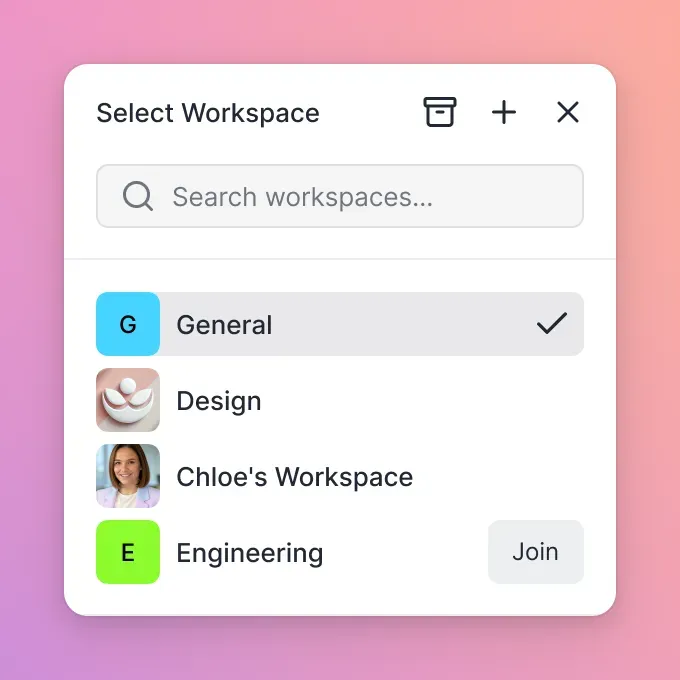
Consider a document processing pipeline. The intake agent saves raw uploads to an inbox workspace. The extraction agent reads from the inbox, processes each document using Metadata Views to pull structured fields, and writes results to an output workspace. The review agent flags items that need human attention. Each workspace has its own permissions: the intake agent can't modify processed results, and the extraction agent can't delete source files.
This workspace isolation prevents the most common multi-agent failure: one agent overwriting another agent's output. Fastio supports granular permissions at the org, workspace, folder, and file level, alongside advisory file locks and automatic version history for concurrent multi-agent access. An agent can acquire a file lock before writing, heartbeat it while working, and release it when done.
Handing Off to Humans
At some point, a human needs to own what the agent built. Ownership transfer lets an agent create a workspace, populate it with deliverables, and then hand full control to a human. The agent keeps admin access for ongoing updates while the human owns the result.
This shows up everywhere: an agent builds a research report and the client receives a branded share link. An agent prepares a proposal and the manager reviews it. An agent processes invoices and the finance team gets structured data they can query through the workspace.
The Business Trial gives teams a 14-day evaluation with usage-based credits and generous storage. You can start building with a workspace that persists and test the full agent-to-human handoff before committing to anything.
How to Deploy Agents to Production
A working prototype is not a production system. Three areas bridge the gap, and none of them involve the agent logic itself.
Observability
Build tracing into your agent from day one. Every run should log the input prompt, each reasoning step, which tools were called with what parameters, tool responses, the final output, total token usage, and wall-clock time. Without this data, debugging a misbehaving agent is guesswork.
LangSmith, Arize, and Braintrust offer agent-specific tracing dashboards. If you're building from scratch, structured logging to PostgreSQL works at smaller scale. The important thing is capturing the full chain of reasoning and actions, not just the final output.
Pay attention to cost tracking. A misbehaving agent that enters a retry loop can burn through thousands of API tokens in minutes. Set budget limits per agent run and alert when usage exceeds expected bounds. Track cost per completed task over time to catch efficiency regressions before they affect your budget.
Testing and Evaluation
Agent testing differs from unit testing because the same input can produce different valid outputs. Two approaches work in practice:
LLM-based evaluation uses a separate model to judge agent outputs against defined rubrics. Questions like "Did the agent use the correct data source?" and "Is the output factually complete?" get scored automatically. Run these evaluations on a test suite and track scores across deployments.
Human evaluation remains necessary for high-stakes workflows. Build review checkpoints into your pipeline so a person can approve, redirect, or reject agent work at key decision points. Treat these checkpoints as part of the system, not a workaround for when the agent fails.
Security and Authorization
Traditional permission models break with agents because the agent decides at runtime which tools to call and what data to access. Production systems need just-in-time authorization that grants permissions per action, not per session. Set clear scope limits on which tools an agent can invoke and what data it can reach. Require human approval gates for irreversible operations: deleting files, sending communications, processing payments.
Log every action to an audit trail. Fastio tracks every file operation, permission change, and workspace action, giving teams full visibility into what agents did and when. This audit trail is as important for debugging as it is for compliance.
Start Small
The fast path to production: one agent, five well-defined tools, and one scoped use case. Get that working end-to-end, with storage, handoff, and monitoring in place, before adding more agents or expanding scope. A focused agent that reliably completes a specific task is worth more than an ambitious multi-agent system that fails unpredictably.
Sources
References used to verify factual claims in this guide.
-
Agent performance starts to degrade around the 20-50 tool range
-
MCP donated to the Linux Foundation's Agentic AI Foundation in December 2025
-
Production-ready agent systems take most teams 3-8 weeks for a focused use case
Frequently Asked Questions
How do you build an agentic AI system?
Choose an LLM with strong tool-calling support, such as Claude, GPT-4, or Gemini. Build a reasoning loop that takes a goal, plans steps, calls tools, and evaluates results. Add persistent memory using PostgreSQL with pgvector for both structured data and semantic search. Connect external systems through the Model Context Protocol (MCP) for standardized tool integration. Set up workspace storage for agent artifacts and configure human handoff so a person can review and take ownership of the agent's work.
What components does an agentic AI system need?
Five core components: a reasoning engine (your LLM), a planning module that breaks goals into executable steps, tool integration for interacting with external systems, a memory system split into short-term session state and long-term cross-session storage, and an orchestration layer that coordinates agent behavior. Production systems also need persistent file storage, human handoff mechanisms, and observability tooling.
What is the best framework for building agentic AI?
It depends on your requirements. LangGraph offers the most control with graph-based workflows and state checkpointing. CrewAI is faster to prototype for role-based multi-agent setups. The OpenAI Agents SDK is simplest if you're already using OpenAI models. Google ADK supports hierarchical agents and cross-framework communication through the A2A protocol. For well-defined workflows, building from scratch with raw API calls avoids framework overhead entirely.
How long does it take to build an agentic AI system?
A minimal proof-of-concept using a framework like LangGraph or CrewAI can be running in one to two days. A production system with proper tool integration, persistent memory, human handoff, security controls, and monitoring takes most teams three to eight weeks for a focused use case. The infrastructure layer, including storage, permissions, and observability, typically takes longer to build than the agent logic itself.
What is the difference between an AI agent and an agentic AI system?
An AI agent is a single autonomous unit that reasons and acts. An agentic AI system is the complete architecture surrounding one or more agents: the storage layer, tool integrations, memory infrastructure, orchestration logic, security controls, and human handoff mechanisms. The agent is the worker. The system is the entire workplace it operates in.
Do I need a vector database for agent memory?
Not necessarily. PostgreSQL with the pgvector extension handles both structured queries and vector similarity search for workloads up to tens of millions of records. This covers most production agent systems without the operational complexity of a separate vector database. Dedicated solutions like Pinecone or Weaviate become worth the overhead at billion-scale collections or when you need specialized features like hybrid search with real-time indexing.
Related Resources

Give your agents a workspace that persists
Fastio provides persistent workspaces with MCP-native access, built-in RAG once Intelligence is enabled, and ownership transfer so agents can build and humans can take over.