12 Best Ways to Make Money with AI in 2026
Global AI spending hit $2.59 trillion in 2026, up 47% year-over-year according to Gartner. That growth is creating real income opportunities for individuals, not just large companies. This guide covers 12 practical ways to earn money with AI, organized by skill level, with estimated income ranges, startup costs, and what you actually need to get started.


What Makes AI Income Realistic in 2026
Gartner forecasts worldwide AI spending will reach $2.59 trillion in 2026, a 47% increase from the prior year. But most of that money flows through enterprise budgets, not consumer products. The practical question is: how do individuals capture a share of that spending?
The answer splits into three tiers. At the entry level, you use AI tools to deliver existing services faster and charge the same rates, pocketing the time savings. In the middle tier, you build AI-powered products or offer AI implementation consulting. At the top, you develop custom AI systems or train specialized models. Upwork reports that AI-related freelance skills grew 109% year-over-year in 2025, and freelancers working on AI projects earn 44% more per hour than those on non-AI projects.
The list below covers all three tiers. Each method includes an estimated monthly income range, startup costs, and whether you need technical skills. The income figures come from freelance platform data, agency surveys, and creator earnings reports, not projections.
Related guides
- 7 Best Streaming Data Platforms for AI Pipelines in 2026Streaming platforms let AI systems handle data feeds in real time, from sensor telemetry to user events. Market...
- 8 Best AI Agent Cost Optimization Tools in 2026AI agent costs add up fast once you move past prototyping. Tool calls, retries, multi-step reasoning, and storage...
- Global Work AI Review 2026: What Job Seekers Should Know Before PayingAI auto-apply tools promise to compress a four-month job search into six weeks, but not all platforms deliver equally....
- Best AI Agents in 2026: 10 Platforms That Actually Ship WorkGartner predicts 33% of enterprise software will include agentic AI by 2028, up from under 1% in 2024. That pace leaves...
- 13 Best AI Tools for Business in 2026, Ranked by FunctionSixty-five percent of organizations now use generative AI in at least one business function, according to McKinsey's...
- Best Headless Browsers for AI Agents: Top Tools (2026)Finding the best headless browsers for AI agents matters for reliable automation. Old scrapers break on dynamic sites....
More on this subject: AI Tool Directories and Comparisons (251 guides)
Non-Technical Methods
These methods require no programming skills. You need a laptop, some AI tool subscriptions, and the willingness to learn prompt engineering and basic workflow design.
The common thread across these methods is speed. AI tools compress delivery timelines, letting you take on more work at the same quality level. A freelance writer who produces two articles per week can produce five. A designer who delivers three concepts per project can deliver ten. The income gain comes from volume and faster turnaround, not from charging more per unit.
1. AI-Assisted Freelance Writing and Copywriting
Use AI writing tools like Claude, ChatGPT, or Jasper to produce blog posts, ad copy, email sequences, and website content at two to three times normal speed. You aren't selling AI-generated text. You're using AI as a research assistant and first-draft generator, then applying editorial judgment, industry knowledge, and brand voice that the AI can't replicate on its own.
Freelance writers who incorporate AI tools into their workflow report completing projects 40% to 60% faster without reducing quality. On platforms like Upwork and Fiverr, experienced AI-assisted copywriters charge $50 to $150 per hour, compared to $30 to $80 for writers using traditional methods.
The key is positioning. "I write blog posts" pays less than "I produce SEO content briefs, drafts, and optimized copy using AI-augmented workflows." Clients pay for output quality and speed, not for how many hours you sit at your desk.
Estimated monthly income: $2,000 to $8,000
Startup cost: $20 to $100/month in AI subscriptions
Skills needed: Strong writing and editing, SEO basics, prompt engineering
2. AI-Generated Visual Content and Design
AI image generators like Midjourney, DALL-E 3, and Stable Diffusion have created a new category of design work. You can sell custom illustrations, stock photos, social media templates, print-on-demand products, and brand identity packages without traditional design training.
The most profitable niche isn't generic stock imagery. It's custom visual content for specific industries: real estate listing graphics, restaurant menu designs, product mockups for e-commerce, and social media templates for coaches and consultants. These clients need consistent, branded visuals on a recurring basis, which means monthly retainers rather than one-off gigs.
Print-on-demand shops using AI-generated designs on platforms like Redbubble, Etsy, and Merch by Amazon report $500 to $3,000 per month after building a catalog of 100 or more designs. Custom design services command higher rates: $200 to $2,000 per project depending on complexity.
Estimated monthly income: $1,000 to $5,000
Startup cost: $30 to $100/month for image generation tools
Skills needed: Visual composition, brand design basics, prompt engineering for image generation
3. AI Content for YouTube and Social Media
Faceless YouTube channels, AI-narrated podcasts, and automated social media accounts represent a growing income category. Tools like ElevenLabs for voice synthesis, Runway for video generation, and various script-writing assistants make it possible to produce polished content without appearing on camera or recording your own voice.
The income ceiling is high but the success rate is low. According to Frameloop's 2026 analysis, only about 3% of faceless YouTube channels reach monetization thresholds. The channels that succeed typically focus on high-RPM niches like personal finance ($10 to $15 RPM), education ($9 to $14 RPM), and true crime ($8 to $13 RPM).
A realistic timeline: 6 to 12 months to reach YouTube monetization (1,000 subscribers and 4,000 watch hours), with initial payouts of $50 to $500 per month. Channels that survive to month 18 typically reach $500 to $5,000 per month. The mistake most people make is treating this as passive income. Successful channels require consistent publishing schedules, audience research, and continuous optimization.
Estimated monthly income: $500 to $5,000 (after 6 to 12 months)
Startup cost: $50 to $300/month for AI tools, $0 to $5,000 for initial content library
Skills needed: Content strategy, basic video editing, audience research
Semi-Technical Methods
These methods benefit from some technical knowledge, but you don't need to be a software engineer. Comfort with no-code tools, basic API usage, and workflow automation platforms like Make.com or n8n is enough.
The barrier here is understanding how systems connect. You need to know what an API key is, how webhooks work, and how to map a business process into a sequence of automated steps. If you've ever connected two apps through Zapier or built a formula in a spreadsheet, you have the foundation.
4. AI Automation Consulting
Businesses know they should be using AI but don't know where to start. AI automation consultants bridge that gap by identifying repetitive tasks, building automated workflows, and training teams to use AI tools effectively.
Common projects include connecting CRMs to email sequences, building AI-powered customer support chatbots, automating invoice processing, and creating internal knowledge bases that answer employee questions. Simple workflow automations (connecting a form to a CRM to an email sequence) sell for $500 to $2,000 per project. Mid-range projects like custom chatbots integrated with a product database command $5,000 to $15,000.
The recurring revenue model is where the real money is. Monthly retainers for ongoing maintenance, optimization, and support run $1,000 to $5,000 per client. Five clients on retainer generates $5,000 to $25,000 per month in predictable revenue. Startup costs are minimal: an LLC filing ($50 to $500), automation platform subscriptions ($50 to $300/month), and marketing spend to land your first clients.
Estimated monthly income: $3,000 to $15,000
Startup cost: $200 to $2,000 initial, $100 to $500/month ongoing
Skills needed: No-code automation tools, business process analysis, client communication
5. Prompt Engineering Services
Prompt engineering has matured from a novelty skill into a real consulting specialty. Businesses hire prompt engineers to build internal prompt libraries, optimize AI workflows, design system prompts for customer-facing chatbots, and create evaluation frameworks for AI output quality.
Rates vary widely by context. On freelance platforms, prompt engineering gigs pay $40 to $150 per hour. Independent consultants working directly with mid-market companies charge $100 to $300 per hour. Senior specialists working on complex agent systems, safety reviews, or regulated-industry applications command $200 to $400 per hour, according to 2026 rate surveys.
The skill gap is real: companies are willing to pay well because the difference between a mediocre prompt and a well-engineered one can mean 10x better output quality. But the window for "generic prompt engineer" is closing. Specialists who combine prompt engineering with domain expertise (healthcare, legal, financial services) command the highest rates.
Estimated monthly income: $3,000 to $15,000
Startup cost: $20 to $50/month for AI tool access
Skills needed: Deep understanding of LLM behavior, domain expertise in a target industry, technical writing
6. AI-Powered Data Analysis and Reporting
Every business generates data. Most don't have the staff to analyze it properly. AI tools like Claude, ChatGPT with Code Interpreter, and specialized platforms can process spreadsheets, CRM exports, financial records, and survey results into actionable reports in minutes rather than days.
Freelance data analysts using AI tools charge $75 to $200 per hour for work that previously required dedicated BI teams. Common projects include sales pipeline analysis, customer churn reports, marketing attribution modeling, and financial forecasting. The deliverable is usually a slide deck or dashboard with clear recommendations, not raw data.
The advantage of AI-augmented analysis is speed. A project that used to take a data analyst a full week can often be completed in one to two days when you use AI to handle data cleaning, pattern recognition, and chart generation. That speed lets you take on more clients and charge competitive rates while maintaining healthy margins.
Estimated monthly income: $3,000 to $12,000
Startup cost: $20 to $100/month for AI and visualization tools
Skills needed: Data literacy, spreadsheet proficiency, business communication, basic statistics
7. Building and Selling AI Workflows and Templates
Platforms like Gumroad, Notion Marketplace, and PromptBase let you package AI workflows, prompt libraries, and automation templates into digital products. A well-designed ChatGPT prompt template for real estate agents, a set of Midjourney prompts for product photography, or a complete n8n workflow for lead qualification can sell hundreds of copies at $10 to $100 each.
The economics favor volume over high prices. A $29 template that sells 50 copies per month generates $1,450 with zero marginal cost after creation. Build a catalog of 10 to 20 templates across related niches and the income compounds. Successful template sellers report $1,000 to $5,000 per month from digital products alone.
The key is solving a specific, painful problem for a defined audience. "100 ChatGPT prompts" sells poorly. "AI-powered listing description generator for Airbnb hosts" sells well because the buyer immediately understands the value.
Estimated monthly income: $500 to $5,000
Startup cost: $0 to $50 for marketplace listings
Skills needed: Prompt engineering, understanding of target audience pain points, basic product marketing


Build and deliver AI projects from one workspace
Persistent workspaces with built-in Intelligence Mode for RAG, remote MCP server access for agents, and branded sharing for client delivery.
Technical Methods
These methods require programming skills, familiarity with APIs, and some understanding of how AI models work. The income ceiling is higher, but so is the learning curve.
The demand signal is clear: companies are hiring AI engineers faster than universities can train them. That talent gap creates pricing power for freelancers and contractors who can deliver working AI systems, not just prototypes or slide decks.

8. Custom AI Chatbot and Agent Development
Building custom AI chatbots, agents, and RAG (retrieval-augmented generation) systems for businesses is one of the highest-paying AI skills in 2026. Projects range from simple customer support bots ($2,000 to $5,000) to sophisticated multi-agent systems with document retrieval, workflow automation, and human-in-the-loop approval ($15,000 to $50,000 or more).
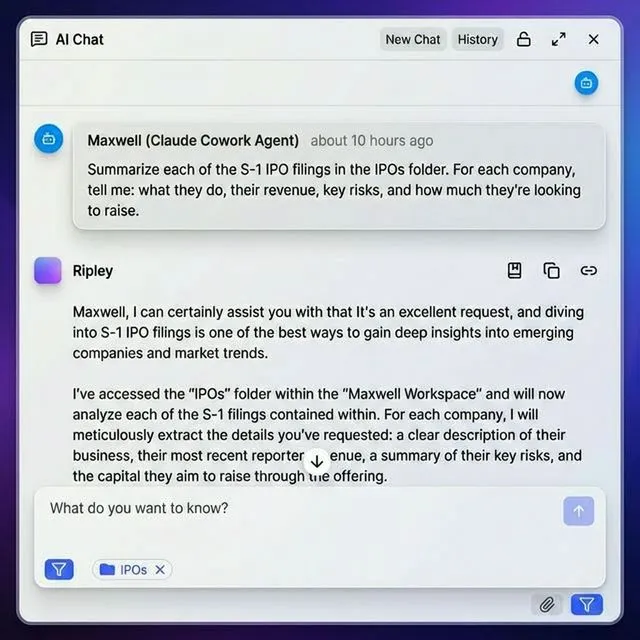
The technical stack typically involves an LLM provider (OpenAI, Anthropic, or open-source models), a vector database for document retrieval, and a platform for file storage, permissions, and collaboration. For the storage and collaboration layer, platforms like Fast.io offer workspaces with built-in Intelligence Mode that auto-indexes files for semantic search and RAG, so you don't need to set up a separate vector database. The MCP server gives agents direct access to workspace files, AI queries, and sharing workflows through a standardized interface.
Retainer work is common in this space. After building the initial system, clients pay $500 to $2,500 per month for monitoring, fine-tuning, and expanding the bot's capabilities. Five retainer clients at the midpoint puts you at $7,500 per month in recurring revenue on top of new project fees.
Estimated monthly income: $5,000 to $25,000
Startup cost: $50 to $200/month for API access, hosting, and development tools
Skills needed: Python or JavaScript, API integration, LLM APIs, basic infrastructure management
9. AI SaaS Products
Solo founders and small teams are building AI-powered SaaS tools that solve narrow problems well. Examples include AI writing assistants for specific industries, automated social media schedulers with AI-generated captions, AI-powered resume screeners for recruiters, and document processing tools for legal or financial firms.
The timeline is long compared to services: 3 to 6 months for an MVP, 12 to 24 months to reach meaningful revenue. But the upside is significant. Successful AI micro-SaaS products built by solo founders reach $5,000 to $50,000 per month at scale, with a handful breaking past $100,000 per month.
One pattern that works well for AI SaaS: build a tool that automates something you already do as a service. If you're an AI automation consultant building the same email-to-CRM workflow for every client, productize it. You already understand the market, the pain points, and the pricing.
Estimated monthly income: $0 to $10,000 (months 1 to 12), $5,000 to $50,000 (at scale)
Startup cost: $100 to $500/month for hosting, APIs, and infrastructure
Skills needed: Full-stack development, product design, marketing, LLM API integration
10. Fine-Tuning and Training Custom Models
Companies with specialized data, such as medical records, legal documents, or proprietary research, need custom models fine-tuned for their specific use cases. This work pays well because it requires both ML engineering skills and domain understanding.
Typical projects include fine-tuning open-source models on company-specific data, building classification systems for document processing, training image recognition models for quality control in manufacturing, and creating specialized NLP pipelines for legal or medical text. Project fees range from $5,000 for straightforward fine-tuning jobs to $50,000 or more for complex, multi-stage model development.
The barrier to entry is genuine technical expertise. You need hands-on experience with frameworks like PyTorch or Hugging Face Transformers, understanding of training infrastructure (GPU provisioning, distributed training), and enough domain knowledge to evaluate whether the model is actually producing useful outputs. This isn't something you can fake with prompt engineering.
Estimated monthly income: $5,000 to $30,000
Startup cost: $200 to $1,000/month for compute resources
Skills needed: Machine learning engineering, Python, PyTorch or TensorFlow, domain-specific knowledge
Scaling Methods
These approaches work best once you have some traction with one of the methods above. They compound existing skills and client relationships.
The shift from solo practitioner to scaled operation follows a predictable arc. You start by doing all the work yourself, then systematize what repeats, then hire others to handle delivery while you focus on sales and strategy. Each step roughly doubles your income ceiling while reducing the hours you spend on production.
11. AI Education and Course Creation
Once you develop real expertise in any AI income method, you can teach it. Online courses, cohort-based programs, workshops, and coaching packages all convert practitioner knowledge into scalable income.
The market is crowded with low-quality AI courses recycling the same surface-level content. The courses that command premium prices ($200 to $2,000) are taught by people with demonstrable results: documented client projects, published case studies, active portfolios, or verifiable income from the methods they teach. If you can show screenshots of your Upwork earnings, your SaaS dashboard, or your client testimonials, that proof is more valuable than any certification.
Course platforms like Teachable, Podia, and Maven handle the infrastructure. Your job is creating the curriculum and marketing it. Successful AI course creators report $3,000 to $20,000 per month, with higher-ticket cohort programs generating $10,000 to $50,000 per launch.
Estimated monthly income: $3,000 to $20,000
Startup cost: $50 to $200/month for course platform and marketing tools
Skills needed: Teaching ability, documented expertise in an AI income method, content marketing
12. AI Automation Agency
An AI automation agency is the scaled version of AI automation consulting. Instead of doing all the work yourself, you build a team (employees or contractors), develop repeatable service packages, and focus on sales and client management.
Agencies that specialize typically outperform generalists. An AI automation agency focused exclusively on law firms, real estate brokerages, or e-commerce companies can develop deep domain expertise, build reusable frameworks, and charge premium rates. Service packages that sell in 2026 typically run $1,500 to $5,000 per month as recurring retainers.
The path from solo consultant to agency usually follows a pattern: land your first 5 to 10 clients doing the work yourself, hire contractors to handle delivery, systematize your sales and onboarding processes, and then scale marketing spend. Agencies that start lean and specialize typically reach $10,000 to $50,000 in monthly revenue within 6 to 12 months. The startup costs are higher than solo consulting ($2,000 to $15,000 depending on your launch tier), but so is the ceiling.
Estimated monthly income: $10,000 to $50,000
Startup cost: $2,000 to $15,000 initial setup
Skills needed: Sales, project management, hiring, business operations, AI workflow design
How to Pick Your First AI Income Method
The biggest risk with AI income opportunities is spending months consuming content about making money with AI instead of actually doing the work. Here's a practical path forward.
Pick one method from this list based on two criteria: your existing skills and the time you have available. If you write well, start with AI-assisted copywriting. If you're comfortable with no-code tools, try AI automation consulting. If you code, build a chatbot for a local business. The method matters less than starting.
Invest your first month in learning one AI tool deeply rather than sampling five of them. A copywriter who masters Claude's writing workflows will outperform someone who dabbles in ChatGPT, Jasper, Copy.ai, and Gemini without building real proficiency in any of them.
Set a 90-day income target. Beginners applying AI to freelance services should aim for $500 to $2,000 per month within that window. If you haven't earned anything by day 90, evaluate whether you're building skills or just consuming tutorials. The gap between "learning about AI" and "earning with AI" is closed by shipping work to real clients, not by watching another YouTube video about passive income.
For technical methods that involve building AI agents or RAG systems, you'll need reliable file storage and collaboration tools from the start. Fastio offers a 14-day Business Trial and Starter plans from $9.99 per month ($99 per year), providing generous storage and monthly credits to prototype and deliver client projects. The built-in Intelligence Mode handles document indexing for RAG once enabled, without requiring a separate vector database setup.
Sources
References used to verify factual claims in this guide.
-
Worldwide AI spending forecast to reach $2.59 trillion in 2026, a 47% increase year-over-year
-
AI-related freelance skills on Upwork grew 109% year-over-year in 2025 Freelancers working on AI projects earn 44% more per hour than those on non-AI projects
-
Only about 3% of faceless YouTube channels reach monetization thresholds
-
Top prompt engineering specialists command $200 to $400 per hour in 2026
Frequently Asked Questions
What is the easiest way to make money with AI?
AI-assisted freelance writing is the lowest barrier to entry. If you can already write, AI tools like Claude or ChatGPT accelerate your research and drafting by 40% to 60%. You can start earning within weeks by offering faster turnaround times at competitive rates on freelance platforms. No coding required, and startup costs are under $100 per month.
Can you make money with AI without coding?
Yes. Methods 1 through 7 on this list require no programming. AI-assisted writing, visual content creation, automation consulting using no-code tools, prompt engineering, and digital product sales all generate real income without writing a line of code. The non-technical ceiling tops out around $15,000 per month for experienced practitioners.
How much can you earn with AI side hustles?
Side income from AI ranges from $500 to $5,000 per month depending on the method and time invested. AI-assisted writing or selling prompt templates might earn $500 to $2,000 per month with 10 to 15 hours per week. AI automation consulting or chatbot development can scale to $5,000 or more monthly, but at that point it's closer to a part-time business than a side hustle.
What AI skills are most profitable?
AI chatbot and agent development commands the highest rates, with experienced developers charging $100 to $300 per hour. Custom model fine-tuning and AI SaaS development have the highest income ceilings but require significant technical skills. For non-technical paths, AI automation consulting offers the best combination of high rates ($100 to $300 per hour) and low barriers to entry.
How long does it take to start earning money with AI?
For service-based methods like AI writing or consulting, most people land their first paid project within 30 to 60 days of starting. For product-based methods like SaaS or YouTube channels, expect 6 to 12 months before generating meaningful revenue. The timeline depends on your existing skills, network, and how many hours per week you invest.
Do you need expensive AI tools to get started?
No. Most AI tools offer free tiers or low-cost plans under $50 per month. ChatGPT and Claude both have free tiers that are sufficient for learning and early client work. For AI agent development, platforms like Fast.io offer a 14-day Business Trial and affordable starter plans with built-in AI capabilities. Your total tool costs for the first three months should stay under $300.
Related Resources

Build and deliver AI projects from one workspace
Persistent workspaces with built-in Intelligence Mode for RAG, remote MCP server access for agents, and branded sharing for client delivery.