13 Best AI Tools for Business in 2026, Ranked by Function
Sixty-five percent of organizations now use generative AI in at least one business function, according to McKinsey's 2024 global survey. That number keeps climbing, but most teams are still guessing which tools deserve budget. This guide ranks 13 AI tools by the business function they serve, with pricing and honest trade-offs for each.


How We Evaluated These Tools
We scored each tool on five criteria: how well it handles its claimed use case, integration depth with other business software, pricing transparency, time to first useful output, and whether the vendor actually targets business users or just added "for Business" to a consumer product page.
Most AI tool roundups lump ChatGPT and Zapier into the same ranked list, which is like comparing a spreadsheet to a database. They solve different problems for different teams. We organized this guide by business function so you can skip to what matters and build a stack that fits your workflow.
Here is the full list:
- ChatGPT - General-purpose AI with the widest integration ecosystem
- Claude - Long-document analysis and natural writing quality
- Google Gemini - AI native to Google Workspace
- Microsoft Copilot - AI embedded in Microsoft 365
- HubSpot AI - CRM-native sales and marketing intelligence
- Jasper - Marketing content at scale with brand voice control
- Gong - Sales call analytics and deal intelligence
- Zapier - No-code workflow automation across 8,000+ apps
- Ramp - AI-powered expense management and spend intelligence
- Lindy - Custom AI agents for business operations
- Notion AI - Intelligence layer for team documentation
- Fastio - AI-indexed file workspaces with agent access
- Fireflies.ai - Meeting transcription and action item tracking
Every tool listed here has a free tier or free trial. We verified pricing and features through vendor sites as of May 2026.
Related guides
- 8 Best AI Agent Cost Optimization Tools in 2026AI agent costs add up fast once you move past prototyping. Tool calls, retries, multi-step reasoning, and storage...
- 10 Best AI Automation Platforms for Business in 2026AI automation platforms combine artificial intelligence with workflow automation, letting companies automate repetitive...
- 7 Best Streaming Data Platforms for AI Pipelines in 2026Streaming platforms let AI systems handle data feeds in real time, from sensor telemetry to user events. Market...
- Global Work AI Review 2026: What Job Seekers Should Know Before PayingAI auto-apply tools promise to compress a four-month job search into six weeks, but not all platforms deliver equally....
- Best AI Agents in 2026: 10 Platforms That Actually Ship WorkGartner predicts 33% of enterprise software will include agentic AI by 2028, up from under 1% in 2024. That pace leaves...
- Best AI Comic Generators in 2026: 8 Tools Tested and RankedThe AI-generated comic book market hit $2.01 billion in 2026, up 32% year over year, largely because character...
More on this subject: AI Tool Directories and Comparisons (231 guides)
General-Purpose AI Platforms
These are the four platforms most businesses start with. Each handles writing, analysis, coding, and research, but they differ in where they are strongest and how they connect to your existing tools. The right choice depends less on benchmark scores and more on which productivity suite your company already runs. A Google Workspace shop gets more out of Gemini on day one than ChatGPT, even if ChatGPT scores higher on general evaluations, because the data your AI needs is already inside Gmail and Drive.
1. ChatGPT
OpenAI's ChatGPT remains the most widely adopted AI tool in business. It handles content drafting, data analysis, code generation, and research across virtually any domain. The GPT-4o model processes text, images, and files, and custom GPTs let teams build reusable workflows without writing code.
Key strengths:
- Largest plugin and integration ecosystem of any AI platform
- Custom GPTs let non-technical users build specialized assistants
- Team and Enterprise tiers include admin controls and data privacy guarantees
Limitations:
- Output quality varies between free and paid tiers
- Enterprise pricing requires annual commitment and a sales conversation
Best for: Teams that need one tool for the widest possible range of tasks.
Pricing: Free tier available. Plus: $20/month. Team: $25/user/month. Enterprise: custom pricing.
2. Claude
Anthropic's Claude excels at long-document analysis, nuanced writing, and following complex multi-step instructions. It consistently produces more natural-sounding text than competitors, which makes it a strong fit for businesses that write contracts, proposals, or detailed reports.
Key strengths:
- Handles documents up to 200K tokens, practical for contracts and research papers
- Extended thinking mode breaks down complex analysis step by step
- Writing quality reads more naturally than most alternatives
Limitations:
- Smaller integration ecosystem compared to ChatGPT
- No native image generation
Best for: Consulting firms, legal teams, and content-heavy businesses that prioritize writing quality.
Pricing: Free tier available. Pro: $20/month. Max: $100/month. Team: $25/user/month.
3. Google Gemini
Gemini's biggest advantage is native integration with Google Workspace. If your company runs on Gmail, Docs, Sheets, and Drive, Gemini works inside those apps without switching context. It also offers real-time web grounding through Google Search and competitive image generation.
Key strengths:
- Native integration with Gmail, Docs, Sheets, and Drive
- Real-time web grounding pulls current information into responses
- Strong coding and image generation in the same interface
Limitations:
- Much less useful if your organization does not use Google Workspace
- Enterprise AI add-on pricing adds to existing Google Workspace costs
Best for: Organizations already running Google Workspace.
Pricing: Free tier available. Google One AI Premium: $19.99/month. Workspace AI add-on: $24/user/month.
4. Microsoft Copilot
Copilot embeds AI directly into Word, Excel, PowerPoint, Outlook, and Teams. It summarizes email threads, builds Excel formulas from plain English, generates presentations from documents, and drafts meeting follow-ups. The deep integration with Microsoft 365 is the entire value proposition.
Key strengths:
- Works inside the Microsoft apps your team already uses daily
- Excel and PowerPoint automation saves significant time on data-heavy tasks
- Enterprise data protection and compliance controls are built in
Limitations:
- At $30/user/month on top of Microsoft 365, it is the most expensive option here
- The value drops quickly if your team does not live in Microsoft apps
Best for: Companies with 10+ employees already paying for Microsoft 365 Business.
Pricing: $30/user/month add-on (requires Microsoft 365 subscription).
Best AI Tools for Marketing and Sales Teams
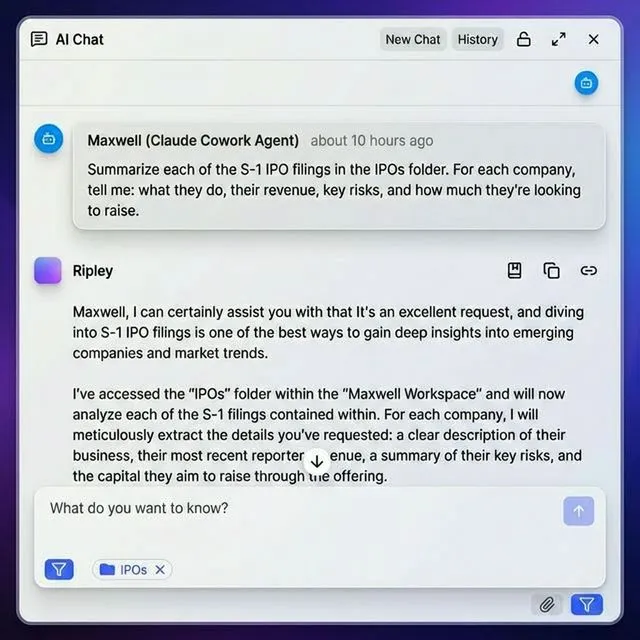
Marketing and sales are the two functions where AI adoption runs highest. McKinsey's survey data shows these functions lead in both adoption rate and measurable business value. The tools below go beyond general-purpose AI to handle domain-specific work like lead scoring, brand voice enforcement, and deal intelligence. The key difference from using ChatGPT for marketing is context: these tools connect directly to your CRM data, your brand guidelines, and your pipeline history, so outputs are grounded in what your business actually does rather than generic best practices.
5. HubSpot AI
HubSpot has embedded AI across its entire CRM platform. The assistant drafts emails, scores leads, recommends next actions for sales reps, and generates reports from natural language queries. What separates it from adding ChatGPT to your sales process is context: HubSpot AI knows your pipeline, your contacts, and your deal history.
Key strengths:
- AI is built into the CRM, so it works with your actual pipeline data
- Predictive lead scoring helps reps focus on deals most likely to close
- Content generation for emails and blog posts uses your brand voice settings
Limitations:
- Full AI features require Professional tiers ($800+/month for Marketing Hub)
- Platform breadth means a steeper learning curve for new teams
Best for: Sales and marketing teams that want AI working directly inside their CRM.
Pricing: Free CRM with basic AI features. Professional plans start at $800/month.
6. Jasper
Jasper focuses on marketing content at scale. It generates blog posts, social media copy, ad creative, and product descriptions while maintaining consistent brand voice across channels. The platform includes SEO optimization, campaign workflows, and team collaboration features that general-purpose AI tools do not offer.
Key strengths:
- Brand voice training produces consistent tone across all content types
- Campaign builder generates coordinated content across channels from a single brief
- Built-in SEO scoring helps content rank without switching to a separate tool
Limitations:
- Starting at $39/month per seat, costs add up for larger marketing teams
- Less useful outside marketing compared to general-purpose alternatives
Best for: Marketing teams producing high volumes of branded content across channels.
Pricing: Creator: $39/month. Pro: $59/month. Business: custom pricing.
7. Gong
Gong records and analyzes sales calls, then surfaces patterns that help reps close more deals. It identifies which talking points correlate with won deals, flags risk signals in active opportunities, and coaches reps based on what top performers actually do. The insights come from your own call data, not generic sales advice.
Key strengths:
- Call analysis identifies winning behaviors specific to your sales process
- Deal intelligence flags at-risk opportunities before they slip
- Coaching features help managers scale top performers' techniques across the team
Limitations:
- Pricing typically starts around $100/user/month with annual contracts
- Requires consistent call recording adoption across the sales team to generate useful data
Best for: B2B sales teams with 5+ reps running discovery calls, demos, or negotiations.
Pricing: Custom pricing, typically $100+/user/month with annual commitment.
Operations, Finance, and Automation
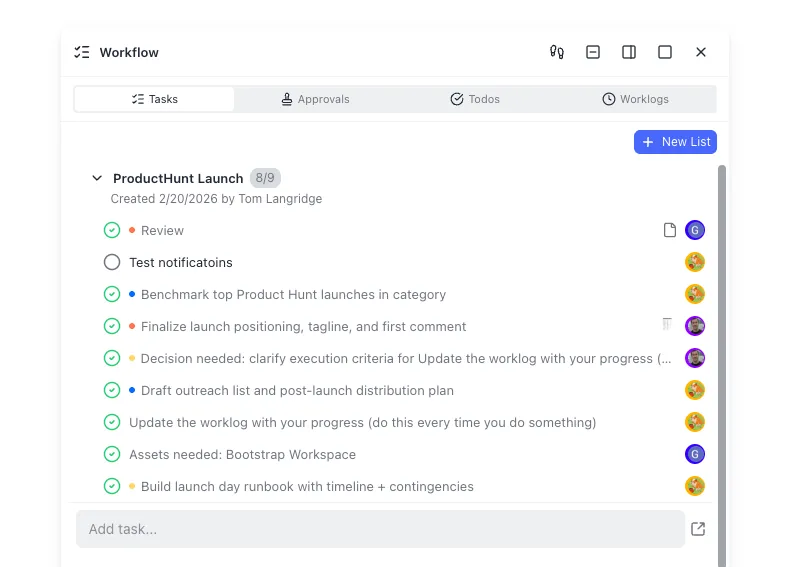
These tools handle the work that happens after a deal closes or alongside daily operations: processing invoices, connecting systems, managing spend, and routing decisions. AI in operations tends to deliver the fastest ROI because it replaces high-volume, repetitive tasks that previously required manual effort every single day. A finance team that spends three hours per week categorizing expenses gets that time back on day one with Ramp. An operations lead manually copying data between Salesforce and Slack can hand that to Zapier and never touch it again.
8. Zapier
Zapier connects over 8,000 apps and lets you build automated workflows without code. The AI features go beyond simple triggers: Zapier can parse incoming emails, extract data from documents, make routing decisions based on content, and hand work off to the right person or system automatically.
Key strengths:
- 8,000+ app integrations cover almost any SaaS tool a business uses
- AI-powered data extraction handles unstructured inputs like emails and PDFs
- No-code builder means operations teams build automations without engineering help
Limitations:
- Complex multi-step workflows get expensive at higher task volumes
- Debugging failed automations requires understanding data flow between steps
Best for: Operations teams connecting their existing tool stack without custom code.
Pricing: Free tier (100 tasks/month). Starter: $19.99/month. Professional: $49/month. Team: $69/month.
9. Ramp
Ramp combines corporate cards with AI-driven expense management. It automatically categorizes transactions, flags duplicate charges, identifies subscription waste, and surfaces savings opportunities across company spend. Rather than just tracking where money went, Ramp actively finds ways to reduce costs.
Key strengths:
- Automatic categorization and receipt matching eliminates manual expense reports
- Subscription tracking identifies unused or duplicate SaaS licenses
- Spend intelligence surfaces negotiation opportunities with vendors
Limitations:
- US-only availability limits options for international teams
- Some advanced analytics features require higher-tier plans
Best for: Finance teams at companies with significant annual spend looking to cut costs automatically.
Pricing: Free for basic expense management. Plus and Enterprise tiers available.
10. Lindy
Lindy is an AI agent platform where you build custom automated assistants. Each Lindy handles a specific task: sending follow-up emails, triaging support tickets, scheduling meetings, or updating CRM records. Unlike Zapier's rule-based approach, Lindies reason about context and intent before acting, which makes them better at handling ambiguous inputs.
Key strengths:
- AI agents that reason about tasks rather than following static if/then rules
- Pre-built templates for common workflows like email triage and lead follow-up
- Agents can trigger other agents, creating multi-step automated chains
Limitations:
- Newer platform with a smaller integration library than Zapier
- Agent behavior can be unpredictable on complex edge cases
Best for: Teams that want AI automation that goes beyond rule-based workflow logic.
Pricing: Free tier available. Pro: $49.99/month.


Give your AI stack a workspace it can search
Fastio provides cloud workspaces with Intelligence enabled for automatic file indexing and remote MCP access for AI agents, backed by a 14-day Business Trial.
Collaboration and Knowledge Management
The last gap in most AI stacks is where work product actually lives. General-purpose AI generates answers, but collaboration tools determine whether those answers become findable, shareable, and useful to the rest of the team. A marketing director who gets a great competitive analysis from Claude still needs somewhere to store it so the sales team can find it next quarter. The tools below solve that problem by adding intelligence to the workspace itself, so content is searchable by meaning from the moment it lands.

11. Notion AI
Notion AI adds intelligence to the workspace your team already uses for docs, wikis, and project management. It summarizes meeting notes, generates action items, answers questions about your workspace content, and drafts documents using existing templates. The AI works within Notion's page structure, so outputs land where your team can actually find them.
Key strengths:
- AI works inside the workspace, not in a separate chat window
- Q&A feature searches across your entire Notion workspace to answer questions
- Summarization and drafting tools works alongside existing templates and databases
Limitations:
- Only useful if your team already uses Notion as its primary workspace
- AI features add $10/member/month on top of existing Notion pricing
Best for: Teams already using Notion for documentation and project management.
Pricing: AI add-on: $10/member/month (requires Notion subscription).
12. Fastio
Fastio is a cloud workspace platform where files are automatically indexed for AI search and retrieval. Enable Intelligence Mode on a workspace and every uploaded document becomes searchable by meaning, not just filename. You can ask questions about your files and get answers with citations pointing to the exact source document.
Where Fastio differs from traditional cloud storage is its agent access layer. The platform exposes a remote Model Context Protocol (MCP) server with a consolidated MCP toolset, so AI agents built on Claude, GPT-4, Gemini, or open-source models can read, write, search, and organize files in the same workspaces your team uses. This is practical for teams that need AI agents to produce work product that humans can review and share.
Metadata Views add structured extraction: describe the fields you want pulled from documents in natural language, and the system builds a typed, sortable spreadsheet from your files. Extract contract dates, invoice totals, or policy numbers without writing OCR templates.
Key strengths:
- Once enabled, Intelligence Mode auto-indexes files for semantic search and AI chat with citations
- MCP server gives AI agents direct workspace access for reads, writes, and queries
- Metadata Views turn unstructured documents into structured, queryable data
- Plans with seats included, starting at $9.99/mo for the Starter plan, plus a Business Trial of up to 14 days on monthly plans
Limitations:
- Newer platform with smaller market share than Dropbox or Google Drive
Best for: Teams using AI agents that need persistent, searchable file storage with human handoff.
Pricing: Starter $9.99/mo (3 seats, 250 GB), Business $49.99/mo (10 seats, 5 TB), Enterprise $199.99/mo (30 seats, 25 TB); 14-day Business Trial requiring a credit card.
13. Fireflies.ai
Fireflies records, transcribes, and analyzes meetings across Zoom, Google Meet, and Microsoft Teams. It identifies action items, generates summaries, and lets you search across past meetings by keyword or topic. The real value shows up after a few weeks of use, when your team has a searchable archive of every decision and commitment made in meetings.
Key strengths:
- Automatic transcription and summary generation across major video platforms
- Action item extraction sends follow-ups to the right people
- Searchable meeting archive helps teams find past decisions and context
Limitations:
- Transcription accuracy drops with heavy accents, crosstalk, or poor audio quality
- Some team members may feel uncomfortable with automatic recording
Best for: Teams running 10+ meetings per week that lose track of decisions and action items.
Pricing: Free tier (limited transcription). Pro: $18/user/month. Business: $29/user/month.
How to Build an AI Stack That Actually Works
The biggest mistake businesses make with AI tools is buying too many at once. Start with one general-purpose platform and one function-specific tool, then add more only when you hit the limits of what you have.
A practical starting stack for most businesses:
- Foundation: One general-purpose AI (ChatGPT, Claude, or Gemini, depending on which productivity suite your company runs)
- Automation: Zapier to connect your existing tools without code
- Function-specific: One tool for your highest-volume workflow (Gong for sales teams, Jasper for marketing, Ramp for finance)
- Knowledge: A workspace that makes AI outputs findable and shareable (Notion AI, Fastio, or both)
McKinsey's 2024 survey found that the average organization using generative AI deploys it in two business functions. Starting with two and expanding based on actual results beats the scattershot approach of subscribing to everything on this list.
One pattern worth noting: the system around the model matters more than the model itself. An AI agent that reads your CRM data, pulls from your knowledge base, and hands work to the right person will outperform a raw frontier model used through a generic chat interface. The tools that embed AI into your actual business context, whether that is HubSpot for sales or Fastio for file management, tend to deliver more value than standalone AI chat.
Sources
References used to verify factual claims in this guide.
-
65% of organizations now use generative AI in at least one business function Gen AI adoption nearly doubled year-over-year from 2023 to 2024 Marketing/sales and product development are the top two functions where organizations deploy generative AI
Frequently Asked Questions
What are the best AI tools for small businesses?
ChatGPT, Zapier, and Ramp are a strong starting combination for small businesses. ChatGPT handles writing, research, and analysis at $20/month. Zapier connects your existing tools with AI-powered automation starting free. Ramp eliminates manual expense tracking at no cost. For file management with AI indexing once enabled, Fastio offers plans starting at $9.99/month (Starter) and a 14-day Business Trial.
Which AI tools are most used in business?
ChatGPT is the most widely adopted AI tool in business as of 2026, followed by Microsoft Copilot and Google Gemini. McKinsey's 2024 survey found that marketing, sales, and product development are the top functions where businesses deploy generative AI.
What AI tools do companies use in 2026?
Most companies now use a mix of general-purpose platforms (ChatGPT, Claude, Gemini) alongside function-specific tools. Common combinations include HubSpot AI or Gong for sales, Jasper for marketing content, Zapier for workflow automation, Ramp for expense management, and Notion AI or Fastio for knowledge management.
Is ChatGPT the best AI tool for business?
ChatGPT has the widest range of capabilities and the largest integration ecosystem, making it the strongest starting point for most businesses. That said, Claude produces better long-form writing, Gemini integrates more deeply with Google Workspace, and Copilot works natively inside Microsoft 365. The best choice depends on your existing tool stack and primary use case.
How much do AI business tools cost?
Most AI business tools offer free tiers for basic use. General-purpose platforms like ChatGPT and Claude charge $20/month for individual plans and $25/user/month for teams. Function-specific tools vary: Zapier starts free, Jasper starts at $39/month, and enterprise tools like Gong and HubSpot AI run $100+/user/month. Fastio plans start at $9.99/month for Starter (250 GB storage, 100,000 credits/month) with a 14-day Business Trial.
Related Resources

Give your AI stack a workspace it can search
Fastio provides cloud workspaces with Intelligence enabled for automatic file indexing and remote MCP access for AI agents, backed by a 14-day Business Trial.