7 Best Streaming Data Platforms for AI Pipelines in 2026
Streaming platforms let AI systems handle data feeds in real time, from sensor telemetry to user events. Market research suggests 80% of AI apps will use streaming data by 2026. We review the top 7 platforms for AI pipelines.

Why AI Needs Streaming Data Platforms
Batch processing often fails to meet the speed modern AI needs.
Streaming platforms let systems handle real-time feeds, from sensor data to user actions. This speed matters for fraud detection, self-driving cars, and instant recommendations.
Analysts expect the real-time data market to grow 22% annually, fueled by generative AI and agent workflows. These platforms connect data producers with consumers, giving AI models a constant flow of fresh context.
Unlike standard databases, streaming tools handle high throughput with low latency. They let AI agents "listen" to events as they happen instead of querying old records.
Helpful references: Fastio Workspaces, Fastio Collaboration, and Fastio AI.
Related guides
- Best AI Agents in 2026: 10 Platforms That Actually Ship WorkGartner predicts 33% of enterprise software will include agentic AI by 2028, up from under 1% in 2024. That pace leaves...
- 8 Best AI Agent Cost Optimization Tools in 2026AI agent costs add up fast once you move past prototyping. Tool calls, retries, multi-step reasoning, and storage...
- Global Work AI Review 2026: What Job Seekers Should Know Before PayingAI auto-apply tools promise to compress a four-month job search into six weeks, but not all platforms deliver equally....
- 13 Best AI Tools for Business in 2026, Ranked by FunctionSixty-five percent of organizations now use generative AI in at least one business function, according to McKinsey's...
- Best Free AI Agent Tools 2026: Top 12 Platforms ComparedBuilding autonomous agents doesn't have to be expensive. The free AI agent ecosystem now offers professional frameworks...
- Best LLM Routing Platforms for Agents in 2026LLM routing platforms distribute agent requests across multiple language models based on task complexity, cost, and...
More on this subject: AI Tool Directories and Comparisons (231 guides)
What to check before scaling best streaming data platforms for ai
Redpanda is a C++ streaming platform. It is API-compatible with Apache Kafka but built for lower latency. It removes the need for ZooKeeper and the JVM, making it a lean, high-performance choice for AI workloads needing fast inference.
Pros:
- High Performance: C++ architecture delivers lower latency than JVM-based alternatives, good for real-time AI.
- Single Binary: Simplifies deployment and operations (no JVM/ZooKeeper).
- Data Sovereignty: WASM-based data transforms run directly inside the broker.
Cons:
- Smaller ecosystem than the established Kafka community.
- Fewer managed service options across niche cloud providers.
Best For: Low-latency AI inference and edge computing.
Pricing: Community edition is free; Cloud starts at usage-based rates.
2. Apache Kafka
Apache Kafka is the standard for event streaming. Originally from LinkedIn, it is widely adopted in enterprise environments for building real-time data pipelines. For AI, Kafka offers a large ecosystem of connectors to ingest data from almost any source.
Pros:
- Large Ecosystem: Thousands of pre-built connectors for databases and apps.
- Battle-Tested: Proven stability at petabyte scale.
- Kafka Streams: Strong library for building stateful stream processing apps.
Cons:
- Operational Complexity: Requires managing ZooKeeper (though KRaft is emerging) and JVM tuning.
- Latency: Generally higher latency than C++ alternatives like Redpanda.
Best For: Enterprise-grade data pipelines and broad integration.
Pricing: Open source (free); managed services vary.
3. Apache Pulsar
Apache Pulsar is a cloud-native messaging and streaming platform from Yahoo. It uses a tiered storage architecture that separates compute (brokers) from storage (BookKeeper). This scales well for AI models that need access to historical data.
Pros:
- Tiered Storage: Automatically offload old data to S3, good for training historical models.
- Multi-Tenancy: Built-in isolation for sharing clusters between different AI teams.
- Geo-Replication: Easy replication for global AI deployments.
Cons:
- Architecture Complexity: More moving parts to manage than Redpanda.
- Steeper Learning Curve: Concepts can be hard for newcomers.
Best For: Multi-tenant AI platforms and geographically distributed teams.
Pricing: Open source (free).
4. Fastio
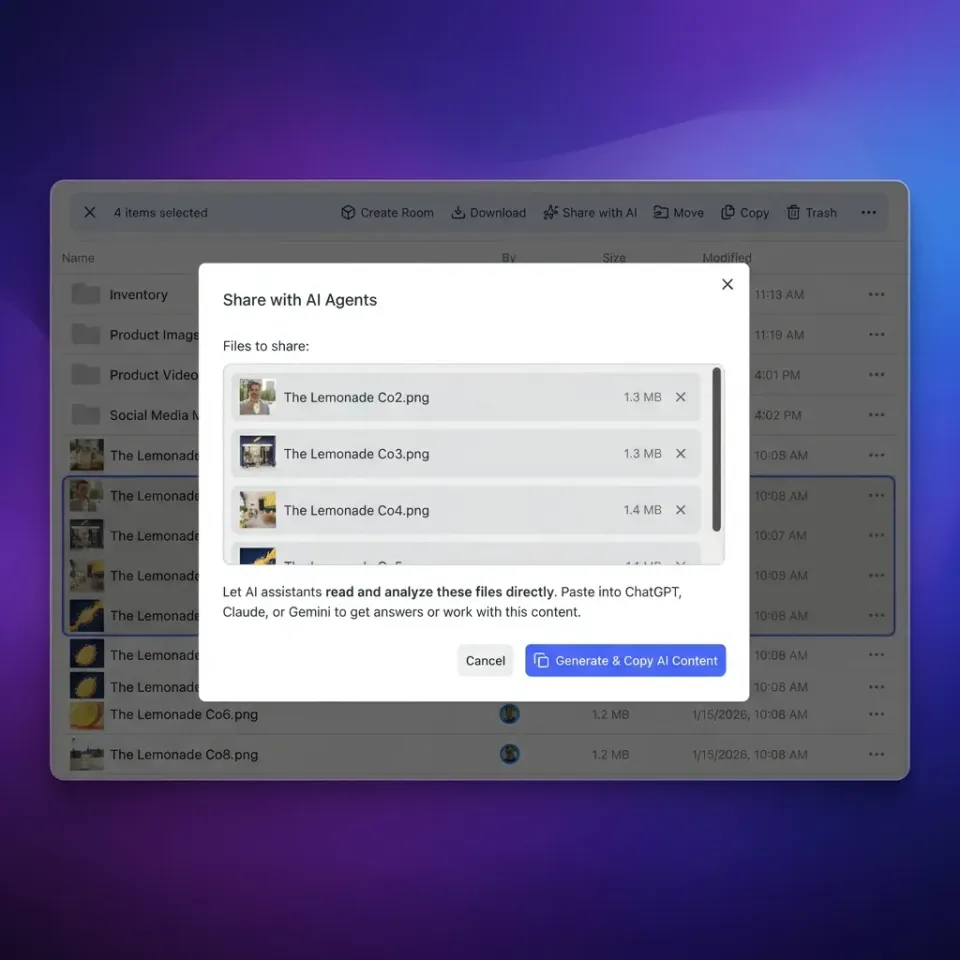
While Kafka and Pulsar handle small events, Fastio streams unstructured assets, including video, audio, and large datasets that AI agents process. Fastio acts as a persistent memory layer for agents. It offers an MCP (Model Context Protocol) server so AI can stream files directly without downloading them.
Pros:
- MCP-Native: A consolidated MCP toolset for AI agents to manage and stream files via natural language.
- Zero-Copy Streaming: Agents can process video/data via URL without using local disk space.
- Persistent Storage: Unlike temporary buckets, agents get generous storage on paid plans.
- Human Handoff: Agents can build data rooms and transfer ownership to humans.
Cons:
- Not a message broker (complements Kafka/Redpanda, does not replace them).
- Focus is on file/object streaming rather than telemetry events.
Best For: AI Agents handling unstructured data, video, and file-based workflows.
Pricing: 14-day Business Trial, card required; see /pricing/. Paid plans start at $9.99/mo.


Give Your AI Agents Persistent Storage
Stop batch processing. Start streaming.
5. Amazon Kinesis
Amazon Kinesis is a common choice for teams in the AWS ecosystem. It offers a fully managed serverless experience for ingesting real-time data streams like video and IoT telemetry, feeding directly into AWS AI services like SageMaker.
Pros:
- AWS Integration: Pipes data directly into S3, Redshift, and SageMaker.
- Kinesis Video Streams: Specialized features for streaming video to ML models.
- Serverless: No infrastructure to provision or manage.
Cons:
- Vendor Lock-in: Hard to migrate away from AWS once adopted.
- Cost: Can get expensive at high scale compared to self-hosted options.
Best For: AWS-heavy AI workloads and video analytics.
Pricing: Pay-per-shard or pay-per-stream hour.
6. Google Cloud Pub/Sub
Google Cloud Pub/Sub provides global, serverless messaging that scales automatically. It works alongside Google's Dataflow and Vertex AI, making it a solid choice for teams building AI on Google Cloud Platform (GCP).
Pros:
- Global Mesh: Messages are available globally without configuring replication.
- Auto-Scaling: Handles spikes in AI inference requests.
- Dataflow Integration: Good pairing for streaming ETL before model ingestion.
Cons:
- Latency Variability: Can have higher tail latency than dedicated brokers.
- GCP Centric: Best features are tied to the Google Cloud ecosystem.
Best For: Serverless AI pipelines on Google Cloud.
Pricing: Pay per GB of data processed.
7. Confluent Cloud
Confluent Cloud is a managed Kafka service from the founders of Kafka. It adds enterprise-grade security, governance, and a Flink-based stream processing engine directly into the platform, enabling "stream governance" for AI data.
Pros:
- Complete Platform: Includes Schema Registry, Connectors, and ksqlDB/Flink.
- Stream Governance: Ensures data quality before it hits your AI models.
- Multi-Cloud: Runs on AWS, Azure, and GCP.
Cons:
- Cost: Premium pricing for premium features.
- Complexity: The full platform has a learning curve for smaller teams.
Best For: Enterprises requiring governed, reliable data streams for critical AI.
Pricing: Usage-based with different tier levels.
Document access rules, audit trails, and retention policies before rollout so staging results are repeatable in production. This avoids late surprises and helps teams debug issues with confidence.
Comparison of AI Streaming Platforms
Choosing the right platform depends on your specific AI use case.
For most AI pipelines, a hybrid approach works best: use Redpanda or Kafka for high-velocity event telemetry, and Fastio to handle the video, audio, and dataset files referenced by those events.
Sources
References used to verify factual claims in this guide.
-
80% of enterprise AI applications expected to use streaming data by 2026
-
Real-time data streaming market growing at 22% CAGR fueled by generative AI and agent workflows
-
Redpanda is a C++ streaming platform with API compatibility with Apache Kafka
-
Apache Kafka is widely adopted for event streaming in enterprise environments
-
Fastio MCP server provides a consolidated MCP toolset for AI agents to manage and stream files
-
Fastio offers a 14-day Business Trial with paid plans starting at $9.99/mo Agents get generous storage on paid plans unlike temporary buckets
-
Review of the top 7 platforms for AI pipelines
Frequently Asked Questions
What is the best streaming platform for AI?
For low-latency inference, Redpanda is often the best choice due to its C++ architecture and lack of JVM overhead. For handling unstructured data like video or large datasets within agentic workflows, Fastio is the better choice due to its native MCP integration.
How do AI agents process streaming data?
AI agents process streaming data by connecting to event sources (like Kafka topics) to receive triggers and then accessing the referenced data payloads (like files in Fastio) via API or MCP. This allows them to react continuously to new information rather than running in batches.
What is the difference between Kafka and Pulsar for AI?
Kafka is widely adopted with a large ecosystem, making it great for general integration. Pulsar offers a tiered architecture that separates compute from storage, which is better for AI use cases requiring access to vast amounts of historical data without expensive local storage.
Why use Fastio for AI pipelines?
Fastio provides a dedicated persistent storage layer for AI agents with a native MCP server. Unlike standard S3 buckets, it allows agents to import, organize, and stream files naturally, enabling workflows like automated video processing or document analysis without local downloads.
Can I use Python with these streaming platforms?
Yes. Kafka has Python client libraries, and Redpanda works with them because it is API-compatible with Kafka. Fastio enables Python-based agents to manipulate files through its REST API with an ordinary HTTP library or through the MCP protocol, integrating easily with frameworks like LangChain.
Related Resources

Give Your AI Agents Persistent Storage
Stop batch processing. Start streaming.