Best Vibe Coding Tools in 2026: 10 Platforms Ranked
Vibe coding tools let you describe what you want in plain English and get working code back. This guide ranks the 10 best options in 2026 across three categories: app builders that generate complete projects from a prompt, AI-native IDEs that augment your existing workflow, and terminal agents that handle complex multi-file changes autonomously. Each entry includes pricing, strengths, limitations, and use case fit.


What Vibe Coding Actually Means
Andrej Karpathy coined the term "vibe coding" in February 2025. He described it as a style of development where you "fully give in to the vibes, embrace exponentials, and forget that the code even exists." The idea spread fast. By the end of 2025, Collins English Dictionary named it Word of the Year.
In practice, vibe coding means describing what you want to build in natural language and letting an AI tool generate the code. You focus on outcomes, not syntax. The tool handles file structure, framework choices, and implementation details. You iterate by talking to the tool, not by reading documentation.
That definition has stretched as the market matured. Today the term covers everything from no-code app builders to terminal agents that refactor 50-file codebases. The tools fall into three rough categories:
- App builders like Bolt, Lovable, and Replit generate complete applications from a prompt. They handle hosting, databases, and deployment. You don't need coding experience.
- AI-native IDEs like Cursor, Devin Desktop (formerly Windsurf), and v0 sit inside a development environment and augment your workflow. They assume you can read code and want control over the output.
- Terminal agents like Claude Code and Gemini CLI run in your shell and handle multi-file edits, testing, and git workflows autonomously. They target experienced developers working on complex codebases.
The right category depends on what you're building and how much you want to understand the code underneath. A startup founder prototyping a landing page needs a different tool than a backend engineer refactoring an authentication system.
Related guides
- AI Agent Tools Comparison: Frameworks, Platforms & Storage SolutionsAI agent tools are platforms and frameworks that help developers build, deploy, and manage autonomous AI systems...
- Best AI Workflow Automation Platforms for 2026AI workflow automation platforms let teams build, deploy, and manage automated processes powered by AI agents, LLMs,...
- Top Tools and Plugins for Semantic KernelMicrosoft Semantic Kernel's plugin ecosystem lets developers connect AI services to existing codebases without...
- Top AI Agent Marketplaces to Buy and Sell Agents in 2026AI agent marketplaces connect developers who build specialized agents with users who need specific automation. This...
- Best Free AI Agent Tools 2026: Top 12 Platforms ComparedBuilding autonomous agents doesn't have to be expensive. The free AI agent ecosystem now offers professional frameworks...
- Best AI Comic Generators in 2026: 8 Tools Tested and RankedThe AI-generated comic book market hit $2.01 billion in 2026, up 32% year over year, largely because character...
More on this subject: AI Tool Directories and Comparisons (231 guides)
How We Evaluated These Tools
We tested each tool against five criteria:
Natural language input quality. How well does the tool interpret vague or complex prompts? Can it ask clarifying questions, or does it just guess?
Project scaffolding. Does the tool generate a complete, well-structured project, or do you spend the next hour fixing imports and file layout?
Iteration speed. How fast can you go from "change the header color" to seeing the result? This includes build times, preview rendering, and how well the tool handles follow-up prompts.
Deployment integration. Can you ship what the tool builds without manual configuration? One-click deploy matters more than you'd think when you're iterating fast.
Production readiness. This is where most tools fall short. Generating a demo is easy. Generating code that handles error states, edge cases, and real user input is harder.
We weighted production readiness and iteration speed most heavily. Any tool can generate a to-do app from a prompt. The gap shows up when you try to build something with authentication, payments, and multi-user state.
Quick Comparison Table

Detailed Reviews
1. Cursor
Cursor is a standalone IDE forked from VS Code with AI built into every layer. It is not a plugin. The editor itself is redesigned around AI-assisted development.
The parallel agents feature, added in early 2026, lets you run up to eight agents simultaneously on separate parts of a codebase using git worktrees. Composer handles multi-file edits in a structured way, and agent mode lets you describe complex changes in natural language and watch them execute across your project. Model flexibility is strong: the Pro plan includes access to Claude, GPT, and Gemini models, with the ability to route different tasks to different models.
Key strengths:
- Parallel agent execution across git worktrees
- Deep codebase indexing for project-wide context
- Broad model selection on all paid plans
- Low-latency autocomplete powered by Supermaven
Limitations:
- Requires switching from your current editor
- Premium request limits run out during heavy agent sessions
- Indexing large codebases causes occasional lag
Best for: Developers who want the most complete AI IDE and are willing to switch editors.
Pricing: Free tier available. Pro at $20/mo. Business at $40/user/mo.
2. Claude Code
Claude Code is a terminal-native agent from Anthropic. You run it in your shell, point it at a codebase, and it reads files, makes edits, runs tests, and commits code. It works alongside whatever editor you already use.
Where Claude Code stands out is depth of reasoning. It reads your entire project, traces relationships between modules, and understands architecture before making changes. For complex backend refactors, it consistently produces changes that respect existing patterns. Sub-agent spawning handles parallel work, and MCP (Model Context Protocol) integration lets it connect to external tools and data sources, including Fastio workspaces for persistent file storage across sessions.
Key strengths:
- Deep codebase reasoning across large repositories
- Terminal-native, works with any editor
- Sub-agent spawning for parallel tasks
- MCP integration for external tool access
Limitations:
- No inline autocomplete (it is an agent, not a completion engine)
- Heavy use requires the Max plan ($100 to $200/mo)
- Terminal-only interface has a learning curve
Best for: Senior developers working on complex backend systems, large refactors, and cross-cutting changes.
Pricing: Free tier available. Pro at $20/mo. Max at $100/mo or $200/mo for heavy agentic workloads.
3. Bolt
Bolt generates full-stack Node.js applications inside the browser using web containers. Paste a prompt, and it scaffolds a complete project with routing, database setup, and deployment config. A Figma import option lets you convert designs directly into working code.
The autonomous debugging mode catches and fixes errors during generation, so you spend less time troubleshooting. File structure output is cleaner than most competitors, with sensible naming and separation of concerns.
Key strengths:
- In-browser web containers for instant previews
- Full-stack Node.js generation with database setup
- Figma-to-code import
- Autonomous error detection and fixing
Limitations:
- Rewrites entire files for minor edits, burning through tokens fast
- Credit-based pricing gets expensive for iteration-heavy work
- Less effective beyond standard templates and patterns
Best for: Rapid prototyping and MVPs that need a working backend quickly.
Pricing: Free tier with 1M tokens/month. Pro at approximately $20 to $25/mo. Teams at $30/user/mo.
4. Lovable
Lovable is the fastest path from a natural language prompt to a working web application. It generates a complete project, sets up Supabase for the database, and handles deployment. A plan mode lets you review what the tool intends to build before it starts generating.
The tool excels at landing pages, internal tools, and simple SaaS prototypes. It targets non-technical founders who need something functional without writing code. The agentic mode handles multi-step builds where each prompt builds on the previous result.
Key strengths:
- Fastest prompt-to-working-app pipeline
- Built-in Supabase integration for databases and auth
- Plan mode for reviewing architecture before generation
- One-click deployment
Limitations:
- Struggles when requirements go beyond standard templates
- Limited customization for experienced developers
- Credit-based pricing adds up during heavy iteration
Best for: Non-technical founders building MVPs and internal tools.
Pricing: Free tier with 5 credits/day. Pro at $25/mo (100 credits). Business at $50/mo.
5. v0 by Vercel
v0 generates production-ready React components using Next.js, Tailwind CSS, and shadcn/ui. It is more focused than Bolt or Lovable. Instead of generating entire applications, it excels at individual UI components and pages that you can drop into an existing project.
A major February 2026 update added Git integration, a full VS Code-style editor, and improved previews. Under the hood, v0 uses multiple proprietary AI models (Mini, Pro, and Max) fine-tuned specifically for React and frontend code. Each model tier offers different quality-to-cost trade-offs.
Key strengths:
- Production-quality React output with clean component structure
- Git sync and Vercel deployment pipeline
- Fine-tuned models specifically for frontend code
- VS Code-style editor in the browser
Limitations:
- React and Next.js only. No Vue, Svelte, or backend generation
- Credit-based pricing requires model tier management
- Less useful for full-stack applications
Best for: React developers who need high-quality UI components and pages.
Pricing: Free tier with $5 in credits. Premium at $20/mo. Team at $30/user/mo.
6. Devin Desktop (formerly Windsurf)
Devin Desktop is an AI IDE that competes directly with Cursor. Its differentiator is Cascade, a multi-step agent that handles complex tasks by breaking them into smaller operations and executing them sequentially. The tool provides direct edits with immediate visual feedback, and Tab prediction suggests next edits based on context.
The interface is cleaner than Cursor's, with more predictable behavior on medium-sized projects. Model selection includes Claude and GPT options. Pricing starts lower than Cursor at $15/mo.
Key strengths:
- Cascade multi-step agent for complex workflows
- Clean interface with predictable behavior
- Tab prediction for contextual next-edit suggestions
- Real-time previews during development
Limitations:
- Monthly credit caps (500/month base tier) hit quickly during heavy use
- Uncertain long-term direction following leadership changes
- Less effective than Cursor on very large codebases
Best for: Professional developers who want an AI IDE with a clean interface and lower entry price.
Pricing: Basic free tier. Pro at $15/mo. Teams at $30 to $40/user/mo.
7. Replit
Replit is a cloud IDE that runs entirely in the browser. Agent 4 can work autonomously for up to 200 minutes, testing its own output and correcting errors without intervention. Design Mode generates interactive prototypes that convert to full applications with one click.
The platform bundles everything: editor, database, authentication, hosting, and deployment. That all-in-one approach removes setup friction but creates vendor lock-in. Replit supports over 50 programming languages, making it the broadest platform on this list.
Key strengths:
- All-in-one platform with built-in hosting, database, and auth
- Agent 4 autonomous mode (up to 200 minutes unattended)
- Design Mode for visual prototyping
- 50+ language support
Limitations:
- Core plan starts at $100/mo, which prices out casual users
- Subscription masks usage overages that can multiply costs 3 to 5x
- Vendor lock-in makes exporting projects harder than it should be
Best for: Students, beginners, and builders who want a complete platform without managing infrastructure.
Pricing: Free Starter tier. Core at $100/mo. Pro (teams) at $100/mo for up to 15 builders.
8. GitHub Copilot
Copilot is the most widely adopted AI coding assistant, with over 4.7 million paid subscribers. It works inside VS Code, JetBrains, Neovim, and Xcode as an extension. You never leave your editor.
The 2026 version includes agent mode with multi-file editing, a multi-model selector (GPT-4o default, with Claude Sonnet and Gemini available), and deep GitHub integration for issues, PRs, and CI/CD. The free tier gives 2,000 inline suggestions per month. Starting in June 2026, GitHub is shifting to usage-based billing where agentic features consume credits.
Key strengths:
- Works inside your existing editor as an extension
- Deep GitHub ecosystem integration (PRs, issues, CI/CD)
- Multi-model access on paid plans
- Largest adoption base and community
Limitations:
- Agent mode is less capable than Cursor or Claude Code
- Agentic features shifting to credit-based billing in mid-2026
- Codebase context is shallower than dedicated AI IDEs
Best for: Teams already using GitHub who want AI assistance without switching tools.
Pricing: Free tier (2,000 suggestions/mo). Pro at $10/mo. Pro+ at $39/mo. Business at $19/user/mo.
9. Kiro
Kiro is AWS's take on AI-assisted development. Instead of vibe-first generation, it uses spec-driven development: you describe what you want, Kiro generates a detailed specification, and then builds the code to match that spec. Agent hooks automate tasks like documentation generation and test creation when you save files.
The approach trades speed for reliability. You get slower initial output, but the code comes with tests, documentation, and a clear spec you can review. AWS Transform integration handles large-scale infrastructure migrations alongside code generation.
Key strengths:
- Spec-driven approach produces more predictable output
- Agent hooks automate docs and test generation
- Multi-model access (Claude, Codex, Gemini, and more)
- AWS ecosystem integration for infrastructure work
Limitations:
- Slower initial generation than vibe-first tools
- Spec-driven workflow adds overhead for simple projects
- Newer tool with a smaller community than Cursor or Copilot
Best for: Enterprise developers building production systems where specs and tests matter more than speed.
Pricing: Free tier available. Paid plans tied to AWS account.
10. Gemini CLI
Gemini CLI is Google's terminal agent and the main competitor to Claude Code in the terminal space. Its standout feature is a 1 million token context window, the largest of any tool on this list. That means it can reason about enormous codebases in a single pass.
The tool uses GEMINI.md files for project-level configuration (similar to .cursorrules for Cursor). Agent skills handle multi-step tasks, and the free tier is generous at 1,000 requests per day.
Key strengths:
- 1M token context window for massive codebases
- Generous free tier (1,000 requests/day)
- GEMINI.md project configuration
- Google ecosystem integration
Limitations:
- Smaller agent ecosystem than Claude Code's MCP network
- Terminal-only interface
- Model quality for coding tasks trails Claude and GPT on some benchmarks
Best for: Developers working with very large codebases who need maximum context, especially within the Google ecosystem.
Pricing: Free tier with 1,000 requests/day. Pro at $19.99/mo.


Give your AI tools a shared workspace
Fastio connects to Claude Code, Cursor, and other MCP-compatible tools. Upload project files, query them with AI, and hand off results to your team.
Where File Storage Fits In
Vibe coding tools generate code, but the projects those tools produce still need a place to store files, share outputs, and hand off work between people and AI agents. This matters especially when multiple tools or team members touch the same project.
Most vibe coding tools handle deployment (Bolt, Lovable, and Replit all bundle hosting), but they don't solve the collaboration layer around generated projects: versioning outputs, sharing with clients, and keeping AI agents connected to the latest files.
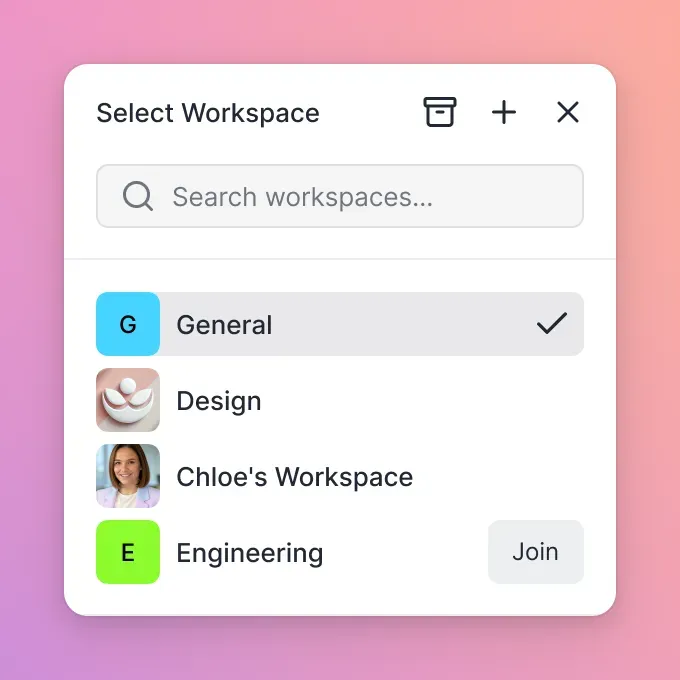
Fastio fills that gap as an intelligent workspace for agentic teams. It gives AI tools and humans the same shared file system with built-in versioning, permissions, and search. The platform offers a Fastio MCP server with a consolidated MCP toolset, so agents running in Claude Code, Cursor, or other MCP-compatible environments can read, write, and organize files in shared workspaces.
A few specific features that connect to vibe coding workflows:
- Intelligence Mode auto-indexes uploaded files for semantic search and RAG. When your vibe coding tool generates a project, upload the output and immediately query it with natural language.
- Ownership transfer lets an AI agent build a workspace, populate it with generated assets, and hand the whole thing to a human client or teammate.
- Branded shares (Send, Receive, Exchange) give you client-facing delivery without stitching together Dropbox links and Google Drive folders.
- Metadata Views turn uploaded documents into a queryable spreadsheet. Describe the fields you want extracted and AI designs a typed schema, no templates or OCR rules needed.
Fastio offers a 14-day Business Trial (card required) with paid plans starting at $9.99/mo. That gives you a persistent workspace for your vibe coding projects connected to any MCP-compatible tool.
Which Tool Should You Choose?
The answer depends on your experience level and what you're building.
If you're a non-technical founder building an MVP: Start with Lovable or Bolt. Both generate complete applications from a prompt with built-in hosting. Lovable is faster for simple apps. Bolt gives more control over the backend.
If you're a frontend developer building React components: v0 by Vercel produces the cleanest React output, and the Vercel deployment pipeline means you can ship components to production in minutes.
If you're a developer who wants an AI-enhanced editor: Cursor is the strongest all-around AI IDE. Devin Desktop is a solid alternative at a lower price point. Both support multiple models and handle multi-file edits well.
If you're a senior engineer working on complex systems: Claude Code gives the deepest codebase reasoning in a terminal-native workflow. Gemini CLI is worth trying if you need the largest context window available.
If you want everything in one place: Replit bundles editor, database, auth, hosting, and AI agent into a single platform. The convenience comes at a higher price and some vendor lock-in.
If you're building for enterprise: Kiro's spec-driven approach produces code with built-in tests and documentation, which matters more than generation speed when you're shipping to production.
Most teams in 2026 use more than one tool. A common pattern is Cursor or Claude Code for the core development work, Bolt or Lovable for quick prototypes, and Fastio as the shared workspace where generated outputs land and get organized for the team.
Sources
References used to verify factual claims in this guide.
-
Andrej Karpathy coined the term vibe coding in February 2025 Collins English Dictionary named vibe coding Word of the Year for 2025
-
GitHub Copilot has over 4.7 million paid subscribers
-
138+ vibe coding tools on the market in 2026
Frequently Asked Questions
What is vibe coding?
Vibe coding is a style of software development where you describe what you want in plain English and an AI tool generates the code. Andrej Karpathy coined the term in February 2025, defining it as coding where you "fully give in to the vibes" and let the AI handle syntax and implementation. The approach ranges from no-code app builders that generate entire projects to terminal agents that refactor complex codebases.
What are the best vibe coding tools in 2026?
The top vibe coding tools in 2026 are Cursor (best AI IDE), Claude Code (best terminal agent), Bolt (best for rapid prototyping), Lovable (best for non-technical founders), v0 by Vercel (best for React components), Devin Desktop (formerly Windsurf, best budget AI IDE), Replit (best all-in-one platform), GitHub Copilot (best editor extension), Kiro (best for enterprise spec-driven development), and Gemini CLI (best for huge context windows).
Is vibe coding the same as AI coding?
Not exactly. AI coding is a broad category that includes autocomplete, code review, bug detection, and test generation. Vibe coding is a specific subset where you describe outcomes in natural language and the AI generates complete implementations. The distinction matters because traditional AI coding assistants like Copilot augment your existing coding workflow, while vibe-first tools like Bolt and Lovable replace it entirely for certain tasks.
Can you build production apps with vibe coding?
Yes, but the tool choice matters. App builders like Bolt and Lovable work well for MVPs, landing pages, and internal tools. For production systems with authentication, payments, and complex state, you need AI IDEs like Cursor or terminal agents like Claude Code that give you full control over the generated code. Most teams use vibe coding tools for initial scaffolding and prototyping, then move to developer-focused tools for production hardening.
How much do vibe coding tools cost?
Pricing ranges from free to $200/mo depending on the tool and usage level. GitHub Copilot starts at $10/mo. Cursor and Devin Desktop run $15 to $20/mo. App builders like Bolt and Lovable cost $20 to $25/mo. Claude Code ranges from $20/mo (Pro) to $200/mo (Max) for heavy agentic workloads. Most tools offer free tiers, but credit limits on those tiers can be restrictive for real projects.
What's the difference between vibe coding app builders and AI IDEs?
App builders (Bolt, Lovable, Replit) generate complete applications from a prompt, handle hosting, and target users who may not know how to code. AI IDEs (Cursor, Devin Desktop) sit inside a development environment and assume you can read and modify the generated code. App builders optimize for speed to a working demo. AI IDEs optimize for control over the output. The trade-off is that app builders hit a ceiling when requirements get complex, while AI IDEs require more technical skill to use effectively.
Related Resources

Give your AI tools a shared workspace
Fastio connects to Claude Code, Cursor, and other MCP-compatible tools. Upload project files, query them with AI, and hand off results to your team.