Best OpenClaw Tools for E-commerce Automation
OpenClaw tools help you manage product listings, inventory, and order processing by handing off repetitive tasks to local AI agents. This guide ranks the best OpenClaw skills and integrations for Shopify, WooCommerce, and general store automation - with install commands and practical workflow examples for each.

Why Automate E-commerce with OpenClaw?
Competitors change prices hourly and supply chains break without warning. Keeping up manually means constant firefighting.
OpenClaw runs on your own machine. You keep control of your data while your agent talks to Shopify, Amazon, and WooCommerce. Standard automation platforms charge per task and cut you off when scripts run too long. OpenClaw agents don't - they run as long as needed, using "skills" to perform sequences of actions from visiting competitor sites to updating your inventory database.
Whether you run a dropshipping business or a boutique brand, the goal is the same: hand repetitive tasks to an agent so you can focus on the work that actually requires your judgment.
Related guides
- Best n8n Tools for AI Agents: Top 10 Nodes for 2026n8n changed AI automation with its visual workflow builder. We rank the best nodes and integrations for building...
- Best Tools for CrewAI Agents: Top Picks for 2026CrewAI agents need good tools to be useful. The framework handles coordination, but external integrations let agents...
- 7 Best OpenClaw Tools for AI Travel Itinerary Planning and Booking AutomationOpenClaw's skill registry includes over 110 transportation skills and 29 dedicated travel tools, but most agents cobble...
- Best OpenClaw Tools for AI Spreadsheet Analysis AutomationManual reporting still eats hours every week, even when the analysis itself takes minutes. OpenClaw skills for...
- Best OpenClaw Tools for AI Video Editing AutomationOpenClaw's ecosystem includes both built-in video generation tools and community-developed editing skills that handle...
- 7 OpenClaw Tools That Automate Employee Onboarding ContentGartner projects that 40% of enterprise applications will embed task-specific AI agents by the end of 2026, up from...
More on this subject: OpenClaw Tools (101 guides)
ClawHub skills for e-commerce automation
These are verified ClawHub skills with active installs. Each entry includes the install command and what the skill actually does in a store context.
1. Fastio - Workspace and Asset Management
Best for: Managing product images, supplier contracts, and invoices.
MCP Server: Connect via remote MCP at https://mcp.fast.io/mcp/tools
Documentation: fast.io/storage-for-agents/
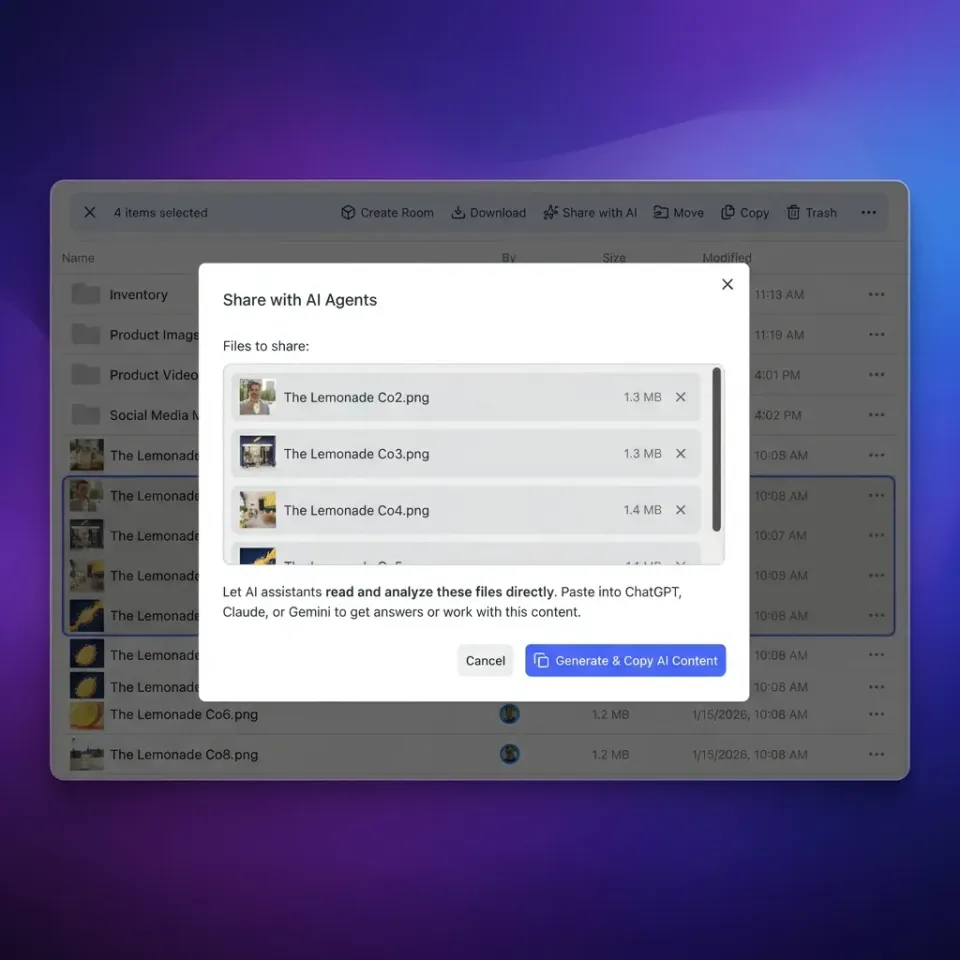
Fastio gives your OpenClaw agent a persistent cloud storage workspace. The remote MCP server provides a consolidated toolset: uploads, branded share links, RAG search once Intelligence is enabled, and contextual comments. Practically, this means your agent can store product images, generate share links for photographers, and answer questions like "What's the return policy in the Supplier X contract?" with cited answers pulled from uploaded documents.
2. Agent Browser - Competitor Price Monitoring
Best for: Price monitoring and trend analysis.
Install: clawhub install TheSethRose/agent-browser
ClawHub Page: clawhub.ai/TheSethRose/agent-browser
A Rust-based headless browser with Node.js fallback. It handles JavaScript-heavy storefronts, captures screenshots for pricing evidence, saves session state, and can run parallel instances - useful when you're watching multiple competitors at once.
3. Playwright - Deep Automation and Form Submission
Best for: Multi-step order workflows and structured data extraction.
Install: clawhub install ivangdavila/playwright
ClawHub Page: clawhub.ai/ivangdavila/playwright
Playwright provides full MCP browser control for multi-step workflows - filling supplier order forms, extracting structured pricing tables, navigating supplier portals. Actions include browser_navigate, browser_click, browser_type, and full-page screenshot/PDF capture. It handles retry logic and artifact management, which matters for scheduled runs that need to stay reliable overnight.
4. SQL Toolkit - Inventory Database Management
Best for: Maintaining a local source of truth across sales channels.
Install: clawhub install gitgoodordietrying/sql-toolkit
ClawHub Page: clawhub.ai/gitgoodordietrying/sql-toolkit
The SQL Toolkit connects your agent to SQLite, PostgreSQL, and MySQL - schema design, query writing, migrations, and optimization. Use it to maintain one inventory record that feeds Shopify, Amazon, and eBay simultaneously. Window functions and CTEs let your agent track sales velocity and price history without needing an ORM.
5. Slack - Team Alerts and Human-in-the-Loop Approval
Best for: Team notifications and approval workflows.
Install: clawhub install steipete/slack
ClawHub Page: clawhub.ai/steipete/slack
The Slack skill (1,000+ installs on ClawHub) lets your agent post messages, send daily digests, react to messages, and manage pins. Useful for two things: alerting your team when something goes wrong (low stock, supplier site down, workflow failed), and requiring human approval before the agent takes a sensitive action like issuing a large refund or doing a bulk price update.
6. AgentMail - Order Confirmations and Supplier Communication
Best for: Automated email workflows with suppliers and customers.
Install: clawhub install adboio/agentmail
ClawHub Page: clawhub.ai/adboio/agentmail
AgentMail is an API-first email platform designed for agent use. Your agent can create dedicated inboxes, send emails with attachments, receive replies via webhook, and search past threads semantically. No rate limits, which matters if you're running high-volume order notification pipelines.
7. Gog - Google Sheets Inventory Tracking
Best for: Supplier data imports and spreadsheet-based inventory.
Install: clawhub install steipete/gog
ClawHub Page: clawhub.ai/steipete/gog
Many suppliers send inventory updates as Google Sheets links. Gog is a unified CLI for Gmail, Drive, Sheets, Docs, Contacts, and Calendar via OAuth. Your agent can read a supplier spreadsheet, extract line items, update your inventory sheet, and flag discrepancies - without leaving the workflow to open a browser.


Give your e-commerce agent a workspace
Give your OpenClaw agent shared cloud storage to manage product assets, invoices, and contracts, with branded share links and built-in RAG search.
Tutorial: building a price matcher agent
Here's a working price-matcher built from the skills above. Five prompts, no code.
Step 1: Install the necessary skills First, connect Fastio via its remote MCP server at https://mcp.fast.io/mcp/tools for storage (to save price history) and install Agent Browser for web access.
# Configure Fastio remote MCP at https://mcp.fast.io/mcp/tools
clawhub install TheSethRose/agent-browser
clawhub install steipete/slack
Step 2: Define the "Watcher" Workflow Write a prompt telling your agent to visit your competitor's product page. You can schedule this to run every hour.
"Using the Browser skill, visit 'https://competitor.com/product-x'. Extract the current price displayed in the selector '.product-price'. Save this price and the timestamp to a CSV file in my Fastio workspace named 'price-history.csv'."
Step 3: Define the "Decider" Logic Tell the agent how to react to the data it just found.
"Using Agent Browser, visit 'https://competitor.com/product-x'. Extract the current price displayed in the selector '.product-price'. Read the last entry in 'price-history.csv' in my Fastio workspace. If the competitor's price is lower than mine, calculate a new price: (Competitor Price - $0.05)."
Step 4: The Safety Check Don't let an agent drop prices without a limit. Add a constraint.
"Check if the new calculated price is below my minimum margin floor of $15.00. If it is, do NOT update Shopify. Instead, use the Slack skill to post a message to the #pricing channel: 'Competitor price dropped below floor!'"
Step 5: The "Actor" (Log the Change) Finally, allow the agent to execute the change if safe.
"If the price is safe, update the product via the Shopify API and log this action to 'price-changes.log' in the Fastio workspace."
Two more workflows worth building
Price matching is the obvious starting point, but these two are where agents save serious time.
Automated Returns Processing Create an agent that monitors your support email. When a return request comes in, the agent can:
- Check the Order ID in Shopify.
- Verify if the return window is still open.
- Generate a return shipping label via a logistics API.
- Email the label to the customer.
- Save a copy of the label to Fastio for your records.
Supplier Invoice Matching Suppliers make mistakes. An OpenClaw agent can:
- Watch your "Invoices" folder in Fastio.
- When a new PDF arrives, extract the line items.
- Use the SQL Toolkit to match those line items against your purchase order database.
- Flag any discrepancies and use AgentMail to draft an email to the supplier asking for credit.
Measuring automation results
Metrics worth tracking:
- Time on admin: How many hours per week are you reclaiming from manual data entry?
- Order accuracy: Automated workflows remove the handoff errors that cause fulfillment mistakes.
- Response time: Agents can reply to supplier or customer messages as soon as they arrive.
- Margin protection: Dynamic pricing with a floor prevents you from selling below cost during competitive price drops.
Track these before and after you deploy an automation. The comparison will tell you quickly whether a given workflow is worth keeping.
Market context
For context on where this space is heading: the global e-commerce automation market was valued at $10.5 billion in 2024 and is projected to grow at a 13.5% CAGR, reaching $28.5 billion by 2032 (Future Data Stats). The core driver is labor cost, not technology novelty - repetitive tasks that previously required headcount are increasingly handled by agents at a fraction of the cost.
Sources
References used to verify factual claims in this guide.
-
global e-commerce automation market reached $10.5 billion in 2024 e-commerce automation market projected to grow at 13.5% CAGR, reaching $28.5 billion by 2032
Frequently Asked Questions
Can OpenClaw manage Shopify inventory?
Yes, by using Agent Browser or Playwright to navigate Shopify's admin UI, combined with the SQL Toolkit to maintain a local inventory database, OpenClaw can monitor stock levels and cross-reference supplier data to prevent overselling across multiple channels.
How to use OpenClaw for dropshipping?
OpenClaw is well-suited for dropshipping. Use Agent Browser to scrape supplier websites for price changes, SQL Toolkit to track margins in a local database, AgentMail to forward order details to suppliers, and Slack to alert you when margins drop below a threshold.
Is OpenClaw safe for handling customer data?
OpenClaw runs locally on your machine, meaning data doesn't leave your control unless you explicitly send it to an external API. Always ensure you use secure connections and reputable skills when handling sensitive customer information.
What is the best OpenClaw tool for product photos?
Fastio is the top choice for product asset management. Connecting your agent to Fastio via its remote MCP server provides a persistent cloud workspace where your agent can upload, organize, and generate branded share links for high-resolution product photos and videos without clogging your local drive.
Do I need to know how to code to use OpenClaw?
No, OpenClaw is designed to be controlled via natural language prompts. You instruct the agent in plain English, and it uses installed skills to execute technical tasks like API calls or file management.
How is Fastio priced?
Fastio offers a 14-day Business Trial (credit card required) to evaluate shared workspaces. Paid plans start at $9.99/month for Starter (3 seats, 250 GB storage), $49.99/month for Business, and $199.99/month for Enterprise. See /pricing/ for details.
Does OpenClaw work with WooCommerce?
Yes, OpenClaw can interact with WooCommerce through Agent Browser or Playwright (logging into WP Admin and navigating the UI) or via direct API calls if you configure the appropriate authentication. The Gog skill also helps if your WooCommerce data is synced to Google Sheets.
What happens if the agent makes a mistake?
It is critical to implement 'safety checks' and 'human-in-the-loop' steps for sensitive actions like refunds or bulk price changes. Configure your agent to ask for approval via Discord or Slack before executing high-impact commands.
Related Resources

Give your e-commerce agent a workspace
Give your OpenClaw agent shared cloud storage to manage product assets, invoices, and contracts, with branded share links and built-in RAG search.