7 Best OpenClaw Tools for AI Vocal Removal and Stem Separation
The music stem separation SaaS market reached $412 million in 2024 and is growing at 21.8% annually, driven by AI models that isolate vocals, drums, bass, and individual instruments from mixed audio. OpenClaw users can access ClawHub skills like AudioPod and run local models like Demucs, but each tool trades off stem count, separation quality, and automation support differently. This guide ranks seven tools that fit into OpenClaw workflows for vocal removal and stem separation.

Where Stem Separation Fits in an OpenClaw Pipeline
The music stem separation SaaS market reached $412 million in 2024, with Dataintelo projecting a 21.8% compound annual growth rate through 2033. That growth reflects a real shift in how musicians, remixers, and content creators work. Isolating vocals or drums from a finished mix used to require expensive studio time. Now an AI model running on a laptop or a cloud API can do it in under a minute.
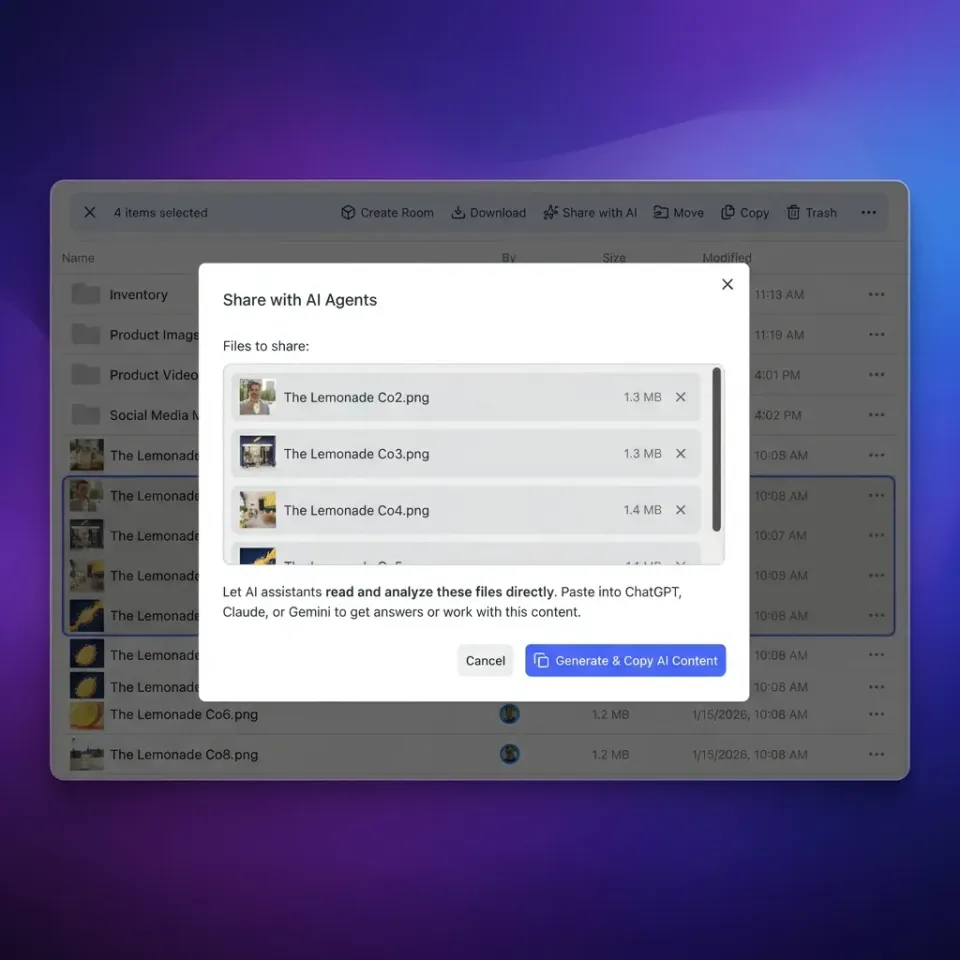
Most guides comparing vocal removers stop at the separation step. They rank LALAL.AI against Moises against UVR and call it done. For OpenClaw users, separation is one node in a longer workflow. An agent can accept an audio upload, route it to a separation tool, sort the resulting stems by instrument type, store them in a shared workspace, and send a download link to a collaborator. The tool you pick for the separation step matters, but so does how well it plugs into that automated chain.
Here is a quick comparison of the seven tools covered in this guide:
- AudioPod (ClawHub skill): Up to 16 stems, speaker separation, noise reduction. Freemium pricing.
- Demucs (local model): 4 to 6 stems, open source from Meta, GPU-accelerated. Free.
- Ultimate Vocal Remover (desktop app): Multi-model ensemble mode, batch processing. Free.
- LALAL.AI (SaaS): 10+ stem types, Andromeda engine. Free tier, then $7.50/month.
- StemSplit (SaaS): Pay-as-you-go at $0.10/minute, API included. No subscription.
- Moises (SaaS): Chord detection, tempo shifting, Hi-Fi mode. Free tier, then $3.99/month.
- Fast.io (workspace): Storage, versioning, branded sharing for stem outputs. 14-day Business Trial, then paid plans starting at $9.99/month.
Each tool was evaluated on separation quality (stem count and audio fidelity), OpenClaw compatibility (native skill, API access, or local integration), pricing model, and workflow automation support.
Related guides
- Best n8n Tools for AI Agents: Top 10 Nodes for 2026n8n changed AI automation with its visual workflow builder. We rank the best nodes and integrations for building...
- Best Tools for CrewAI Agents: Top Picks for 2026CrewAI agents need good tools to be useful. The framework handles coordination, but external integrations let agents...
- Best OpenClaw Tools for AI Brand Identity and Visual Asset Kit GenerationOpenClaw's skill ecosystem includes specialized tools that handle logo systems, color palettes, social media assets,...
- 5 Best OpenClaw Tools for AI Watermark Removal and Image CleanupThe keyword "ai watermark remover" draws 14,800 monthly searches in the US, yet most guides cover standalone browser...
- Top OpenClaw Tools for AI Background RemovalAI background removal isolates subjects from their backgrounds, and OpenClaw skills make this available through simple...
- Top OpenClaw Tools for AI Object Removal and Image InpaintingThe video object removal AI market hit $1.27 billion in 2024, but most guides still cover standalone apps that process...
More on this subject: OpenClaw Tools (101 guides)
AudioPod: The Most Complete ClawHub Skill
AudioPod is the standout stem separation skill on ClawHub. It bundles vocal isolation, stem splitting, noise reduction, and speaker separation into a single install. Processing runs on AudioPod AI's cloud API, so your local hardware specs do not limit what you can do.
The skill separates audio through tiered modes. The 2-stem karaoke mode splits vocals from accompaniment. The standard 4-stem mode isolates vocals, drums, bass, and other instruments. At the top end, the 16-stem mastering mode breaks out vocal ambience, individual drum kit pieces (kick, snare, hi-hat, cymbals), and guitar tone versus attack. That 16-stem granularity is unusual for a ClawHub skill and matches or exceeds what most standalone SaaS tools offer.
Speaker separation is the other standout capability. Upload a podcast or meeting recording and AudioPod splits it into clean per-speaker tracks with timestamps. Combined with noise reduction that strips hiss, wind, and room tone, it covers audio cleanup tasks that would otherwise require separate tools.
AudioPod accepts MP3, WAV, FLAC, MP4, and MKV files up to 100 MB. Output is pro-grade 48 kHz WAV, with processing taking roughly 30 seconds per track.
Key strengths:
- Up to 16 stems from a single skill, far more than the typical 4-stem ceiling
- Speaker separation and noise reduction handle podcast and meeting audio alongside music
- Cloud processing works on any machine, including low-power devices
Limitations:
- Requires an AudioPod API key and internet connection for all processing
- Free accounts have restricted download access and track length limits
- The AI model behind AudioPod is not publicly disclosed, making benchmark comparisons difficult
Best for: Producers and content creators who want the widest stem selection from a single ClawHub install without managing local model infrastructure.
How to Run Stem Separation Locally with Open-Source Models
When you want full control over separation quality and prefer not to depend on a third-party API, two open-source options stand out for OpenClaw users. Both run locally and produce results competitive with paid services.
The tradeoff is setup time. You need a machine with a dedicated GPU (NVIDIA CUDA or Apple Silicon MPS) and enough disk space for model weights, which range from 80 MB to over 1 GB depending on the architecture. Once configured, though, you avoid per-minute fees and keep all audio data on your own hardware.
A practical example: a podcast production agent accepts a raw recording, runs Demucs to isolate the vocal track from background music, applies noise reduction, and writes the cleaned file to a Fast.io workspace where the editor picks it up. The entire chain runs locally, keeping audio off third-party servers. On a mid-range NVIDIA RTX 3060, Demucs processes a 4-minute track in roughly 15 seconds. The main constraint is VRAM. HTDemucs needs around 4 GB of GPU memory for standard-length tracks, and files over 10 minutes may require segment-based processing to avoid out-of-memory errors.

Demucs
Demucs is Meta's open-source source separation model. The current version, Hybrid Transformer Demucs (HTDemucs), uses a hybrid spectrogram-and-waveform architecture with transformer attention to achieve a 9.0 dB signal-to-distortion ratio on the MUSDB HQ test set. In practical terms, that means clean vocal isolation with minimal bleed on well-produced tracks.
The standard mode separates audio into four stems: vocals, drums, bass, and other instruments. A 6-stem mode adds piano and guitar as individual outputs. Processing runs on your local GPU (CUDA or MPS on Apple Silicon), which keeps latency low and avoids API costs entirely.
OpenClaw agents can call Demucs through shell commands or Python subprocess calls. A typical workflow accepts an audio file in chat, runs the separation model to split it, and returns the stems as downloadable files.
Key strengths:
- Free and open source with no API limits or usage caps
- 9.0 dB SDR on standard benchmarks, competitive with paid tools
- Runs fully offline with no data leaving your machine
Limitations:
- Requires a GPU for reasonable processing speed (CPU works but is much slower)
- Manual setup: install Python dependencies, download model weights
- Limited to 4 or 6 stems, no fine-grained instrument breakdown
Best for: Developers who want free, local, benchmark-quality separation integrated directly into OpenClaw agent scripts.
Pricing: Free (MIT license).
Ultimate Vocal Remover (UVR)
Ultimate Vocal Remover wraps multiple separation architectures into a single desktop application. Version 5.6.0 supports Demucs v1 through v4, MDX-Net, and VR models, letting you pick the right model for each job or combine several through ensemble mode for higher quality at the cost of processing time.
Ensemble mode is UVR's distinguishing feature. Running the same track through two or three different models and averaging the outputs produces cleaner stems than any single model alone. The app handles batch processing natively, so you can queue an entire album and walk away.
For OpenClaw integration, UVR's community has published a standalone separation library that lets agents call the same model backends without launching the desktop GUI. This means an OpenClaw agent can route audio files through UVR's models in a headless workflow.
Key strengths:
- Ensemble mode combining multiple AI architectures for best free results
- Supports every major separation model family (Demucs, MDX-Net, VR)
- Batch processing for multiple tracks in a single run
Limitations:
- Desktop GUI requires a workaround for headless agent use
- Requires local GPU for fast processing
- More complex setup than a single-model tool
Best for: Power users and developers who want to compare or combine multiple models without paying for a SaaS subscription.
Pricing: Free (open source).
Best SaaS APIs for Agent-Driven Stem Separation
If you prefer cloud processing over managing local GPU infrastructure, three SaaS platforms offer APIs or web interfaces that work alongside OpenClaw workflows. Each takes a different approach to pricing and feature depth.
The key decision point is whether you need an API for agent automation or just a web interface for manual uploads. LALAL.AI and StemSplit both expose developer APIs, making them viable targets for OpenClaw agent calls. Moises focuses on its mobile and web apps with no public API, so it fits better as a standalone tool for musicians who separate tracks manually.
A typical integration looks like this: an OpenClaw agent receives an audio file, calls the SaaS API to upload and process it, polls for completion, downloads the resulting stems, and writes them to a Fast.io workspace for the client to access. The main constraint is API rate limits and file size caps, which vary by provider. LALAL.AI caps uploads at 2 GB on Pro plans, while StemSplit allows up to 500 MB. For agents processing batches, queuing requests with backoff logic prevents hitting rate ceilings during peak runs.
LALAL.AI
LALAL.AI is the longest-running commercial vocal remover and arguably the quality benchmark for the category. Its Andromeda engine separates vocals, drums, bass, piano, electric guitar, acoustic guitar, synthesizer, strings, and wind instruments, a wider instrument palette than any other SaaS tool on this list.
Beyond stem separation, LALAL.AI offers voice cleaning (removing plosives and background noise), echo and reverb removal, and lead versus backing vocal separation. Batch processing handles up to 20 files at once, and a VST plugin integrates directly into DAW workflows for producers who want real-time access.
LALAL.AI's API lets OpenClaw agents upload files and retrieve processed stems programmatically. Combined with a Fast.io workspace for file organization, an agent can separate, sort, and share stems without manual steps.
Key strengths:
- Widest instrument palette among SaaS tools (10+ stem types including synthesizer and strings)
- VST plugin for direct DAW integration
- Batch upload of up to 20 files simultaneously
Limitations:
- Subscription pricing ($7.50 to $15/month) adds up for occasional users
- Free tier limited to 10 minutes of processing
- No native ClawHub skill, requires custom API integration
Best for: Professional studios and producers who need consistent, high-quality separation across many instrument types.
Pricing: Free (10 min), Lite at $7.50/month (90 min), Pro at $15/month (250 min + API + VST).
StemSplit
StemSplit takes a pay-as-you-go approach that avoids subscriptions entirely. Processing costs $0.10 per minute of audio, so a typical 4-minute song runs $0.40. Credits never expire, and every account includes a developer API at no extra cost.
The platform offers three separation modes: 2-stem (vocals and instrumental), 4-stem (vocals, drums, bass, other), and 6-stem (adding piano and guitar). Output formats include WAV, MP3, and FLAC, with support for input files up to 500 MB and 120 minutes long. StemSplit has passed 250,000 users since launch.
For OpenClaw agents, StemSplit's API is the simplest integration path among the SaaS options. The pay-per-use model also means you are not paying a monthly fee during quiet months when the skill runs only occasionally.
Key strengths:
- No subscription required, pay only when you process ($0.10/min)
- Credits never expire, ideal for intermittent use
- Developer API included on all accounts at no extra cost
Limitations:
- Newer platform with a smaller user base than LALAL.AI or Moises
- Maximum 6 stems, no fine-grained instrument breakdown beyond piano and guitar
- Fewer post-processing features compared to full-suite tools
Best for: Developers and occasional users who want low-cost API access without monthly commitments.
Pricing: 5 free minutes, then $0.10 per minute (no subscription).
Moises
Moises takes a different angle than the other SaaS options on this list. Built for practicing musicians, it layers chord detection, tempo shifting, pitch control, lyric transcription, and metronome alignment on top of stem separation. Over 70 million users have adopted the platform across iOS, Android, and web.
The separation engine is competitive with LALAL.AI on most source material. Pro subscribers get Hi-Fi mode at 48 kHz/24-bit resolution with lossless WAV exports, suitable for professional studio work.
Moises does not currently offer a public developer API, which limits direct OpenClaw agent integration. It remains a strong standalone tool for musicians who want to practice along with isolated parts, and separated stems can be downloaded and routed into an agent workflow manually.
Key strengths:
- Practice-focused features (chord detection, tempo shifting, pitch control) unique among separation tools
- Hi-Fi mode with 48 kHz/24-bit output on Pro tier
- Mature platform with 70 million users and strong mobile apps
Limitations:
- No public API for direct agent integration
- Advanced features (Hi-Fi mode, unlimited tracks) require a subscription
- Less relevant for fully automated workflows than API-first alternatives
Best for: Performing musicians who want stem separation alongside practice and learning tools.
Pricing: Free (limited), Premium at $3.99/month, Pro at $9.99/month.


Store and share your separated stems from one workspace
Fast.io gives OpenClaw agents shared storage, workspace organization, and branded sharing for audio project files. Starts with a 14-day Business Trial.
Storing and Sharing Stems with Fast.io
Separation is half the job. Once an AI model splits a track into four, six, or sixteen stems, those files need somewhere to go. They need version tracking (did you run Demucs or AudioPod on this track?), folder organization by project or instrument type, and a way to share specific stems with bandmates, clients, or collaborators without emailing WAV files back and forth.
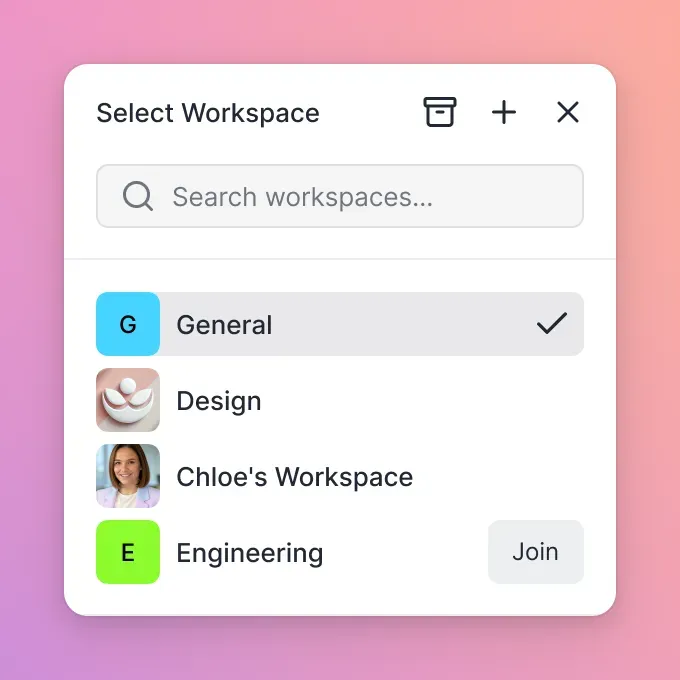
Fast.io handles this layer of the pipeline. An OpenClaw agent can write stem files to a Fast.io workspace through the MCP server, organize them into folders by project or instrument, and generate branded share links for external collaborators. Once Intelligence is enabled for the workspace, uploaded audio files are indexed for semantic search, so you can ask questions like "find the vocal stems from last Tuesday's session" through the AI chat interface.
Plans start at $9.99/month for Starter (3 seats, 250 GB) and $49.99/month for Business (10 seats, 5 TB). Fast.io offers a 14-day Business Trial (credit card required).
Fast.io is not a separation tool. It does not split audio. It is the storage, organization, and sharing layer that sits after the separation step in your agent workflow. Pair it with any of the six separation tools above and you get a pipeline that runs from raw audio to shared, organized stems without manual file management.
Key strengths:
- MCP server integration lets OpenClaw agents read and write files directly
- Intelligence Mode indexes audio files for natural-language search
- Branded sharing links for sending stems to external collaborators
Limitations:
- No audio processing or separation capabilities built in
- Requires pairing with a separate separation tool for the full pipeline
- Intelligence Mode search works on metadata and context, not audio content analysis
Best for: Any OpenClaw workflow that needs persistent, organized, shareable storage for separated stems.
Pricing: Paid plans start at $9.99/month (Starter) and $49.99/month (Business), with a 14-day Business Trial (credit card required).
Which Tool Should You Choose?
The right tool depends on where you sit in the tradeoff between stem count, cost, and automation.
If you want a single ClawHub install that covers the most ground, start with AudioPod. Its 16-stem mode and built-in speaker separation make it the most complete single-skill option for OpenClaw users.
If you want free, local, and benchmark-quality results, Demucs gives you 4 to 6 stems at 9.0 dB SDR with no API costs. Pair it with UVR's multi-model ecosystem to experiment with ensemble approaches across different architectures.
If you process audio occasionally and want the lowest per-track cost, StemSplit's $0.10/minute pricing with no subscription and a built-in API makes it the simplest SaaS integration for OpenClaw agents.
If you need the widest instrument palette from a SaaS provider and process enough tracks to justify a subscription, LALAL.AI's Andromeda engine covers 10+ instrument types with consistently high quality.
If you are a musician who wants to practice along with separated stems, Moises is the one of the few tools here built around that use case, with chord detection, tempo shifting, and pitch control layered on top of competitive separation quality.
For any of these tools, pair the separation step with a Fast.io workspace to handle the storage, versioning, and sharing that comes after. Fast.io offers a 14-day Business Trial (credit card required), with paid plans starting at $9.99/month.
Sources
References used to verify factual claims in this guide.
-
The music stem separation SaaS market reached $412 million in 2024 with a projected 21.8% CAGR through 2033
-
Demucs v4 achieves 9.0 dB signal-to-distortion ratio on the MUSDB HQ test set
-
AudioPod separates audio into up to 16 distinct stems
-
LALAL.AI Lite plan costs $7.50/month and Pro plan costs $15/month
-
StemSplit pricing is $0.10 per minute of audio with no subscription
-
Moises has over 70 million users across iOS, Android, and web
Frequently Asked Questions
What is the best free AI vocal remover for OpenClaw?
Demucs and Ultimate Vocal Remover (UVR) are both free and open source. Demucs runs as a Python CLI that OpenClaw agents can call directly, producing 4 to 6 stems at benchmark-quality 9.0 dB SDR. UVR adds ensemble mode that combines multiple models for cleaner results. Both require a local GPU for fast processing.
Can OpenClaw remove vocals from a song?
OpenClaw itself does not perform audio separation. It orchestrates tools that do. You can install the AudioPod skill from ClawHub for cloud-based separation, run Demucs locally through shell commands, or call SaaS APIs like LALAL.AI and StemSplit from within an OpenClaw agent session.
How does AI stem separation work?
AI stem separation uses deep neural networks trained on thousands of songs where the individual stems (vocals, drums, bass, other instruments) are known. The model learns to predict which parts of a mixed audio signal belong to each stem. Modern architectures like Hybrid Transformer Demucs process both the raw waveform and a frequency-domain spectrogram simultaneously, achieving signal-to-distortion ratios above 9 dB on standard test sets.
What is the difference between vocal removal and stem separation?
Vocal removal produces two outputs: an isolated vocal track and an instrumental track with the vocals stripped out. Stem separation goes further, splitting the audio into three or more individual components such as vocals, drums, bass, and other instruments. Some tools like AudioPod offer up to 16 stems, isolating individual drum kit pieces and guitar tones separately.
How do I organize stem files after separation?
An OpenClaw agent can write separated stems to a Fast.io workspace using the MCP server, organizing files by project or instrument type. Fast.io handles versioning, folder structure, and branded sharing links. Once Intelligence is enabled for the workspace, stems are indexed for semantic search so you can find specific files by describing what you need in natural language.
Related Resources

Store and share your separated stems from one workspace
Fast.io gives OpenClaw agents shared storage, workspace organization, and branded sharing for audio project files. Starts with a 14-day Business Trial.