Best OpenClaw Tools for AI Shopping Assistants and Product Recommendations
ClawHub lists 51 shopping and e-commerce skills, but most handle niche marketplace lookups or regional grocery ordering. This guide filters the category down to the seven skills that actually matter for building a product recommendation agent, grouped by what they do, price comparison, catalog management, checkout automation, and customer insight, with install commands and workflow examples.

Why Shopping Agents Need Specialized Skills
Amazon attributes 35% of its annual revenue to AI-powered product recommendations. That stat comes from one company with a dedicated engineering team and years of proprietary training data. Most retailers don't have those resources, which is exactly where OpenClaw fills the gap.
OpenClaw is an open-source AI agent that runs locally and connects to external services through "skills," modular instruction sets hosted on ClawHub. The shopping and e-commerce category on ClawHub currently lists 51 skills, but the count is misleading. Many target narrow use cases: one searches Irish takeaway menus, another predicts Animal Crossing turnip prices. If you're building a shopping assistant that compares products, recommends alternatives, and handles checkout, you need a curated shortlist.
The seven skills below cover the full shopping assistant workflow, from product discovery through purchase completion. Each entry includes the install command, what the skill actually does, and where it fits in a recommendation pipeline.
Related guides
- Best n8n Tools for AI Agents: Top 10 Nodes for 2026n8n changed AI automation with its visual workflow builder. We rank the best nodes and integrations for building...
- Best Tools for CrewAI Agents: Top Picks for 2026CrewAI agents need good tools to be useful. The framework handles coordination, but external integrations let agents...
- 7 Best OpenClaw Tools for AI Mockup and Product VisualizationProduct teams using AI mockup tools report iteration cycles up to 70% faster than manual design workflows, yet most...
- Top OpenClaw Tools for AI Dropshipping Product Research and Listing OptimizationDropshipping product research still eats hours of manual browsing, even for experienced sellers. OpenClaw skills turn...
- Top OpenClaw Tools for Graphic DesignersGraphic designers use top OpenClaw tools to handle routine tasks like resizing files and generating palettes. These...
- Best OpenClaw Tools for Indie HackersGuide to openclaw tools indie hackers: OpenClaw tools give solo developers an automated team to handle code and...
More on this subject: OpenClaw Tools (101 guides)
Top 7 OpenClaw Shopping Skills by Use Case
1. Dupe, Find Cheaper Alternatives Across Retailers
Best for: Price comparison and product discovery
ClawHub: Available as "dupe"
Dupe connects your agent to the dupe.com API, which indexes products across major retailers and surfaces cheaper alternatives for any given item. Hand your agent a product URL or description, and it returns visually similar or functionally equivalent options at lower price points. This is the core of most product recommendation workflows: the user says "I like this jacket but it's too expensive," and the agent returns three alternatives under budget.
The skill works best when paired with a persistent workspace. Store comparison results in a Fastio workspace so the agent can reference past searches, track price drops over time, and avoid recommending the same item twice in different sessions.
2. Buy-Anything, Conversational Checkout via Rye
Best for: In-chat purchasing from Amazon and Shopify stores
ClawHub: Available as "buy-anything"
Buy-Anything wraps Rye's Universal Checkout API into a conversational flow. A user shares an Amazon or Shopify product URL, and the agent walks them through variant selection, shipping details, and payment. Card details are tokenized through Stripe before they reach any part of the system, keeping PCI compliance off your plate entirely.
The skill includes spending guardrails (users set a maximum purchase limit before their first transaction) and order tracking that polls status without requiring a separate app. Shopify purchases keep the merchant as the seller of record, so there's no intermediary billing. For agents that both recommend and sell, Buy-Anything closes the loop between "here's what I suggest" and "done, it's ordered."
3. Clawpify, Full Shopify Store Management
Best for: Product catalog operations and inventory management
Install: openclaw skill install clawpify
Clawpify gives your agent full access to Shopify's GraphQL Admin API. Products, orders, customers, inventory, discounts, and catalog data are all available through unified GraphQL operations. Your agent can update product descriptions in bulk, adjust pricing based on competitor data, manage inventory levels, and handle order fulfillment actions.
The skill enforces confirmation prompts before destructive operations like refunds, cancellations, and gift card deactivation. It's MIT-0 licensed, so you can modify it freely. If you're running a Shopify store and want your OpenClaw agent to act as a store admin, Clawpify is the skill that makes that possible.



Give Your Shopping Agent a Memory That Lasts
Store product comparisons, customer preferences, and purchase histories in a workspace your agent can search by meaning. Persistent workspaces, MCP-ready at mcp.fast.io.
Product Discovery and Visual Search Skills
4. EachLabs Product Visuals, AI Product Photography
Best for: Generating product images for listings and recommendations
Install: openclaw skill install eachlabs-product-visuals
Product recommendations need visuals. EachLabs Product Visuals generates e-commerce product photography and short videos from reference images or text descriptions. Your agent can create lifestyle shots, white-background catalog images, and comparison visuals without a photo studio.
This matters for recommendation agents that curate collections or build comparison pages. Instead of scraping product images (which raises legal questions), the agent generates original visuals that represent the product accurately. Pair it with a workspace to store generated assets: upload to Fastio, create a branded share link, and hand the collection to a client or team member.
5. Shopping, General Purchase Decision Support
Best for: Research-heavy buying decisions
Install: openclaw skill install shopping
The Shopping skill focuses on the research phase of purchasing. Rather than handling checkout, it helps users compare options, evaluate tradeoffs, and avoid buyer's remorse. The agent can weigh factors like warranty terms, return policies, material quality, and long-term cost of ownership.
This skill works well as the front end of a recommendation pipeline. The Shopping skill narrows the field based on the user's stated preferences, then hands the shortlisted products to Dupe for price comparison or Buy-Anything for checkout. It's maintained by a single developer (ivangdavila) and has over 600 installs on ClawHub.
6. JTBD Analyzer, Customer Motivation Insights
Best for: Understanding why customers buy, not just what they buy
Install: openclaw skill install jtbd-analyzer
JTBD Analyzer applies the Jobs-to-Be-Done framework to product analysis. Instead of sorting products by features or price, it maps each option to the functional, emotional, and social outcomes the customer is trying to achieve. The output follows a structured format: situation, motivation, desired outcome, plus the alternatives that could fill the same "job."
For recommendation agents, this changes the quality of suggestions. A feature-comparison agent might recommend the laptop with the most RAM. A JTBD-informed agent recognizes that the customer's real job is "present confidently in client meetings," and recommends the laptop with the best display and battery life instead. The skill is most useful when your agent handles repeat customers whose preferences the agent can learn over time.
Storing Recommendations and Closing the Loop
7. Fastio, Persistent Workspace for Agent Output
Best for: Storing product research, comparison data, and customer interaction history
Connection: Remote MCP server at https://mcp.fast.io/mcp/tools
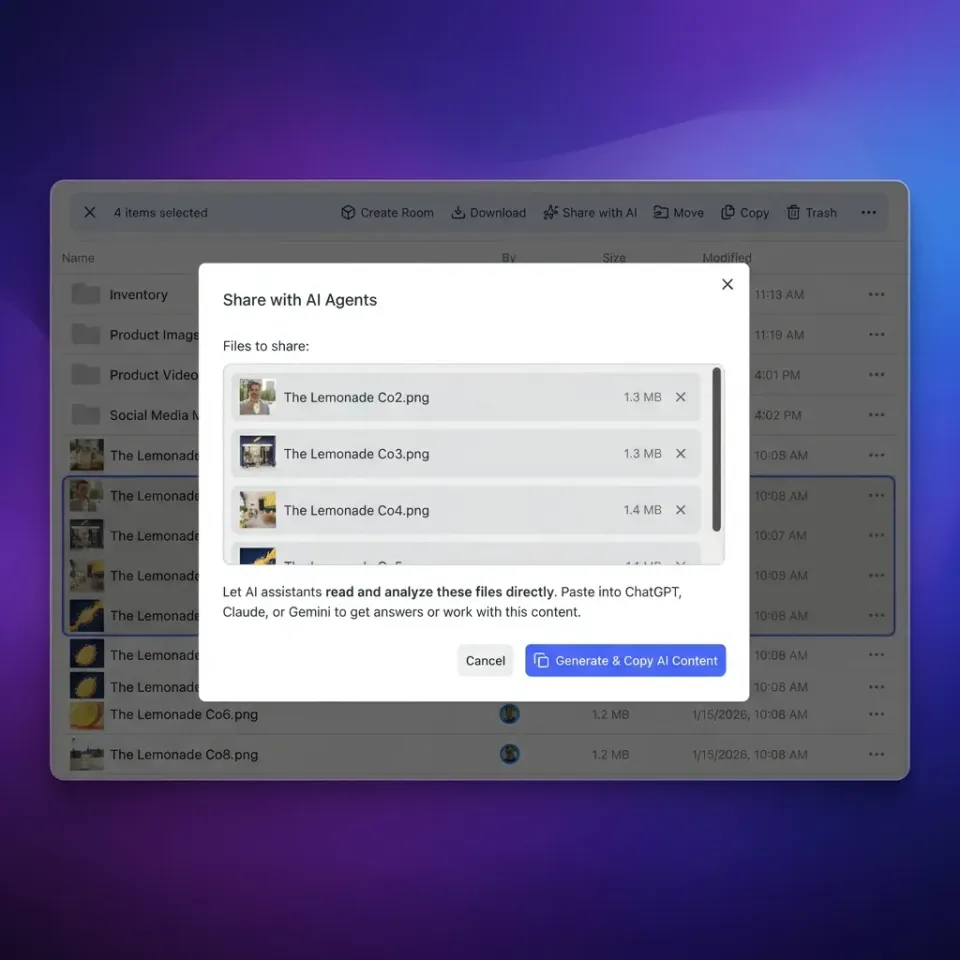
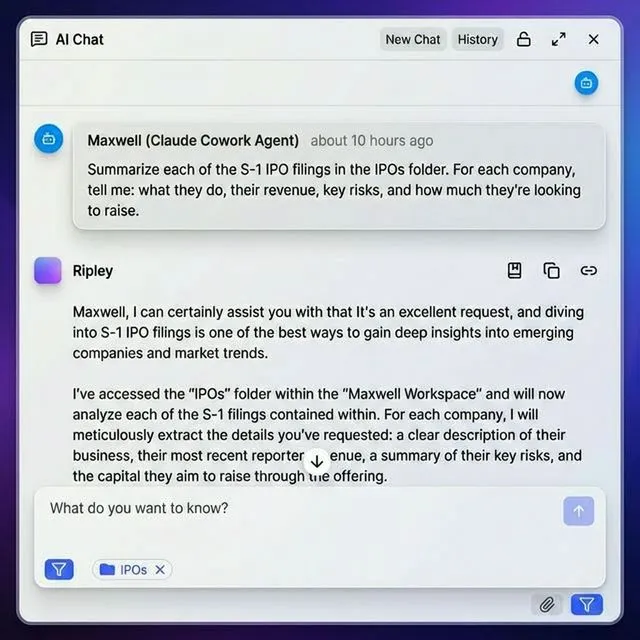
Shopping agents generate a lot of intermediate data: price comparisons, product shortlists, customer preference profiles, purchase histories. Without persistent storage, that context vanishes between sessions. Fastio gives your OpenClaw agent a workspace with generous storage, built-in semantic search, and a consolidated MCP toolset for file management, sharing, and AI-powered queries.
The practical advantage is session continuity. Your agent stores a customer's past searches and purchase history in a workspace, and the next time that customer asks for a recommendation, the agent pulls context from Intelligence Mode rather than starting from scratch. Fastio's MCP server is available at mcp.fast.io via Streamable HTTP, so any LLM that supports MCP can connect directly.
When the agent finishes building a product comparison or curated collection, it can create a branded share link and hand the output to the customer or a team member. The ownership transfer feature lets the agent build the workspace, then transfer it to a human who takes over from there.
Pricing: 14-day Business Trial (credit card required). Paid plans start at $9.99/mo (see pricing).
Other storage options exist. S3 works if you want raw object storage with no built-in search. Google Drive works for teams already in the Google ecosystem but lacks MCP integration and semantic indexing. Fastio sits in between: it's a workspace with file intelligence built in, not just a bucket.
Building a Recommendation Pipeline
These seven skills cover different stages of a shopping assistant workflow. Here's how they connect in practice.
Stage 1: Understand the request. The Shopping skill takes the user's input ("I need running shoes for trail running under $150") and breaks it into structured criteria. JTBD Analyzer adds the motivation layer, whether the customer prioritizes durability, comfort, or looking good on Instagram.
Stage 2: Find candidates. Dupe searches across retailers for products matching those criteria. Results get stored in a Fastio workspace so the agent can reference them later without re-querying.
Stage 3: Enrich and compare. EachLabs Product Visuals generates comparison images. Clawpify pulls inventory and pricing data from your Shopify store if you're also a seller. The agent builds a shortlist with pricing, visuals, and a JTBD fit score.
Stage 4: Present and purchase. The agent presents the top recommendations with images and reasoning. If the customer wants to buy, Buy-Anything handles checkout through Rye's API. The transaction, preference data, and outcome get logged back to Fastio for the next session.
This pipeline doesn't require custom code. Each skill is an instruction set that your OpenClaw agent follows. The orchestration happens through your prompts, telling the agent which skills to use and in what order. For scheduled runs (daily deal roundups, weekly price drop alerts), pair this pipeline with a cron job that triggers your agent at set intervals.
How to Choose the Right Skills for Your Use Case
Not every shopping assistant needs all seven skills. The right combination depends on what your agent is actually doing.
Price comparison agent: Dupe + Shopping + Fastio. The agent finds alternatives, compares them, and stores results for future reference.
Full-service concierge: All seven. The agent researches, recommends, generates visuals, processes checkout, and remembers the customer's preferences across sessions.
Shopify store assistant: Clawpify + JTBD Analyzer + Fastio. The agent manages your catalog, understands customer motivations, and keeps product data organized.
Deal finder or coupon agent: Dupe + Buy-Anything + Fastio. The agent hunts for lower prices and completes purchases when the target price is hit.
Start with two or three skills and add more as your workflows mature. Every skill you add increases the agent's prompt complexity, so there's a real tradeoff between capability and reliability. Test each combination before deploying it to customers.
For teams running multiple agents, Fastio's workspace permissions control which agents can read and write to shared data. Advisory file locks let an agent signal an active update while working on a product comparison, while automatic version history preserves every revision. Audit logs track every action, so you can review what your shopping agent recommended and why.
Sources
References used to verify factual claims in this guide.
-
Amazon attributes 35% of its annual revenue to AI-powered product recommendations
-
51 shopping and e-commerce skills listed in the ClawHub Shopping and E-commerce category
-
Buy-Anything skill uses Rye Universal Checkout API with Stripe tokenization for secure payments
Frequently Asked Questions
Can OpenClaw build a shopping assistant?
Yes. OpenClaw supports shopping assistants through ClawHub skills like Shopping (purchase research), Dupe (price comparison), and Buy-Anything (conversational checkout). You install these skills, then prompt your agent to use them in sequence. The agent runs locally on your machine and connects to external APIs through the skills.
What e-commerce skills are available on ClawHub?
ClawHub lists 51 skills in the Shopping and E-commerce category. They range from Shopify store management (Clawpify) and Amazon checkout (Buy-Anything) to niche tools like grocery ordering in specific countries. The seven skills covered in this guide are the ones most relevant for building product recommendation and shopping assistant workflows.
How do AI shopping agents compare products?
AI shopping agents compare products by pulling data from multiple sources (retailer APIs, web scraping, user reviews) and evaluating options against the user's stated criteria. Skills like Dupe search across retailers for alternatives at lower price points, while JTBD Analyzer evaluates products based on the customer's underlying motivation rather than just features and price.
Is the Buy-Anything skill safe to use for purchases?
Buy-Anything tokenizes payment details through Stripe before they reach any other system, so card numbers never touch the chat or the LLM. Users set a spending limit before their first purchase. Shopify transactions keep the merchant as the seller of record with no intermediary billing. That said, you should test thoroughly with small purchases before giving an agent broad purchasing authority.
How does Fastio help shopping agents retain context?
Fastio provides persistent storage that survives between agent sessions. Your shopping agent can store customer preference profiles, past search results, and purchase histories in a workspace. Intelligence Mode auto-indexes these files for semantic search, so the agent can retrieve relevant context (like "this customer prefers sustainable brands") without re-asking.
Related Resources

Give Your Shopping Agent a Memory That Lasts
Store product comparisons, customer preferences, and purchase histories in a workspace your agent can search by meaning. Persistent workspaces, MCP-ready at mcp.fast.io.