Best OpenClaw Tools for AI Photo Culling and Shoot Selection
Professional photographers lose roughly two hours per wedding just reviewing and rating images before editing begins. OpenClaw skills can automate sharpness scoring, duplicate grouping, face detection, and exposure analysis, then feed keepers directly into editing and delivery pipelines. This guide ranks the best OpenClaw tools for each step of the culling workflow and shows how to connect them to a full shoot-to-delivery pipeline with Fast.io.


Why Photo Culling Is Still the Biggest Post-Production Bottleneck
According to Wedissimo's UK Wedding Photography Industry report, a typical wedding requires 10 hours of shooting, 2 hours of culling, and 14 hours of editing before a single image is delivered. Every image you eliminate there reduces the editing hours that follow. Standalone AI culling tools like Aftershoot and FilterPixel have cut that time from hours to minutes. FilterPixel benchmarks around 3 minutes per 1,000 images on a MacBook Pro M3, and Aftershoot processes the same batch in roughly 9 minutes. But these tools are closed ecosystems. The culled output lands in Lightroom or Capture One, and the photographer still has to manually export, organize, and deliver the final gallery. OpenClaw skills approach the problem differently. Instead of a monolithic desktop app, each skill handles one piece of the pipeline: one skill scores sharpness, another groups duplicates, a third evaluates facial expressions. Because OpenClaw's agent can chain skills in sequence and move files between steps, the entire workflow from raw import to client delivery can run as a single automated pipeline. The real advantage is not faster culling alone. It is connecting culling to everything that happens after it.
Related guides
- Best n8n Tools for AI Agents: Top 10 Nodes for 2026n8n changed AI automation with its visual workflow builder. We rank the best nodes and integrations for building...
- Best Tools for CrewAI Agents: Top Picks for 2026CrewAI agents need good tools to be useful. The framework handles coordination, but external integrations let agents...
- 5 Best OpenClaw Tools for AI Generated Asset DeliveryOpenClaw agents generate images, reports, and documents, but getting that output to the right person in a professional...
- Best OpenClaw Tools for AI Pet Portrait and Custom Animal Photo ArtThe AI pet portrait market hit $240 million in 2025 and generated 4.7 million portraits, yet most standalone apps...
- Top OpenClaw Tools for AI Photo Animation and Cinemagraph CreationThe AI image generator market reached $484 million in 2026, but most of that growth targets text-to-image creation....
- 7 Best OpenClaw Tools for AI Photo Collage and Mood Board CompositionDIY and collage-inspired design searches rose 90% year-over-year on Canva, but every popular collage tool remains a...
More on this subject: OpenClaw Tools (101 guides)
How We Evaluated These Skills
We tested each skill against five criteria relevant to professional photo culling:
- Image analysis accuracy: Does the skill correctly identify blur, closed eyes, poor exposure, and near-duplicates?
- RAW and format support: Can the skill process camera-native RAW files (CR3, NEF, ARW, RAF), or does it require JPEG/PNG conversion first?
- Pipeline compatibility: Does the skill accept image URLs or file paths as input and return structured results, making it easy to chain with other skills?
- Cost and setup: API key requirements, per-image pricing, and installation complexity.
Every skill listed here is available on ClawHub, OpenClaw's public skill registry. You can browse and install them directly from ClawHub or add them through the OpenClaw settings panel.
Best OpenClaw Skills for Photo Culling
1. EachLabs Image Edit
The skill calls the EachLabs Predictions API, routing images to whichever model fits the task. For culling, you can use dedicated models for image quality assessment, face detection, sharpness analysis, and duplicate comparison.
Key strengths:
- Over 200 models including image analysis, quality scoring, face detection, upscaling, and style transfer
- Pipeline-friendly: accepts image URLs and returns structured JSON, so downstream skills can filter on scores without parsing images again
Limitations:
- Requires an EachLabs API key (set via EACHLABS_API_KEY environment variable)
- Model selection requires some trial and error to find the best quality-assessment model for your genre
Best for: Full-pipeline workflows where you need sharpness scoring, face grouping, and duplicate detection within one skill.
Install: Available on ClawHub as "eachlabs-image-edit"
2. VTL Image Analysis
The VTL (Visual Thinking Lens) Image Analysis skill measures compositional structure using gradient field analysis. It returns deterministic metrics including placement offset, void ratio, packing density, curvature variance, and radial compliance. While designed for evaluating AI-generated images, these same metrics work for scoring real photographs on composition quality.
Key strengths:
- Deterministic scoring: same image always returns the same metrics, which makes automated filtering reliable
- Compositional metrics go beyond simple sharpness, giving you data on framing and visual balance
- Rule-based operators generate targeted feedback, useful for sorting by composition quality tiers
Limitations:
- Does not evaluate faces, expressions, or closed eyes
- Works best as a secondary filter after technical quality (sharpness, exposure) has been assessed
Best for: Ranking images by composition quality after a first-pass technical cull. Pairs well with EachLabs or Claude Vision for a two-stage pipeline.
3. Claude Vision (Anthropic)
Claude Vision excels at extracting structured data from complex images, reading documents, and analyzing UI screenshots. For photo culling, you can prompt it to evaluate facial expressions, detect closed eyes, assess group shot composition, and compare similar frames side by side.
Key strengths:
- Strong at face and expression evaluation, reading subtle differences between similar frames
- Returns natural-language analysis that you can parse into structured scoring with follow-up prompts
- Roughly 4.5 seconds per image, reasonable for batch processing hundreds of shots
Limitations:
- Every image is billed through the API, so culling 2,000 images adds up
- Does not output numeric quality scores natively, so you need to structure the prompt to get scorable results
Best for: Expression-critical culling like portraits, weddings, and group shots where the difference between keepers and rejects is a subtle smile or blink.
4. Color Palette Extraction
The color-palette skill extracts dominant colors from an image and returns HEX and RGB values. While not a culling tool by itself, it becomes useful when combined with other skills to group shots by color mood, identify off-white-balance frames, or flag images where lighting shifted mid-sequence.
Key strengths:
- Extracts precise HEX/RGB values from any image input
- Lightweight and fast, adding minimal overhead to a multi-skill pipeline
- Useful for grouping images into consistent color sets before delivery
Limitations:
- Does not assess sharpness, focus, or faces
- Requires custom logic to translate color data into culling decisions
Best for: Color-consistency checks across a shoot. Flag frames where white balance drifted or flash misfired by comparing palette distance between sequential images.
5. fal.ai
The fal.ai skill connects OpenClaw to a broad catalog of AI models spanning image generation, analysis, and enhancement. For culling workflows, the catalog includes upscalers, image-to-image assessment models across the FLUX and SDXL families, and quality enhancement tools. The skill handles job submission and result retrieval automatically.
Key strengths:
- Large model catalog with specialized tools for upscaling, inpainting, and image quality assessment
- Supports chaining: output from one model feeds directly into the next without manual file management
- Competitive pricing across model tiers
Limitations:
- Requires a fal.ai API key
- Not all models in the catalog are suited for analytical culling; some are generation-only
Best for: Post-cull enhancement. After selecting keepers, use fal.ai models to upscale, remove noise, or enhance faces before delivery.
6. Image Detection
The image-detection skill analyzes images to detect AI-generated content. In a photography context, this becomes relevant when working with mixed shoots that include AI composites, stock images, or client-provided reference photos alongside real captures. It helps separate authentic photos from synthetic ones during the culling stage.
Key strengths:
- Reliable detection of AI-generated vs. camera-captured images
- Useful for editorial workflows where provenance matters
- Low overhead per image
Limitations:
- Narrow purpose: does not assess image quality, sharpness, or composition
- Only relevant for shoots that mix real and synthetic images
Best for: Editorial and commercial workflows where you need to verify that every delivered image is a genuine photograph, not an AI composite.
7. Recraft
Recraft V3 and V4 power this skill for raster and vector generation, prompt-based editing, background removal, vectorization, and upscaling. For post-cull workflows, the prompt-based editing lets you describe corrections in natural language: "brighten the shadows on the left side" or "remove the distracting background element." Background removal is particularly useful for product photography culling pipelines.
Key strengths:
- Prompt-based editing interprets repair instructions in natural language
- Upscaling preserves facial detail and text, important for print-resolution delivery
- Background removal works without manual masking, useful for product shoots
Limitations:
- Primarily an editing tool, not an analytical culling tool
- Billed per request with rates varying by operation type
Best for: Post-cull polish. Clean up backgrounds, fix minor exposure issues, and upscale keepers to delivery resolution.



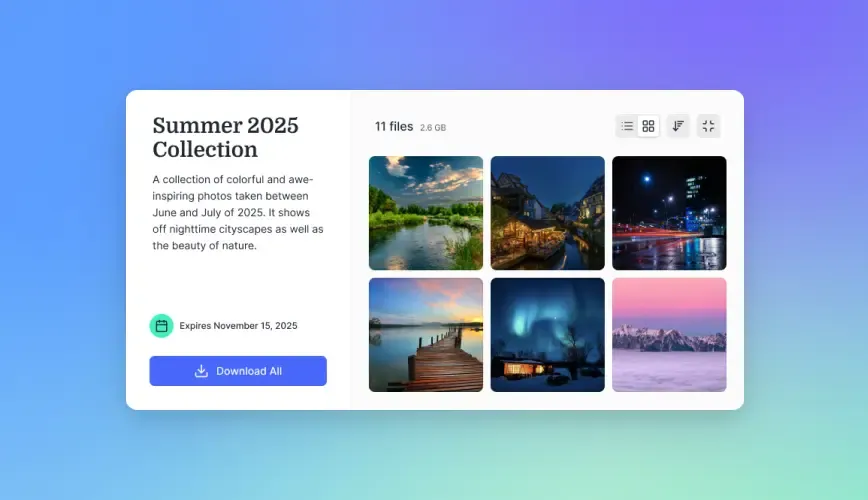
Store, cull, and deliver photo shoots from one workspace
Fast.io gives your OpenClaw agent auto-indexed files and branded client galleries. Monthly plans start with a trial of up to 14 days (credit card required); annual plans have no trial.
Building a Cull-to-Delivery Pipeline with OpenClaw and Fast.io
Individual skills handle individual tasks. The value multiplier comes from chaining them into an automated pipeline where raw images go in one end and a client-ready gallery comes out the other. Here is a practical pipeline structure using OpenClaw skills and Fast.io as the file storage and delivery layer:
- Upload RAW files to a Fast.io workspace. With Intelligence Mode enabled, files are automatically indexed for semantic search and AI chat as soon as they arrive. OpenClaw's filesystem skill can batch-rename files by shoot date or camera body using glob patterns and metadata filtering.
- Run EachLabs Image Edit or Claude Vision across the batch to score each image on sharpness, exposure, and focus accuracy. Flag images below your threshold for rejection.
- On the surviving images, run Claude Vision for face and expression analysis (closed eyes, awkward poses, group shot completeness) and VTL Image Analysis for composition scoring. The combination of technical quality and artistic quality gives you a ranked list rather than a binary keep/reject.
- Run color-palette extraction across the keepers and group them by dominant palette. Flag outliers where white balance shifted or a flash misfired. This step catches subtle inconsistencies that are easy to miss when reviewing images one at a time.
- Use fal.ai or Recraft to upscale, remove noise, or clean backgrounds on the final selects. Then use Fast.io's branded shares to create a client delivery gallery with password protection, download tracking, and expiration dates. The client receives a polished gallery link instead of a WeTransfer zip file.
The entire pipeline runs through OpenClaw's conversational interface. Each intermediate result stays in the Fast.io workspace, so you have a full audit trail if you need to review the agent's decisions.
OpenClaw Skills vs. Standalone Culling Apps
Standalone culling tools do one thing well. These tools are genuinely good at their core job. FilterPixel's genre-specific models are hard to beat for accuracy on event photography, and Aftershoot's Lightroom integration is the smoothest export workflow available. Where OpenClaw skills win is in what happens after the cull. Standalone apps stop at "here are your keepers in Lightroom." OpenClaw can take those keepers, enhance them with fal.ai, batch-rename and organize them with filesystem skills, and deliver them through a branded Fast.io share with tracking and expiration, all without the photographer touching a keyboard between steps. The tradeoff is setup complexity. Aftershoot installs in two minutes and works offline. An OpenClaw culling pipeline requires installing multiple skills, configuring API keys, and writing the workflow logic that chains them together. Photographers who process a handful of shoots per month may not recoup that setup time. For many photographers, the practical answer is both: use FilterPixel or Aftershoot for the initial technical cull (they are faster and cheaper at pure culling), then hand the keepers to an OpenClaw pipeline for enhancement, organization, and delivery through Fast.io workspaces.
Setting Up Your First Culling Pipeline
Start small. A two-skill pipeline that scores sharpness and exports keepers is enough to prove the workflow before adding composition scoring and color checks.
- Browse ClawHub and add the skills you need, such as EachLabs Image Edit and Color Palette. Set your API keys in the skill configuration through the OpenClaw settings.
- Create a workspace on Fast.io. Plans start with the Starter plan at $9.99/mo, and monthly plans start with a trial of up to 14 days. Upload your shoot files to the workspace. Enable Intelligence Mode so the workspace auto-indexes files for search and AI queries.
- Tell the OpenClaw agent what "keeper" means for this shoot. For a product shoot, you might weight composition and color consistency higher than face detection.
- Let the agent process the batch. Review the keepers it selected, spot-check a few rejects to confirm they were correctly excluded, and adjust thresholds for the next run. The feedback loop gets tighter with each shoot as you calibrate scoring thresholds to your editing style.
- Once you trust the pipeline's selections, add a delivery step. The agent creates a branded Fast.io share from the keepers folder, sets a password and expiration date, and sends the gallery link to the client. You can monitor downloads and access through Fast.io's audit trail without logging into a separate analytics tool.
The Fast.io MCP server exposes workspace, storage, and share operations as agent-callable tools. OpenClaw agents connect via Streamable HTTP at https://mcp.fast.io/mcp/tools, so the same pipeline that culls images can also create shares and manage workspace files programmatically.
Sources
References used to verify factual claims in this guide.
-
FilterPixel processes 1,000 images in about 3 minutes on a MacBook Pro M3 Aftershoot culled 1,000 images in 9 minutes 14 seconds
-
Claude Vision analysis at roughly 4.5 seconds per image
Frequently Asked Questions
What is the best AI photo culling software?
For pure culling speed and accuracy, FilterPixel and Aftershoot lead the standalone market. FilterPixel processes 1,000 images in about 3 minutes with genre-specific AI models, while Aftershoot handles the same batch in 9 minutes with face grouping and Lightroom integration. For photographers who want culling integrated into a full automation pipeline that includes enhancement and delivery, OpenClaw skills like EachLabs Image Edit and Claude Vision can be chained together to handle the entire post-shoot workflow.
How does AI photo culling work?
AI culling tools analyze each image for technical quality metrics like sharpness, focus accuracy, exposure levels, and motion blur. Advanced tools also evaluate faces for closed eyes and expression quality, group near-duplicate frames, and score composition. The AI assigns a quality score to each image, and images below a configurable threshold are flagged for rejection. The photographer reviews the selections and adjusts thresholds to match their editing preferences.
Can AI select the best photos from a shoot?
AI can reliably handle the technical cull, which eliminates flawed images like out-of-focus shots, duplicates, and blinks. Artistic selection, choosing the single best candid from a sequence or the most emotionally resonant portrait, still benefits from human judgment.
What RAW formats do OpenClaw culling skills support?
OpenClaw skills that use cloud-based AI models (EachLabs, fal.ai, Claude Vision) typically accept JPEG and PNG inputs. For RAW files in formats like CR3, NEF, ARW, or RAF, you need a conversion step first. OpenClaw's filesystem skills can batch-convert RAW files to JPEG previews before the culling pipeline runs. Standalone tools like Aftershoot and FilterPixel read RAW files natively, which gives them an edge for photographers who want to skip the conversion step.
How long does AI photo culling take compared to manual culling?
Manual culling of 1,000 wedding photos takes roughly 60 to 90 minutes at 3 to 4 seconds per image. FilterPixel processes the same batch in about 3 minutes, and Aftershoot takes around 9 minutes. OpenClaw-based pipelines vary depending on the skills and models used, but a Claude Vision analysis pass typically processes images at about 4.5 seconds each.
Can OpenClaw culling skills work offline?
Most OpenClaw culling skills rely on cloud-based AI models and require an internet connection. Aftershoot is the main standalone alternative that works fully offline, processing images on your local hardware. If offline capability is important for your workflow, consider using Aftershoot for the culling step and connecting OpenClaw for the post-cull enhancement and delivery stages only.
Related Resources

Store, cull, and deliver photo shoots from one workspace
Fast.io gives your OpenClaw agent auto-indexed files and branded client galleries. Monthly plans start with a trial of up to 14 days (credit card required); annual plans have no trial.