Best OpenClaw Tools for AI Answer and FAQ Content Generation
Gartner predicted search engine volume would drop 25% by 2026 due to AI chatbots. Google confirmed the trend by deprecating FAQ rich results in May 2026. FAQ content still matters, but the goal has shifted from earning rich snippets to getting cited by answer engines like ChatGPT, Perplexity, and Google AI Overviews. Eight ClawHub skills handle the full pipeline from question discovery through answer drafting, schema markup, and citation tracking.


Why FAQ Content Shifted to Answer Engines
Gartner predicted in February 2024 that search engine volume would drop 25% by 2026 as AI chatbots replaced traditional queries. That prediction landed the same month Google officially deprecated FAQ rich results, ending a seven-year run of expandable Q&A snippets in search results.
The shift does not make FAQ content less valuable. It changes where the content needs to perform. Instead of targeting Google's rich result carousel, FAQ pages now need to be structured so that ChatGPT, Perplexity, Claude, and Google AI Overviews can find, parse, and cite them. This practice, called answer engine optimization (AEO), treats every Q&A pair as a potential source for AI-generated answers.
OpenClaw agents can automate the full AEO workflow: mining questions from search data and community forums, drafting structured answers, generating schema markup, and tracking whether AI assistants actually cite your content. ClawHub lists over 350 search and research skills, with a growing subset focused specifically on AEO.
We evaluated skills on four criteria: question source quality (are the questions pulled from real user behavior, not generated?), output structure (does the skill produce content ready for publishing?), schema compliance (does it generate valid JSON-LD?), and measurement capability (can it track AI citations?).

Related guides
- Best n8n Tools for AI Agents: Top 10 Nodes for 2026n8n changed AI automation with its visual workflow builder. We rank the best nodes and integrations for building...
- Best Tools for CrewAI Agents: Top Picks for 2026CrewAI agents need good tools to be useful. The framework handles coordination, but external integrations let agents...
- Best OpenClaw Tools for AI Vector and SVG Illustration GenerationMost AI image generators output raster formats, leaving designers to manually trace paths or accept bloated SVG files...
- Top OpenClaw Tools for AI Content HumanizationOpenClaw's skill ecosystem includes several purpose-built tools for detecting and removing AI writing patterns from...
- Top OpenClaw Tools for AI Data Extraction from Screenshots and Visual ContentAgent Browser passed 58,600 installs on Composio in early 2026, signaling that developers need tools for data locked...
- 7 Best OpenClaw Tools for AI 3D Model GenerationOpenClaw's skill registry includes several tools that search, download, and generate 3D models in printable formats....
More on this subject: OpenClaw Tools (101 guides)
Best Skills for Question Discovery
The foundation of any FAQ workflow is finding the right questions. Generic brainstorming produces generic content. The skills below pull questions from actual search behavior and community discussions, giving your agent real data to work.
A practical starting point: run aeo-prompt-research-free against your brand name and top three product categories. The skill returns conversational queries grouped by topic cluster, so you can see which question areas have the most AI-assistant search activity. Filter the output by competition level and prioritize clusters where fewer than five competitors have published structured answers. That gap is where a new FAQ page has the best chance of earning citations from ChatGPT, Perplexity, or Google AI Overviews.
One constraint worth noting: question discovery skills rely on publicly accessible search data. If your product serves a niche B2B audience, the question volume from free sources may be thin. In that case, supplement with the AnswerOverflow Discord integration or the SEO/AEO Skills Pack's Reddit mining to capture questions from community forums where your users actually ask for help.
1. aeo-prompt-research-free
Built by psyduckler, this skill discovers which AI prompts and topics matter for a brand's answer engine visibility using only free tools. It identifies the conversational queries that users type into ChatGPT, Perplexity, and similar platforms, then clusters them by topic and competition level.
Key Strengths:
- Focuses specifically on AI-assistant queries, not just traditional search keywords
- Uses free data sources with no paid API subscriptions required
- Outputs prioritized topic clusters ranked by citation potential
Limitations:
- Relies on publicly available data, so niche industries may see thinner results
- No built-in integration with paid keyword tools like SEMrush or Ahrefs
Best For: Teams starting an AEO strategy from scratch who need to identify which questions to answer first.
2. SEO/AEO Skills Pack
This community skills pack by jrr996shujin-png combines three capabilities: question mining from Reddit and Quora, keyword ranking across Google and Bing, and competitive content analysis. The question mining component scans community discussions for real user problems, categorizes the signals, and transforms them into 40 to 50 long-tail conversational questions per run.
Key Strengths:
- Pulls questions from actual user discussions, not search volume estimates
- Generates prioritized content calendars with 15 recommendations per run
- Includes competitive intelligence to identify content gaps competitors have not covered
Limitations:
- Requires SEMrush API and Google Search Console access for full functionality
- More complex setup than single-purpose skills
Best For: Content teams that want question discovery and competitor analysis in one workflow.
3. AnswerOverflow
Built by rhyssullivan, AnswerOverflow indexes Discord community discussions and makes them searchable. Discord servers contain thousands of answered questions that never surface in search engines. This skill lets your OpenClaw agent query those conversations to find real questions and verified community answers.
Key Strengths:
- Taps into a question source that most FAQ generators ignore entirely
- Answers come from verified community members, not AI-generated guesses
- Works well for developer tools and technical products with active Discord communities
Limitations:
- Only covers Discord, not Slack, forums, or other community platforms
- Requires the target Discord server to use AnswerOverflow indexing
Best For: Developer-focused products with active Discord communities where users ask and answer technical questions.
How to Draft FAQ Content That Answer Engines Cite
Once you have a list of questions worth answering, these skills handle the writing and structural markup. The goal is content that reads naturally to humans while being machine-parseable for answer engines.
The pattern that earns citations is specific: lead each answer with a single declarative sentence that directly addresses the question, then follow with supporting detail. Answer engines pull from content that gives a clear, self-contained response in the first 40 to 60 words. If your opening paragraph buries the answer behind context or caveats, AI systems skip it in favor of a competitor who gets to the point faster.
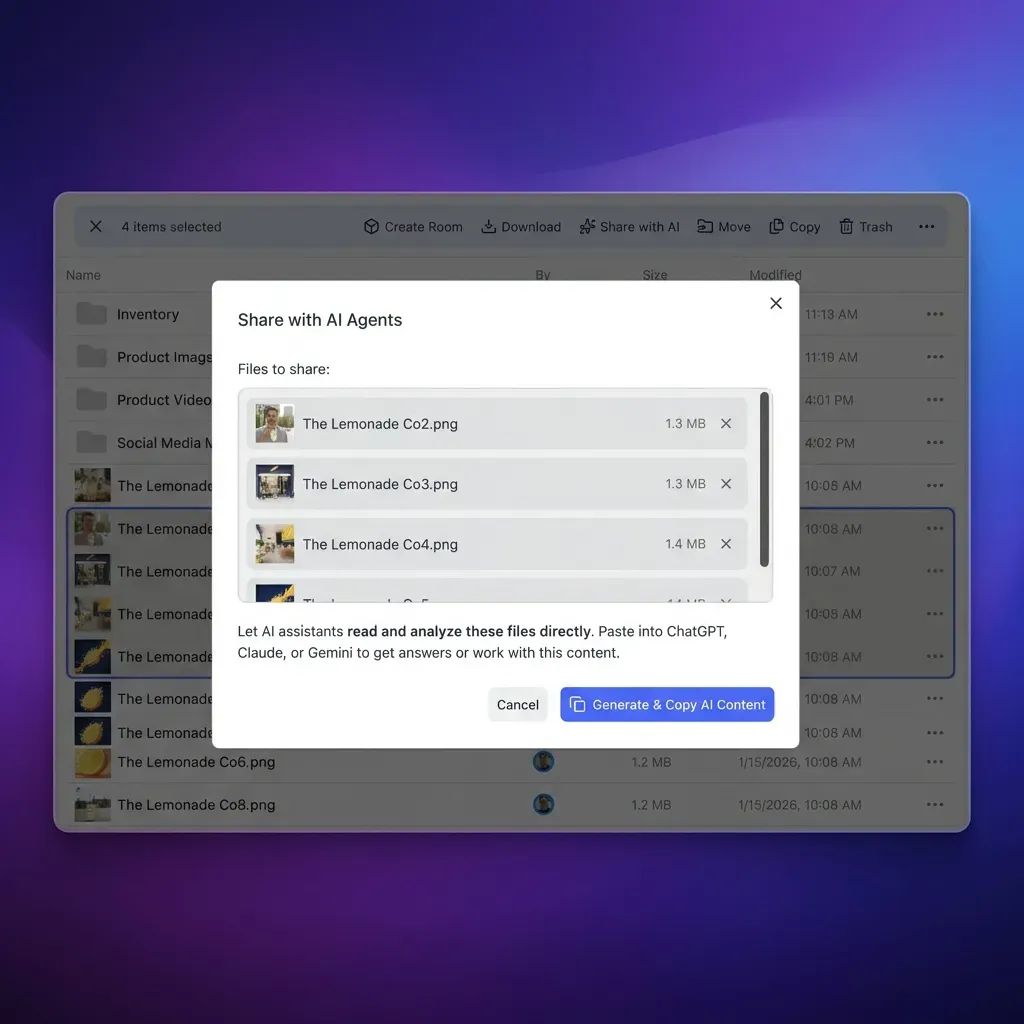
Schema markup reinforces that structure. Even though Google deprecated FAQ rich results, valid FAQPage JSON-LD still signals to crawlers and AI systems where each question-answer pair starts and ends. Pair the aeo-content-free skill with schema-markup-generator so your agent produces both the prose and the structured data in a single pass, then store the output in a Fastio workspace where your editorial team can review before publishing.
4. aeo-content-free
The companion to aeo-prompt-research-free, this skill by psyduckler creates or refreshes content specifically optimized for AI citation. It takes a topic and target questions, then drafts content structured with clear definition blocks, concise answer paragraphs, and attribution-friendly formatting that answer engines prefer to cite.
Key Strengths:
- Designed specifically for AI citation, not just traditional SEO ranking
- Pairs directly with aeo-prompt-research-free for a research-to-publish pipeline
- Produces content with clear, quotable answer blocks
Limitations:
- Output quality depends heavily on the input question quality
- May need human editing for brand voice consistency
Best For: Teams already using the aeo-prompt-research-free skill who want an end-to-end pipeline from question discovery to draft content.
5. content-engine
Built by ariktulcha, content-engine is a full-stack content creation pipeline that handles research, drafting, and publication preparation. Unlike single-purpose FAQ writers, it manages the entire lifecycle from topic research through final output, making it useful for teams producing FAQ pages alongside blog posts and knowledge base articles.
Key Strengths:
- Covers the full pipeline from research to publication-ready output
- Handles multiple content types beyond just FAQ pages
- Useful for teams with high-volume content needs
Limitations:
- Broader scope means less specialization in AEO-specific formatting
- Configuration requires more upfront setup than single-purpose skills
Best For: Content teams that need FAQ generation as part of a larger content operation, not a standalone workflow.
6. schema-markup-generator
This skill generates valid Schema.org JSON-LD structured data for articles, FAQs, products, and how-to pages. Even though Google deprecated FAQ rich results in May 2026, structured data still serves as a comprehension signal that helps search engines and AI systems parse your content correctly. The skill has over 8,700 downloads on ClawHub.
Key Strengths:
- Generates valid JSON-LD for FAQPage, Article, HowTo, and Product schema types
- Keeps markup current with Schema.org standards
- Integrates into existing content pipelines without manual JSON editing
Limitations:
- FAQ schema no longer triggers visible rich results on Google as of May 2026
- Requires periodic updates as Schema.org evolves
Best For: Any team publishing FAQ content that wants clean structured data for AI comprehension, even without the visual SERP benefit.


Give your FAQ content a permanent home
Generous storage, Intelligence Mode for semantic search across your content library, and MCP tooling so your OpenClaw agent can read, write, and share FAQ assets.
How to Measure Whether AI Assistants Cite Your FAQ Pages
Publishing FAQ content without measurement is guessing. These two skills close the AEO feedback loop by tracking whether AI assistants actually reference your pages.
Traditional analytics tools like Google Search Console track clicks from organic search, but they cannot tell you whether ChatGPT or Perplexity cited your FAQ page in a response. That gap makes AEO measurement harder than standard SEO. The psyduckler AEO suite addresses this by querying AI platforms directly, checking whether your brand or page URL appears in generated answers for your target questions.
A useful workflow: run aeo-analytics-free weekly against your top 20 FAQ pages. Export the citation data to a shared workspace so your content team can compare citation rates against page update dates. Pages that were recently refreshed but still show zero citations likely have structural problems, such as answers that bury the key fact below the fold or missing schema markup. Pages with high citation rates become templates for future FAQ content.
7. aeo-analytics-free
The third skill in psyduckler's AEO suite, aeo-analytics-free measures whether a brand is mentioned and cited by AI assistants. It tracks your visibility across ChatGPT, Perplexity, and other answer engines, giving you concrete data on which FAQ pages are being cited and which are being ignored.
Key Strengths:
- Directly measures AI citation, the metric that matters for AEO
- Uses free tools with no enterprise analytics subscription needed
- Completes the research-to-measurement loop with the other AEO skills
Limitations:
- AI citation tracking is inherently imprecise since answer engines do not always show sources
- Coverage depends on which AI platforms expose citation data
Best For: Teams that need to prove AEO ROI or prioritize which FAQ pages to update next.
8. aeo-prompt-frequency-analyzer
Also by psyduckler, this skill analyzes the search queries that Gemini uses when answering user prompts. By understanding which queries an AI assistant runs behind the scenes, you can reverse-engineer what content structure and keywords lead to citation.
Key Strengths:
- Reveals the hidden search behavior of AI assistants
- Helps optimize content for the queries AI systems actually run, not just user-facing searches
- Useful for identifying content formatting patterns that increase citation likelihood
Limitations:
- Currently focused on Gemini's search behavior, which may differ from other AI platforms
- Requires interpretation to translate insights into content changes
Best For: Advanced AEO practitioners who want to understand the mechanics behind AI citation decisions.
Storing and Sharing Generated FAQ Content
An OpenClaw agent can generate dozens of FAQ pages in a single session, but those files need to live somewhere accessible to your content team, your CMS, and your other agents. Local disk works for solo projects but breaks down when multiple people or agents need to collaborate on content.
Fastio provides persistent workspaces where your OpenClaw agent can write FAQ content that your editorial team reviews through a web interface. With Intelligence Mode enabled, the workspace indexes every FAQ document for semantic search, so you can ask questions like "which FAQ pages mention pricing?" and get cited answers from your own content library.
The Fastio MCP server gives your agent read, write, and search access across workspaces. After your agent generates a batch of FAQ pages, it can upload them to a shared workspace, organize them by topic cluster, and leave comments anchored to text selections. Branded shares let you distribute finalized FAQ sets to clients or partner teams.
Fastio offers a 14-day Business Trial (credit card required), with paid plans starting at $9.99/mo (see pricing). Connect your agent via the remote MCP server at https://mcp.fast.io/mcp/tools.
Other storage options include S3 for teams already running AWS infrastructure, Google Drive for organizations in the Google Workspace ecosystem, or a local git repository for developers who prefer version control over cloud storage.
Sources
References used to verify factual claims in this guide.
-
Search engine volume will drop 25% by 2026 due to AI chatbots and virtual agents
-
ClawHub hosts over 5,400 community-built skills across categories
-
Google deprecated FAQ rich results in May 2026
-
Schema-markup-generator skill has over 8,700 downloads on ClawHub
Frequently Asked Questions
Can OpenClaw generate FAQ content automatically?
Yes. Skills like aeo-content-free and content-engine can draft FAQ pages from a list of target questions. The agent researches the topic, writes structured answers, and outputs content ready for review. Most teams add a human editing step before publication to ensure brand voice consistency and factual accuracy.
What skills help create answer-engine-optimized content?
The psyduckler AEO suite covers the full workflow: aeo-prompt-research-free for question discovery, aeo-content-free for drafting optimized content, and aeo-analytics-free for tracking AI citations. The schema-markup-generator adds JSON-LD structured data that helps answer engines parse your content correctly.
How do AI FAQ generators source questions?
The best OpenClaw skills pull questions from real user behavior rather than generating them synthetically. The SEO/AEO Skills Pack mines Reddit and Quora discussions. AnswerOverflow indexes Discord community Q&A threads. The aeo-prompt-research-free skill identifies conversational queries users type into AI assistants like ChatGPT and Perplexity.
Does FAQ schema markup still matter after Google removed FAQ rich results?
Google deprecated FAQ rich results in May 2026, so the markup no longer triggers expandable snippets in search results. However, Google confirmed it still uses FAQ structured data to understand page content. AI answer engines like ChatGPT and Perplexity also use structured data as a signal when deciding which sources to cite. The schema-markup-generator skill keeps your markup valid for these AI comprehension use cases.
How do you measure whether AI assistants cite your FAQ content?
The aeo-analytics-free skill tracks brand mentions and citations across AI platforms. The aeo-prompt-frequency-analyzer reveals which search queries AI assistants run behind the scenes when answering user prompts, helping you understand what content patterns lead to citation. Traditional analytics tools like Google Search Console track clicks from search but do not capture AI citation data.
Related Resources

Give your FAQ content a permanent home
Generous storage, Intelligence Mode for semantic search across your content library, and MCP tooling so your OpenClaw agent can read, write, and share FAQ assets.