8 OpenClaw Tools for AI Accessibility Testing and Web Remediation
The WebAIM Million 2026 report found 95.9% of the top one million homepages fail WCAG compliance, with average errors per page climbing 10.1% year-over-year to 56.1. These eight OpenClaw tools and skills cover the automatable portion of WCAG issues, from scanning and alt text generation to contrast verification, while routing the judgment calls that require human expertise to reviewers with enough context to act.


Why Accessibility Remediation Needs Agents
The WebAIM Million 2026 report analyzed one million homepages and found 95.9% had at least one WCAG 2 failure, with an average of 56.1 errors per page. That is a 10.1% increase from 2025, reversing six consecutive years of slow progress.
Six error types account for 96% of all failures: low contrast text (83.9% of pages), missing alt text (53.1%), missing form labels (51%), empty links (46.3%), empty buttons (30.6%), and missing document language (13.5%). Every one of these is detectable by automated tooling. The problem is not discovery. The problem is that fixing violations at scale takes more time than most teams can afford.
Automated scanners catch roughly 30-40% of all WCAG issues on their own. The remaining 60-70% require human judgment: evaluating whether alt text captures the right context, testing keyboard navigation paths through complex interfaces, and confirming that dynamic content changes are announced to screen readers correctly.
OpenClaw agents sit between fully automated scanning and fully manual remediation. They can chain multiple scanning tools in sequence, generate first-draft fixes like alt text and ARIA attributes, and route flagged items to human reviewers with structured context about each violation. The eight tools below cover different parts of this pipeline, from initial detection through content remediation to ongoing prevention.
Related guides
- Best n8n Tools for AI Agents: Top 10 Nodes for 2026n8n changed AI automation with its visual workflow builder. We rank the best nodes and integrations for building...
- Best Tools for CrewAI Agents: Top Picks for 2026CrewAI agents need good tools to be useful. The framework handles coordination, but external integrations let agents...
- Top OpenClaw Tools for Graphic DesignersGraphic designers use top OpenClaw tools to handle routine tasks like resizing files and generating palettes. These...
- Best OpenClaw Tools for Indie HackersGuide to openclaw tools indie hackers: OpenClaw tools give solo developers an automated team to handle code and...
- Best OpenClaw Tools for Legal Teams: Top 7 IntegrationsLegal teams use autonomous agents to handle repetitive tasks, and early adopters report significant efficiency gains....
- 7 Best OpenClaw Tools for 3D ArtistsTop OpenClaw tools for 3D artists manage large files, connect to Blender MCP, and support agent collaboration....
More on this subject: OpenClaw Tools (101 guides)
How We Evaluated These Tools
We tested each tool against four criteria specific to OpenClaw accessibility workflows:
Detection coverage: What portion of WCAG 2.1 AA success criteria does the tool address?
Remediation capability: Does it only identify issues, or does it generate fix suggestions that agents can apply?
OpenClaw integration: Can an OpenClaw agent invoke the tool via installed skill, MCP connection, shell command, or HTTP API?
Human review support: Does the tool flag low-confidence results, present output in a reviewable format, or support approval workflows?
Most teams combine a scanner from the first three rows with one or more remediation tools from rows 4-6 and a coordination layer from rows 7-8.
Automated WCAG Scanners
The scanning tools below detect violations across live pages, generated components, and full sites. Each one connects to OpenClaw through a different integration path, so teams can pick the approach that fits their existing workflow.

1. Axe MCP Server
Deque's axe MCP Server connects the axe-core accessibility engine to any MCP-compatible agent, including OpenClaw. It runs the same detection engine as the axe DevTools browser extension, then passes remediation guidance from Deque's Axe Assistant AI back to the agent for review or direct application.
The MCP integration makes it programmable. When an OpenClaw agent generates a React component or edits an HTML template, the axe MCP Server can scan the output and return specific fix suggestions before the code is committed. Developers review, apply, or reject each suggestion without leaving their editor.
Key Strengths:
- Zero false positive commitment from the axe-core engine, trusted by Google and Microsoft
- AI-powered fix suggestions that agents can apply directly to code
- Works with Claude Code, Cursor, VS Code, and OpenClaw via Model Context Protocol
Key Limitations:
- Web-only for now, with native mobile testing planned for future releases
- Full axe Platform access requires Deque licensing beyond the basic tier
Best For: Development teams running OpenClaw in an IDE who want accessibility issues caught and fixed during coding.
2. Accessibility Test Scanner
This OpenClaw skill by jeremylongshore evaluates WCAG 2.1 and 2.2 conformance directly within agent sessions. It validates ARIA attribute usage, tests keyboard navigation patterns, checks focus management, and assesses screen reader compatibility. The skill holds a 100/100 security score on the skills directory with a Grade A rating.
Key Strengths:
- Covers both WCAG 2.1 and 2.2 Level AA success criteria
- Checks ARIA patterns and focus management that static scanners often miss
- Clean security audit record on the ClawHub skills marketplace
Key Limitations:
- Works at the component or page level, not across full sites in a single run
- Needs pairing with a browser-based tool for live DOM testing on complex single-page applications
Best For: Developers using OpenClaw to build or review web components who need inline WCAG feedback during agent sessions.
3. Pa11y
Pa11y is an open-source CLI that runs accessibility checks against URLs or entire sitemaps. Version 9.1 ships with axe-core 4.11 and supports blocking deployments that introduce new violations. OpenClaw agents can run Pa11y through shell commands to scan staging environments before releases go live.
Pa11y catches 73% of violations when configured with the axe-core engine rather than its default HTML CodeSniffer. The sitemap mode scans every URL in a sitemap.xml file, returning violations grouped by page and severity level.
Key Strengths:
- CI/CD integration blocks deploys that introduce new accessibility regressions
- 73% detection rate when configured with the axe-core engine
- Sitemap-wide scans provide full-site coverage in a single run
Key Limitations:
- CLI output requires parsing to produce human-readable reports
- Identifies violations only and does not generate fix suggestions
Best For: Teams with CI/CD pipelines who want OpenClaw to run accessibility gates before every deployment.


Track accessibility remediation from first scan to final fix
Upload scan results, store generated alt text, and search past audits once Intelligence is enabled. Persistent workspace storage for your OpenClaw agents.
Content Remediation Tools
Scanning finds violations. These three tools help fix them. Image Describer generates alt text, Color Palette checks contrast ratios, and WAVE produces visual reports that give reviewers enough context to approve or rewrite suggested fixes.
4. Image Describer
Image Describer generates alt text by running vision models against images and returning descriptions formatted for screen readers. Submit an image URL or file and it returns coverage of objects, people, scenes, colors, and embedded text. It also interprets data visualizations by describing trends and values rather than simply labeling them as "a chart."
The WebAIM Million report found 53.1% of homepages have images missing alt text, and pages now average 66.6 images each. Manual description writing cannot keep up at that volume. Image Describer produces the initial draft while flagging context-dependent images like logos and decorative graphics for human review.
Key Strengths:
- Alt text tuned for screen reader consumption, not social media captions
- Interprets charts and data visualizations with trend descriptions
- Extracts embedded text from screenshots and signage via built-in OCR
Key Limitations:
- Context-dependent images (brand marks, decorative graphics) still need human descriptions
- Does not insert generated text into HTML or CMS fields automatically
Best For: Teams remediating large image libraries that need first-draft descriptions before human approval.
5. Color Palette
Color Palette extracts colors from images and evaluates whether combinations meet WCAG 2.1 minimum contrast ratios: 4.5:1 for normal text and 3:1 for large text. After extraction, it flags failing combinations and suggests accessible alternatives in HEX and RGB formats ready for CSS use.
Key Strengths:
- Automatic WCAG contrast ratio evaluation against both text size thresholds
- Generates accessible alternative color suggestions for failing pairs
- Converts between color formats for direct integration into stylesheets
Key Limitations:
- Checks extracted palettes, not rendered text overlaid on backgrounds
- Analyzes colors only and does not describe image content
Best For: Design teams verifying that color schemes meet contrast requirements across image-heavy pages.
6. WAVE
WebAIM's WAVE evaluates web pages for accessibility issues and presents results as visual overlays directly on the page. OpenClaw agents can call the WAVE API to scan URLs programmatically, parse the JSON response, and route flagged items into a remediation queue. In independent testing, WAVE identifies 71% of violations, though it carries an 8% false positive rate that requires human filtering.
Key Strengths:
- Visual overlay format makes results scannable for non-technical reviewers and stakeholders
- Covers heading structure, form labels, links, and images in one scan
- Established trust across the accessibility community with years of consistent methodology
Key Limitations:
- 8% false positive rate requires human review of flagged items
- Free API tier has rate limits that restrict large-scale automated scanning
Best For: Accessibility auditors who want OpenClaw to generate visual reports for stakeholder review and compliance sign-off.
Prevention and Workflow Coordination
Scanning and remediation fix what already exists. These two tools close the loop: Accessibility Toolkit prevents new violations from being introduced, and Fast.io gives teams a shared workspace where audit results, generated descriptions, and remediation progress persist between scans.
7. Accessibility Toolkit
The Accessibility Toolkit skill by cgtreadw works at the behavioral level. Instead of scanning for existing issues, it shapes how an OpenClaw agent produces output. When the agent generates HTML, the skill enforces patterns that include proper ARIA attributes, keyboard navigation support, and alt text prompts for any images the agent creates or references.
Key Strengths:
- Prevents accessibility failures at the source rather than catching them afterward
- Applies across any agent workflow that produces web content, not just specific page types
- Composes with browser-based OpenClaw skills for combined prevention and detection
Key Limitations:
- Does not remediate existing issues; pair with scanning tools for legacy content auditing
- Effectiveness varies with how consistently the underlying LLM follows the skill's behavioral patterns
Best For: Teams using OpenClaw to generate or maintain web interfaces that need to meet WCAG standards from the start.
8. Fast.io
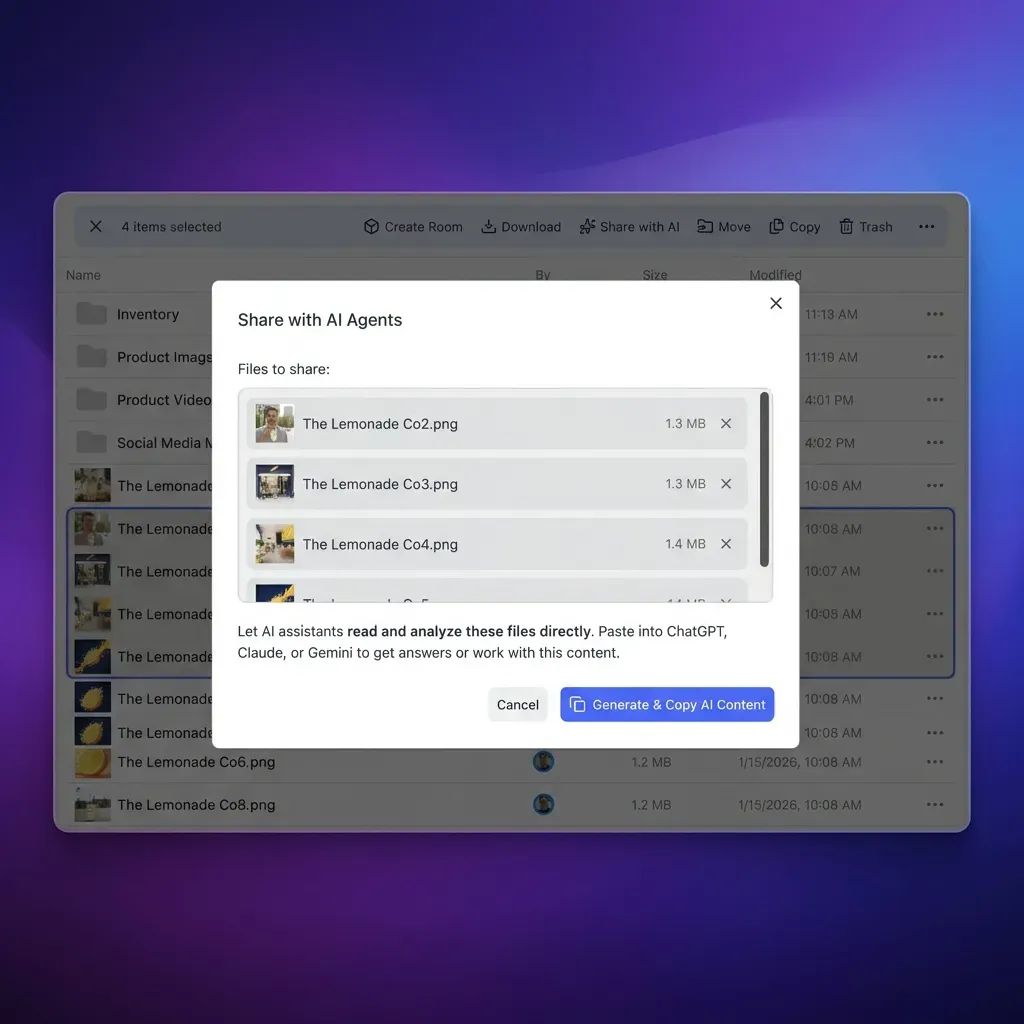
Fast.io provides the coordination layer where audit results, generated descriptions, and remediation notes persist between scans. OpenClaw agents upload results to Fastio workspaces via the MCP server, and reviewers search past audits once Intelligence Mode is enabled for the workspace. Ownership transfer lets an agent build a complete audit workspace and hand it to a compliance team or client.
Local storage or S3 buckets can hold audit files, but they lack the indexing and search layer that makes historical results useful. Google Drive and Dropbox store files but do not auto-index them for semantic queries. Once Intelligence is enabled for the workspace, Fast.io indexes uploaded audit reports automatically, so a reviewer can search "which pages failed color contrast checks last month" instead of opening individual files.
Pricing:
- 14-day Business Trial, card required; paid plans start at $9.99/month
Key Strengths:
- MCP server at /mcp gives OpenClaw agents direct workspace access for reads, writes, and queries
- Intelligence Mode auto-indexes uploaded files for semantic search once enabled
- Ownership transfer for handing off completed audit workspaces to clients or compliance teams
- 250 GB to 25 TB storage on paid plans
Key Limitations:
- Does not perform accessibility scanning; requires pairing with detection tools from this list
- AI features like Intelligence Mode and semantic search consume credits from the monthly allocation
Best For: Teams running regular accessibility audits who need a shared workspace for tracking remediation across multiple sites or client engagements.
Choosing the Right Combination
No single tool covers the full accessibility pipeline. Combine them based on where your team spends the most remediation time.
During development: Axe MCP Server + Accessibility Toolkit. The MCP server catches WCAG violations as agents write code. The Toolkit skill prevents common failures from being introduced at all. This pairing works best for teams building new web interfaces with OpenClaw.
Before deployment: Pa11y + Accessibility Test Scanner. Pa11y blocks CI/CD pipelines when new regressions appear across the full site. The Test Scanner adds component-level WCAG checks within OpenClaw sessions for more targeted auditing of individual components.
Remediating existing content: Image Describer + Color Palette + WAVE. Image Describer generates alt text drafts for the 53.1% of sites WebAIM found with missing descriptions. Color Palette verifies contrast compliance. WAVE produces visual reports that non-technical stakeholders can review and approve.
Coordinating across scans: Fast.io stores audit results, shares them with reviewers, and supports semantic search across historical reports once Intelligence is enabled. Fast.io offers a 14-day Business Trial (card required; see pricing) to test the full pipeline before scaling up.
Automated tools detect 30-40% of WCAG issues independently. OpenClaw agents extend that range by chaining tools in sequence, generating first-draft fixes, and routing the remaining judgment calls to human reviewers with enough context to act quickly. The goal is not to replace accessibility specialists. It is to clear the automatable backlog so specialists can focus on the issues that actually require their expertise.
Sources
References used to verify factual claims in this guide.
-
95.9% of home pages had detected WCAG 2 failures in 2026 56.1 average accessibility errors per page, a 10.1% increase from 2025 53.1% of home pages had images with missing alternative text
-
Pa11y catches 73% of violations when configured with axe-core engine WAVE identifies 71% of violations with an 8% false positive rate
-
Automated accessibility tools catch roughly 30-40% of all WCAG issues
Frequently Asked Questions
Can OpenClaw test websites for accessibility?
Yes. OpenClaw can run accessibility scans through several paths: installed skills like Accessibility Test Scanner check WCAG 2.1/2.2 conformance directly in agent sessions, shell commands let it invoke CLI tools like Pa11y for site-wide scanning, and MCP connections let it call the axe MCP Server for detection with AI-powered fix suggestions. The agent can chain these tools, collect results, and route flagged items to human reviewers.
What tools check WCAG compliance with AI?
The axe MCP Server by Deque combines axe-core scanning with AI-generated fix suggestions via the Model Context Protocol. Image Describer generates alt text using vision models. Accessibility Test Scanner checks WCAG 2.1 and 2.2 conformance including ARIA validation and keyboard navigation. Color Palette evaluates contrast ratios against WCAG thresholds. Most teams combine two or more of these tools to cover different parts of the compliance pipeline.
How do you automate accessibility testing?
Start with a scanning tool like axe-core, Pa11y, or WAVE to identify violations across your site. Add OpenClaw skills like Image Describer for alt text generation and Color Palette for contrast checks. Integrate Pa11y into your CI/CD pipeline to block deployments that introduce new violations. Use a workspace like Fast.io to store results and track remediation over time. Automated tools catch 30-40% of WCAG issues. The remaining 60-70% require human judgment, so build a review step into the workflow.
Can AI generate alt text for web images?
Yes, but with important limitations. Vision-model skills like Image Describer produce usable first drafts that describe objects, scenes, and embedded text. These work well for product photos, team pictures, and data visualizations. However, AI-generated descriptions miss context-dependent meaning: whether an image is decorative and should have empty alt text, what terminology the organization uses, and how the image relates to surrounding content. Human review is still necessary for production use.
How accurate are automated accessibility scanners?
Detection rates vary by tool. Pa11y catches 73% of violations when configured with the axe-core engine. WAVE identifies 71% but carries an 8% false positive rate. Axe-core maintains a zero false positive commitment, meaning every issue it flags is a real violation, though it may miss some issues other tools catch. No automated tool covers the full WCAG specification. Roughly 60-70% of accessibility issues require human judgment to evaluate, which is why most teams pair automated scanning with manual review.
Related Resources

Track accessibility remediation from first scan to final fix
Upload scan results, store generated alt text, and search past audits once Intelligence is enabled. Persistent workspace storage for your OpenClaw agents.