Best OpenClaw Skills for AI Mind Map and Concept Visualization
The mind mapping software market reached $1.2 billion in 2025, yet most tools still require manual node-by-node construction. OpenClaw skills close that gap by generating mind maps, flowcharts, and concept diagrams from plain conversation text. This guide ranks the five best visualization skills on ClawHub by output format, automation depth, and practical fit.


Why Most Mind Map Tools Still Require Manual Input
The global mind mapping software market hit $1.2 billion in 2025 and is projected to reach $2.5 billion by 2034 at a 9.2% compound annual growth rate, according to Verified Market Reports. That growth tracks a real shift: teams are moving from static documents to visual knowledge structures for planning, architecture reviews, and decision tracking.
The tools driving that market (Miro, XMind, MindMeister) still expect a human to drag nodes, draw connections, and arrange layouts by hand. For teams already using AI agents to handle research and data processing, the manual step is a bottleneck. The broader "ai mind map generator" keyword draws about 390 monthly searches in the US, a signal that developers are actively looking for automation.
OpenClaw skills solve this by converting natural language into structured visual output. Describe your project goals in a chat or paste a meeting transcript, and the right skill produces a mind map or concept diagram without manual layout work. ClawHub, the public skill registry, hosts over 5,400 curated entries across 23+ categories, and visualization is one of the faster-growing segments.
The five skills ranked below were evaluated on four criteria:
- Output format. Does it produce PNG, SVG, Mermaid code, Excalidraw files, or shareable links?
- Automation depth. Can it generate a complete map from unstructured input, or does it need structured prompts?
- Collaboration support. Can others view, edit, or comment on the output without installing anything?
- Infrastructure requirements. API keys, cloud accounts, or self-contained?
Related guides
- How to Use Claude Code Skills in ClineAccording to GitHub's Octoverse 2024 report, the number of developers building with generative AI on the platform...
- How to Install and Manage Cline Agent SkillsAI coding agents boost code volume by 180%, but shipped code rises by only 30%, showing a critical gap in development...
- Best OpenClaw Skills for AI Landscape and Environment Concept ArtOpenClaw's image generation ecosystem now spans eleven providers and dozens of community skills, but choosing the right...
- Best OpenClaw Skills for Web ResearchWeb research skills let OpenClaw agents find and read information on the live web. Without them, your AI is stuck with...
- Top 7 OpenClaw Skills for Growth HackersThese top OpenClaw skills help growth hackers automate experimentation and analytics. They scale campaigns faster. Real...
- How to Automate Infrastructure: Top OpenClaw Skills for Network EngineersNetwork automation used to require writing complex Python scripts or wrestling with Ansible playbooks. Today, OpenClaw...
More on this subject: OpenClaw Skills (109 guides)
1. mindmap-generator
The mindmap-generator skill by parasharnagle is the most directly relevant tool for this use case. It takes conversations, goals, decisions, and daily priorities and renders them as PNG mind map images.
Where other visualization skills treat mind maps as one option among many diagram types, mindmap-generator is purpose-built for the format. The output is a finished PNG file ready to embed in a document, attach to a message, or upload to a shared workspace. No rendering pipeline, no Mermaid viewer, no browser required.
How it works:
Feed the skill a conversation transcript, a list of project goals, or a set of decisions your agent has been tracking. The skill parses the input, identifies hierarchical relationships, and produces a structured mind map with a central topic, branches, and leaf nodes.
Key strengths:
- PNG output works everywhere: Slack, email, docs, presentations
- No API keys or external services required
- Handles unstructured input (conversations, freeform text) without needing a specific diagram syntax
Limitations: PNG is a raster format, so you cannot edit the output after generation. If you need to rearrange nodes or add branches, you have to regenerate the entire map. For iterative brainstorming where the map evolves over multiple sessions, an editable format like Mermaid or Excalidraw is a better fit.
Best for: Quick visual summaries. An agent finishes a research session, generates a mind map of its findings, and drops the PNG into a shared folder for the team to review.

2. Diagram Skill (Mermaid Mindmaps)
The Diagram skill from the official openclaw/skills repository supports mindmaps as one of eight diagram types, alongside flowcharts, sequence diagrams, architecture maps, ER models, class diagrams, state diagrams, and timelines.
For mind mapping specifically, the skill generates Mermaid mindmap syntax. Mermaid's mindmap support uses a simple indentation-based format that renders natively in GitHub, GitLab, Notion, and any tool with Mermaid support. The output defaults to a centered root node with hierarchical branches, top-to-bottom orientation for concept hierarchies, and a 10-to-15 node limit that keeps the visual clean and scannable.
Supported output formats:
- Mermaid code blocks (embed directly in markdown files)
- PlantUML for teams using PlantUML toolchains
- ASCII art for terminal or chat output
- HTML with Mermaid.js for interactive browser viewing
The trade-off is clear: you get editable, version-controlled code instead of a finished image. A Mermaid mind map committed to a repo is diffable, reviewable in pull requests, and renders automatically in GitHub README files. That makes it the stronger choice for documentation-centric teams.
Limitations: No direct PNG or SVG export. If you need an image file, you will need a separate rendering step with the Mermaid CLI, a browser-based exporter, or a screenshot tool. The skill also requires structured prompts for best results. Dumping a raw conversation transcript produces less reliable output than a clear description like "create a mind map of our Q3 product roadmap with three main branches."
Best for: Teams that keep documentation in Git. The Mermaid output embeds in README files, wiki pages, and pull request descriptions without any external tooling.


Store and share every mind map your agents generate
Persistent workspace storage with MCP-native access. Your OpenClaw agent writes visualization files, sets permissions, and hands off to your team with ease.
Excalidraw-Based Concept Visualization
Two ClawHub skills produce Excalidraw-compatible output for concept mapping: Excalidraw Flowchart for structured process flows, and Excaliclaw for freeform collaborative diagrams.
3. Excalidraw Flowchart
Built by swiftlysingh, the Excalidraw Flowchart skill converts text descriptions into Excalidraw-compatible flowchart files. It accepts natural language, a simple diagram DSL, Graphviz DOT notation, or raw Excalidraw JSON. The skill handles automatic layout, arrow routing, shape inference, and support for decision forks, loops, and swimlanes.
For concept visualization, the flowchart format works well when your thinking follows a process: decision trees, onboarding sequences, deployment pipelines, or any structure where ideas flow from one step to the next. The Excalidraw output is editable, so a team member can open the file and refine the concept map after the agent generates the initial structure.
Limitations: Flowcharts only. If your concept map is more of a radial web than a sequential flow, you will need a different tool.
Best for: Decision trees, process documentation, and concept flows where relationships between ideas are sequential or branching.
4. Excaliclaw
Nick Taylor's Excaliclaw generates native Excalidraw diagrams and returns shareable URLs that anyone can open and edit in a browser. The skill includes rendering fixes for text element handling, font specification, and arrow routing that prevent common problems with AI-generated Excalidraw output (missing labels, overlapping nodes, broken arrows).
For concept visualization, Excaliclaw's strength is collaboration. The agent generates a concept map, produces a shareable link, and anyone on the team can open it, rearrange nodes, add new branches, and share the updated version. No software installation required on the viewer's side.
Limitations: Output is Excalidraw-only. If you need Mermaid code or a standalone PNG, you will need a separate conversion step. Results vary across LLMs because the quality depends on the model's ability to produce valid Excalidraw JSON.
Best for: Brainstorming sessions and architecture reviews where the initial AI-generated map is a starting point, not a finished deliverable.
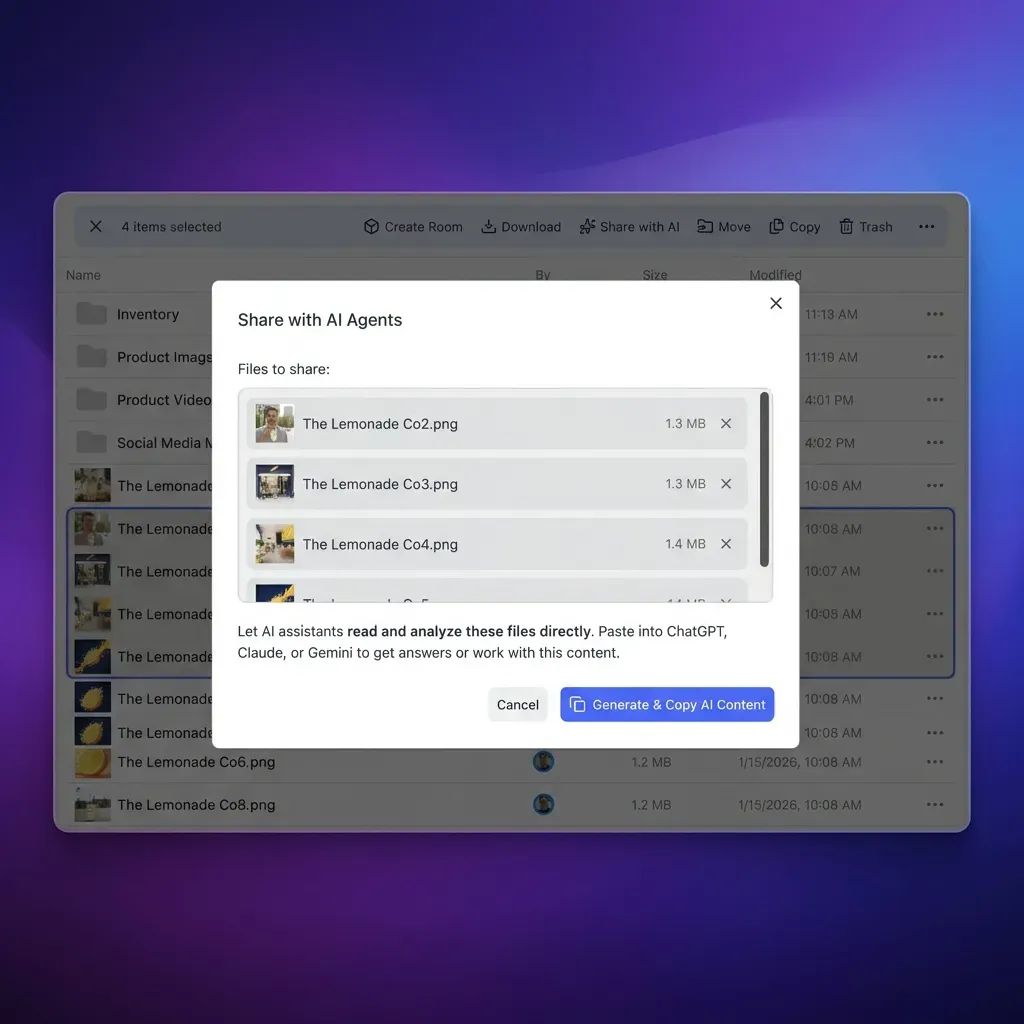
5. canvs: Best for Real-Time Team Brainstorming
The canvs skill by voronkovm connects OpenClaw to Canvs.io, a collaborative whiteboard platform. Unlike the other skills on this list, canvs produces interactive diagrams that multiple people can edit simultaneously rather than static files or one-time shareable links.
The whiteboard format is the closest digital equivalent to covering a conference room wall with sticky notes and drawing arrows between them. For early-stage concept exploration where ideas are loosely connected and the structure has not solidified yet, that flexibility matters more than clean automated layouts.
Limitations: Requires a Canvs.io account. The output lives on the Canvs.io platform rather than as a local file, which adds a dependency. Teams that need offline access or want to store visualizations in their own infrastructure should weigh this trade-off.
Best for: Real-time team brainstorming where multiple people contribute to a concept map simultaneously.
Comparison Summary
Four of the five skills are free with no API keys. If you want a finished image without extra steps, start with mindmap-generator. If you want editable output that lives in your repo, the Diagram Skill with Mermaid is the default choice. If collaboration is the priority, Excaliclaw or canvs will fit better depending on whether you need async (shareable links) or synchronous (live whiteboard) editing.
How to Store and Share Agent-Generated Visualizations
Generating a mind map is half the job. The other half is getting it to the right people without losing track of versions or access permissions.
Local storage works for solo development but breaks in team environments. A PNG saved to /tmp on an agent's host disappears after a reboot. Cloud storage services like S3 or Google Drive handle persistence but add credential management overhead and no built-in way for the receiving team to preview or annotate the file inline.
Fastio is built for this handoff. An OpenClaw agent writes visualization files to a Fastio workspace through the MCP server, and the workspace handles versioning, access control, and shareable links automatically. The agent can set granular permissions at the org, workspace, folder, or file level. When the work is done, the agent transfers ownership to a human who reviews output through the web UI. Once Intelligence is enabled on the workspace, uploaded files are indexed for semantic search, so team members can find diagrams by content rather than filename.
Fastio offers a 14-day Business Trial, with paid plans starting at $9.99/mo for Starter (see pricing). For a workflow that produces mind maps, workspaces provide persistent storage, sharing, and handoff without managing infrastructure. Connect your agent at fast.io/storage-for-openclaw.
Sources
References used to verify factual claims in this guide.
-
Mind mapping software market reached $1.2 billion in 2025, projected to reach $2.5 billion by 2034 at 9.2% CAGR
-
ClawHub hosts over 5,400 curated skills across 23+ categories
-
mindmap-generator generates visual mindmap images from conversations, goals, decisions, and daily priorities, delivered as PNG
Frequently Asked Questions
Can OpenClaw generate mind maps automatically?
Yes. The mindmap-generator skill converts conversations, goals, and decisions into PNG mind map images without manual layout. The Diagram skill also supports Mermaid mindmap syntax, producing editable code that renders in GitHub, GitLab, and Notion.
What OpenClaw skills create flowcharts for concept visualization?
The Excalidraw Flowchart skill by swiftlysingh generates flowcharts from natural language, DSL, or Graphviz DOT input. Excaliclaw by Nick Taylor produces general-purpose Excalidraw diagrams with shareable URLs. The Diagram skill handles flowcharts alongside seven other diagram types using Mermaid or PlantUML output.
How do I visualize concepts with OpenClaw?
Choose a skill based on your output needs. For a quick PNG summary, use mindmap-generator. For editable code in documentation, use the Diagram skill with Mermaid output. For collaborative visual maps, use Excaliclaw (shareable links) or canvs (real-time whiteboard). All are available on ClawHub.
Are OpenClaw mind map skills free?
Four of the five skills listed here are free with no API keys required: mindmap-generator, Diagram Skill, Excalidraw Flowchart, and Excaliclaw. The canvs skill requires a Canvs.io account. OpenClaw itself is free and open source, though you pay for the underlying LLM API calls.
What output formats do OpenClaw visualization skills support?
The five skills cover PNG (mindmap-generator), Mermaid and PlantUML code (Diagram Skill), Excalidraw files (Excalidraw Flowchart), Excalidraw JSON with shareable URLs (Excaliclaw), and interactive whiteboards (canvs). PNG is the simplest to share. Mermaid is the most documentation-friendly. Excalidraw is the most editable.
Can I store and share mind maps generated by OpenClaw agents?
Yes. Upload agent-generated files to a cloud workspace for versioning and team access. Fastio supports this through its remote MCP server, offering branded share links, granular permissions, and ownership transfer to hand off workspaces to a human reviewer. Paid plans start with a 14-day Business Trial.
Related Resources

Store and share every mind map your agents generate
Persistent workspace storage with MCP-native access. Your OpenClaw agent writes visualization files, sets permissions, and hands off to your team with ease.