The Best Manus AI Developer Tutorials and Courses
While many resources explain basic prompting for Manus AI, developers require deeper technical guidance to integrate agent workflows. We review the best Manus AI developer tutorials and courses covering API access, custom MCP setup, and full-stack orchestration. Learn how these guides can help you build stable production integrations.


A Guide to Evaluating the Manus AI Developer Training Ecosystem
Although 84% of software engineering teams planned to deploy autonomous web-browsing agents in 2026, the vast majority of developer tutorials focus on user-facing prompts rather than programmatic API integrations [Nocode MBA 2026 Report]. This training gap forces developers to rely on trial-and-error when connecting autonomous runtimes to their data pipelines. Because Manus operates inside temporary, sandboxed cloud computers, understanding the underlying API orchestration is critical for building production-grade integrations that persist data securely.
Manus is an autonomous action engine capable of navigating websites, executing code in a secure sandbox, and managing complex multi-step workflows. Unlike traditional chatbots, it is designed for hands-on execution. For developers, this means moving beyond the standard chat UI and using the developer API, custom connectors, and Model Context Protocol (MCP) servers to bridge the agent with existing software systems. To get started, developers can read the Fast.io storage for agents integration guide or onboard their agents via the Fast.io agent resource.
Manus Developer Tutorial Comparison
To help you find the right resources for your engineering requirements, we compared the leading tutorials and courses across skill levels, formats, and pricing models:
Evaluation Methodology
To select the best tutorials and courses, we analyzed five core parameters: API v2 currency, completeness of sandbox computer code examples, depth of custom connector setup instructions, ease of deployment, and how they handle persistent storage handoffs. We evaluated how well each resource explains the handoff between autonomous runtimes and human supervisors. We paid particular attention to how these courses address API rate limits, authentication credentials, and data lifecycle safety during complex integration runs.
Related guides
- The Developer Guide to Devin AI Codebase MigrationPlatform migrations represent a substantial financial and operational risk. This guide outlines how to use Devin AI to...
- Claude AI Courses: Best Training Programs and Certifications for 2026Anthropic launched 20 free courses on Skilljar, a $99 proctored certification exam, and a $150 million nonprofit...
- The Best Manus AI Courses and Training Programs: A Professional GuideSpecialized training is essential to bridge the skills gap in agentic AI. This guide reviews the best Manus AI courses,...
- Is Manus AI Free? Free Plan, Credits, and LimitsManus AI is free to start on a limited-credit Free plan, but heavier autonomous agent work usually needs paid Pro or...
- Manus AI Pricing and Credit Consumption GuideManus AI pricing operates on a credit-based billing system across Free, Pro, and Team tiers, complemented by a...
- Manus AI vs Question AI: Choosing the Best AI for Academic ResearchIn 2025, overall adoption of artificial intelligence tools among researchers jumped from 57% in 2024 to 84% in 2025,...
More on this subject: Manus (53 guides)
Reviewing the Best Manus AI Developer Tutorials and Courses
Here are the best Manus AI developer tutorials and courses, detailing their strengths, limitations, and pricing models:
1. The Official Manus AI API Documentation (api.manus.ai)
The official developer documentation hosted at api.manus.ai provides a comprehensive RESTful API reference for task execution, project organization, file management, and webhook setups [Manus Official Website].
Key strengths:
- Serves as the primary source of truth for all API v2 endpoints, ensuring compatibility with current schemas.
- Details how to pass the API_KEY header and point OpenAI SDK clients to the Manus base URL.
- Explains webhook payloads for real-time task status updates.
Key limitations:
- Lacks production-ready application templates and hands-on developer code repositories.
- Does not cover custom MCP server hosting patterns.
Best For: Developers requiring a precise reference for raw HTTP requests and base URL integration.
Pricing: Free to access, while task execution consumes Manus account credits.
2. freeCodeCamp: Learn to Build Automated Workflows with Manus AI
This video course on the freeCodeCamp YouTube channel, created by Beau Carnes, is a comprehensive guide to building automated workflows [freeCodeCamp Manus AI Course].
Key strengths:
- Explains agentic fundamentals and how the action engine manages complex multi-step tasks.
- Provides hands-on demonstrations of connecting third-party tool integrations like Google Workspace and Slack.
- Highly accessible for developers new to autonomous runtimes.
Key limitations:
- Focuses more on visual configuration and UI prompting than writing custom API wrapper code.
- Lacks deep coverage of backend database persistence and webhook endpoints.
Best For: Software engineers seeking a practical, visual introduction to agent automation patterns.
Pricing: Free.
3. No Code MBA: Building Full-Stack Apps with Manus AI
This series of step-by-step video tutorials on the No Code MBA platform shows developers how to build complex SaaS applications with database backends, Stripe, and authentication [No Code MBA Course].
Key strengths:
- Focuses on building full-stack applications with integrated backend infrastructure.
- Demonstrates how the multi-agent system runs parallel tasks, such as database schema generation and lead research.
- Compares Manus AI with alternative tools to establish architectural tradeoffs.
Key limitations:
- Requires a paid subscription to access the full course curriculum.
- Focuses on high-level SaaS templates rather than low-level code script execution.
Best For: Technical founders who want to build and deploy complex applications using agentic code generation.
Pricing: Paid membership, with select free preview articles.
4. Community PHP SDK for Manus AI (tigusigalpa/manus-ai-php)
The open-source tigusigalpa/manus-ai-php package on GitHub provides a structured developer SDK for integrating Manus AI into PHP and Laravel projects.
Key strengths:
- Offers type-safe PHP interfaces for calling the Manus API within backend web frameworks.
- Simplifies credential handling and request formatting for Laravel developers.
- Clean object-oriented wrappers for managing tasks, projects, and file uploads.
Key limitations:
- Community-maintained and may lag behind official API v2 updates.
- Lacks support for other popular languages like Python or Go.
Best For: Backend developers building Laravel web applications that trigger agentic tasks.
Pricing: Free and open-source.
5. Fastio Persistent Workspace and MCP Server
Fastio provides persistent, collaborative cloud workspaces and a dedicated MCP server that connects Manus agents to team storage [Fast.io Pricing].
Key strengths:
- Resolves the ephemeral sandbox storage problem by writing agent outputs to a version-controlled directory.
- Exposes Streamable HTTP at /mcp and legacy SSE at /sse for direct integration.
- Enables automatic document data extraction via Metadata Views and built-in RAG search.
Key limitations:
- Requires an active internet connection to communicate with the remote endpoints.
- Fastio requires a paid subscription; monthly plans start with a free trial of up to 14 days.
Best For: Distributed software development teams and autonomous agentic workflows that require shared context and persistent file storage.
Pricing: Solves credit limits starting at Starter $9.99/mo, Business $49.99/mo, or Enterprise $199.99/mo, with a free trial of up to 14 days on monthly plans (credit card required).
6. Community-Built Manus MCP Servers (nanameru/Manus-MCP)
This GitHub repository contains Model Context Protocol (MCP) server configurations that expose Manus capabilities to local IDEs like Cursor and Devin Desktop (formerly Windsurf).
Key strengths:
- Lets developers trigger Manus tasks directly from their local code editor.
- Connects to the local filesystem to expose local context to the remote agent.
- Actively updated by community developers building custom editor tools.
Key limitations:
- Requires manual configuration of JSON configuration files on your local machine.
- Running local node processes increases local memory overhead.
Best For: Software engineers who want to control Manus agents from inside Cursor, Devin Desktop, or Claude Desktop.
Pricing: Free and open-source.
7. ZenML and Modal: Serverless Manus Agent Workflows
This developer workshop guide focuses on deploying serverless Manus agents using ZenML and Modal.
Key strengths:
- Teaches production deployment patterns, serverless scaling, and webhook event handling.
- Covers programmatic task scheduling and orchestrating multiple agents in parallel.
- Shows how to handle pipeline errors and set up automatic retries.
Key limitations:
- Highly technical, requiring experience with ZenML, Modal, and Python orchestration.
- Lacks UI-focused guides, focusing entirely on serverless backend execution.
Best For: DevOps and backend engineers building scalable production workflows.
Pricing: Free guide; execution costs are based on Modal cloud compute usage.
How to Configure and Integrate Manus AI Storage
Connecting Manus to persistent storage requires configuring custom connectors to handle file outputs. Because Manus operates inside isolated sandboxes, all generated assets are deleted once the task run completes. To prevent data loss, developers connect the agent to remote workspaces using custom connectors. Setting up a custom connector allows Manus to write logs, reports, and screenshots directly to persistent, version-controlled folders.
Manus supports custom MCP servers over HTTP transport, allowing developers to host their own MCP endpoints or connect to cloud-native platforms like Fastio. Fastio provides a dedicated MCP server for persistent cloud storage. This server exposes a consolidated MCP toolset that includes commands for writing files, querying directories, and retrieving document content.
To connect Manus to Fastio persistent workspaces:
- Open Settings: Click on the Settings option in the sidebar of the Manus application.
- Add Connector: Navigate to the Connectors tab and click on the "+ Add connectors" button.
- Input Custom MCP Endpoint: Select the Custom MCP tab, choose "Direct configuration", and enter your Fastio server URL, transport type (HTTP), and optional headers.
- Authorize: Click Save to register the server, then authorize and toggle the connector inside your active task.
Once Manus writes files to a Fastio workspace, developers can use Metadata Views to turn raw documents into a live, queryable database. By describing the fields you want extracted in natural language, the built-in AI designs a typed schema supporting Text, Integer, Decimal, Boolean, URL, JSON, and Date & Time formats. It scans the files in the workspace, populates a sortable spreadsheet view, and updates the data grid as new files are uploaded. This structured extraction layer is detailed at the Metadata Views product page: /product/document-data-extraction/.
This persistent workflow is ideal for team collaboration and client handoffs. An agent can set up a workspace, populate it with files, configure Metadata Views, and then hand over the organization to a human client via ownership transfer. Developers can start by signing up for a 14-day free trial on Fastio [Fastio Pricing]. Monthly plans begin with a free trial of up to 14 days that requires a credit card to activate; annual plans have no trial. Fastio offers three subscription plans: Starter at $9.99/mo, Business at $49.99/mo, and Enterprise at $199.99/mo. By integrating Manus with a persistent workspace, you ensure that all agent outputs remain secure, searchable, and fully versioned.
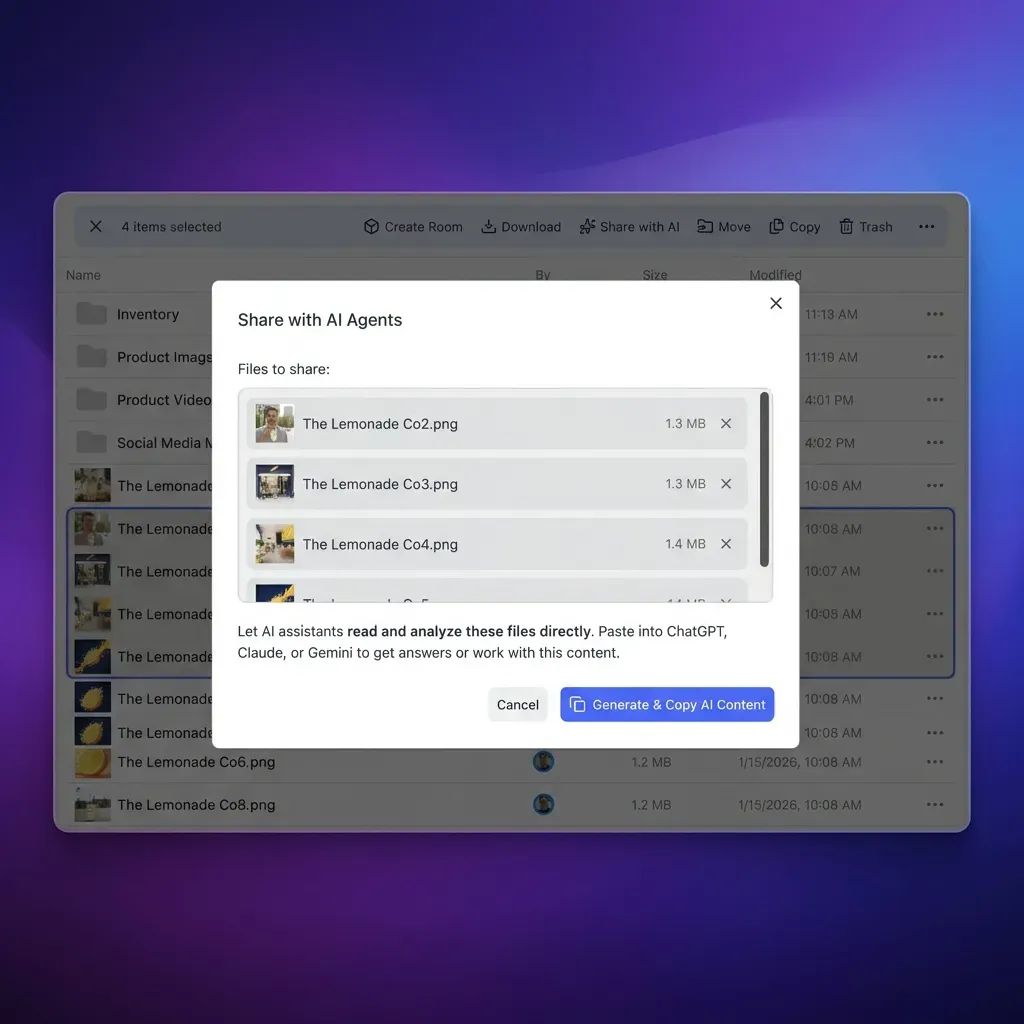


Persist Manus AI sandbox files in a shared workspace
Provide your autonomous agents with a secure, permanent storage layer. Connect the Fastio MCP server, sync generated files, and organize data with a 14-day free trial.
Choosing the Right Manus AI Tutorial: A Decision Guide
Selecting the right Manus AI developer tutorial or course depends on your current learning goals, language preference, and project architecture.
For software engineers who need an immediate, visual overview of agentic workflows and third-party integrations, Beau Carnes' freeCodeCamp course on YouTube is the best starting point. If your goal is to build full-stack web applications with database schemas, Stripe, and authentication, the video guides on No Code MBA provide the necessary end-to-end templates.
Developers focused on backend code integration should consult the official API documentation at api.manus.ai to study the REST endpoints, or use the community-maintained PHP SDK on GitHub to build Laravel wrappers. If you want to run Manus agents directly inside your local development environment, configuring a local MCP server like nanameru/Manus-MCP will connect the agent to Cursor or Devin Desktop.
Finally, for production deployments that require persistent file lifecycles, teams should look at serverless Modal templates and connect their agentic pipelines to a collaborative cloud workspace. Platforms like Fastio provide the version-controlled folders, hybrid search, and structured metadata extraction needed to turn temporary agent runs into durable team assets. By pairing the right developer tutorials with a persistent storage layer, you can build autonomous agent workflows that are reliable, secure, and ready for production scaling.
Sources
References used to verify factual claims in this guide.
-
While 84% of software engineering teams planned to deploy autonomous web-browsing agents in 2026, the vast majority of developer tutorials focus on user-facing prompts rather than programmatic API integrations.
-
The official developer documentation hosted at api.manus.ai provides a comprehensive RESTful API reference for task execution, project organization, file management, and webhook setups.
-
This video course on the freeCodeCamp YouTube channel, created by Beau Carnes, is a comprehensive guide to building automated workflows.
-
Fastio plans start at Starter $9.99/mo, Business $49.99/mo, or Enterprise $199.99/mo, with a free trial of up to 14 days on monthly plans (credit card required).
Frequently Asked Questions
Where can I find the official Manus AI API docs?
The official Manus AI API docs are located at api.manus.ai and provide the complete REST API v2 endpoint reference. Developers can use these docs to study task creation, project organization, file uploads, and webhook event payloads for programmatic integrations.
Are there developer courses for Manus AI?
Developer courses for Manus AI include the freeCodeCamp video course on YouTube by Beau Carnes and the No Code MBA tutorials on building full-stack applications. These courses guide developers through agentic automation, tool connectors, and backend database integrations.
How do I learn to integrate custom MCP servers with Manus?
You can learn to integrate custom MCP servers with Manus by reviewing community repositories like nanameru/Manus-MCP and using HTTP transport adapters to connect the agent to external workspaces. This setup allows the Manus agent to call external storage and workspace tools programmatically.
Related Resources

Persist Manus AI sandbox files in a shared workspace
Provide your autonomous agents with a secure, permanent storage layer. Connect the Fastio MCP server, sync generated files, and organize data with a 14-day free trial.