Best AI Task Managers in 2026
Knowledge workers lose 60% of their day to task management overhead, according to Asana's Anatomy of Work Index. AI task managers attack this gap directly by auto-scheduling work, reprioritizing when deadlines shift, and pulling tasks from email and chat. This guide tests seven tools across two approaches: calendar-driven schedulers that own your time blocks and task-list managers that organize your inbox.

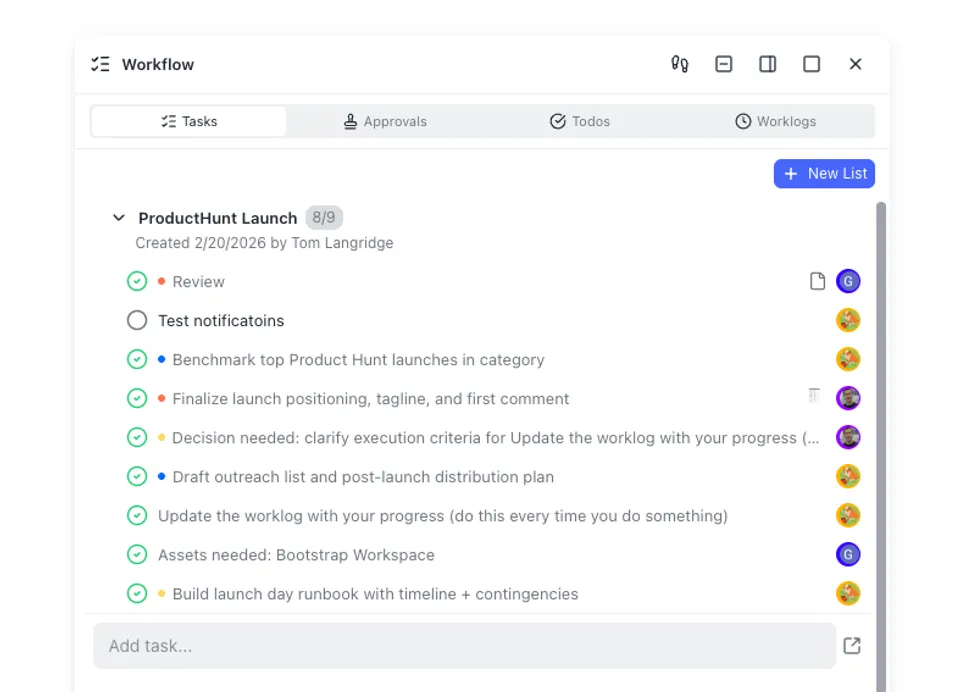
60% of Your Workday Goes to Managing Work, Not Doing It
Knowledge workers spend 60% of their day on "work about work," according to Asana's Anatomy of Work Index, a survey of over 10,000 workers globally. That includes chasing status updates, attending unnecessary meetings, searching for documents, and manually reshuffling priorities. Only 40% of the workday goes to skilled, strategic thinking.
AI task managers exist because this ratio is fixable. Instead of a list you manually sort every morning, these tools schedule tasks into open calendar slots, reprioritize when deadlines move, and pull action items from email and Slack without manual entry.
Not every tool approaches this the same way. Some optimize your calendar minute by minute. Others organize your inbox and break big goals into actionable subtasks. One coordinates files for AI agents alongside human workers. Here are seven options across those categories, ranked by the quality of their AI scheduling:
- Motion: best auto-scheduling for calendar-packed professionals
- Reclaim AI: best free tier with habit protection
- Morgen: best human-in-the-loop daily planning
- Todoist: best lightweight AI task list
- ClickUp Brain: best for team-scale project management
- alfred_: best for email task extraction
- Fast.io: best for AI agent file coordination
Related guides
- Best AI Browsers in 2026: 8 Options Ranked by Use CaseAI-driven search now accounts for 30% of all query interactions, up from under 10% in 2023, and the browsers carrying...
- 14 Best AI Apps in 2026 (Free and Paid)AI apps have gone from novelty to daily driver. With 900 million weekly ChatGPT users and global AI app downloads...
- Best AI Apps for Mac in 2026Apple's MLX framework hits roughly 3x the token throughput of generic inference runners on identical M4 hardware. That...
- 7 Best Grammarly Alternatives for 2026Grammarly Pro costs $144 per year, but several alternatives match or beat its grammar accuracy at a fraction of the...
- Best Free AI Tools in 2026: What's Actually Free and Worth UsingMost free AI tool lists include 14-day trials that quietly start charging you. This guide covers 11 tools that are free...
- Best Free AI Apps in 2026 (We Tested the Real Limits)Most "best free AI apps" roundups blur the line between genuinely free and trial-period freemium. We tested 11 apps,...
More on this subject: AI Tool Directories and Comparisons (231 guides)
How We Evaluated These Tools
Most roundups lump personal to-do apps with enterprise project management suites. A freelancer scheduling her week has different needs than a 200-person engineering team. We focused on tools with genuine AI scheduling intelligence, not platforms that added "AI" to their search bar.
Five criteria guided the evaluation:
- Scheduling intelligence: Does the AI place tasks on your calendar based on deadlines and priorities, or does it just suggest due dates?
- Reprioritization speed: When a meeting appears or a deadline moves, how fast does the tool adjust your plan?
- Integration depth: Can it pull tasks from your existing tools (email, Slack, Jira, Notion) or does everything need manual entry?
- Learning curve: Can you get value in the first hour, or does the tool need weeks of training data before it helps?
- Pricing honesty: What does it cost after the trial ends, and are core AI features locked behind higher tiers?
The biggest gap in competing roundups: they mix individual productivity tools with full project management suites. ClickUp Brain made our list because its AI genuinely prioritizes and generates tasks, but we flagged it as a team tool, not a personal scheduler. That distinction matters when you're choosing where to spend $15/month.

Calendar-Driven AI Schedulers
These tools take over your calendar. You add tasks with deadlines and durations, and the AI finds optimal time slots and rebuilds your schedule when things change.
1. Motion
Motion started the AI scheduling category and still leads it. Add a task with a deadline and estimated duration, and Motion places it in the optimal calendar slot based on your meetings, energy preferences, and competing deadlines. When a new meeting appears, every task reshuffles automatically.
The scheduling engine factors in priority levels, deadline urgency, and meeting density. It doesn't find the "next open slot." It finds the slot where the task is most likely to get done given everything else on your plate. According to Motion, users save an average of two hours per day by eliminating manual calendar management.
Key strengths:
- Real-time rescheduling when your calendar changes
- Team scheduling that protects individual focus time
- Project boards with deadline-aware task placement
Limitations:
- $19/month on monthly billing is steep for solo users
- Requires accurate time estimates. Bad estimates produce bad schedules.
Pricing: $12.73/month annual, $19/month monthly. 7-day free trial.
Best for: Professionals with packed calendars who want the AI to handle time-block Tetris entirely.
2. Reclaim AI
Reclaim protects your habits first, then schedules tasks around them. Define a 90-minute morning focus block and a lunchtime walk, and those become immovable anchors. Tasks and meetings fit around your protected time, not the other way around.
The habit protection is more than static calendar blocks. When a meeting conflicts with your focus period, Reclaim moves the focus block to the next best slot automatically instead of deleting it. Over time, it learns when you're most productive and adjusts scheduling windows accordingly.
Key strengths:
- Generous free tier with basic habit protection and smart meetings
- Two-way sync with ClickUp, Asana, Todoist, Linear, and Jira
- Calendar sync across both Google Calendar and Outlook
Limitations:
- Advanced scheduling features require the Business tier at $12/user/month
- Habit protection can feel rigid if your schedule changes unpredictably
Pricing: Free plan available. Starter $8/month, Business $12/month per user.
Best for: People who protect daily routines (focus time, exercise, breaks) and need a scheduler that respects those boundaries.
3. Morgen
Morgen is for people who want an AI suggestion, not an AI takeover. Its AI Planner proposes an optimized daily schedule, but nothing changes until you review and approve it. Think of it as a planning assistant that makes recommendations rather than decisions.
It unifies all your calendars and task managers into one view. Google Calendar, Outlook, Todoist, Notion, ClickUp, Linear: Morgen pulls them in and gives you a single planning surface. A priority scoring system ranks tasks by urgency, due date, duration, and importance before the AI Planner generates your daily plan.
Key strengths:
- Human approval required for every schedule change
- Connects to nearly every major calendar and task manager
- Booking links for meeting scheduling based on real cross-calendar availability
Limitations:
- Morgen has no free tier. 14-day trial only.
- $30/month on monthly billing is expensive for a planning layer
Pricing: $15/month annual, $30/month monthly. Teams from $10/seat annual.
Best for: Power users of multiple tools who want AI-suggested plans without surrendering control.
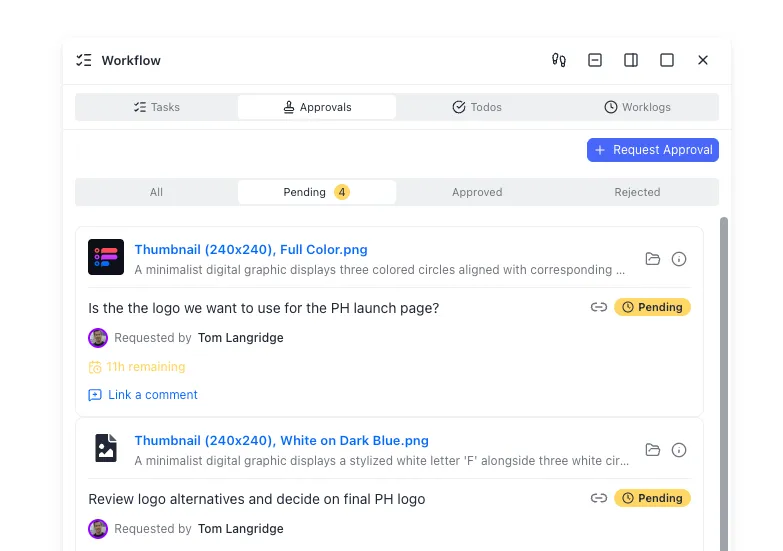
What Task-List Managers Handle That Schedulers Miss
These tools organize your work before it hits the calendar. They break goals into steps, extract tasks from email, or coordinate files for AI agents.
4. Todoist
Todoist has been the standard for simple task management since 2007. The 2026 version adds three AI features worth reconsidering: Assist (task breakdown, smart scheduling, custom filter generation), Ramble (voice-to-task capture in 38 languages via Google Gemini), and Email Assist (inbox-to-task conversion).
Assist is the highlight. Add "Launch new product page" and the AI breaks it into concrete subtasks: write copy, gather images, design layout, QA review, publish. These are contextually relevant breakdowns, not generic templates. Smart scheduling analyzes your current backlog and suggests dates that prevent you from overloading a single day.
Key strengths:
- Natural language processing handles patterns like "every third Friday until December"
- Ramble converts spoken notes to structured tasks in 38 languages
- The simplest interface of any tool on this list
Limitations:
- AI features locked behind Pro ($5/month) or Business ($8/month) plans
- No native calendar integration. Requires Morgen or Reclaim as a bridge.
Pricing: Free tier with 5 projects. Pro $5/month, Business $8/user/month.
Best for: Solo professionals who want the lightest possible tool with real AI assistance.
5. ClickUp Brain
ClickUp Brain is the option for teams that need AI across their entire project management platform. Brain reads your tasks, docs, and conversations in real time, generates subtasks from descriptions, estimates completion dates from team velocity, and recommends what to work on next.
The 2026 Super Agents feature goes further: @mention an AI "coworker" in task comments, assign it recurring workflows, and configure it with 500+ skills across writing, research, and data analysis. This is the one of the few tools on the list where you can delegate task execution to AI, not just task scheduling.
Key strengths:
- AI with full project context across tasks, docs, and conversations
- Super Agents for automated task execution and workflow management
- Multi-model support including GPT-4o, GPT-5, Claude, and o3
Limitations:
- Brain costs $5/member/month on top of ClickUp base pricing
- Overwhelming for individuals. This is built for teams of 10+.
Pricing: Free plan available. Brain add-on $5/member/month. Everything AI tier bundles unlimited usage.
Best for: Teams already using (or willing to adopt) ClickUp who want AI embedded in their project management.
6. alfred_
alfred_ solves a problem the other tools ignore: tasks buried in email that nobody tracks. It reads every incoming message, identifies action items and deadlines, catches commitments you made in sent messages, and adds them to your task list automatically.
Every extracted task links back to its source email thread for one-click context. The AI processes your inbox overnight, so each morning starts with a task list that reflects yesterday's communications rather than yesterday's manual logging.
Key strengths:
- Catches tasks hidden in email threads without manual entry
- Tracks commitments you made, not just requests from others
- Daily briefings combine email, calendar, and task summaries
Limitations:
- alfred_ is paid only, with no free version. $24.99/month is the only option.
- Focused on email. Tasks from Slack or meetings require other tools.
Pricing: $24.99/month or $249/year.
Best for: Professionals drowning in email who lose track of commitments buried in threads.
7. Fast.io
Fast.io is a workspace platform where AI agents and humans collaborate on files in the same environment. If your team runs AI agents for research, content generation, or data processing, those agents need somewhere to organize files, track progress through audit logs, and hand off completed work.
Fast.io exposes a remote MCP server with a consolidated MCP toolset that lets agents create workspaces, manage files, and transfer ownership to humans when work is complete. When Intelligence Mode is enabled for the workspace, it auto-indexes files, so searching across documents works by meaning rather than filename.
Key strengths:
- MCP-native access lets AI agents manage files programmatically
- Ownership transfer: agent builds the deliverable, human receives it via a claim link
- Built-in RAG for semantic search across all workspace files
Limitations:
- Not a daily planner. Designed for agentic team workflows, not personal scheduling.
- No calendar integration.
Pricing: Plans start at $9.99/mo (Starter: 250 GB, 3 seats) with a 14-day Business Trial (credit card required).
Best for: Developer teams running AI agent pipelines who need file coordination at the API and MCP level.
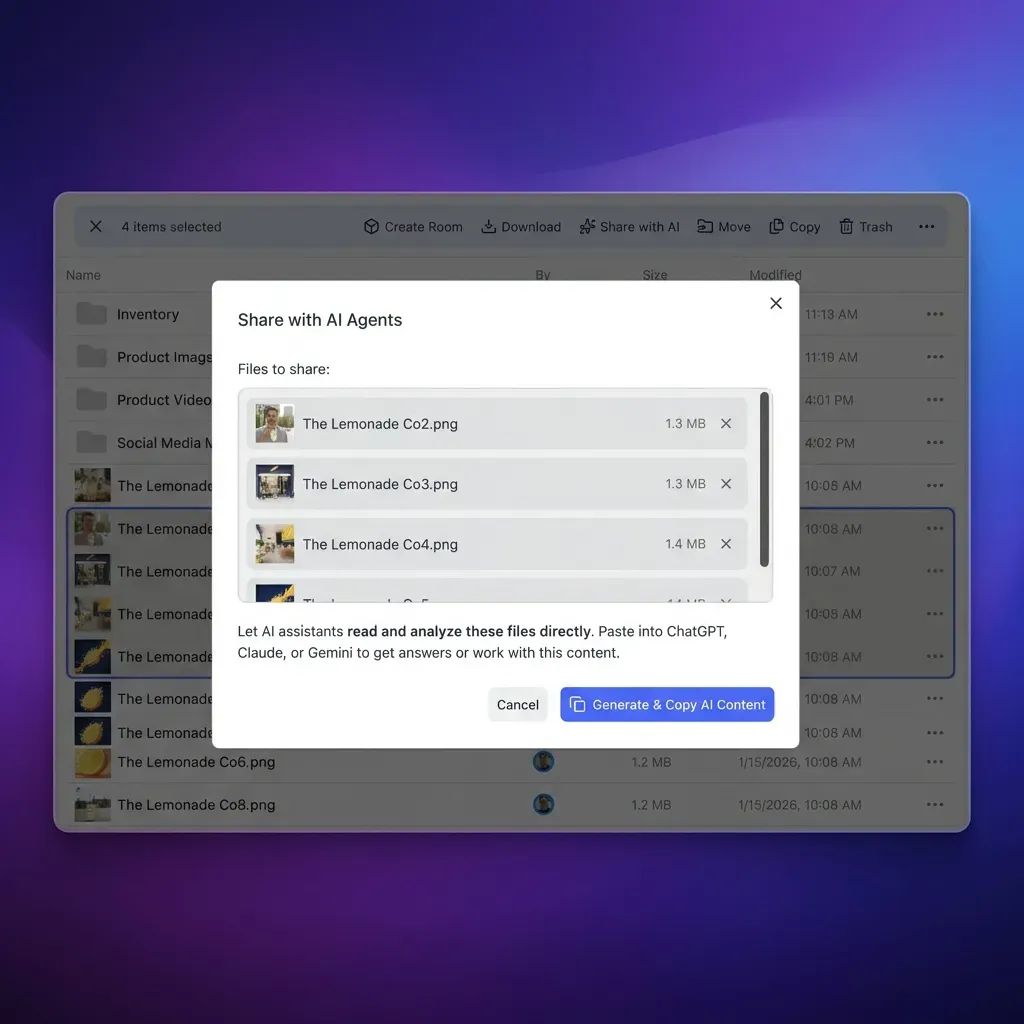


Stop losing agent output between handoffs
Fast.io gives your AI agents a persistent workspace to organize files, upload deliverables, and transfer completed work to humans through MCP.
How to Choose the Right AI Task Manager
The right choice depends on where your tasks come from and how much automation you want.
Calendar is your bottleneck: Motion or Reclaim AI. Motion for full auto-scheduling. Reclaim if protecting daily habits and focus time matters more than task optimization.
You want simplicity above everything: Todoist with AI Assist. It does less than Motion or ClickUp, and that's why it works. You'll actually open it every day.
You want control over every scheduling decision: Morgen. It suggests daily plans. You approve them. Nothing moves without your sign-off.
You manage a team, not just yourself: ClickUp Brain. The AI understands full project context across your entire organization, not just one person's calendar.
Tasks hide in your email: alfred_. Nothing else on this list extracts action items from your inbox automatically.
AI agents generate your deliverables: Fast.io. Agents create workspaces, organize files, and hand off work in shared spaces through MCP. Humans pick up where agents leave off.
One pattern works well for complex setups: pair a personal scheduler (Motion or Reclaim) with a workspace tool (Fast.io or ClickUp) for team coordination. The scheduler owns your day. The workspace owns the team's output.
Sources
References used to verify factual claims in this guide.
-
Knowledge workers spend 60% of their day on work about work
-
Motion users save an average of two hours per day
Frequently Asked Questions
What is the best AI task manager?
Motion is the strongest option for professionals who need automated calendar scheduling. It places tasks into optimal time blocks based on deadlines and priorities, then reshuffles everything when your schedule changes. Reclaim AI is a strong alternative if you want a free tier and habit protection features.
Can AI prioritize my tasks automatically?
Yes. Motion, Reclaim AI, and ClickUp Brain analyze deadlines, estimated effort, and calendar density to rank and schedule tasks without manual input. Motion and Reclaim go further by rescheduling lower-priority work when higher-priority tasks or meetings appear. Todoist suggests optimal dates based on your backlog but does not auto-place tasks on your calendar.
Is Motion better than Todoist for AI scheduling?
They solve different problems. Motion auto-schedules tasks into calendar blocks and rearranges them in real time when conflicts appear. Todoist suggests due dates and breaks large tasks into subtasks but does not manage your calendar directly. Choose Motion if calendar optimization is the priority. Choose Todoist if you want a lightweight task list with AI help and do not need calendar management.
What AI app can manage my to-do list?
Todoist is the simplest AI-powered to-do list app. Its AI Assist breaks goals into subtasks, suggests scheduling dates, and converts voice notes to organized tasks through Ramble. For a more automated approach, Motion takes your to-do list and schedules every item into calendar blocks. alfred_ takes a different angle by extracting tasks from your email inbox so you never have to add them manually.
Do AI task managers work with Google Calendar?
Most do. Motion, Reclaim AI, and Morgen integrate directly with Google Calendar and use it as their primary scheduling surface. ClickUp syncs with Google Calendar for time tracking and scheduling. Todoist requires a third-party connector like Morgen or Reclaim to add calendar integration.
Are AI task managers worth paying for?
If you spend significant time shuffling tasks between days, rescheduling around meetings, or losing track of commitments, an AI scheduler can reclaim hours each week. Reclaim AI offers a functional free tier to test whether automated scheduling fits your workflow before committing to paid plans. Todoist's free tier also lets you try AI task breakdown on up to 5 projects.
Related Resources

Stop losing agent output between handoffs
Fast.io gives your AI agents a persistent workspace to organize files, upload deliverables, and transfer completed work to humans through MCP.