How to Build an AI Agent for Ecommerce Operations
AI agents can automate 40-60% of routine ecommerce operations, from inventory forecasting to order routing and customer support. This guide walks through the architecture decisions, tool choices, and implementation steps for building a custom ecommerce agent that connects your store data to autonomous workflows. You will learn how to structure multi-tool agents, persist operational data across sessions, and hand off results to human operators.


What an Ecommerce AI Agent Actually Does
An ecommerce AI agent is an autonomous system that manages online store operations: product search, order processing, inventory management, customer support, and returns handling. Unlike a chatbot that answers questions, an agent takes actions. It reads your inventory database, decides when to reorder, updates pricing based on competitor data, and routes customer issues to the right resolution path.
The practical difference matters. A chatbot tells a customer their order shipped. An agent checks the warehouse management system, confirms the carrier scan, updates the order status, and sends the tracking notification, all without a human touching the workflow.
McKinsey estimates the global agentic commerce opportunity could reach $3 trillion to $5 trillion by 2030. That number reflects a shift from AI as a recommendation layer to AI as an execution layer. Shopify reported that AI-attributed orders on their platform grew 15x between January 2025 and early 2026, driven largely by agents completing purchases on behalf of consumers.
The building blocks for a custom ecommerce agent are straightforward: a language model for reasoning, tool integrations for store APIs, a persistence layer for state, and a handoff mechanism for edge cases that need human judgment.

Related guides
- Best AI Dropshipping Tools in 2026The global dropshipping market reached $543 billion in 2026. Sellers who automate product research and fulfillment with...
- How to Enable Dynamic Tool Learning for AI AgentsDynamic tool learning lets AI agents find and use new tools while they run, instead of being limited to hardcoded...
- How to Build AI Agents for Batch ProcessingBatch processing lets AI agents handle repetitive work across thousands of files without you having to watch over them....
- How to Build an AI Agent Data FlywheelAn AI agent data flywheel is a self-reinforcing cycle where agent interactions generate data that improves future agent...
- AWS Strands Agents: Build AI Agents with Amazon's Agent FrameworkAWS Strands Agents is Amazon's open-source Python framework for building AI agents that use tools, maintain memory, and...
- How to Build a Closed Loop System for AI AgentsDeploying autonomous AI agents in an open loop manner often leads to compounding errors. Implementing a closed loop...
More on this subject: AI Agents: General Guides (190 guides)
Core Agent Architecture for Online Stores
A production ecommerce agent needs five components working together. Skip any of these and you will hit a wall within the first week.
Reasoning engine. This is your LLM. Claude, GPT-4, Gemini, or an open-source model like LLaMA. The model interprets incoming data (a new order, a low-stock alert, a customer complaint) and decides which tools to call. Pick a model that supports tool use natively, because ecommerce agents spend most of their time calling APIs, not generating text.
Tool layer. Your agent needs programmatic access to Shopify, WooCommerce, or whatever platform runs your store. It also needs access to your warehouse system, shipping carriers, payment processor, and CRM. The Model Context Protocol (MCP) is becoming the standard way to expose these integrations. Shopify open-sourced their AI Toolkit in April 2026, which includes an MCP server for store operations: searching docs, validating GraphQL queries, and executing admin actions.
State persistence. Ecommerce operations span hours or days. An order placed today might need a return processed next week. Your agent needs to remember what it did, what is pending, and what failed. A local SQLite database works for prototyping, but production systems need shared storage that multiple agent instances can access.
Decision guardrails. Not every action should be autonomous. Set thresholds: the agent can issue refunds under $50 without approval, but anything above that goes to a human queue. Define which product categories the agent can reprice and which need manual review. These guardrails prevent expensive mistakes during the learning phase.
Human handoff. When an agent encounters something outside its guardrails, it should package the context (what happened, what it tried, what it recommends) and route it to a human operator. The handoff should include all relevant files, conversation history, and a summary of the agent's reasoning.
Choosing Between Single-Agent and Multi-Agent
A single agent handling all ecommerce operations sounds simpler, but specialization wins in practice. Pulse Commerce's research on AI agent design recommends keeping each agent specialized within a single domain rather than assigning multiple disparate tasks. A dedicated inventory agent develops better forecasting accuracy than a general-purpose agent that also handles customer support.
The pattern that works: one orchestrator agent that receives events and routes them to specialized sub-agents for inventory, orders, support, and pricing. Each sub-agent has its own tool access and guardrails. The orchestrator handles coordination and conflict resolution (for example, when the pricing agent wants to discount a product the inventory agent flagged as low-stock).
Building the Agent Step by Step
Start with the operation that costs you the most time or money. For most stores, that is either inventory management or customer support. Here is the implementation sequence for an inventory-focused agent.
Step 1: Connect your data sources. Set up API access to your ecommerce platform. If you are on Shopify, install the Shopify AI Toolkit to get MCP-native access to your store's admin API, product catalog, and order history. For WooCommerce, use the REST API with OAuth authentication. Pull your initial product catalog, current stock levels, and 12 months of order history.
Step 2: Build the forecasting pipeline. Feed historical sales data into your agent's context. The agent analyzes seasonal patterns, identifies products with declining velocity, and flags items approaching stockout. AI-powered demand forecasting can cut forecasting errors by 50% compared to manual methods, according to supply chain research from Cahoot.
Step 3: Set up automated reordering. Define reorder rules: minimum stock thresholds, preferred suppliers, lead times, and budget constraints. The agent monitors inventory levels continuously and generates purchase orders when thresholds are crossed. Start conservative. Set the agent to draft purchase orders for human approval before enabling fully autonomous ordering.
Step 4: Add pricing intelligence. Connect competitor price monitoring (tools like Prisync or Competera work well here). The agent adjusts your prices based on rules you define: match the lowest competitor within 5%, never go below your margin floor, increase price when you are the only seller in stock. Dynamic pricing agents can improve margins by 10-15% when properly calibrated.
Step 5: Wire up notifications and reporting. The agent should surface decisions it made and actions it took. Daily inventory reports, reorder notifications, price change summaries. Use webhooks to push these to Slack, email, or your project management tool.
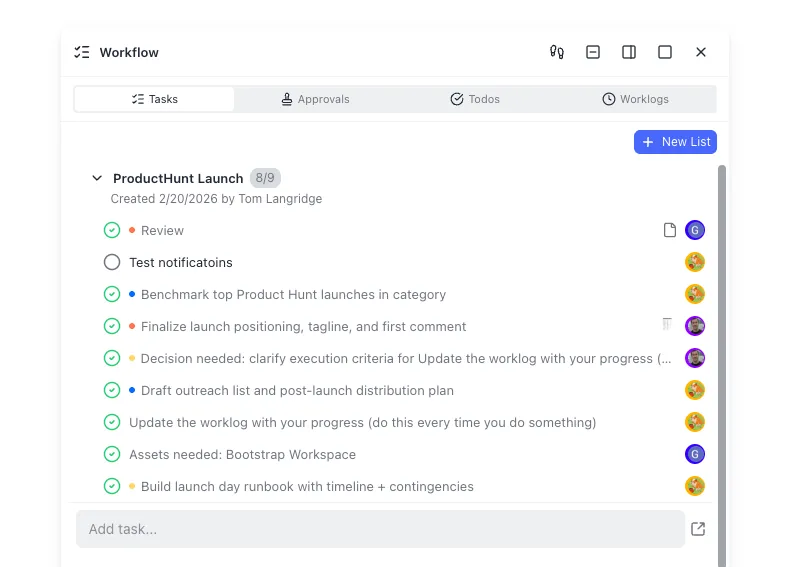


Give your ecommerce agent a persistent workspace
Generous storage, MCP-ready endpoint, and Intelligence Mode for semantic search across your inventory reports and order data.
Persisting Agent State and Files
The hardest part of running ecommerce agents is not the AI reasoning. It is keeping state consistent across sessions and making agent output accessible to your team. An agent that generates a purchase order needs to store it somewhere your procurement team can review it. An agent that creates a pricing report needs to share it with your category managers.
Local file storage works for a single developer testing locally. But production ecommerce agents need shared, persistent storage with versioning and access control. You have several options.
Cloud object storage (S3, GCS). Cheap and scalable, but no built-in collaboration features. Your team gets files dumped into buckets with no context about what the agent did or why. No search, no previews, no commenting.
Google Drive or Dropbox. Better for human access, but agent integration is clunky. Rate limits, complex OAuth flows, and no native AI features like semantic search over stored documents.
Purpose-built agent workspaces. Fastio is designed for this pattern. Agents and humans share the same workspaces, and files are automatically indexed for semantic search and AI chat when Intelligence is enabled. The Fastio MCP server exposes workspace, storage, and intelligence operations through a standard protocol, so your ecommerce agent can upload reports, query metadata, and hand off work to human operators through the same interface.
The ownership transfer model is particularly useful for ecommerce agencies. An agent builds out the workspace, populates it with inventory reports, pricing analyses, and order summaries, then transfers the organization to the client. The agent keeps admin access for ongoing operations while the client gets full ownership of their data.
Fastio's 14-day Business Trial provides persistent cloud storage and developer tooling, giving you the runway to prototype and validate an ecommerce agent before committing budget.
Connecting Shopify and WooCommerce
The two most common ecommerce platforms have different agent integration paths. Here is what works for each.
Shopify. The Shopify AI Toolkit, open-sourced in April 2026 under an MIT license, is the fastest path. It bundles three capabilities: searching Shopify's developer documentation and API schemas, validating GraphQL queries and Liquid templates in real time, and executing live store management actions through the Shopify CLI. Install it as a plugin for Claude Code, Cursor, or VS Code. The toolkit also supports Shopify's Universal Commerce Protocol (UCP), an open standard co-developed with Google for agent-to-merchant communication.
{
  "mcpServers": {
    "shopify": {
      "command": "npx",
      "args": ["-y", "@anthropic-ai/claude-code-mcp"],
      "env": {
        "SHOPIFY_ACCESS_TOKEN": "your-token"
      }
    }
  }
}
WooCommerce. No official MCP server exists yet. Build your own tool layer using the WooCommerce REST API v3. The key endpoints you need: /products for catalog management, /orders for order processing, /customers for CRM data, and /reports for sales analytics. Wrap these in MCP-compatible tools so your agent can call them the same way it calls any other tool.
Platform-agnostic approach. If you run multiple storefronts or want to stay flexible, build your agent against a normalized data layer. Define standard schemas for products, orders, and customers, then write adapters for each platform. This adds upfront work but prevents vendor lock-in as your agent operations scale.
For either platform, your agent needs a workspace where it stores the artifacts it generates: inventory snapshots, pricing recommendations, order exception reports, and customer interaction logs. Keeping these in an intelligent workspace like Fastio means your team can search across them semantically and ask questions about trends without building a separate analytics pipeline.
Handling Customer Support with Agents
Customer support is where ecommerce agents deliver the most visible ROI. Support agents handle repetitive queries (order status, return requests, shipping updates) while routing complex issues to human agents. Companies using AI agents for ecommerce support report 40-60% reduction in support costs.
The implementation pattern follows a triage model. Every incoming message gets classified by intent: order inquiry, return request, product question, complaint, or billing issue. Each intent has a different resolution path.
Order inquiries are the simplest. The agent looks up the order by email or order number, checks the current status from your fulfillment system, and responds with tracking information. No human needed for 90% of these.
Return requests require more judgment. The agent checks the return policy (is the item eligible? is it within the window?), generates a return label if approved, and updates the order status. For items outside the return window, the agent can offer alternatives (store credit, exchange) within your defined guidelines before escalating to a human.
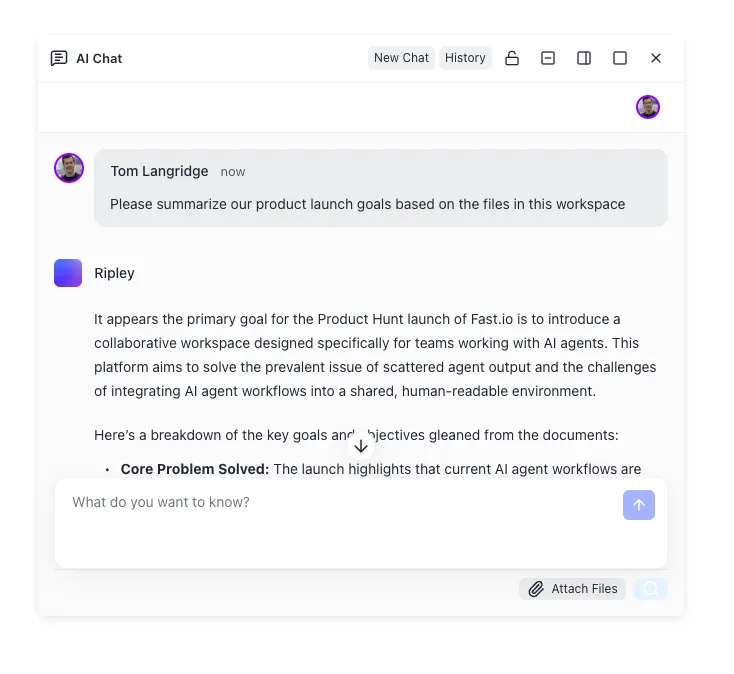
Product questions pull from your product catalog and, if you have it indexed, your knowledge base. This is where having your product documentation in an intelligent workspace pays off. With Intelligence Mode enabled, the agent can search across product specs, user guides, and FAQs semantically, then cite specific documents in its response.
Complaints and edge cases get packaged and escalated. The agent writes a summary of the interaction, attaches relevant order history and previous tickets, and creates a task for the support team. The human gets full context instead of starting from scratch.
Gorgias, a dedicated ecommerce support platform, reports that their AI agent resolves tickets autonomously at rates exceeding 60% for stores with well-structured product data. The key factor is data quality: agents perform best when your product information, policies, and order data are clean and accessible.
Measuring Agent Performance and Scaling
An ecommerce agent that runs without measurement is a liability. Define metrics before you deploy, and review them weekly for the first three months.
Inventory agent metrics. Track forecast accuracy (predicted vs. actual demand), stockout rate, overstock carrying cost, and purchase order accuracy. A well-tuned inventory agent should reduce stockout events by 20-30% within the first quarter. Compare your reorder timing against what manual processes would have produced.
Support agent metrics. Measure resolution rate (percentage of tickets closed without human intervention), customer satisfaction scores on agent-handled tickets, escalation rate, and average resolution time. Start with a target of 40% autonomous resolution and work up from there as you refine your knowledge base and decision rules.
Pricing agent metrics. Monitor margin impact, competitive win rate, and revenue per session. Dynamic pricing without measurement is just random number generation. A/B test agent-managed pricing against your manual process on a subset of products before rolling out broadly.
Scaling from one agent to many. Once your first agent proves its value, extend the pattern. The orchestrator architecture described earlier makes this straightforward: add a new sub-agent, define its tools and guardrails, and connect it to the event stream. Common second agents are a returns processor, a catalog enrichment agent (writing product descriptions, optimizing images), or a marketing agent (adjusting ad spend based on inventory levels).
Keep agent artifacts organized as you scale. Each agent should write its outputs (reports, decisions, logs) to a structured workspace where your team can audit what happened. Audit trails matter both for debugging and for building trust with stakeholders who are skeptical about autonomous operations.
Sources
References used to verify factual claims in this guide.
-
McKinsey estimates the global agentic commerce opportunity could reach $3 trillion to $5 trillion by 2030
-
AI-attributed orders on Shopify grew 15x since January 2025
-
AI-powered demand forecasting can cut forecasting errors by 50%
-
Companies using AI agents report 40-60% reduction in support costs Pilot implementation typically costs $3,000 to $8,000 per agent
-
Shopify AI Toolkit open-sourced on April 9, 2026 under MIT license
Frequently Asked Questions
How do AI agents work in ecommerce?
An ecommerce AI agent connects to your store's APIs (Shopify, WooCommerce, or custom platforms), reads operational data like inventory levels, order status, and customer messages, then takes actions based on rules and AI reasoning. The agent uses tool calling to interact with your systems, meaning it can check stock, generate purchase orders, update prices, and respond to customers programmatically. Unlike a dashboard or report, the agent acts autonomously within defined guardrails.
Can AI agents manage inventory?
Yes, inventory management is one of the strongest use cases for ecommerce agents. An agent monitors stock levels continuously, forecasts demand using historical sales data and seasonal patterns, and generates purchase orders when thresholds are crossed. AI-powered demand forecasting can cut forecasting errors by 50% compared to manual methods. Start with the agent drafting purchase orders for human approval before enabling fully autonomous reordering.
What is the best AI for online stores?
There is no single best AI for all stores. For Shopify stores, the Shopify AI Toolkit provides MCP-native access to your store's admin API and is the fastest integration path. For custom agents, Claude, GPT-4, and Gemini all support the tool-calling patterns needed for ecommerce operations. The more important choice is your persistence and collaboration layer. Tools like Fastio provide shared workspaces where agents store their outputs and humans review them, which matters more than which LLM you pick.
How do I build an ecommerce chatbot with AI agents?
Start by connecting your product catalog, order system, and support policies to your agent through API integrations or MCP tools. Build intent classification to route customer messages (order inquiry, return request, product question, complaint). For each intent, define the resolution workflow and the conditions under which the agent should escalate to a human. Test with a shadow mode where the agent drafts responses but a human approves them before they are sent. Gradually increase autonomy as accuracy improves.
How much does it cost to build an ecommerce AI agent?
A pilot implementation typically costs $3,000 to $8,000 per agent for setup, with monthly infrastructure costs of $1,500 to $5,000 depending on volume and model usage. You can reduce costs significantly by using open-source tools like the Shopify AI Toolkit and free-tier services. Fastio's 14-day Business Trial (credit card required) covers persistent storage and MCP access for prototyping. The biggest cost variable is LLM API usage, which scales with the number of operations your agent handles daily.
How long does it take to deploy an ecommerce AI agent?
A focused pilot targeting one operation (inventory management or customer support) takes 4-8 weeks from design to production. The first two weeks go to API integration and data pipeline setup. Weeks three and four cover agent logic, guardrails, and testing. The remaining time is for shadow-mode validation where the agent runs alongside your existing processes. Scaling to additional agent types after the first deployment is faster, typically 2-3 weeks per additional agent.
Related Resources

Give your ecommerce agent a persistent workspace
Generous storage, MCP-ready endpoint, and Intelligence Mode for semantic search across your inventory reports and order data.