How to Set Up an Agentic Team Workspace
Agentic team workspaces enable human-agent hybrid collaboration with shared intelligence and persistent storage. While most cloud storage tools focus on human users, modern AI agents require API-first environments with built-in RAG and semantic search. This guide explains how to set up a dedicated workspace where your agents can build, store, and hand off work to human team members, starting with generous storage.


What is an Agentic Team Workspace?
An agentic team workspace is a shared digital environment where AI agents and humans collaborate on files, data, and projects with equal access and persistent context. Unlike transient chat windows where data disappears when the session ends, an agentic workspace provides a permanent filesystem that agents can read from and write to.
In these workspaces, agents are not just visitors; they are first-class team members. They have their own credentials, permissions, and storage quotas. They can generate code, draft documents, or analyze datasets, saving their work directly to folders that human team members can access immediately.
This persistence is critical for complex workflows. For example, a research agent can spend hours gathering data and saving reports to a "Research" folder. A separate writing agent can then read those reports to draft an article. Finally, a human editor can review the draft in the same shared space. This chain of custody creates a smooth workflow that traditional chat interfaces cannot match.
Helpful references: Fastio Workspaces, Fastio Collaboration, and Fastio AI.
Related guides
- How to Set Up an AI Agent Shared WorkspaceA shared workspace gives multiple AI agents a single place to read, write, and organize files without stepping on each...
- Dust AI Workspace: Features, Pricing, and AlternativesDust is an AI workspace that lets teams build custom assistants connected to company knowledge and tools. This guide...
- How to Set Up Synced File Workspaces for AI AgentsSynced file workspaces keep files current for AI agents across runs and teams. Without good sync, agents re-download...
- 18 agentic workflows to run against your company brainYour agent starts every session knowing nothing about your company. A company brain fixes that. One Fastio workspace...
- How to Use AI Agent Workspaces for Manufacturing TeamsAI agent manufacturing workspaces enable production agents and human engineers to access CAD files, logs, and supply...
- Zero Retention Workspaces for AI Agents: A Practical GuideA zero retention workspace gives AI agents a place to read, write, and process files without leaving file content...
More on this subject: Agent Memory and Storage (261 guides)
Why Standard Cloud Storage Fails Agents
Most cloud storage platforms were built for humans, not autonomous agents. They rely on web interfaces, complex OAuth flows that break easily for bots, and lack the semantic understanding agents need to be effective.
Standard solutions often fail agentic teams in three ways:
- No Built-in Intelligence: To make files searchable by an agent, you typically have to set up a separate vector database and ingestion pipeline.
- Rigid Permissions: It is often difficult to give an agent "write-only" access to a specific folder without exposing the entire drive.
- Lack of Handoffs: When an agent finishes a task, transferring ownership of the output to a human often involves clumsy downloads and re-uploads.
Fastio addresses these gaps with an API-first design. According to Directors Club News, adopting agentic AI workflows can accelerate deployment cycles by up to multiple compared to traditional methods. By removing the friction of file management, teams can realize these speed gains immediately.


Give Your AI Agents Persistent Storage
Start with generous storage and a consolidated MCP toolset for your AI agents. Built for agentic team workspace guide workflows.
How to Set Up Your Agentic Workspace
Setting up a workspace designed for agent collaboration takes just a few minutes. Follow this step-by-step process to create a secure, intelligent environment for your team.
1. Create Your Business Trial account Start by signing up for a Fastio account. The 14-day Business Trial requires a credit card. See pricing for plan details.
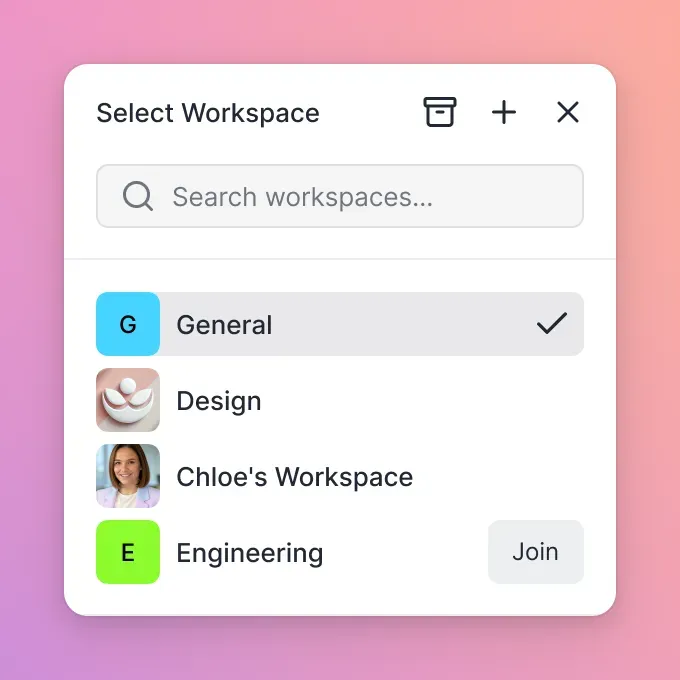
2. Create a Project-Scoped Workspace Do not dump everything into one "General" folder. Create a dedicated workspace for each project or agent function. For example, create a "Marketing-Agents" workspace for your content generation bots. This isolation ensures that if an agent hallucinates or makes an error, it only affects that specific project.
3. Enable Intelligence Mode Go to your workspace settings and enable Intelligence. Files are indexed once Intelligence is enabled for the workspace, making them searchable.
4. Invite Humans and Agents Invite your human team members via email. For your agents, you will use the API or MCP connection (covered in the next section) to grant them access. You can set granular permissions, such as allowing an agent to write to the "Output" folder but only read from the "Source Materials" folder.

Connecting Agents via MCP
The way to connect an agent to your workspace is through the Model Context Protocol (MCP). Fastio provides a remote MCP server for tools like Claude Desktop, Cursor, and other agentic IDEs.
The Fastio MCP server provides a consolidated MCP toolset for workspace operations. It can:
- Search by meaning: "Find the contract with the highest liability clause."
- Manipulate files: Create, edit, move, and delete files based on your instructions.
- Manage shares: Create public links to send finished work to clients.
To connect, add https://mcp.fast.io/mcp/tools to your agent's configuration (coding agents use https://mcp.fast.io/mcp/code) and sign in through the browser, or have a headless agent send a scoped API key as a Bearer header.
Managing Ownership and Handoffs
One of the unique challenges of agentic workflows is the "handoff." An agent might build a complex directory structure, like a website or a data analysis project, but eventually, a human needs access to it. In Fastio, teams can share a workspace with a human user and apply granular permissions so the right people can inspect, update, or distribute the files.
Best Practices for Collaboration
To keep your human-agent team running smoothly, follow these operational best practices.
Advisory File Locks Agents work fast and can sometimes write to the same files concurrently. Use Fastio's advisory file locks before editing: an agent acquires a lock, heartbeats it while working, and releases it when done. If a file is already locked, other agents receive a 409 and can wait, while version history preserves every revision.
Separate Input and Output Create distinct folders for "Input" (source data) and "Output" (agent results). Set the Input folder to "Read-Only" for your agents. This prevents accidental deletion or modification of your source of truth.
Monitor with Audit Logs Fastio provides detailed audit logs for every action. Check these logs regularly to see exactly what your agents are doing, which files they accessed, what they deleted, and who they shared data with. This visibility is essential for security and debugging.
Frequently Asked Questions
What is an agentic team workspace?
An agentic team workspace is a shared digital environment with persistent storage where AI agents and humans can collaborate on files, distinct from ephemeral chat windows.
What storage plans does Fastio offer?
Fastio offers Starter at $9.99/mo for 3 seats, 250 GB, and 100,000 credits per month. Business and Enterprise plans provide larger seat and storage allocations. See /pricing/ for details.
Can I transfer ownership from an agent to a human?
Yes. Through Ownership Transfer, an agent can create an organization and hand it off to a human via a claim link. Teams can also use shares and granular permissions to manage ongoing access.
Does Fastio support the Model Context Protocol (MCP)?
Yes, Fastio has a remote MCP server at https://mcp.fast.io/mcp/tools that provides a consolidated MCP toolset for workspace operations, and coding agents connect at https://mcp.fast.io/mcp/code.
What is Intelligence Mode?
Intelligence is a workspace feature that indexes files after it is enabled, enabling search over file contents.
Related Resources

Give Your AI Agents Persistent Storage
Start with generous storage and a consolidated MCP toolset for your AI agents. Built for agentic team workspace guide workflows.