How to Intersect Turnitin AI Detection Checker with Hermes Agent Workflows
Integrating Turnitin's similarity and AI detection flags into automated document pipelines allows developers to build resilient content validation agents. This guide outlines how to configure a custom skill for the Nous Research Hermes Agent using the turnitin ai detection checker, establish browser-automation fallbacks, and persist verified files in Fast.io workspaces.


Why Automated Document Pipelines Need an AI Verification Gateway
Over 15,000 institutions use Turnitin worldwide to enforce academic and editorial integrity, and the company claims over 98% confidence in detecting AI-generated text [Turnitin AI Writing Detection Page]. However, integrating this enterprise check into automated document pipelines remains a major challenge for developers because Turnitin does not provide an open, unauthenticated API for third-party scripts. Most online guides focus on students attempting to bypass AI detection. This article addresses developers who want to build automated validation agents using Nous Research Hermes Agent.
A Turnitin AI detection checker workflow integrates Turnitin's similarity and AI detection flags into automated document pipelines, often utilizing custom wrappers or scripts. Nous Research Hermes Agent is an open-source, MIT-licensed agentic framework that executes complex, multi-step workflows on local or remote servers. The official NousResearch/hermes-agent repository and documentation do not feature any integrations, skills, or instructions for connecting to Turnitin's enterprise API or automating Turnitin checks. You can learn more about deploying agent configurations by visiting the Nous Research Hermes Agent GitHub repository. To bridge this gap, developers must implement custom document processing pipelines that pass draft content to Turnitin, extract the results, and store the verified text. This setup establishes an automated verification loop, protecting content quality before publication.
While other general-purpose tools like Grammarly's AI Detector offer public access for simple ChatGPT and Gemini verification [Grammarly AI Detector Page], Turnitin remains the standard for institutional verification. Developers building workflows for universities or enterprise publishers must integrate with Turnitin's ecosystem.
Related guides
- Best OpenClaw Alternatives for AI Agent Workflows in 2026OpenClaw's 353k GitHub stars make it the most popular AI agent framework, but security issues in ClawHub and a growing...
- Best OpenClaw Workflows for AI Code ReviewOpenClaw's skills ecosystem includes several code review tools that analyze pull requests, scan for security...
- Best Storage for Hermes Agent Autonomous Workflows: Local vs Cloud WorkspacesAutonomous agent operations require persistent file layers to retain context across task execution cycles. This guide...
- Hermes Agent vs AI Generator Checker: Autonomous AI Loops vs Single-Pass ScoringAI content checkers assess static text using statistical perplexity scores, while Nous Research Hermes Agent provides...
- Hermes Agent vs Google ADK: Turnkey Agent or Build-Your-Own FrameworkGoogle ADK crossed 19,000 GitHub stars as a build-your-own framework while Hermes Agent passed 100,000 as a...
- Nous Research Hermes Agent AI Code Detector Setup: Automating Code AuditsNous Research Hermes Agent AI code detector setup involves configuring the agent to automatically fetch source files...
More on this subject: Hermes Agent (100 guides)
How to Define a Custom Turnitin Skill in Hermes Agent
To connect Hermes Agent to Turnitin, you must create a custom skill that conforms to the agentskills.io standard. Custom skills are self-contained folders that contain a configuration markdown file and a scripts directory. The agent scans these external directories at startup to register new capabilities. Since Turnitin does not support built-in connections in the Hermes framework, defining this custom skill is the only way to establish a programmatic link.
By defining a dedicated skill, you isolate the integration logic from the agent's core code. The agent can now call the python runner script whenever it needs to scan a document. This separation of concerns allows developers to update the Turnitin API parameters or browser-automation selectors without modifying the core Hermes logic. It also ensures that other subagents can reuse the verification capabilities across different workspaces.
Directory Layout for Hermes Agent Skills
To organize your custom skill, place the files in your agent's local directory path, typically mapping to the ~/.hermes/skills/ folder. The skill must be self-contained so that the agent can read, test, and run it. The following file structure shows the layout of our verification skill:
~/.hermes/skills/
└── turnitin-detector/
    ├── SKILL.md
    └── scripts/
        └── turnitin_api_check.py
By placing the files in this location, the agent automatically registers the skill. You can verify this by running the hermes skills command in your terminal. This CLI command lists all active skills and prints their basic usage instructions.
Writing the SKILL.md Instructions
The instruction file is stored at the root of your skill folder as SKILL.md. This file uses YAML frontmatter to tell the agent when to trigger the skill. It also provides markdown guidelines explaining how to run the helper script and interpret the JSON output.
Here is the complete content for the skill instructions file:
---
name: turnitin_detector
description: Runs draft text through Turnitin's AI detection checker using API calls or browser automation.
version: 1.0.0
---

### Turnitin AI Detector Integration

Use this skill when you need to analyze a draft's AI probability score before committing it to a workspace.

### Usage Instructions

1. Pipe the content draft into the Python helper script:
   python scripts/turnitin_api_check.py draft.txt

2. The script returns a JSON response containing the status and the ai_score.

3. Parse the ai_score percentage:
   - If the score is below twenty percent, the content is ready for upload.
   - If the score is twenty percent or higher, trigger the rewriting routine to humanize the draft.
This file serves as the agent's reference. When the agent is tasked with checking a document, it reads this markdown file to learn the command syntax and understand the validation logic.
Registering the Custom Skill in config.yaml
To configure this skill in Hermes Agent, you must register its path in the global configuration file. The configuration is stored at ~/.hermes/config.yaml. You add the external directory under the skills key:
skills:
  external_dirs:
    - "~/.hermes/skills/turnitin-detector"
  auto_load: true
To secure the connection to remote storage, developers can store their API tokens in the environment file and link them to the Fast.io MCP Server configuration. The agent uses its environment file at ~/.hermes/.env to load credentials, ensuring that your Turnitin API keys remain secure:
TURNITIN_API_KEY="your_enterprise_api_key_here"
TURNITIN_BASE_URL="https://api.turnitin.com/v1"
This ensures that credentials are never hardcoded in the main configuration file.
How to Build a Turnitin AI Detection Checker Integration Loop
Turnitin supports two primary integration paths for developers: the Learning Tools Interoperability (LTI) standard for Learning Management Systems (LMS) and the Turnitin Core API for custom Similarity and Originality products. While the Turnitin Core API provides programmatic endpoints to submit documents and retrieve scores, organizations without an enterprise API license must use a browser-automation fallback to submit drafts.
A developer can handle these two paths using a structured, five-step integration loop:
Submission: The script uploads the document to the Turnitin Core API similarity endpoint. If the enterprise API is unavailable, the script triggers a browser-automation fallback using Playwright to upload the file.
Polling: The script enters a polling loop, checking the report status endpoint every thirty seconds until the analysis finishes.
Extraction: The script parses the returned report data to retrieve the similarity score and the AI writing indicator score.
Threshold check: The script compares the AI score against your organization's quality threshold, typically set to twenty percent.
Actionable output: If the AI score is below the threshold, the script returns a success status. If the score is higher, it returns the flagged text blocks to the agent's context window for iterative rewriting.
The following Python script illustrates how to implement this integration loop:
"""Turnitin integration script for Hermes Agent workflows"""
import os
import sys
import json
import time
import requests
from playwright.sync_api import sync_playwright

def submit_to_turnitin_api(file_path, api_key, base_url):
    """Submit document to Turnitin Core API similarity endpoint"""
    headers = {
        "Authorization": f"Bearer {api_key}",
        "Content-Type": "application/json"
    }
    payload = {
        "title": os.path.basename(file_path),
        "submission_type": "file"
    }
    try:
        response = requests.post(
            f"{base_url}/submissions",
            headers=headers,
            json=payload,
            timeout=30
        )
        if response.status_code == 201:
            submission_id = response.json().get("id")
            ### Upload the physical file
            upload_url = response.json().get("upload_url")
            with open(file_path, "rb") as f:
                upload_resp = requests.put(upload_url, data=f, timeout=60)
            if upload_resp.status_code == 200:
                return submission_id
        return None
    except requests.RequestException:
        return None

def run_browser_fallback(file_path, email, password):
    """Fallback flow using Playwright browser automation"""
    with sync_playwright() as p:
        browser = p.chromium.launch(headless=True)
        context = browser.new_context()
        page = context.new_page()
        try:
            page.goto("https://www.turnitin.com/login_page.asp", timeout=30000)
            page.fill("input[name='email']", email)
            page.fill("input[name='password']", password)
            page.click("input[type='submit']")
            page.wait_for_selector(".assignment-list", timeout=15000)
            ### Submit file
            page.click("text=Submit File")
            page.fill("input[name='title']", os.path.basename(file_path))
            page.set_input_files("input[type='file']", file_path)
            page.click("input[type='submit']")
            page.wait_for_selector(".report-score", timeout=30000)
            score_element = page.query_selector(".report-score")
            score_text = score_element.text_content() if score_element else "0%"
            return {"status": "success", "ai_score": score_text.strip()}
        except Exception as e:
            return {"status": "error", "message": str(e)}
        finally:
            browser.close()

if __name__ == "__main__":
    if len(sys.argv) < 2:
        print(json.dumps({"status": "error", "message": "Missing file path"}))
        sys.exit(1)

    target_file = sys.argv[1]
    api_token = os.environ.get("TURNITIN_API_KEY")
    api_url = os.environ.get("TURNITIN_BASE_URL")

    sub_id = None
    if api_token and api_url:
        sub_id = submit_to_turnitin_api(target_file, api_token, api_url)

    if sub_id:
        ### Poll for results
        headers = {"Authorization": f"Bearer {api_token}"}
        for _ in range(20):
            time.sleep(30)
            resp = requests.get(f"{api_url}/submissions/{sub_id}", headers=headers, timeout=10)
            if resp.status_code == 200:
                data = resp.json()
                if data.get("status") == "COMPLETE":
                    ai_score = data.get("ai_writing_score", "0%")
                    print(json.dumps({"status": "success", "ai_score": ai_score}))
                    sys.exit(0)
        print(json.dumps({"status": "error", "message": "Polling timed out"}))
    else:
        ### Fallback to browser automation
        login_email = os.environ.get("TURNITIN_EMAIL")
        login_pass = os.environ.get("TURNITIN_PASSWORD")
        if login_email and login_pass:
            result = run_browser_fallback(target_file, login_email, login_pass)
            print(json.dumps(result))
        else:
            print(json.dumps({"status": "error", "message": "No API keys or fallback login credentials found"}))
This script ensures that the agent receives structured JSON output containing the AI score, regardless of whether the enterprise API or a browser automation fallback is used. The agent then reads this score to decide whether to proceed or refine the text.
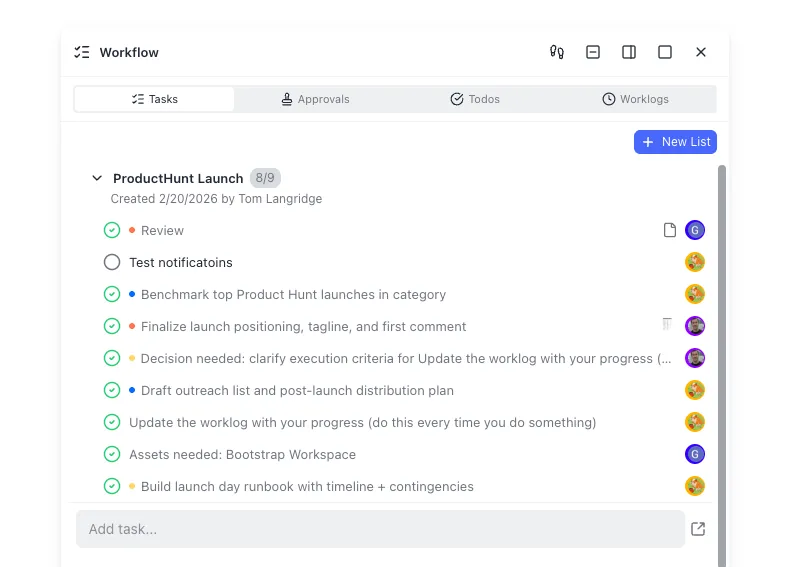
LTI Integration Logic vs Core API
Learning Tools Interoperability (LTI) is the standard protocol used by universities and institutions to embed Turnitin within platforms like Canvas, Blackboard, or Moodle. For custom developer workflows, the LTI standard requires establishing a secure OAuth handshake between your agent server and Turnitin's registration portal. If your organization has an institutional LMS license, you can configure your gateway to mock an LMS launch request. This allows you to submit documents programmatically through LTI parameters.
However, for custom business applications that operate outside of an LMS environment, the Turnitin Core API is the preferred path. It provides REST endpoints for file uploads, report status polling, and score extraction. When designing a Hermes Agent workflow, the agent checks if Core API keys are available in its environment file. If they are, it uses direct HTTP requests; if not, it automatically falls back to browser-automation scripts.
Handling Selector Changes and Bot Mitigation
Websites that do not offer public APIs often employ bot detection to limit automated traffic. To minimize the risk of being blocked when using browser-automation fallbacks, the Playwright script configures a realistic user-agent string and sets a standard browser viewport. When running high-volume checks, you should implement randomized delays between requests.
If the site blocks the agent's IP address, you must configure the browser context to route traffic through a proxy server. Furthermore, front-end changes to the website can break HTML selectors, causing the script to fail. Developers must handle these changes by updating the query selectors in the Python script.


Build a turnitin ai detection checker workflow
Deploy an intelligent workspace on Fast.io to secure your automated document verification pipelines, check drafts against Turnitin, and store versioned files. Starts with a 14-day free trial.
Why Persistent Cloud Workspaces Resolve Ephemeral Storage Gaps
When running automated document verification pipelines, saving drafts and reports on local disk storage is unreliable because local disks are ephemeral. If your Hermes Agent runs inside serverless containers on platforms like Modal, all files are lost when the instance reboots. Storing reports in Amazon S3 buckets provides durability but requires complex API configurations and lacks real-time co-editing interfaces. Storing documents in Google Drive offers cloud storage but lacks semantic search APIs and version history views for agents.
Fast.io provides a collaborative workspace layer designed for humans and agents. When the Hermes Agent finishes checking a document against the Turnitin AI detection checker, it uploads the draft and the verification report to a Fast.io workspace. For developers seeking to design custom file management flows, the Fast.io Storage for Agents page outlines the full system requirements.
This shared environment provides several benefits for developer workflows:
Per-File Version History: Fast.io preserves the complete version history for every file. If an agent edits a draft during the rewriting loop, human team members can inspect the changes and restore previous versions.
Intelligence Mode: When Intelligence Mode is enabled, the workspace automatically indexes all files. This allows the agent and human team members to use hybrid search to query documents by meaning, in addition to using exact full-text matching.
Metadata Views: Through Metadata Views, developers can transform unstructured document folders into a live database. You describe the columns you want to extract in natural language, and Fast.io designs a schema using fields like Text, Integer, Decimal, Boolean, URL, JSON, and Date & Time. No manual templates or OCR rules are required. Developers can use Metadata Views to parse verification reports, extract AI detection percentages, and organize them into a queryable table. To learn more about setting up structured databases from your files, visit the Metadata Views product page.
By storing files in a shared workspace, you establish an audit trail that makes the content generation process clear and verifiable.
Tracking Verification Scores with Metadata Views
To monitor the validation pipeline, you can create a Metadata View in your workspace. This structured grid compiles the scores of all drafts in one place, allowing your team to see which files require human review. You can create the view using the Fast.io web interface or programmatically via the MCP toolset.
To create the view, define the following columns in natural language:
Target Keyword: A Text field containing the primary search term.
Verification Status: A Text field with values like Pending, Approved, or Needs Refinement.
AI Probability Score: A Decimal field storing the percentage returned by the Turnitin checker.
Last Checked: A Date & Time field recording when the script ran.
When the agent saves a new draft, Fast.io scans the document and populates these columns. If the agent updates the text to lower the AI score, the view automatically updates the values, keeping your team database in sync.
Querying the Database from the Agent CLI
Using the Fast.io MCP server, the Hermes Agent can query this structured grid directly from its terminal interface. It does not need to download and parse every document to find those that need attention. The agent can run structured queries using the metadata values.
For example, the agent can query for files where the Verification Status is set to Needs Refinement. Once retrieved, it automatically runs the text through its rewriting routine. By combining file storage with metadata queries, you eliminate the need to maintain an external database for your agent pipelines.
Guide to Operational Handoff and Troubleshooting Verification Workflows
Once you configure your verification pipeline, you can hand off the workspace to a human client or manager using Fast.io ownership transfer. The agent signs up for a user account, creates the organization, and configures the workspaces. Once the setup is complete, the agent generates a claim link to transfer the organization to a human client.
The human client starts their 14-day free trial, which requires a credit card to activate. Fast.io offers three paid plans:
Starter Plan: For individual developers at $9.99 per month ($99 per year), providing 250 GB of storage and 100,000 usage credits.
Business Plan: For collaborative teams at $49.99 per month ($499 per year), supporting up to 10 seats and providing 5 TB of storage with 600,000 credits.
Enterprise Plan: For large deployments at $199.99 per month ($1,999 per year), supporting up to 30 seats and providing 25 TB of storage with 3 million credits.
To compare plans and configure billing limits, visit the Fast.io Pricing page. If you encounter errors during implementation, verify the following configuration settings:
StdioServerParameters Error: If the Hermes Agent log displays a StdioServerParameters name error, the environment is missing the mcp package. Resolve this by injecting the package into your hermes-agent installation:
pipx inject hermes-agent mcp
YAML Syntax Issues: Use a yaml validator or run the config check CLI command to ensure that your API keys and configuration files are correctly formatted:
hermes config check
Network Timeout Errors: If the Playwright script fails to load the login page, verify your proxy settings and ensure that your user-agent string is configured correctly to avoid bot detection systems. For details on standard LLM metadata formats, refer to the fast.io/llms.txt configuration guide.
By checking these settings, you ensure that your automated content verification pipeline runs reliably without manual interruptions.
Sources
References used to verify factual claims in this guide.
-
Over 15,000 institutions use Turnitin worldwide to enforce academic and editorial integrity, and the company claims over 98% confidence in detecting AI-generated text.
-
Nous Research Hermes Agent is an open-source, MIT-licensed agentic framework that executes complex, multi-step workflows on local or remote servers.
-
For individual developers at $9.99 per month ($99 per year), providing 250 GB of storage and 100,000 usage credits. For collaborative teams at $49.99 per month ($499 per year), supporting up to 10 seats and providing 5 TB of storage with 600,000 credits. For large deployments at $199.99 per month ($1,999 per year), supporting up to 30 seats and providing 25 TB of storage with 3 million credits. The human client starts their 14-day free trial, which requires a credit card to activate.
-
While other general-purpose tools like Grammarly's AI Detector offer public access for simple ChatGPT and Gemini verification [Grammarly AI Detector Page]
Frequently Asked Questions
Can Turnitin detect AI content?
Yes, Turnitin can detect AI-generated content through its AI writing detection tool. The system evaluates text patterns to identify writing likely produced by large language models, including GPT models and Gemini, providing a percentage score showing how much of the submission was generated by AI.
How does Turnitin AI detection checker work?
The Turnitin AI detection checker works by analyzing the linguistic patterns of a document. It breaks the text down into segments and evaluates them against statistical models of human and AI writing. The tool measures predictability and structure, calculating a confidence score for whether the segments were generated by a language model.
Does Turnitin have an API for AI detection?
Turnitin offers programmatic access to its plagiarism and AI detection capabilities through the Turnitin Core API, which is available for Similarity and Originality enterprise licenses. However, there is no public or free API, meaning developers must configure API key authentication or use LTI integrations to automate submissions.
Related Resources

Build a turnitin ai detection checker workflow
Deploy an intelligent workspace on Fast.io to secure your automated document verification pipelines, check drafts against Turnitin, and store versioned files. Starts with a 14-day free trial.