Best OpenClaw Workflows for AI Code Review
OpenClaw's skills ecosystem includes several code review tools that analyze pull requests, scan for security vulnerabilities, and catch AI-generated code accepted without review. This guide covers the best ClawHub skills for automated code review, how to wire them to GitHub, and where persistent file storage fits into the workflow.


Why Chat-First Code Review Matters
Traditional code review tools run inside CI pipelines or IDE extensions. OpenClaw takes a different approach: the review agent lives in your chat interface, whether that's a desktop app, a terminal session, or a messaging gateway like Slack or Discord. You describe what to review in plain language, and the agent fetches the diff, runs analysis, and posts findings back to the PR.
This matters because it removes the context switch. Instead of opening a separate dashboard or waiting for a CI check to finish, you ask your agent to review the latest PR and get a summary in the same conversation where you're already working. The GitHub skill by steipete gives the agent access to pull requests, diffs, CI status, and review comments through a single integration point, so you don't need a separate tool for each operation.
Related guides
- How to Automate Video Review Workflows with Manus AIWhile AI-driven automation can slash initial video editing and rough-cut assembly times by up to 80%, creative teams...
- Claude Code Review: How to Use /code-review and UltrareviewClaude Code ships a built-in /code-review command that scans diffs for correctness bugs and improvement opportunities...
- Top OpenClaw Workflows for AI Customer Review Response GenerationOpenClaw workflows chain review monitoring, sentiment analysis, and brand voice skills into automated response...
- Best OpenClaw Workflows for AI Image Generation PipelinesOpenClaw 2026.4.5 turned agents into image producers. The native image_generate tool supports 10 providers out of the...
- Best OpenClaw Workflows for Nonprofit OrganizationsOpenClaw workflows help nonprofit organizations scale their impact by automating donor outreach, grant research, and...
- Best OpenClaw Workflows for Account ExecutivesOpenClaw workflows automate routine sales tasks, allowing account executives to focus on closing deals. This...
More on this subject: OpenClaw Workflows and Integrations (69 guides)
How We Evaluated These Workflows
We reviewed skills from ClawHub, OpenClaw's public skills registry, and the community-maintained awesome-openclaw-skills collection. Criteria for inclusion:
- Direct code review function: The skill must analyze code, diffs, or repositories, not just manage issues or format output.
- Active maintenance: Skills with recent updates and documented ClawHub pages.
- Real-world usage: Evidence of adoption in the OpenClaw showcase or community discussions.
- Composability: Skills that work well alongside other OpenClaw tools, especially the GitHub skill for PR interaction.
We excluded skills that only handle project management, documentation generation, or code formatting without an analysis component.
Workflows covered in this guide:
- GitHub + Custom Review Skill: PR diff analysis and inline comments. Best for teams with existing GitHub workflows.
- astrai-code-review: Cost-optimized review with intelligent model routing. Best for high-volume repos where LLM costs matter.
- code-security-audit: OWASP vulnerability scanning. Best for security-conscious teams.
- cacheforge-vibe-check: Detects unreviewed AI-generated code. Best for teams using AI coding assistants.
- credential-scanner: Secret and API key detection. Best for pre-merge security gates.
- Code skill: Structured development with built-in review phases. Best for solo developers wanting discipline.
1. GitHub Skill with Custom Review Logic
The foundation of any OpenClaw code review workflow is the GitHub skill by steipete. It gives your agent access to pull requests, issues, CI runs, and the GitHub API through natural language commands.
Key strengths:
- Full PR lifecycle: fetch diffs, post reviews, and add inline comments from the chat interface.
- CI monitoring: inspect failed workflow steps and summarize build errors without leaving the conversation.
- Repository queries: extract specific data from repository metadata using structured filters.
How the review workflow works:
The agent periodically checks for new PRs (or responds to an automation hooks trigger), fetches the diff, and analyzes the changes against rules you define in a custom skill. You write a skill file that specifies what to look for: missing tests, naming conventions, import patterns, or framework-specific anti-patterns. The agent then posts findings as PR comments, formatted the same way a human reviewer would.
Limitations:
- Requires GitHub CLI authentication in the agent's environment. If your agent runs in a separate session, make sure it has access to the correct authentication context.
- Review quality depends on how specific your custom skill instructions are. Generic prompts produce generic output.
Best for: Teams that want full control over review logic and already use GitHub as their primary platform.

2. astrai-code-review: Cost-Optimized AI Review
The astrai-code-review skill routes review tasks to different LLMs based on complexity, saving 40% or more compared to always using the most expensive model. Simple formatting checks go to a lightweight model, while architectural questions route to a more capable one.
Key strengths:
- Intelligent model routing that classifies task complexity before selecting an LLM.
- Cost savings compound quickly on high-volume repositories with dozens of daily PRs.
- Works alongside the GitHub skill for end-to-end PR review automation.
How it fits the workflow:
Pair astrai-code-review with the GitHub skill. The GitHub skill fetches the PR diff and metadata, then passes it to astrai-code-review for analysis. The routing layer decides which model handles each review task: trivial style checks go to a fast, inexpensive model, while security-sensitive changes or complex refactors route to a premium model.
Limitations:
- Model routing logic is opaque. You trust the skill's classification of "simple" vs. "complex" without fine-grained control.
- Requires API keys for multiple LLM providers to take advantage of routing.
Best for: Teams reviewing 10+ PRs per day who want automated review without runaway API costs.


Store and search every code review report automatically
Fastio gives your OpenClaw agent persistent storage with built-in semantic search. Upload review artifacts, query past scan results, and share findings with your team.
3. Security Scanning Workflows
Code review should catch more than style issues. Three ClawHub skills handle the security side of review.
code-security-audit
Runs a comprehensive security scan combining OWASP Top 10 vulnerability detection and dependency analysis. Point it at a repository or a PR diff, and it flags injection risks, broken authentication patterns, and known vulnerable dependencies.
Best for: Teams that need OWASP-aligned scanning as part of every review cycle.
credential-scanner
Scans files, directories, and repositories for leaked secrets: API keys, tokens, passwords in configuration files, and credentials accidentally committed to version control. Run it as a pre-merge check to catch secrets before they reach the main branch.
Best for: Any team, but especially those with multiple contributors who may not have pre-commit hooks configured.
cacheforge-vibe-check
A newer skill that audits code for patterns indicating AI-generated code was accepted without proper review. As more developers use AI coding assistants, the risk of merging hallucinated logic or subtly incorrect implementations grows. This skill flags common "vibe coding" anti-patterns: overly generic variable names, suspiciously uniform code structure, and boilerplate that doesn't match the project's conventions.
Best for: Teams where multiple developers use AI coding tools and want a safety net against uncritical acceptance of generated code.
These three skills work well as a chain. Run credential-scanner first (fast, catches the highest-severity issues), then code-security-audit for deeper analysis, and cacheforge-vibe-check as a final quality pass.
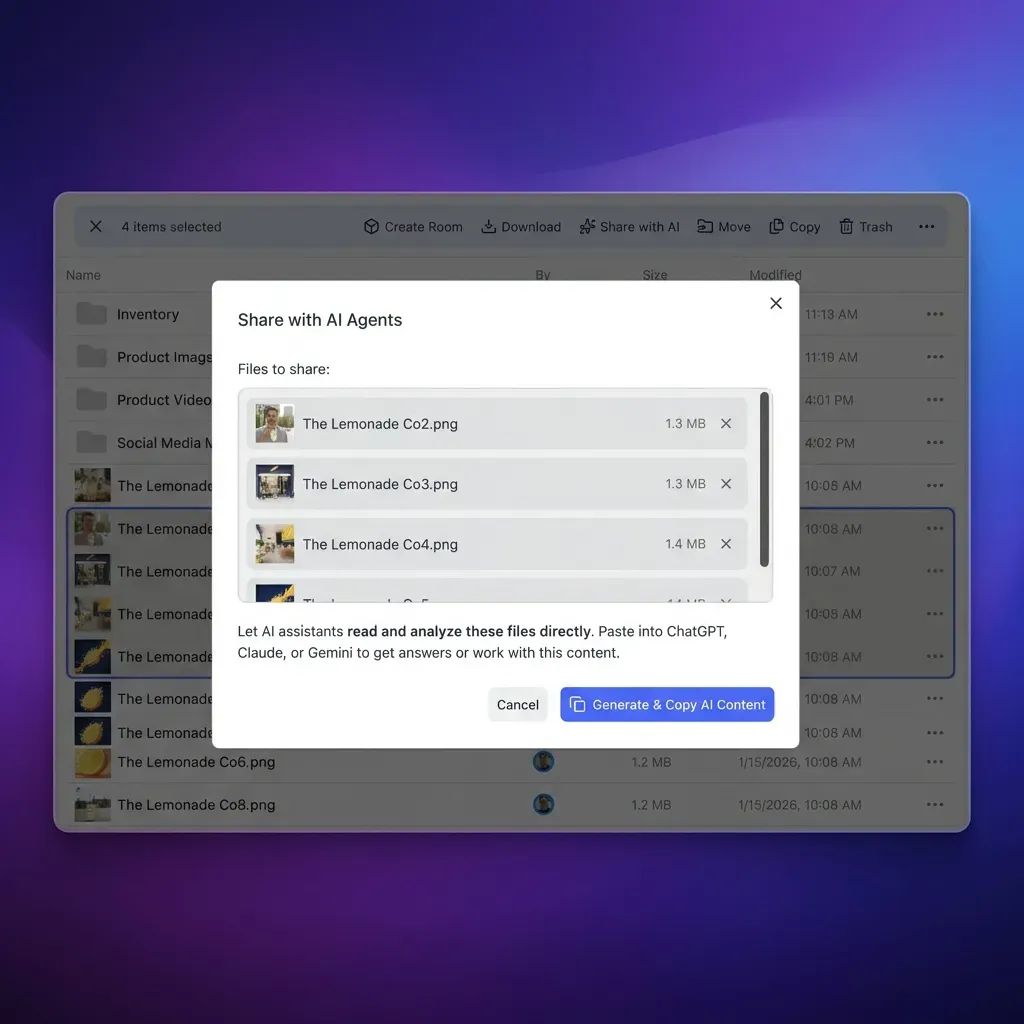
Connecting Review Output to Persistent Storage
Code review generates artifacts: audit reports, security scan results, historical diffs, and trend data across sprints. Most teams lose this information when the CI run finishes or the chat session ends. Persistent storage solves that.
Local options like saving reports to disk or pushing them to a git repository work for individual developers. S3 or GCS buckets handle team-scale storage but require infrastructure setup and IAM configuration. For teams that want storage without the ops overhead, Fastio provides a workspace that agents can write to directly.
Fastio workspaces support the MCP server with Streamable HTTP at /mcp, so your OpenClaw agent can upload review reports, organize them by repository and date, and make them searchable through Intelligence Mode's built-in RAG. When a reviewer or engineering manager wants to check historical scan results, they search the workspace in natural language instead of digging through CI logs.
Fastio offers a 14-day Business Trial (credit card required), giving teams shared workspaces and search capabilities for review artifacts.
The workflow pattern:
- OpenClaw agent pulls the PR diff via the GitHub skill.
- Review skills (astrai-code-review, code-security-audit) analyze the changes.
- Agent posts findings as PR comments on GitHub.
- Agent uploads the full report to a Fastio workspace for long-term retention and search.
- Team members query past reviews through workspace Intelligence or the Fastio MCP server.
Setting Up Your Review Pipeline
Here is how to assemble these skills into a working pipeline. The exact setup depends on your OpenClaw installation and messaging gateway, but the general structure applies everywhere.
Step 1: Install the GitHub skill
Add the GitHub skill from ClawHub and authenticate it with your GitHub account. If your agent runs in a container or a separate user session, confirm the agent has access to the correct authentication context.
Step 2: Add review skills from ClawHub
Install the skills you need from ClawHub. Start with one review skill (astrai-code-review is a good default) and one security skill (credential-scanner for quick wins). Add more as your team's needs become clear.
Step 3: Write a coordination skill
Create a custom skill that chains the individual tools. The skill should: fetch new PRs since the last check, run each PR through your review pipeline, post summaries back to GitHub, and upload reports to your storage layer.
Step 4: Set up triggers
OpenClaw supports scheduled checks and automation hooks-driven triggers. For smaller teams, a periodic check every 15-30 minutes works well. Larger teams benefit from automation hooks integration where GitHub notifies the agent immediately when a PR is opened or updated.
Step 5: Tune and iterate
Review the first 10-20 automated reviews carefully. Adjust your custom skill to reduce false positives, refine the prompts for your review skills, and calibrate the security scanning sensitivity. Automated review improves with feedback, and the early investment in tuning pays off quickly.
Common pitfalls to avoid:
- Running every skill on every PR regardless of size. Small documentation fixes don't need a full OWASP scan.
- Posting too many comments on a single PR. Consolidate findings into a single review summary.
- Ignoring the agent's auth context. If GitHub authentication is missing or expired, the workflow fails silently.
Sources
References used to verify factual claims in this guide.
-
Parent keyword 'ai code review tools' has 590 monthly searches at $22.26 CPC
-
astrai-code-review saves 40%+ vs always using the most expensive model through intelligent model routing
Frequently Asked Questions
Can OpenClaw review code automatically?
Yes. The GitHub skill fetches PR diffs and review skills like astrai-code-review analyze the changes. The agent posts findings as PR comments, though final approval and merge decisions stay with human reviewers.
Which OpenClaw skills help with code review?
The main options are astrai-code-review for cost-optimized AI analysis, code-security-audit for OWASP vulnerability scanning, credential-scanner for secret detection, and cacheforge-vibe-check for catching unreviewed AI-generated code. The GitHub skill by steipete provides the PR interaction layer that all review skills depend on.
How do I connect OpenClaw to GitHub for PR reviews?
Install the GitHub skill from ClawHub and authenticate it with your GitHub account. If your agent runs in a container or separate user session, confirm the agent has access to the correct GitHub authentication context. The skill's ClawHub page includes setup instructions for common deployment environments.
Is OpenClaw code review accurate?
Accuracy depends on the underlying LLM and the specificity of your review instructions. Generic prompts produce generic feedback. Writing a detailed custom skill that defines exactly what patterns to flag, what conventions to enforce, and what to ignore produces much better results. The astrai-code-review skill improves cost efficiency through model routing, but the quality of review output depends on how well you configure the review criteria.
How much does automated OpenClaw code review cost?
The OpenClaw agent itself is free and open source. LLM API costs depend on which models you use and how many PRs you review. The astrai-code-review skill reduces costs by 40% or more through intelligent model routing, sending simple checks to inexpensive models. Fastio offers a 14-day Business Trial (card required), with paid plans starting at $9.99/month; see pricing at /pricing/.
Can I use OpenClaw code review with GitLab or Bitbucket?
The GitHub skill is GitHub-specific, but ClawHub includes a bitbucket-automation skill for Bitbucket and an azure-devops skill for Azure DevOps repositories. The review analysis skills (astrai-code-review, code-security-audit) work with any code regardless of hosting platform since they analyze diffs and file contents directly.
Related Resources

Store and search every code review report automatically
Fastio gives your OpenClaw agent persistent storage with built-in semantic search. Upload review artifacts, query past scan results, and share findings with your team.